

Wholesale Preserved Flower Gift Box: Elegant Bulk Floral Gifts for Every Occasion
2026-09-25
Looking for a gift that feels personal but won't wilt before the thank-you note? Wholesale preserved flower gift boxes solve that quietly. Each arrangement keeps its color and shape for months—not days—so your clients, guests, or team remember the gesture long after the event. PHLEEYA designs these bulk floral sets to balance cost and elegance, no dusty dried bouquets or last-minute florist runs. In this guide, I'll walk through how to pick the right sizes, themes, and packaging for any occasion.
What Makes Preserved Flower Gift Boxes a Smart Bulk Choice for Events
Ordering fresh flowers for an event often means racing against the clock, but preserved blooms flip that script. They keep their shape and color for months, so you can place a bulk order weeks or even months ahead without worrying about drooping petals or browning edges. That buffer is a lifesaver when you're coordinating a large guest list, a venue with tricky logistics, or an outdoor setup where heat and humidity would wreck fresh arrangements.
Bulk pricing on preserved arrangements also stretches further than you'd expect. Since the flowers won't wilt, the same centerpieces can move from ceremony to reception, then go home with guests as favors. No need to buy separate decor and parting gifts. And because they don't require water or refrigeration, you skip the hidden costs of vases, cold storage, and last-minute replacements. Leftover boxes stay presentable for future events or can be donated without a rush.
Another reason they're a smart bulk buy is the visual consistency. Fresh flowers vary from stem to stem, but preserved boxes are assembled under controlled conditions, so each piece matches the sample you approved. That matters when you're setting 30 tables or handing out 200 thank-you gifts. You also avoid the 6 a.m. flower market run and the frantic trimming session. The boxes arrive ready to display, and if a setup delay happens, they don't punish you with wilted edges.
Pairing Preserved Floral Colors with the Tone of Your Gathering
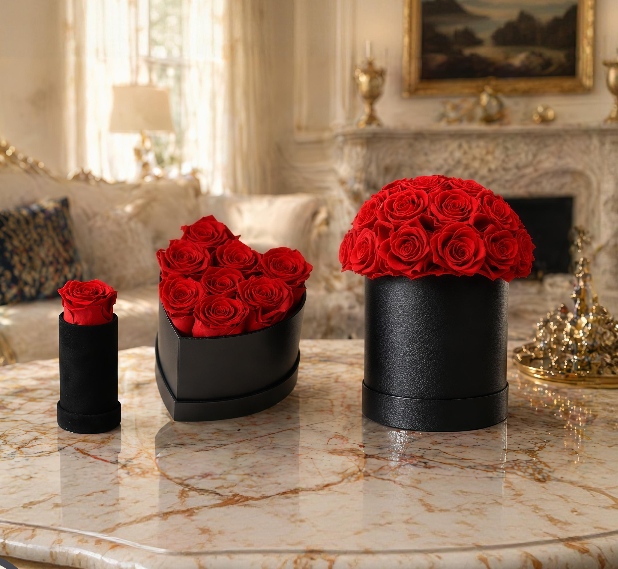
The quiet charm of dried and preserved stems lies in their mutability, so think of their hues as a conversation with the room rather than a fixed decoration. For an intimate supper where candlelight flatters deep burgundy and caramel, lean into blooms that hold those whispers—strawflower, dried eucalyptus, and darkened roses bring a warmth that feels inviting without shouting. Muted mauves and oat-colored grasses, on the other hand, settle beautifully into a late-morning brunch or a soft-toned bridal shower, letting the palette hum at the same frequency as linen napkins and pale stoneware.
When the gathering tips toward celebration—a birthday, a reunion, a table crowded with glasses and laughter—preserved florals can mirror that lift with sun-bleached yellows, dusty corals, and the occasional pop of preserved blue thistle. The trick is not to match every color in the room, but to choose one or two notes that already exist in your table setting or the surrounding space, then let the arrangement hold those tones steady. That way the preserved stems feel less like a centerpiece decision and more like an organic part of the afternoon’s mood.
How Wholesale Preserved Blooms Retain Their Look Without Daily Care
Preserved blooms keep their fresh-cut appearance because the natural sap is replaced with a plant-based solution that locks in softness and color. This process pauses the decay cycle without making the stems feel artificial, so the petals stay pliable instead of turning brittle. Since no water or nutrients are required, there is no daily ritual of trimming stems or topping up a vase.
The real trick to their longevity lies in what you do not have to do. Without exposure to direct sun, high humidity, or constant handling, the color remains stable and the texture holds. A light dusting with a soft brush or a cool air blower every few weeks is enough to keep them looking intentional, not neglected. That makes them a practical choice for spaces where fresh flowers would fade within days.
Unlike dried flowers that often look fragile and faded, wholesale preserved blooms are selected at peak bloom and treated before any wilting begins. This means the final product keeps the natural shape, subtle sheen, and realistic petal movement of a living stem. The absence of daily care does not come from being fake; it comes from pausing the plant at its best moment.
Adding a Personal Touch to Bulk Flower Boxes Without Extra Cost
When you're sending out dozens of flower boxes, it's easy to assume personalization requires a bigger budget. But the truth is, the smallest details—ones already sitting in your studio—can make each box feel intentional. A strip of kraft paper folded around the stem wrap, a few inches of twine tied in an off-center knot, or a single dried stem of baby's breath slid under the ribbon can shift the whole look from bulk delivery to considered gift.
Another zero-cost move is to vary the arrangement based on who's receiving it. If one customer ordered for a birthday and another for a thank-you, tuck a sprig of rosemary or a different greenery accent into the thank-you box. Handwriting just the recipient's name on the corner of the box with a fine-tip marker adds a layer of care that printed labels can't match. You're not changing the core product—just the way it's finished.
Leftover fabric scraps, old sheet music, or pages from a beat-up paperback can be cut into narrow bands and used as belly wraps. Even a simple diagonal snip on the end of the paper sleeve gives a more hand-finished feel than a straight cut. The goal isn't to add more stuff; it's to use what's already around you in a way that makes each box look like it was packed by someone, not something.
Reading the Details That Signal a Well-Made Preserved Floral Gift
Run your fingers over the petals before you commit. A well-made preserved rose or peony should feel supple, almost like fresh, not stiff or crunchy. If the surface has an overly glossy, plastic-like sheen, that often means a heavy coating to hide damage. Look at the edges of each bloom; they should be intact with no fraying or browning. Good preservation keeps the natural color variance alive, so a single stem may have slightly lighter outer petals and deeper tones near the center.
Lift the arrangement gently and check the underside. Stems should be trimmed cleanly and anchored without visible glue blobs or loose wire ends poking through. In a quality gift, the filler moss or greenery sits snugly around the base, not clumped to cover bare spots. Pay attention to leaves as well. They ought to show fine veining and a matte, organic texture. If every leaf looks identically flat and bright, it’s likely been dyed or treated with cheap fixatives. A high-grade preserved floral piece rarely feels uniform; instead, it carries tiny, natural irregularities that make it believable.
Preserved Flower Gifts That Move Easily from Weddings to Corporate Gifting
There's a certain relief in finding one gift that doesn't have to be reimagined for every occasion. Preserved flower arrangements pull this off surprisingly well. A centerpiece that looked romantic under wedding string lights can be disassembled into smaller keepsake jars, or simply handed over as is to a business partner who'll place it near a windowless conference room and forget it needs nothing.
The trick is choosing designs that lean on texture and form rather than overtly bridal colors. Muted greenery, soft whites, and a few sculptural stems read as thoughtful but not sentimental. That's the sweet spot where a gift moves between a personal celebration and a professional gesture without anyone questioning the fit.
FAQ
Preserved flowers are real blooms that have been treated to keep their softness and natural color for months or even years, without needing water. Unlike fresh arrangements, they won't start wilting after a few days, which makes them a practical but still elegant choice for gifts.
They work for almost anything—birthdays, anniversaries, weddings, corporate events, baby showers, or just a spontaneous gesture. Because they last so long, they also become a small keepsake after the celebration.
Most quality preserved arrangements hold their look for 12 to 36 months, sometimes longer if kept away from direct sunlight and high humidity. There's no watering involved, so you avoid the drooping bouquet problem entirely.
Yes, the wholesale option is meant for larger quantities, so you get consistent packaging and a better per-unit price. They're a popular choice for client gifts, employee recognition, wedding favors, and event giveaways.
Very little. Keep them out of direct sun, avoid humid areas like bathrooms, and dust them lightly with a soft brush or a gentle stream of cool air. No water, no trimming, no daily upkeep.
Many suppliers offer custom ribbon colors, box finishes, and optional message or logo cards. It's best to ask about minimum order quantities and lead times, especially for weddings or branded corporate gifts.
Fresh flowers are beautiful but short-lived. Preserved arrangements keep their appearance for months, so the recipient can enjoy them long after the occasion. They're also easier to store and ship in bulk without worrying about water or wilting.
Conclusion
Ordering preserved flower gift boxes in larger quantities brings a quiet practicality to event planning without skimping on elegance. Because the blooms are treated to hold their shape and softness for months, you can style a long wedding weekend or a multi-day conference with the same arrangements, no water changes or wilting to worry about. The color range lets you mirror the mood of the room, from warm blush and cream for a romantic reception to deep burgundy and eucalyptus for a formal corporate dinner. A well-chosen mix of textures and tones reads as intentional rather than generic, even when the boxes are handed out in volume.
Small, thoughtful details often separate a memorable favor from a forgettable one, and that doesn't have to mean extra spending. Simple ribbon choices, a sprig of dried grass, or a handwritten tag tucked beside the arrangement can shift the feel from standard to personal. Before committing to a wholesale order, it's worth checking the stems, the neatness of the box lining, and how securely the flowers are fixed in place, since those signals tell you whether the pieces will hold up across dozens of gifting moments. The same design can move easily from a bridal shower favor to a client thank-you gift, making the investment stretch further without looking repetitive.
Contact Us
Contact Person: Mr. Luo
Email: [email protected]
Tel/WhatsApp: 86 18100895505
Website: https://www.feiliyaflowers.com/en/