

Wholesale DETDA for Reliable Industrial Supply
2026-10-10
Every industrial buyer knows the headache of sourcing DETDA that arrives off-spec, late, or with zero technical support. At Fortune, we flip that script: wholesale DETDA built for uninterrupted production — consistent purity, predictable lead times, and a supply chain that actually communicates. This isn't just another chemical listing; it's the missing piece for operations that refuse to gamble on reliability.
What DETDA Brings to High-Performance Curing
DETDA alters the cure profile in ways that matter when cycle times and thermal loads climb. Its methyl-substituted aromatic ring slows the amine's attack just enough to allow thorough mixing and wet-out, then accelerates once heat is applied. That latency-to-reactivity balance gives formulators a practical window for processing while still hitting demold temperatures faster than many unsubstituted aromatic amines.
Beyond speed, DETDA raises the glass transition temperature and crosslink density of cured networks. The rigid aromatic backbone and short spacer between amine groups create a tightly packed matrix that resists softening under load. Parts cured with DETDA tend to hold modulus at elevated temperatures and show lower creep in hot-wet conditions, which is why it appears in structural composites, tooling, and high-temperature adhesives.
There is also a formulation benefit that often goes unnoticed: DETDA can reduce the need for multiple accelerators or co-curing agents. Because it delivers both reactivity control and final thermal-mechanical performance, a single curative can simplify inventory and mixing steps without sacrificing the end properties. That combination of handling, speed, and heat resistance is what makes DETDA a default choice when standard aliphatic amines fall short.
Bulk DETDA Buying Without Consistency Headaches
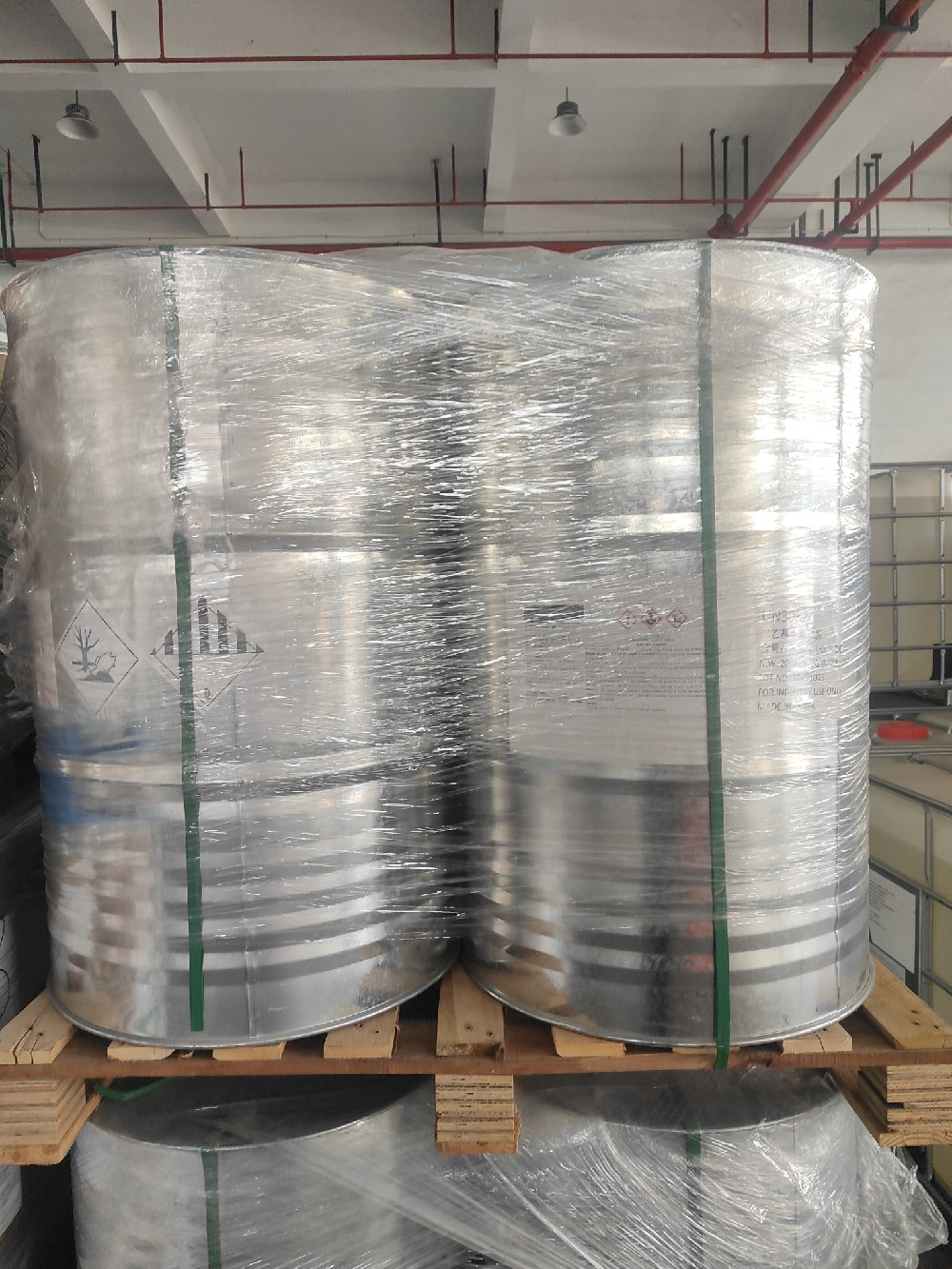
Purchasing DETDA in bulk often feels like a gamble when suppliers can't maintain batch-to-batch uniformity. The real cost of inconsistency shows up downstream—unpredictable cure rates, shifting viscosity, and mechanical properties that drift from spec. Instead of chasing price breaks across multiple vendors, smart buyers lock in one source that treats every drum as if it were the first one out of the reactor.
The secret to headache-free bulk buying lies in demanding a certificate of analysis that goes beyond the basic amine value. Look for tight control over isomer ratios, moisture content, and color stability. When a supplier can show you SPC charts for the last fifty lots, you're no longer hoping for consistency—you're verifying it before the truck even backs into your dock.
At scale, even a two percent swing in reactive diluent content can force line adjustments that eat your margin. That's why volume buyers shift from transactional ordering to partnership models with fixed lot reservations, pre-shipment retain samples, and quarterly round-robin testing. Consistency isn't a premium feature; it's the whole point of bulk procurement.
Polyurethane Jobs Where DETDA Outperforms Alternatives
In high-temperature cast polyurethane parts, DETDA consistently beats other chain extenders where continuous service temperatures climb above 100°C. Its rigid aromatic structure gives the final elastomer a dense crosslink network that holds hardness and load-bearing capacity when MOCA or DMTDA-based systems soften. Industrial rollers, press pads, and hot metal handling components are typical jobs where this difference shows up on the production floor.
Another area where DETDA outperforms alternatives is in fast-cycle RIM and spray polyurethane/polyurea applications. Because DETDA reacts quickly with MDI and TDI prepolymers, molds can be opened sooner without sacrificing physical properties. For high-volume manufacturing of automotive body panels, agricultural equipment parts, and mining screens, that speed translates into more parts per shift and fewer rejects due to under-cure.
In demanding abrasion and impact environments, DETDA-based polyurethane often provides a better balance of toughness and tear strength than systems extended with aliphatic amines or glycols. Pump impellers, hydrocyclone liners, and slurry pipe linings made with DETDA typically show longer wear life in field tests, especially when combined with high-hardness TDI prepolymers. The difference is not just lab data; maintenance crews notice fewer unplanned replacements.
Keeping DETDA Purity Intact from Drum to Reactor
Keeping DETDA clean starts well before the reactor charge. Every drum opening is a chance for moisture or airborne particulates to slip in, and once water meets an isocyanate downstream, the resulting urea side reactions are almost impossible to undo. We insist on sealed dip tubes and dry nitrogen blanketing from the moment a drum is tapped, with desiccant breathers on day tanks. It sounds fussy, but a few grams of water per drum has a way of showing up later as haze, viscosity drift, or off-ratio cure.
Transfer lines get less attention than they deserve. Reusing a hose that previously carried polyol or plasticizer can leave a thin film that reacts slowly with DETDA or alters its stoichiometry. Dedicated, clearly labeled stainless or PTFE-lined hoses make a difference, and they should be flushed with dry nitrogen before and after each use. Where possible, we move DETDA by low-pressure nitrogen rather than an open pour, because that simple switch removes both oxygen contact and the temptation to set a funnel on top of a dirty tote.
At the reactor itself, temperature control is part of purity maintenance. Cold spots near exterior walls or dead legs can cause DETDA to crystallize or thicken, and reheating tends to leave localized degradation products. Keeping the storage and feed loop between roughly 25°C and 35°C, with slow recirculation through a 10-micron filter, catches any polymerized fines before they reach the metering pump. That final filtration step has caught more batches than I care to count.
Storage Routines That Keep DETDA Ready to React
DETDA's amine groups are hungry for carbon dioxide and moisture, so the container matters more than most chemists admit. A half-empty drum with a loose bung invites slow carbamate crust formation at the liquid surface. The fix isn't expensive gear—it's disciplined nitrogen padding after every draw, plus a dip tube that reaches near the bottom to avoid pulling from the oxygen-rich top layer. If your storage area sees temperature swings, keep the barrel off bare concrete; a simple wooden pallet breaks the cold-sink effect that drives condensation inside the headspace.
Color is a liar here. Fresh DETDA can range from pale straw to deep amber depending on isomer ratio and trace oxidation, so visual checks alone won't tell you if it's still reactive. Instead, log the closure torque and the date of each opening. Drums that sit longer than three weeks in humid climates tend to build a faint haze at the meniscus—that's the early warning sign before viscosity creeps up and your stoichiometry goes soft. A quick amine value titration beats a spec sheet guess every time.
Don't overthink filtration. Some operators push DETDA through fine mesh or cartridge filters before charging the reactor, but a 200-mesh screen at the drum pump outlet handles 95% of the real-world debris without slowing your line. The bigger win is rotation: first in, first out, with oldest stock used for less color-critical formulations. And keep the storage log handwritten on the drum itself—a permanent marker note like 'opened 14 Mar, N2 pad 2 psi' does more for batch consistency than any digital inventory tag.
Choosing a DETDA Supplier Who Won't Stall Your Line
A DETDA supplier can look solid on paper until a late shipment or an off-spec batch leaves your line sitting idle. The real test is whether they treat your production schedule as their own problem. Press them on safety stock levels, lead time buffers, and how they handle a genuinely urgent order—not just what the sales sheet promises.
Consistency beats a low quote every time. Even small shifts in isomer ratio or moisture content can change cure speed and final hardness, so a supplier that understands your process will send batch data before the truck leaves their dock. If you only find out about a variance after a bad run, the savings vanish fast.
Pay attention to how quickly you can reach someone who can actually release a truck or pull a sample for retesting. If every question gets bounced through layers of customer service, that’s a warning sign. A supplier that values your uptime gives you a direct line to a decision-maker, not a ticket number.
FAQ
DETDA is diethyltoluenediamine, an aromatic diamine curing agent widely used in polyurethane and epoxy systems. It delivers fast cure rates, good mechanical strength, and resistance to chemicals and heat, making it a workhorse for coatings, adhesives, and composites.
Buying DETDA in wholesale quantities allows manufacturers to lock in a single batch, reducing variability between containers. Consistent amine values and isomer ratios mean fewer adjustments on the line and more predictable end-product performance.
Look for suppliers who provide a certificate of analysis with each shipment, maintain stable inventory, and offer technical support. Logistics reliability, such as proper packaging and on-time delivery, also matters as much as the chemical purity itself.
Yes, DETDA is often chosen for applications needing elevated temperature cures. It promotes rapid crosslinking and retains good physical properties after exposure, though formulation adjustments may be needed to balance pot life.
DETDA offers a different reactivity profile and is often preferred where MOCA's regulatory status or handling concerns are an issue. It provides similar hardness and chemical resistance but typically with faster gel times and lower viscosity in many formulations.
Suppliers typically offer DETDA in steel drums, IBC totes, or bulk tanker loads depending on volume. Moisture-resistant seals and nitrogen blanketing are common to prevent degradation during storage and transport.
Yes, it functions as a curing agent or chain extender in polyurethane elastomers and as a hardener in epoxy resins. Formulators value its ability to boost hardness, tensile strength, and thermal stability across both chemistries.
DETDA should be handled with proper PPE including chemical-resistant gloves and eye protection. Work areas need adequate ventilation, and spills should be contained with inert absorbents. Always consult the safety data sheet for specific exposure limits and first-aid measures.
Conclusion
DETDA has become a workhorse in high-performance curing because it delivers a rare combination of rapid reactivity and robust final properties. In polyurethane coatings, cast elastomers, and reaction injection molding, it shortens demold and cure cycles without making parts brittle or overly heat-sensitive. That speed translates directly into throughput gains on busy shop floors. When buying wholesale, the real challenge isn't price alone; it's consistency. Reputable suppliers now analyze every lot for amine value, moisture, and isomer distribution, so drums from different shipments perform interchangeably. This removes the guesswork from formulation adjustments. Against typical alternatives like MOCA or slower aromatic diamines, DETDA often wins in applications where thermal stability, abrasion resistance, and fast turnaround matter most. For teams running continuous production, that reliability means fewer rejected batches and less downtime spent adjusting mix ratios. It also simplifies inventory planning when a single supplier can meet both volume and quality targets without excuses.
Maintaining DETDA purity from drum to reactor requires discipline. Even small amounts of water or oxygen degrade the amine and reduce cure speed, so smart operations blank drums with dry nitrogen and use closed transfer lines wherever possible. Storage conditions matter just as much; keeping material in a cool, dry area away from sunlight and ensuring drums are resealed tightly after each use preserves reactivity for months. Beyond storage, a reliable wholesale supplier prevents production stalls by holding sufficient stock and shipping without delay. Instead of waiting on backorders or chasing vague lead times, you receive DETDA that's ready to react the moment it hits the reactor. That reliability, combined with proper handling, is what keeps industrial polyurethane lines moving without interruption.
Contact Us
Contact Person: WANG SIHAI
Email: [email protected]
Tel/WhatsApp: +86-13815295628
Website: https://www.fortunechemtech.com/index_en.html