

Top Potential Transformers for Reliable Voltage Measurement
2026-06-24
Voltage measurement is the silent backbone of every power system, yet its reliability hinges on one often-overlooked component: the transformer. Whether you're monitoring grid stability, protecting sensitive equipment, or ensuring accurate metering, the right transformer can mean the difference between precision and costly errors. In this post, we dive into the top potential transformers that combine innovation with rugged dependability. Among them, Lugao stands out for its engineering finesse—but there’s more to the story. Curious which designs are reshaping the landscape? Read on.
Precision-Rated Potential Transformers: Core Design Secrets for Accurate Readings
Getting potential transformer accuracy right often comes down to the core. The material choice alone—whether it's a high-permeability nickel-iron alloy or a grain-oriented silicon steel—shapes everything from magnetizing current to phase shift. Beyond material, the physical dimensions, lamination quality, and even the air gap geometry must be tuned to keep the transformer operating in its linear region across a wide voltage range. Skimp here, and the errors creep in long before the nameplate accuracy class is met.
Heat and frequency shifts can throw a precision PT off spec faster than most engineers expect. A core that performs flawlessly at 60 Hz and 25°C might drift noticeably under varying operational conditions. That's why top-tier designs incorporate temperature-compensated shunts or split-core structures that reduce eddy-current losses and maintain consistent permeability. It's not just about hitting a target accuracy; it's about staying there when the load changes or the ambient temperature swings.
The winding strategy matters more than many realize. Positioning the primary and secondary windings asymmetrically can introduce ratio errors and phase shifts, no matter how perfect the core is. Layer winding techniques and careful electrostatic shielding keep inter-winding capacitance in check, preventing high-frequency noise from corrupting low-level measurement signals. Every turn is a balancing act between the magnetic and electric fields, and the best PTs are those where the core and coils work together to isolate and reflect the primary voltage with minimal distortion.
Noise-Immune Shielded Units: Maintaining Purity in High-Interference Zones
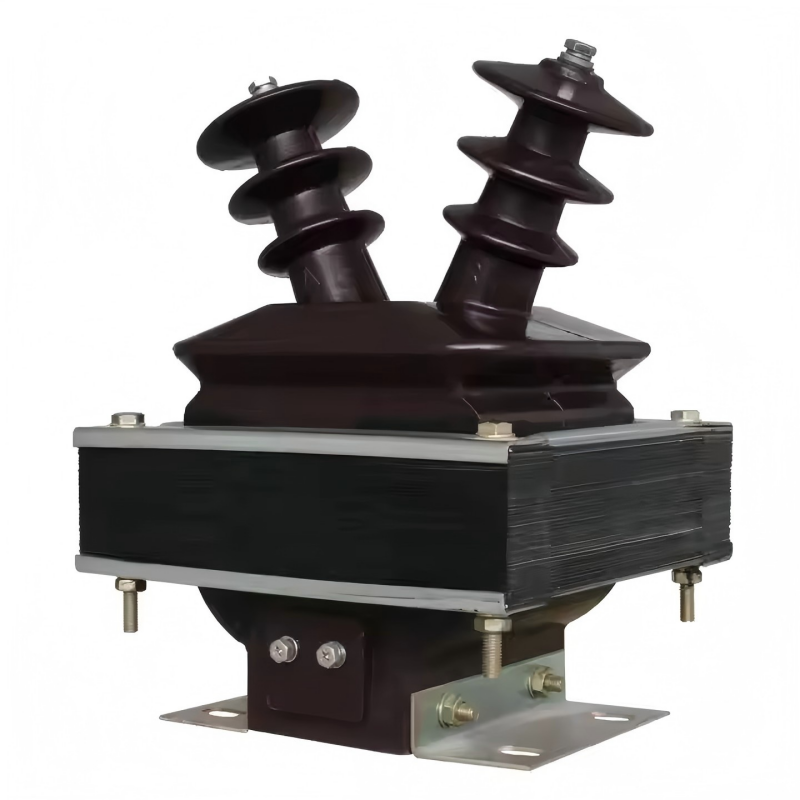
High-interference environments can wreak havoc on sensitive electronics, turning crisp signals into illegible noise. Shielded units act as a barrier, deflecting electromagnetic and radio frequency interference before it penetrates critical circuits. By encasing components in conductive materials, these designs create a Faraday cage effect, ensuring that external chaos never reaches the delicate inner workings. This approach isn't just about blocking—it's about maintaining a controlled micro-environment where signal integrity remains uncompromised, no matter how hostile the surroundings become.
What sets truly noise-immune units apart is their layered defense strategy. Beyond basic shielding, they incorporate grounding techniques, differential signaling, and filtering at every entry point. These methods work together to reject common-mode noise and prevent ground loops, which are often the hidden culprits behind erratic behavior. Even the physical layout is optimized, with careful trace routing and component placement that minimizes coupling. The result is a system that can operate in close proximity to heavy machinery, RF transmitters, or power lines without a flicker of disruption.
Rigorous testing under extreme conditions validates this immunity. Units are bombarded with broadband noise, subjected to electrostatic discharges, and placed in environments that mimic industrial chaos. The goal is not merely survival but flawless performance—data streams remain error-free, analog outputs stay stable, and uptime is absolute. In fields like medical instrumentation, aerospace, or industrial automation, such reliability isn't a luxury; it's a requirement. Noise-immune shielded units don't just cope with interference—they redefine what's possible in high-stakes settings.
Low-Impedance Measurement Transformers: Cutting Signal Loss for True Voltage Representation
In the realm of precision instrumentation, even the most carefully designed measurement chain can fall victim to subtle signal degradation. Low-impedance measurement transformers step in to eliminate the voltage drop and phase shift that plague high-impedance interfaces, ensuring the signal arriving at your meter is an uncorrupted mirror of the source. By maintaining a near-zero output impedance, these transformers drastically reduce loading effects, delivering a true voltage representation even when driving long cables or moderate input impedances downstream.
The secret lies in the transformer’s winding architecture and core material selection. Unlike generic step-down transformers that prioritize power efficiency, low-impedance measurement variants use high-permeability nanocrystalline or amorphous cores to achieve minimal leakage inductance. This, combined with tightly coupled windings and careful shielding, suppresses common-mode noise while preserving bandwidth. The result is a device that transmits voltage signals with exceptional linearity, making it indispensable for power analyzers, oscilloscopes, and data acquisition systems where every millivolt counts.
Field applications reveal the stark contrast: a standard potential transformer might introduce a voltage error of several percent under varying burden, whereas a low-impedance design keeps errors below 0.1%. This matters not just for accuracy but for long-term reliability—less signal stress means fewer calibration cycles and greater confidence in your measurements. Whether monitoring grid harmonics or capturing transient waveforms, lowering the impedance at the transformer output is the straightforward path to uncompromised signal fidelity.
Thermally Compensated Cores: Stability That Outlasts Temperature Swings
Inside every high-performance optical system, the core element faces a silent adversary—thermal fluctuation. As temperatures rise and fall, conventional materials expand and contract, throwing off alignment and degrading image quality. Thermally compensated cores are engineered to resist these dimensional shifts, pairing materials with opposing thermal expansion coefficients. This intelligent match neutralizes drift at the structural level, ensuring that focus and calibration remain rock-steady even when the environment does not.
The real magic lies in the synergy between the glass and its housing. Instead of fighting thermal expansion with bulky insulation or active cooling, these cores lean into physics itself. The optical elements and their surrounding mounts move in tandem, canceling out the net displacement. It’s a passive solution that demands no power, no maintenance, and no compromise—just a clever balance that keeps the light path undisturbed through scorching days and freezing nights.
Field users quickly notice the difference. In applications ranging from long-range surveillance to precision metrology, the absence of refocusing routines saves time and eliminates a common point of failure. The core stays sharp and true, outing ambient conditions that would sideline lesser designs. Long-term stability becomes a built-in feature, not a spec-sheet promise. Ultimately, thermally compensated cores offer more than just optical endurance; they bring a kind of quiet confidence that the view won’t waiver, no matter what the weather brings.
Wideband Frequency Response: Transformers That Capture Every Voltage Nuance
When it comes to translating electrical signals without losing their soul, wideband frequency response in transformers isn't just a spec—it's a promise. This characteristic ensures that from the deepest bass rumble to the highest harmonic sparkle, every volt of the original signal finds its way through, uncolored and intact. In audio and precision measurement, that's what separates a clinical reproduction from one that breathes life.
The real magic lies in how these transformers handle voltage nuances. Minute fluctuations that define texture and space in a signal aren't flattened or exaggerated; they're preserved with such fidelity that the output mirrors the input’s personality. Wideband design means the core and windings work harmoniously across an expansive frequency range, sidestepping the phase shifts and roll-offs that can smear transient details.
Integrated Monitoring Solutions: Smart Transformers with Built-In Diagnostics
Modern power grids rely on transformers that do more than just step voltage up and down—they actively monitor their own health. Smart transformers now come equipped with embedded sensors that track temperature, partial discharge, load fluctuations, and insulation condition in real time. This self-awareness allows utilities to move away from reactive maintenance toward a truly proactive approach, catching stress signals before they escalate into failures.
The diagnostic data streams directly from the transformer to central control systems via secure communication protocols, enabling operators to assess multiple units across a network without physical inspections. Machine learning algorithms sift through the continuous feed, establishing baseline behavior for each unit and flagging subtle anomalies that would escape routine checks. For instance, a gradual shift in dissolved gas levels might indicate emerging thermal faults, giving crews weeks to schedule an intervention instead of dealing with an unexpected outage.
What sets these integrated solutions apart is their ability to contextualize readings rather than just reporting raw numbers. They factor in ambient conditions, load history, and even known vibration patterns from nearby equipment to reduce false alarms. This intelligence transforms a basic step-down device into a predictive asset that not only supplies electricity but also protects the grid's stability, minimizing downtime and extending the transformer's service life without constant human oversight.
FAQ
A potential transformer, often abbreviated as PT, is a type of instrument transformer designed to step down high voltages to a low, safe value that can be easily measured by standard instruments. Think of it as a precision voltage converter. It isolates the measuring equipment from the high primary voltage, keeping operators safe and equipment undamaged. Without these, direct measurement of high voltages would be impractical and dangerous. They're the backbone of accurate metering, relaying, and protection in power systems.
While both use electromagnetic induction, the main difference lies in their purpose and design. A power transformer handles massive amounts of energy, often with efficiency being the top priority. Potential transformers, on the other hand, are all about accuracy. They have a fixed, precise turns ratio and are built to have minimal phase angle error and ratio error. They're calibrated to deliver a voltage that faithfully replicates the primary waveform, just scaled down. Also, PTs are typically loaded with very low burden, just instruments, whereas power transformers drive heavy loads.
The main types are electromagnetic PTs, capacitor voltage transformers (CVTs), and optical voltage transformers. Electromagnetic PTs are the classic wire-wound type, suitable for lower voltages like those found in distribution systems. CVTs use a capacitive divider and a tuning coil, making them cost-effective for very high voltages, often above 100 kV, where electromagnetic PTs become bulky and expensive. Optical voltage transformers exploit the Pockels effect or other optical principles; they're immune to electromagnetic interference and are gaining traction in modern digital substations. Each has its niche depending on voltage level, accuracy needs, and environmental factors.
First, the rated primary and secondary voltages must match the system and instruments. Accuracy class is vital — for metering you might need 0.3 class or better, for protection 3P or 6P may suffice. The burden, meaning the total load connected to the secondary, must be within the PT's rated capacity or errors will creep up. Also, consider the insulation level, frequency, and environmental conditions like temperature and humidity. For outdoor use, you'll need a weatherproof design. And if harmonics are present, a PT with a wider bandwidth might be necessary.
Improper grounding can lead to safety hazards and measurement errors. Always ground the secondary circuit to prevent shock risks and to stabilize the voltage reference. Overloading the secondary, even briefly, can cause thermal damage and accuracy drift. Also, wiring mistakes like reversed polarity will upset protective relays and metering. In maintenance, check for insulation degradation, loose connections, and dirt accumulation on insulators. For oil-filled PTs, periodic oil testing is a good practice to detect internal arcing or moisture ingress.
They play a quiet but pivotal role. Accurate voltage data is essential for protective relays to detect faults quickly and isolate the right section, preventing cascading outages. For metering, errors in voltage translate directly into billing errors or incorrect power flow analysis. A failed PT can leave a protection scheme blind, risking equipment damage. So, selecting a robust, well-tested PT and maintaining it properly is a cornerstone of grid reliability. It's a small investment relative to the consequences of voltage measurement failure.
Conclusion
Achieving truly reliable voltage measurement hinges on the synergy between precision core design and robust shielding. Precision-rated potential transformers begin with meticulously engineered cores that minimize phase shift and ratio errors, ensuring that every reading reflects real-time conditions without the creeping distortions that plague lesser units. By pairing these carefully wound magnetic circuits with advanced noise-immune shielding, these transformers maintain signal purity even when installed near high-current switchgear or arc furnaces. The integration of low-impedance measurement paths further refines the output, virtually eliminating the signal loss that often masks subtle voltage fluctuations. This combination of design philosophies—accuracy at the core, purity through shielding, and transparency via low impedance—lays the groundwork for measurements that engineers can trust for critical protection and metering systems.
Beyond static accuracy, dynamic performance across temperature and frequency ranges defines the most resilient transformers. Thermally compensated cores leverage specialized alloys that resist saturation drift, delivering consistent performance from arctic mornings to desert afternoons, effectively decoupling measurement stability from environmental swings. Meanwhile, wideband frequency response ensures that fast transients and harmonic content are faithfully captured, no longer smoothed away by bandwidth limitations. The frontier of reliability is further extended by integrated monitoring solutions: sensors embedded in the transformer housing continuously track insulation health, winding temperature, and residual flux, streaming diagnostic data directly to maintenance dashboards. These smart features preempt failures before they falsify a reading, turning the transformer from a passive component into an active guardian of measurement integrity.
Contact Us
Contact Person: Doreen
Email: [email protected]
Tel/WhatsApp: 8618057712366
Website: https://www.liugaopower.com/