
Top Hard Chrome Plating Equipment Suppliers for Precision Industrial Finishing
2026-11-16
Achieving flawless, wear-resistant surfaces in precision manufacturing isn’t just about the process—it’s about the equipment behind it. Hard chrome plating remains a cornerstone of industrial finishing, delivering unmatched hardness, corrosion protection, and dimensional restoration for critical components. Yet the difference between an acceptable result and a truly superior finish often hinges on one factor: your plating equipment supplier. Whether you’re upgrading an existing line or building a new one from the ground up, knowing which suppliers lead the market can save you time, reduce downtime, and ensure repeatable quality. Among them, Junda has carved out a distinctive position by engineering robust, precision-focused systems tailored to demanding OEM and rebuild applications. In this post, we cut through the noise and spotlight the top hard chrome plating equipment suppliers that combine engineering depth, reliable support, and innovation—so you can make a choice that elevates your finishing capability from day one.
Why Precision Industrial Finishing Demands the Right Chrome Plating Setup
When components are machined to tolerances measured in microns, the finishing process can't be an afterthought. The right chrome plating setup isn't just about applying a shiny layer; it's about engineering the tank geometry, anode placement, and current distribution to deposit exactly the thickness required without distorting delicate features. A rack designed for generic parts will never give you uniform coverage on a complex aerospace strut or a high-pressure valve body. Getting it wrong means rejecting parts at final inspection—or worse, field failures that trace back to a plating line that was never dialled in for the job.
Precision work also exposes weaknesses in bath chemistry control that mass-production lines can often mask. When you're chasing a consistent 25-micron deposit with less than 5% variance, the trivalent-to-hexavalent chromium ratio, the sulfate catalyst level, and even the ripple from your rectifier become critical variables. A setup that isn't built around tight filtration and real-time chemical monitoring will drift over a shift, and the difference between a perfect satin finish and a pitted surface often comes down to how well the tanks are agitated and how quickly the operator catches a temperature swing.
Beyond the technical specs, the physical layout of the line shapes everything. Precision parts can't be dropped in a basket and barrel-plated; they need custom fixturing that shields threads, masks bores, and ensures hydrogen relief without trapping plating solution. The best shops treat the racking-and-unracking sequence as part of the machining process, designing the whole workflow so parts move from final grind to chrome and back to inspection with as little handling as possible. When the setup is right, plating becomes an extension of the machine shop instead of a bottleneck.
Key Features to Look for in a Hard Chrome Plating Equipment Partner
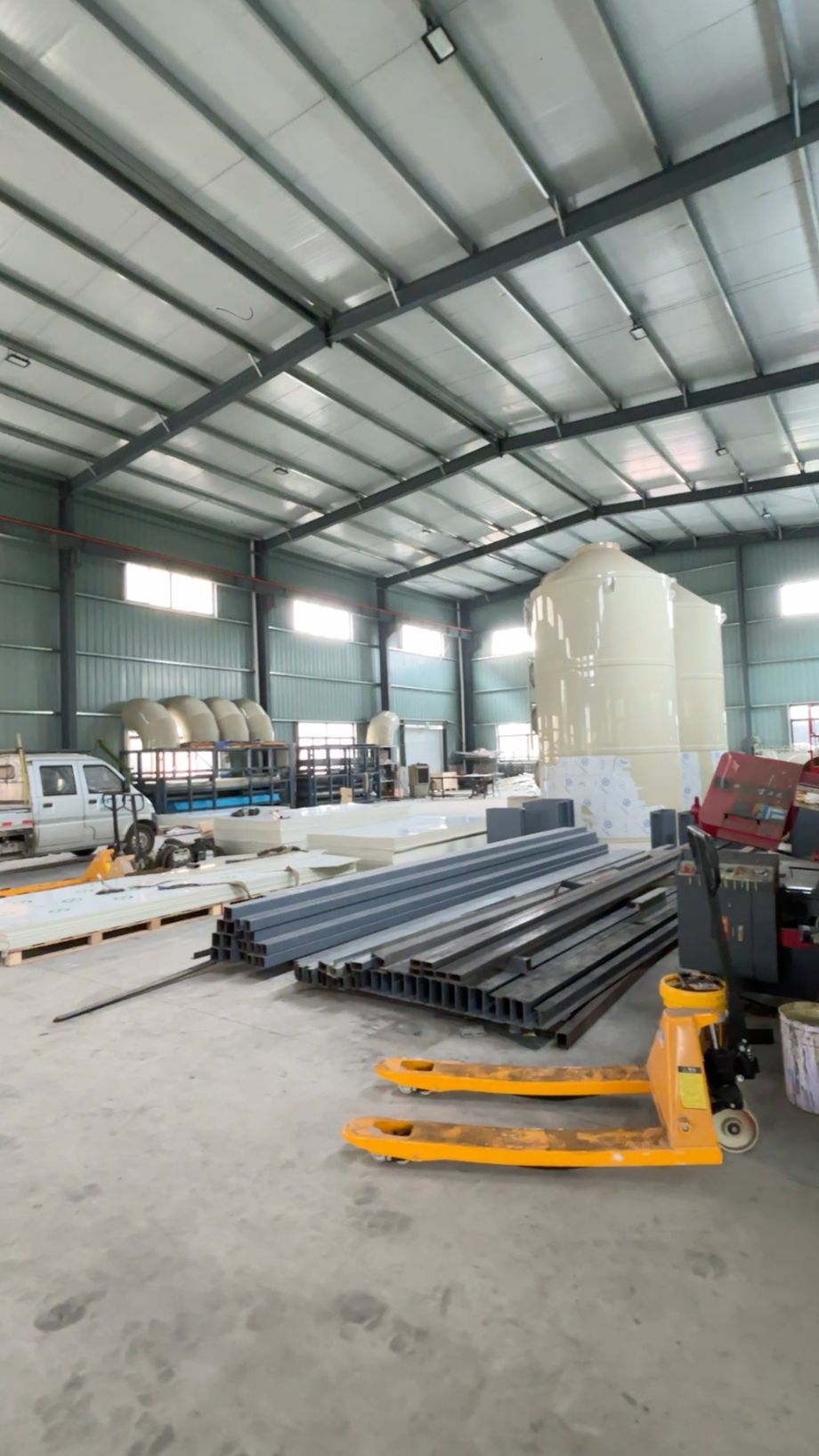
A dependable partner brings proven process knowledge that goes beyond simply manufacturing tanks and rectifiers. They understand how solution chemistry, anode placement, and current distribution affect deposit hardness and adhesion. Look for a team that asks detailed questions about your parts, production targets, and floor layout before proposing a single component, because customizing the tank geometry, cooling, and fume extraction around your actual workflow often makes the difference between chronic rework and consistent output.
Support after installation is just as critical as the hardware itself. The right partner offers hands-on commissioning, operator training that covers troubleshooting plating defects right at the line, and readily available technical backup when a bath drifts out of spec. Avoid setups where you are handed a manual and left to figure out anode maintenance schedules or waste treatment tie-ins on your own. A partner that invests time in making your team self-sufficient while standing behind their rectifier warranties and tank linings will save you far more in downtime than any upfront equipment discount.
Finally, examine how they handle evolving requirements. Whether you need to add a hard chrome plating line for oversized hydraulic rods later or integrate automated hoists and data logging to meet tighter customer specs, a forward-thinking partner plans for expansion slots in control panels, thicker bus bars for future capacity, and modular tank designs. Their engineering team should be comfortable discussing pulse plating options, trivalent chromium transitions, and closed-loop rinsing — not just selling you what’s in their catalog.
How the Top Suppliers Are Redefining Surface Hardness and Durability
Gone are the days when harder simply meant more brittle. Leading material suppliers have shifted their focus toward creating surfaces that don't just resist wear but actually adapt to stress. Through refined grain structures and multi-phase microstructures, they're delivering components that maintain their integrity under cyclical loads that would have cracked older generations. It's less about a single hardness number and more about how the surface behaves over thousands of cycles.
What's equally striking is the move away from thick, energy-intensive coatings. The most advanced treatments now infiltrate the outermost atomic layers, altering properties without adding measurable thickness. This means you get a drill bit or a bearing surface that feels almost frictionless, yet it won't delaminate under high shear. The durability comes from harmony between the core toughness and the radical skin, not from piling on sacrificial layers.
Suppliers are also rethinking the feedback loop between production and performance. Real-time process data lets them tweak quenching rates or deposition parameters mid-batch, ensuring that every part leaving the line carries a predictable, engineered grain boundary network. The result is a surface that handles heat, corrosion, and impact differently depending on the intended abuse — a technical shift that quietly extends product lifetimes in fields ranging from surgical instruments to heavy machinery.
Innovations in Plating Technology That Separate Industry Leaders
What truly sets top-performing manufacturers apart isn’t just their capacity to plate parts — it’s how they reinvent the process behind it. One quiet breakthrough has been the shift toward pulse reverse plating, where precisely controlled waveforms allow for far denser and more uniform deposits than conventional DC methods ever could. This technique opens doors to thinner layers with superior corrosion resistance, dramatically reducing material waste while improving reliability in aerospace and medical tooling. Leaders adopt it not as a gimmick, but as a core method to meet tightening tolerance demands without chasing diminishing returns from older bath chemistries.
Another area where forward-thinking outfits shine is in process control through real-time analytics. Instead of relying on periodic bath samples and manual titrations, they’ve integrated inline sensors that track metal ion concentration, additive consumption, and organic breakdown products moment by moment. The real innovation is the closed-loop adjustment — systems that auto-dose brighteners and levelers based on actual part throughput, not a fixed schedule. This adaptive approach slashes variation between shifts, extends bath life, and lets a single line pivot between vastly different specifications without the usual calibration lag.
Perhaps the most telling separator is how sustainable practices are being woven directly into advanced plating, rather than bolted on afterward. Trivalent chromium formulations that rival the hardness and reflectivity of hexavalent chrome have finally matured, and the companies using them aren’t just checking an environmental box — they’re gaining a finish that often outperforms the legacy process in micro-crack density and fatigue life. Paired with closed-loop rinsewater recovery and electrowinning cells that pull metal from dragout, these innovations turn waste streams into feedstock. It’s this combination of performance-first thinking and material stewardship that quietly redefines what the market expects from a top-tier plater.
Overcoming Common Coating Challenges with Proven Equipment Solutions
Achieving a flawless finish often starts with controlling film thickness across complex geometries. Uneven buildup in recessed areas or excessive edge coverage can silently ruin product performance. Instead of reworking parameters endlessly, many teams turn to closed-loop fluid delivery systems that automatically compensate for viscosity shifts and line speed changes. These setups don’t just spray material—they adapt in real time, trimming waste and slashing the number of rejected parts before the shift ends.
Bubbles and surface defects have a way of appearing right when throughput demands spike. Manual mixing and open reservoirs invite air entrapment that shows up later as pinholing or cratering. Vacuum-assisted dispensing and inline degassing units remove that variable entirely. By keeping the fluid path sealed from the drum to the nozzle, operators spend less time troubleshooting and more time running at full capacity—a practical shift that pays for itself faster than most process overhauls.
Cure-related headaches—tacky spots, poor adhesion, or slow line speeds—frequently trace back to mismatched energy delivery rather than a bad material batch. Swapping in modular UV-LED arrays or precisely zoned infrared panels lets you dial in wavelength and intensity exactly where needed, without roasting sensitive substrates. The result is repeatable crosslinking that holds up under final inspection, even when ambient conditions drift. It’s the difference between crossing your fingers at the end of the line and knowing the output will be right the first time.
Selecting a Supplier That Balances Cost, Quality, and After-Sales Support
Finding a supplier that nails the trifecta of cost, quality, and after-sales support often feels like solving a complex puzzle. The cheapest option can quickly become the most expensive if quality slips or support vanishes after the invoice is paid. Instead of choosing based on price alone, evaluate the full value a partner brings. Map out the total cost of ownership, including hidden expenses like rework, delays, or training time that crop up when materials or components don’t meet expectations. A supplier that openly discusses its quality control processes and provides clear, responsive channels for post-purchase issues tends to safeguard your operation far better than one that simply undercuts competitors.
Quality isn't just about a flawless product on day one; it's about consistency over time and a supplier's willingness to stand behind their work. When assessing potential partners, look beyond glossy brochures and ask concrete questions. How do they handle a batch that falls short of specs? What does their warranty actually cover, and more importantly, how quickly do they act on it? After-sales support that feels like a genuine partnership rather than a scripted call center makes a measurable difference. A supplier that offers proactive updates, technical guidance without constant upselling, and a named contact who understands your business helps you avoid production hiccups that far outweigh any upfront savings.
Finally, a balanced partnership thrives on mutual understanding. Clearly communicate your non-negotiables, whether that's a maximum defect rate, guaranteed lead times, or on-site assistance within a certain window. A supplier worth keeping will embrace that clarity and often suggest practical trade-offs that keep costs reasonable without cutting corners. Consider working with suppliers that specialize in your industry or have long tenures with similar-sized clients, as they’ve typically refined the equilibrium you’re searching for. When cost, quality, and support align, you’re not just buying a product; you’re building a relationship that helps your business stay resilient.
FAQ
Hard chrome plating is a process where a thick layer of chromium is electrodeposited onto a metal surface to improve wear resistance, reduce friction, and restore dimensional accuracy. It's preferred in precision industrial finishing because it can be applied with tight thickness control, has excellent hardness, and performs reliably in harsh environments like hydraulics, molds, and heavy machinery components.
Look past the glossy brochures and focus on their track record with similar-scale projects. Ask for case studies or client references in your specific industry. Check how long they've been manufacturing rectifiers, tanks, and automation systems, and whether they offer after-sales support, training, and spare parts. A supplier that asks detailed questions about your plating cell design and chemistry is usually more reliable than one that just quotes a price.
Yes, several suppliers now offer modular and containerized plating lines designed for limited floor space. These systems often include integrated fume extraction, rectifiers, and even closed-loop rinsing. When evaluating them, make sure the modules can be expanded later if your volume grows, and double-check that the small footprint doesn't compromise the anode-to-cathode spacing required for consistent chrome thickness.
Rectifier selection goes beyond just amperage. You'll want to look at ripple factor— for hard chrome, ripple should be under 5%. Modern switched-mode power supplies or thyristor-controlled units with precise filtering are common. Also consider pulse plating capabilities if you need improved hardness or micro-cracked patterns. Remote monitoring and digital control interfaces are now standard for process consistency, but they need to be robust enough to handle the plating shop environment.
It's absolutely critical— not just for worker safety but for plating quality and regulatory compliance. Chromic acid mist must be captured at the tank surface. Look for push-pull ventilation systems combined with packed bed scrubbers or mesh pad mist eliminators that can achieve over 99% removal efficiency. A supplier that doesn't emphasize this component or includes an undersized system is a red flag.
Many top-tier suppliers offer turn-key solutions, but you’ll need to clarify what ‘turn-key’ actually covers. Some include only the plating line itself, while others handle chemical delivery, wastewater treatment, and even the building layout. Always request a detailed scope of supply document. It’s also wise to have third-party commissioning oversight even if the supplier handles installation, just to validate process parameters and safety interlocks before the first production run.
The main challenges are lead anode degradation, tank liner integrity, and rectifier component fatigue due to continuous high current. Good suppliers will provide detailed maintenance schedules and offer service contracts that include periodic rectifier testing, anode straightening or replacement, and inspection of heating/cooling coils. Some even offer remote diagnostics for power supplies. Ask upfront about the availability of spare parts and whether they stock critical items locally.
Choose suppliers that integrate closed-loop rinsing and evaporation recovery systems right from the start. Look for equipment designed to work with non-hexafluorochromic acid alternatives that are currently being developed. The plating tank and ancillary systems should be constructed with materials compatible with potential future electrolyte changes. A supplier that regularly participates in industry consortia or regulatory update discussions usually stays ahead of compliance trends and designs their equipment accordingly.
Conclusion
Precision industrial finishing hinges on a hard chrome plating setup that delivers more than just surface-level shine—it must ensure micron-level uniformity, exceptional hardness, and long-term corrosion resistance. The right equipment partner understands that every component, from hydraulic rods to aerospace actuators, demands a tailored tank configuration, precise rectifier control, and a chemical bath composition that can withstand high-stress cycles. Top suppliers have moved beyond off-the-shelf solutions; they co-engineer lines with automated hoists, in-tank temperature profiling, and real-time thickness monitoring to eliminate human error. This level of integration not only boosts deposition rates but also slashes rework rates, making it indispensable for industries where a single coating flaw can lead to catastrophic failure.
Leading manufacturers are redefining durability through innovations like pulse-reverse plating and nanostructured chromium layers that outperform legacy hexavalent alternatives while aligning with tightening environmental mandates. These advances allow shops to tackle chronic challenges—such as edge build-up, hydrogen embrittlement, and pit formation—using closed-loop filtration and adaptive current density algorithms. When evaluating suppliers, savvy buyers look beyond the price tag for partners who offer modular skid designs, remote diagnostics, and long-term technical support that evolves with production demands. The best balance emerges from those who treat every system as a living process, not a one-time capital sale, ensuring consistent quality across millions of cycles without sacrificing cost efficiency or workplace safety.
Contact Us
Contact Person: hayyr
Email: [email protected]
Tel/WhatsApp: 8613575807672
Website: https://www.jundaelectroplating.com