

Top 10 Tactile Paving Systems for Enhanced Urban Accessibility
2026-06-24
In the quest for truly inclusive cities, tactile paving systems are the unsung heroes guiding millions of steps every day. Yet, not all solutions are created equal—durability, slip resistance, and design harmony can make or break urban accessibility. At Beata Ceramics, we believe that safety should never compromise aesthetics. In this blog, we unveil ten standout tactile paving innovations that are redefining public spaces, combining cutting-edge functionality with visual appeal. Whether you're an urban planner, architect, or simply passionate about accessible design, these insights will spark new ideas for your next project.
Rethinking the Yellow Strip: Beyond Basic Tactile Guidance
The yellow strip has become so ubiquitous in public spaces that we rarely stop to question its actual role. Originally intended as a simple tactile warning for visually impaired pedestrians, it too often acts as a one-note signal: "edge here, proceed with caution." But cities are not uniform environments, and a static ridge pattern can’t differentiate between a subway platform drop and a gentle curb ramp. This oversimplification risks false confidence—someone relying solely on texture might miss the subtler cues that a well-designed space should provide.
A more thoughtful approach would treat tactile guidance as a language rather than a binary flag. Imagine surfaces that shift texture to indicate gradient changes, or materials that grow more pronounced as danger intensifies. Some designers are experimenting with hybrid systems that pair ground indicators with subtle auditory feedback, triggered by pressure rather than constant beeping. The goal isn’t to discard the yellow strip entirely but to evolve it into a context-aware element, seamlessly woven into the landscape instead of painted on top as an afterthought.
Materials Matter: How Composite Pavers Are Redefining Durability
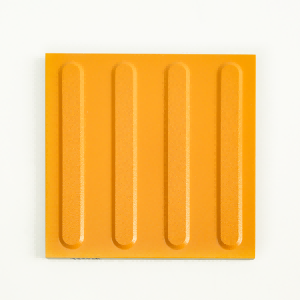
For years, the go-to choice for outdoor paving came down to two options: natural stone, with its undeniable charm, or poured concrete, valued for its uniformity. But both carry significant baggage when it comes to long-term performance. Stone can crack under freeze-thaw cycles, stain from fallen leaves, or lose its grip after years of foot traffic. Concrete, on the other hand, is prone to developing hairline fissures that grow into unsightly breaks, often requiring expensive replacements just a few seasons in. Composite pavers step into that gap with a fundamentally different approach, combining recycled polymers and mineral fillers in a way that directly tackles these weaknesses at the material level.
What sets these planks and tiles apart isn't just the raw mix but how the components are engineered to work together. The polymer matrix gives the paver a slight, built-in flexibility that absorbs stress without cracking—imagine a driveway that can subtly adjust to ground movement rather than fighting it. Meanwhile, the dense composite surface resists moisture from the inside out, so even in climates with heavy rain or snow, water doesn't seep in to cause internal damage. Add in UV inhibitors blended throughout the material instead of just coated on top, and you get a product that holds its color and structural integrity for decades, not seasons. This is durability redefined as a proactive, integrated feature rather than a hopeful byproduct.
Invisible Design: The Psychology Behind Effective Texture Patterns
Texture patterns often operate beneath conscious awareness, yet they profoundly shape how we interact with objects and spaces. The human brain is wired to respond to tactile and visual cues, processing them as signals of quality, safety, or familiarity long before rational analysis kicks in. A subtly rough paper stock or a finely embossed leather grain can trigger associations with durability and luxury, while a smooth, unadorned surface might suggest modernity and efficiency. This silent communication between texture and psyche is the foundation of invisible design—it guides perception without demanding attention, making the user’s emotional response feel instinctual rather than manipulated.
Effective texture patterns also exploit the brain’s pattern-recognition capabilities to enhance usability without overt instruction. A barely perceptible grid on a touchscreen keypad helps fingers locate keys accurately by providing micro-resistance, even though users rarely notice its presence. Similarly, the micro-etching on a high-end camera dial not only improves grip but also reinforces the impression of precision engineering. These choices reduce cognitive load by offloading certain decisions to subconscious sensory processing, making interactions feel more natural. The key is to align texture with function so seamlessly that the user feels smarter or more competent, never suspecting the design’s quiet assistance.
The psychological pull of texture often draws on deep-rooted evolutionary responses—smooth surfaces can evoke feelings of calm and cleanliness, whereas intricate, repeating patterns might inspire fascination or a sense of order. Designers can harness these responses to create environments or products that support specific states of mind: a softly textured wall covering in a clinic might subdue anxiety, while a playful, irregular pattern on a children’s toy sparks curiosity. The invisibility lies in how these elements bypass analytical thinking, directly appealing to the emotional brain. When done well, the user never stops to wonder why a space feels welcoming or an object fits the hand so perfectly—the texture has done its work in the background, shaping experience from the shadows.
When Standards Collide: Navigating Global Tactile Paving Variations
Tactile paving, those textured ground surfaces found in cities worldwide, serves as a critical wayfinding tool for people with visual impairments. However, the intended safety net quickly transforms into a maze when international travelers encounter unfamiliar patterns. A raised dot might mean “stop” in one country but “go” in another, creating dangerous confusion at busy intersections.
Consider the stark differences: Japan’s extensive system uses yellow blister tiles for warning and linear bars for directional guidance, while much of Europe relies on a combination of blister and corduroy patterns. The United States, under the ADA, mandates truncated domes at curb ramps and platform edges but often omits directional guidance strips altogether. This patchwork of regulations means that a visually impaired person navigating from Tokyo’s Narita Airport to London’s Heathrow must mentally switch between tactile languages multiple times.
Navigating these variations requires a delicate balance. International architects and urban planners increasingly adopt hybrid approaches, incorporating both local code and universal design principles. Temporary solutions, like audio beacons or GPS-based apps, can bridge gaps, but the long-term goal remains harmonization. Initiatives like the ISO/FDIS 23599 assist in aligning standards, though true global consistency remains elusive.
Smart Surfaces: Embedding Technology into the Walking Path
Walking routes are no longer just passive pathways. Underfoot, a quiet shift is unfolding—surfaces laced with subtle electronics that sense each step, adjust lighting, and even harvest energy from the rhythm of movement. You might not notice the plates beneath your trainers or heels, but they’re there, turning a stroll into a quiet act of data generation or power contribution.
Beyond the novelty, these smart pathways serve practical ends. Town planners can watch footfall patterns emerge in real time, spotting the alley that needs a new bench or the crossing that’s overdue for a stoplight. At night, edges glow gently only when someone approaches, fading behind them, so path becomes lantern—energy spent only where footsteps ask for it. And when a crack forms or a rooted slab tilts, the surface itself can ping for repair before anyone trips.
The real charm is that the magic stays hidden. Tech nestles into gritstone or resin, leaving the path’s texture and feel unchanged. A gravel lane in a park, a boardwalk near the shore, the town square’s paving—each can carry this intelligence without turning into a gadget showroom. It’s the kind of progress that doesn’t demand attention, just makes the walk a little safer, a little smarter, and a little more responsive to the people using it.
Community Footprints: Stories of Independence Forged by Thoughtful Paving
In a small neighborhood just outside the city core, a simple stretch of pavement became more than infrastructure. When residents noticed that the cracked, uneven walkways were keeping elderly neighbors indoors and making wheelchair navigation a daily hazard, they didn't wait for official intervention. Instead, they pooled resources, studied accessible design, and laid a path that truly considered every step. The result wasn't just a smoother surface—it was the return of morning walks, unassisted trips to the corner store, and the quiet triumph of moving through one's own community without fear.
The real story lies in the details often overlooked: gentle slopes where curbs once stood, tactile edges that guide without announcement, and widened lanes that accommodate side-by-side strolls. A retired teacher who had stopped venturing out after a fall now traces her daily route along this carefully crafted route, her footprints marking a reclaimed sense of agency. Children too find their own independence here, walking to a community garden that was previously cut off by a treacherous intersection. These aren't engineering marvels; they're acts of attention, showing that independence isn't built by grand gestures but by surfaces that invite you to move forward, at your own pace, on your own terms.
FAQ
Tactile paving offers consistent surface indicators that guide visually impaired pedestrians through complex urban spaces, reducing their reliance on memory or assistance. The textured patterns signal upcoming hazards, direction changes, or safe crossings, effectively translating the environment through touch.
Blister domes are primarily installed at crosswalks and platform edges to warn of potential danger, while the linear grooves of corduroy paving guide users along a safe route, such as toward a public facility or along a sidewalk free of obstacles.
Stainless steel and high-impact composite polymers are now favored for their slip resistance, vivid color contrast, and superior endurance against weather and heavy foot traffic. Unlike plain concrete, they retain their texture and luminance without frequent refinishing.
Many modern systems use surface-applied mats or resin-bonded studs that adhere directly over asphalt or stone with minimal excavation. This method allows overnight installation in busy areas, preserving daily access and reducing noise and dust.
High visual contrast—such as bright yellow or white against dark pavement—alerts those with residual sight to upcoming transitions, while also serving as a universal caution cue for all pedestrians. The dual-sensory approach heightens safety in dimly lit or crowded conditions.
Elderly individuals with reduced sensitivity, distracted walkers focused on phones, and parents pushing strollers all subconsciously register the texture changes. Additionally, in snowy regions, the raised patterns remain detectable even when vision is fully obscured.
Guidelines like ISO 23599 and national codes specify exact dome dimensions, spacing, and brightness ratios. This uniformity means a traveler can recognize the same warning pattern whether in Tokyo, London, or New York, fostering intuitive navigation worldwide.
Regular high-pressure washing removes biofilms and grime that compromise grip, while periodic inspection catches loose fasteners early. For resin-applied elements, re-sealing edges every few years prevents moisture ingress that leads to lifting.
Conclusion
The familiar yellow strip is just the starting point—today’s tactile paving systems push far beyond basic guidance. When you look at how composite materials are replacing traditional concrete, it becomes clear that durability and subtle texture can coexist, making paths safer without screaming for attention. The psychology behind effective patterns often goes unnoticed, yet the right rhythm of ridges and dots underfoot quietly shapes confidence, steering pedestrians through complex transit hubs or along busy sidewalks. At the same time, designers wrestle with a patchwork of international standards, meaning a successful system must adapt its language of touch across borders while staying instantly legible to those who rely on it.
The next leap is about weaving intelligence into the walking surface—think embedded sensors that communicate with canes or smartphones, offering real-time hazard warnings or turn-by-turn navigation. But all the tech in the world falls flat without the human stories. In cities that have embraced thoughtful paving, residents talk about reclaiming their commute, about that stretch of textured ground that finally lets them navigate the corner store alone. These systems, at their best, blend material science, behavioral insight, and a global sensitivity into something deceptively simple: a pathway that treats independence not as a luxury, but as a given.
Contact Us
Contact Person: Emma
Email: [email protected]
Tel/WhatsApp: 8618064423698
Website: https://www.beataceramics.com/