

Top 10 Solar Farm Factories in China Powering the Global Clean Energy Shift
2026-07-07
China has quietly become the world’s solar manufacturing powerhouse, with sprawling gigafactories producing panels that now dot landscapes from California to the Sahara. In this countdown, we spotlight the ten factories at the heart of the clean energy surge—massive facilities where innovation meets scale. From fully automated production lines to breakthroughs in perovskite cells, these sites aren’t just assembling components; they’re reshaping how the planet harnesses sunlight. As a trusted partner in the solar ecosystem, Topfencesolar brings you an inside look at the operations driving down costs and accelerating the global shift away from fossil fuels. Which factory claims the top spot? Read on to discover the giants lighting up the future.
How These Factories Became the World’s Solar Powerhouse
In the sprawling industrial parks of Zhejiang and Jiangsu, rows of nondescript factories churn out a product that has reshaped global energy markets. Two decades ago, these facilities were producing textiles and toys. Today, they pump out over 80% of the world’s solar panels. The transformation began in the early 2000s, when local entrepreneurs, eyeing subsidies in Germany and Japan, pivoted from low-margin manufacturing to photovoltaics. They reverse-engineered early panels, invested in cheap labor, and iterated rapidly on production techniques. What set them apart wasn’t a single breakthrough, but a relentless focus on scaling processes that Western competitors had deemed too mature to optimize.
The real inflection point came as provincial governments doubled down on clean energy. State-backed loans flooded into the sector, often at rates that made expansion irresistible. Manufacturers built vertically integrated supply chains, from polysilicon refining to wafer slicing, all clustered within a few hundred kilometers. This density slashed logistics costs and allowed for just-in-time innovation. A tweak in a cell’s busbar design could move from a workshop to a production line in weeks, not months. Critics point to overcapacity and debt, but the results are undeniable: module prices plummeted by over 90% in a decade, making solar the cheapest electricity source in history.
Laboratories tucked behind these assembly lines are often overlooked. In Shaanxi and Guangdong, teams of engineers tinker with perovskite layers and heterojunction cells, filing patents at a pace that eclipses rivals. They operate with a pragmatism that academic labs can’t match—if a new coating saves half a cent per watt, it gets adopted. The workforce, too, is retooled at remarkable speed. Ex-garment workers become technicians on automated soldering machines, their muscle memory adapted to handling ultrathin wafers. This human agility, coupled with policy muscle, has turned a cluster of factories into an energy force that few saw coming.
Inside the Mega-Facilities That Outpace the Rest
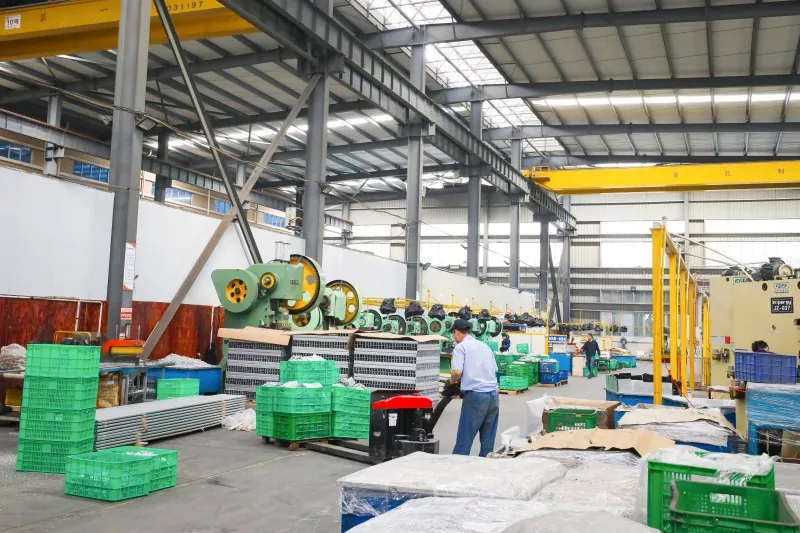
Stepping into one of these vast logistical hubs feels less like entering a warehouse and more like witnessing a carefully choreographed ballet of steel and data. Conveyor systems snake through multi-level structures, each package tracked by a constellation of ceiling-mounted cameras that feed into a central nervous system of machine learning models. The result isn’t just speed—it’s a quiet, humming precision that shifts and adapts in real time, rerouting items around bottlenecks before a human supervisor even notices a blip on the screen.
What truly separates these facilities from their smaller counterparts, though, is how they weaponize vertical space. In ordinary distribution centers, square footage is the ultimate constraint; here, robotic shuttles climb 100-foot storage grids, retrieving goods from dense cubbies no person could reach without a cherry picker. The inventory isn’t arranged by category but by algorithms that place popular items in the most energy-efficient retrieval zones, reshuffling the entire grid overnight based on purchasing patterns streaming in from online storefronts.
Yet the most unsettling advancement isn’t visible on a tour—it’s the predictive staging system. Long before a customer clicks “buy,” these mega-facilities are already positioning products in regional micro-hubs based on aggregated weather data, social media sentiment spikes, and even traffic congestion forecasts. It’s a supply chain that doesn’t just react to demand; it anticipates it with an almost eerie accuracy, turning the old model of warehousing into something closer to a self-writing script for global commerce.
The Innovation Machine Behind Cheaper Solar Energy
Solar energy didn’t become the cheapest source of electricity overnight. It took decades of methodical engineering, factory-floor tweaks, and a relentless push to squeeze more power from every silicon wafer. The real engine behind falling costs is a feedback loop where each new generation of panels builds on the lessons of the last—both in the lab and on the assembly line.
At the heart of this progress lies materials research and manufacturing scale. Early cells converted just a fraction of sunlight into electricity, but steady improvements in crystal purity, anti-reflective coatings, and thin-film alternatives have pushed efficiencies beyond what many thought possible. Meanwhile, razor-thin margins forced automation breakthroughs that now churn out panels with remarkable consistency.
What keeps the momentum going is a culture of incremental gain. Teams across the globe redesign cells to capture more of the spectrum, tweak silver paste patterns to cut costs, and refine lamination methods to extend lifetimes. These small, unglamorous steps compound, and that compounding is why solar gets cheaper every year.
Silicon to Sunlight: Where the Panels Begin
Every solar panel’s journey starts in the crust of the Earth, where quartzite rock is mined and purified into the silicon that forms the backbone of photovoltaic cells. This raw material undergoes an intense transformation—crushed, heated in arc furnaces, and refined to 99.9999% purity—becoming the polysilicon ingots destined to capture sunlight. It’s a process that feels equal parts alchemy and precision engineering, turning sand into the seeds of energy independence.
From those ingots, ultra-thin wafers are sliced with diamond-wire saws, each one a potential power plant smaller than a human hair in thickness. These wafers are then doped with trace elements like phosphorus and boron, creating the electric field that will later separate electrons when photons strike. The artistry lies in balancing conductivity and crystalline structure, ensuring that every wafer can endure decades of weather while converting light into current with minimal loss.
Once the cells are interconnected, laminated, and framed, they emerge as the sleek modules we recognize on rooftops. But the story truly starts with that first moment silicon is pulled from the earth—a reminder that the path from raw element to renewable energy is both profoundly technical and deeply grounded in the planet’s oldest resources.
Global Reach: Exporting Green Energy Across Continents
The vision of a planet powered by clean electricity increasingly depends on energy crossing borders. Countries blessed with abundant sun, wind, or hydropower potential are now positioning themselves as the next generation of energy exporters. It’s a shift that transforms renewable energy from a local solution into a global commodity, shipped not in tankers but through high-voltage cables and future hydrogen pipelines.
This isn’t just theory. Major interconnectors already link the hydro-rich Nordic region to continental Europe, while ambitious projects like Xlinks aim to send Moroccan solar and wind power directly to the UK. The infrastructure is complex and the investments enormous, but the logic is compelling: sharing clean power across time zones and climates makes grids more resilient and helps decarbonize regions that lack domestic renewable resources.
Beyond electrons, the trade in green molecules is emerging. Hydrogen produced in renewable-rich areas can be stored, transported, and used as a carbon-free fuel or industrial feedstock. From Australia’s plans to ship liquid hydrogen to Japan and South Korea, to Europe’s partnerships with North African nations for green ammonia, the foundations of a global green energy market are being laid—quietly redrawing trade routes and energy alliances in the process.
The Next Leap: What’s Coming in Solar Manufacturing
The solar manufacturing landscape is on the verge of a dramatic shift. While silicon-based panels dominate today’s market, next-generation materials like perovskites are moving from lab scale to pilot lines. These materials offer the potential for higher efficiencies at lower production costs, and they can be applied as thin films on flexible substrates. This opens doors to new form factors—imagine solar cells integrated into building materials or curved surfaces. At the same time, tandem cell architectures that stack perovskite layers atop traditional silicon are inching closer to commercial reality, promising to break through the efficiency ceiling that has long constrained single-junction cells.
Beyond materials, the factory floor itself is getting smarter. Advanced robotics and machine vision systems are taking over tasks that once required human dexterity, from wafer handling to quality inspection. Real-time data analytics fed by IoT sensors allow manufacturers to fine-tune every stage of production, slashing waste and boosting yield. Additive manufacturing techniques are even being explored to print circuitry directly onto cells, eliminating steps in the supply chain. These leaps aren’t just about making better panels—they’re about fundamentally reshaping how quickly and flexibly the industry can scale to meet global energy demand.
FAQ
China's dominance stems from massive investments in clean energy, a complete supply chain, government support, and economies of scale that drive down costs.
They produce around 80% of the world's solar panels, making solar energy more affordable and accessible worldwide, accelerating the shift away from fossil fuels.
They're pushing advances in perovskite cells, bifacial panels, and automated production lines that boost efficiency and slash manufacturing costs.
Many now run partly on renewable energy, recycle water, and use closed-loop systems to minimize waste, though there's still room for improvement.
LONGi Green Energy, Jinko Solar, Trina Solar, and JA Solar are among the giants, each with gigawatt-scale factories.
Massive production scale and continuous efficiency gains have driven down the cost per watt by over 90% in the last decade, democratizing solar power.
No, the vast majority of their output is exported, supplying major projects from the US to Europe to emerging markets in Africa and Asia.
Trade barriers, raw material supply issues, and the need to constantly innovate to stay ahead are ongoing hurdles.
Conclusion
China’s top solar farm factories have grown into the backbone of the global clean energy shift, combining sprawling mega-facilities with relentless process innovation to push down costs year after year. Walking through a single plant, you witness the full journey from raw silicon purification to finished panels rolling off the line at lightning speed—a vertically integrated machine that few other nations have been able to replicate at comparable scale. These factories don’t just churn out volume; they embed a culture of rapid iteration that has shrunk per-watt prices dramatically, turning solar from an alternative into the cheapest source of new electricity in many parts of the world. By obsessively fine-tuning every step, from diamond-wire wafer slicing to advanced cell architectures, they’ve managed to stay ahead even when global supply chains wobbled, reinforcing their role as the planet’s solar powerhouse.
That manufacturing muscle now reaches every continent, with container ships carrying gigawatts of panels from Chinese ports to utility-scale projects in deserts, on water, and across vast rural landscapes. The sheer diversity of destinations—from South American highlands to Middle Eastern sun belts—reflects how deeply these exports have become embedded in national decarbonization plans. Meanwhile, behind factory gates, the next leap is already taking shape: tandem perovskite-silicon cells, fully automated smart lines, and ultra-low-carbon production methods that reimagine how panels are made. Rather than resting on their laurels, these factories are investing heavily in R&D to crack the efficiency ceiling and drive down the carbon footprint of manufacturing itself, signaling that the coming decade could transform the industry just as profoundly as the last one did.
Contact Us
Contact Person: Nancy
Email: [email protected]
Tel/WhatsApp: +86-13365923720
Website: https://www.topfencesolar.com/