

Top 10 Main Door Companies from China Worth Considering for Your Home
2026-11-16
When it comes to choosing a main door for your home, the options can feel endless—but not all manufacturers are created equal. China has quietly become a global hub for door innovation, blending traditional craftsmanship with modern security and design. Among the many names worth knowing, FANSI stands out for its fire-rated doors that don't compromise on style. In this list, we've narrowed down ten Chinese door companies that deserve your attention, each offering something unique—from bespoke finishes to bulletproof durability. Ready to find the perfect entryway that balances safety, aesthetics, and value? Let's open the door to what China has to offer.
What Actually Separates a Good Chinese Door Factory from the Rest
A good Chinese door factory rarely advertises itself as 'good.' Instead, you see it in the small things: raw material batches that match the approved samples months later, edge banding that stays flush after a humid season, and hardware recesses cut with the same tolerance on the first door and the five-hundredth. Many factories can produce a photogenic first article. Far fewer can keep that standard when the order volume climbs, the deadline tightens, and the client is eight time zones away.
The real difference often lives in middle management and documentation. Strong factories photograph and label every stage—frame assembly, veneer pressing, hinge routing, finish application—and share those images without being asked. They flag a slight grain mismatch before it reaches the spray booth, not after the container is sealed. Their QC sheet is not a formality; it records actual measurements for each door, from diagonal squareness to moisture content. That habit prevents the kind of slow drift that turns a premium order into a costly claim.
Communication is another quiet separator. A dependable factory responds with specifics: which CNC program was used, when the glass will arrive, why a hinge supplier changed. They do not promise 'best quality' and then disappear for two weeks. They are comfortable saying no to a finish that will fail, even if it means losing a deposit. Over time, that honesty costs less than a warehouse full of doors that nobody wants to sign for.
Materials and Finishes You'll Want to See in Person
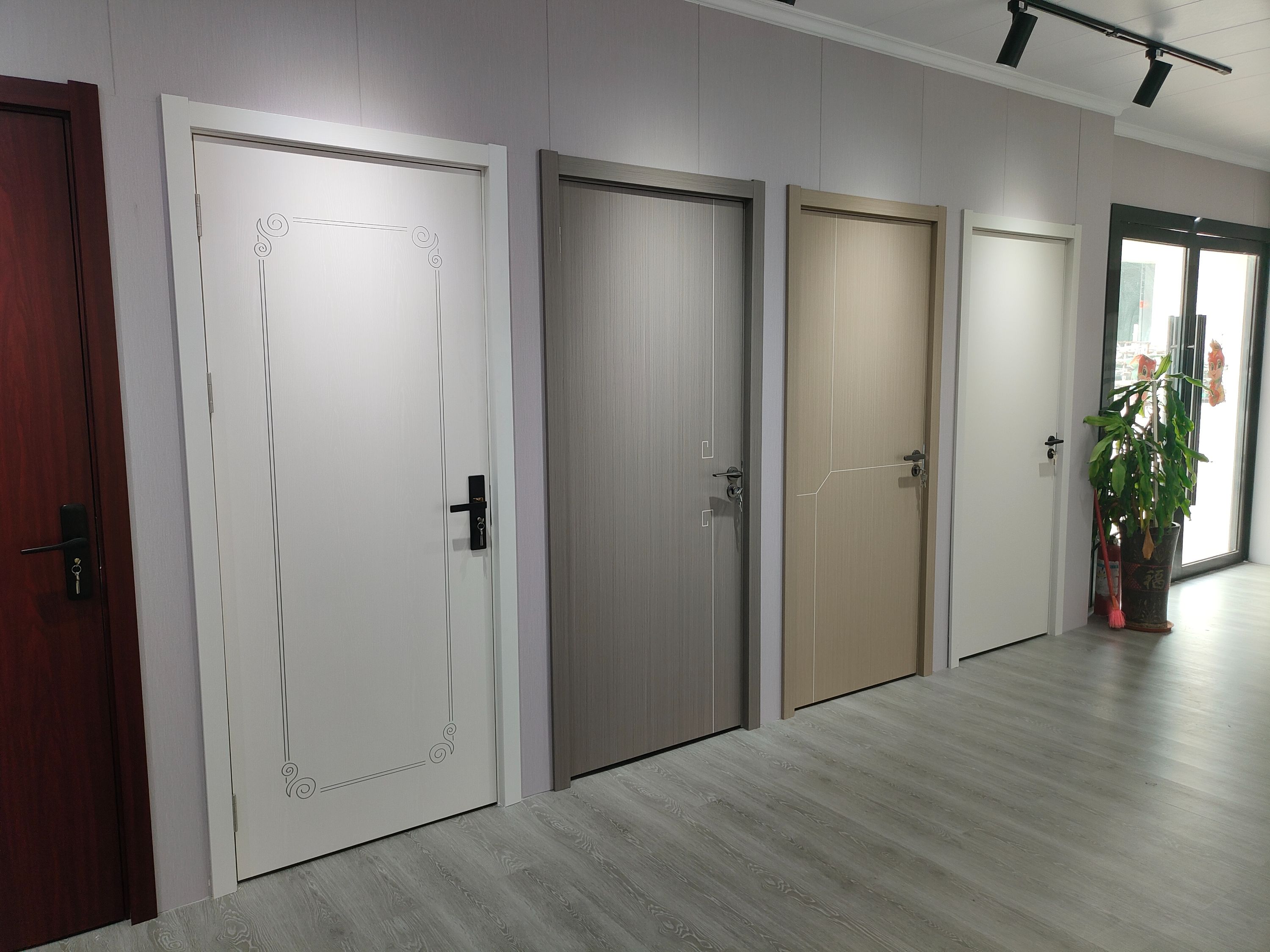
A photograph can only tell you so much about a brushed brass handle or a honed marble countertop. The way light catches a micro-bevelled edge, the subtle grain variation in white oak veneer, or the cool, slightly textured feel of a limewash wall—these details rarely translate through a screen. When you run your fingers across a surface, you pick up on the depth of a stain, the softness of a matte lacquer, and the weight of a solid metal pull, all of which shape the daily experience of a room far more than any spec sheet suggests.
Some finishes demand a closer look under different lighting conditions. A high-gloss lacquer can shift from deep charcoal to near-black with a hint of blue depending on the time of day, while a natural clay plaster reveals faint trowel marks that add organic movement to a wall. Even something as simple as a satin versus a semi-gloss paint becomes obvious only when you see it at eye level and from an angle, where sheen levels and roller texture finally show up.
If you are torn between two options—say, a wire-brushed oak floor and a smooth, hand-scraped version—ordering physical samples can help, but nothing beats visiting a showroom or a local maker’s workshop. Seeing a full door slab or a large tile laid out flat lets you judge colour consistency, edge detailing, and how the finish reacts to your own touch. Trust your hands as much as your eyes: the right material should feel as good as it looks when you are standing right in front of it.
Custom Door Orders: Where 'Made to Measure' Gets Real
A tape measure, a slightly warped door frame, and a client who insists the opening is “standard.” That’s where custom door orders stop being a catalogue fantasy and start demanding actual numbers. We don’t guess at millimetres or pretend that every hallway was framed by a perfectionist. Instead, each order begins with a field check that accounts for uneven floors, out-of-plumb studs, and hinge placements that have shifted over decades.
What most people don’t expect is how quickly “made to measure” turns into a conversation about materials and movement. A solid oak slab will expand and contract with the seasons, so we calculate clearance differently than we would for a painted MDF door. The swing direction, the latch backset, even the thickness of a rug in the next room can change the final dimensions. That level of detail isn’t fussiness—it’s the difference between a door that closes with a soft click and one that sticks on the first humid afternoon.
Once the measurements are locked, fabrication gets real in a quieter way. Curved archways, extra-tall openings, or a need to match century-old trim profiles mean every piece is cut, joined, and finished for that one specific doorway. There’s no warehouse rack of near-enough sizes. The result is a door that fits the space, the climate, and the way the household actually moves through it—not just the way it looked in a showroom photo.
Pricing Myths and What a Fair Quote Should Include
Pricing myths often start with the assumption that a lower quote means better value. In reality, a fair quote reflects the actual scope of work, the expertise required, and the time needed to do the job properly. When someone tells you they can do it for half the price, what they're really saying is they'll cut corners somewhere — maybe in materials, maybe in craftsmanship, or maybe in the communication that keeps a project on track. A fair quote doesn't hide behind vague line items; it breaks down exactly where your money goes, from labor and materials to contingency buffers for unexpected issues. That transparency is rare, and it's worth paying for.
Another myth is that a quote is just a number. A genuinely fair quote includes context: who will actually be doing the work, what happens if something goes wrong, and how changes will be handled once the project starts. Skilled professionals factor in their own liability, insurance, and the cost of doing things right the first time. If a quote doesn't mention a timeline, a payment schedule, or a clear scope of work, it's not a quote — it's a guess. You deserve better than a guess.
Finally, some people believe that negotiating down a quote means they've won. But a fair quote already balances profit with value; squeezing it only encourages the provider to rush, substitute cheaper materials, or disappear when problems arise. Instead of haggling, ask what's included and what isn't. A professional who stands behind their number is usually the one who'll stand behind their work.
Lead Times, Shipping, and What Nobody Tells You About Imports
Import lead times are rarely what the supplier quotes. A factory might promise 30 days, but that clock usually starts after payment confirmation, tooling adjustments, and sample approval—none of which appear on the proforma invoice. Then add consolidation waits at the port, customs holds, and trucking delays that no one owns end-to-end. The real timeline often stretches 60 to 90 days, and the only honest way to plan is to pad every number by half again.
Shipping costs hide more than fuel surcharges. A container rate looks fixed until you learn about terminal handling charges, documentation fees, port congestion surcharges, and the security fees that appear on the bill of lading like line items from a magician's sleeve. Many first-time importers budget for freight but forget demurrage and detention—those per-diem charges when a container sits too long at the port or your warehouse doesn't unload fast enough. One missed pickup can erase your margin on the entire shipment.
Nobody warns you about the paperwork fatigue. A single shipment can demand a commercial invoice, packing list, bill of lading, certificate of origin, insurance certificate, and sometimes a phytosanitary certificate or import license—each with exact wording that must match across documents. One typo in the HS code or a mismatch between the invoice and packing list can hold your goods at customs for weeks. The import brokers won't chase these details for you; they just file what you give them. The lesson is simple: if you aren't bored to tears double-checking every line, you aren't ready to import.
After the Sale: Support, Spare Parts, and Warranty Honesty
A purchase doesn't end when the invoice is paid. We keep a running stock of spare parts for every model we sell, not just the current lineup. If a component fails, you won't be told to buy a whole new unit. We'll ship the exact part with clear replacement instructions, usually within two business days.
Our warranty terms are written in plain language. No fine print that suddenly excludes the exact thing that broke. If a defect is covered, we fix it or replace it, and we cover the return shipping. You deal with one support contact from start to finish, not a call-center maze.
The real test is how a company behaves six months after the sale. We'd rather lose a few dollars on an honest repair than lose a customer who needed straight answers. Ask us anything about ongoing maintenance, wear-and-tear limits, or what to keep on hand. We'll tell you what actually matters, not what sounds good in a brochure.
FAQ
They can be if you filter by export track record. Look for factories that have done container loads to Europe or North America, not just domestic sales. Ask for reference photos of installed doors in your region, and check if they use marine-grade coatings for coastal areas. The better ones use galvanized steel or thermally broken aluminum and will send a sample corner before production.
You'll see two main routes: galvanized steel with a wood-grain transfer finish, and 6063 aluminum with a thermal break for better insulation. Some higher-end workshops also do solid wood cores or composite panels. Avoid raw cold-rolled steel without proper anti-rust treatment. A thicker leaf, around 1.5 to 2 mm steel, and a multi-point locking strip usually indicate a sturdier build.
Most export-oriented factories handle custom widths and heights without charging a huge premium. Standard Chinese residential doors often run 960 mm wide, which may be too narrow for some buildings. If you need 1000 or 1100 mm, that's usually a simple CAD change. The real limit is your door frame: if the wall is not plumb or the opening is oversized, you may need to order a custom subframe.
Don't assume a 'security door' label means the same as your local standard. Ask if the door has been tested to EN 1627 or similar, not just a Chinese Grade A stamp. For fire doors, request a test certificate from a recognized lab and check the intumescent strip is actually fitted. Some factories will install multi-point locks by Hoppe, Roto, or Siegenia on request, which makes a real difference.
For a single custom main door, count on 25 to 40 days of production after the final drawing is approved. Shipping to a major port in Europe, North America, or Australia then takes 15 to 40 days depending on route and whether it's LCL or a full container. Add customs clearance and local delivery. In total, plan around 10 to 14 weeks from payment to receiving the door.
The biggest one is not confirming the swing direction and hinge position on the drawing. Another is ignoring the threshold and weather seal design. People also assume the handle hole is standard for their local hardware, but Euro profile cylinders and Chinese mortise locks don't always match. Finally, paying the balance before a detailed pre-shipment video can leave you with little leverage if the color or size is wrong.
Yes, the stronger factories can supply a full entrance system: door leaf, frame, adjustable sill, sidelights, and transom panels. Many will pre-drill for a mortise lock or install a smart lock you specify, as long as it fits the backset. If you want a one-piece look, request that the sidelight profiles match the door's finish exactly, and confirm the glazing beads are thermally broken if you live in a cold area.
Conclusion
The real difference between a forgettable door supplier and one worth your time often comes down to details you won't see in a brochure. A solid Chinese factory will let you inspect raw material batches, show you how their finishing line handles humidity control, and have no problem sending a video of the exact door being built for your order. Materials matter more than marketing: ask for physical samples of the actual wood species, not just a color swatch, because the same "oak" can look completely different depending on the cut and stain. Custom work is where many manufacturers fall apart, but the better ones treat made-to-measure as standard practice—odd angles, unusual heights, double rabbets, whatever your opening demands. If a company only offers fixed sizes and pushes you toward their stock list, that's a signal to keep looking.
Pricing in this market is rarely as simple as the headline number. A quote that looks cheap often leaves out crating, hardware, taxes, or the cost of replacing doors damaged in transit. A fair price should itemize everything from hinges and locks to the packaging that survives a month at sea. Lead times are equally slippery: production might be six weeks, but port congestion and customs clearance can stretch delivery to four months. Reputable suppliers will give you a realistic window and update you proactively. After the sale matters just as much. Ask directly about spare parts availability and whether the warranty covers dimensional stability or just manufacturing defects. A factory that admits limitations and still stands behind its product is far more valuable than one that promises perfection and disappears after the final invoice.
Contact Us
Contact Person: Liam
Email: [email protected]
Tel/WhatsApp: (+86)16658531012
Website: https://www.fansifiredoor.com