

Top 10 All-in-One BESS Solutions That Simplify Energy Management
2026-11-02
Energy management shouldn’t feel like solving a puzzle with missing pieces. Yet for many facility managers, juggling storage capacity, peak shaving, and backup readiness quickly becomes overwhelming. The good news? A new wave of all-in-one BESS platforms is cutting through the clutter. In this roundup, we break down ten standout solutions—including options from UNC—that bundle hardware, software, and controls into one neat package. Whether you're upgrading a commercial site or planning a microgrid, these systems promise less guesswork and more uptime.
What Makes All-in-One Battery Storage a Practical Choice for Busy Teams
For teams juggling constant deadlines, the last thing anyone needs is a power backup that demands its own project manager. All-in-one battery storage strips away the usual vendor shuffle by combining the inverter, battery modules, and energy management into a single cabinet. That means one delivery, one installation crew, and one point of contact when questions come up. It is the difference between coordinating three separate contractors and simply scheduling a morning of work.
Beyond installation, the practical benefits show up in daily use. Busy teams rarely have time to babysit equipment, so these systems are built to self-manage: automatic load shifting, remote firmware updates, and fault alerts that go straight to a phone or dashboard. Add in a compact footprint that fits in a parking garage corner or a mechanical room already crowded with other gear, and you get backup power that quietly does its job without stealing hours from the people who have real work to do.
Why Energy Managers Are Rethinking Their Storage Setup
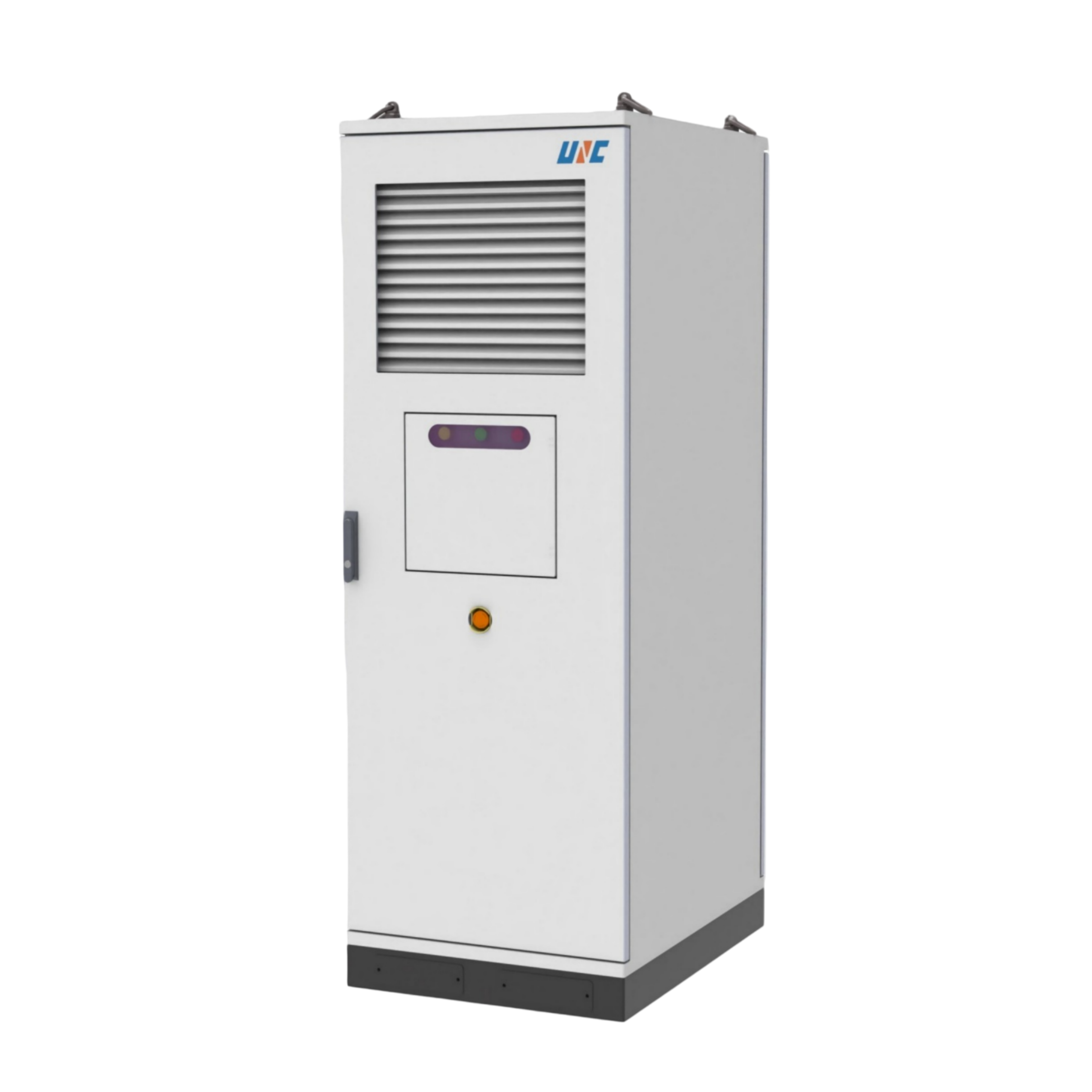
For years, the default approach to industrial energy storage was simple: install enough lead-acid batteries to cover the worst-case outage and forget about them until something failed. That mindset is shifting fast. Facility managers now face pressure from volatile utility rates, tighter emissions targets, and the unpredictable loads of EV fleets and on-site renewables. A storage system that merely sits idle for emergencies no longer earns its footprint. Instead, the new priority is flexibility—systems that cycle daily, shave peak demand, and shift solar output into evening hours without degrading prematurely.
The technology itself has also changed the calculus. Lithium iron phosphate packs, with their longer cycle life and deeper usable capacity, make frequent cycling financially viable in ways older chemistries never could. Meanwhile, software has moved from basic monitoring to predictive control, allowing storage to respond to price signals or grid constraints in real time. Energy managers are discovering that a properly sized battery can pay for itself through demand charge reductions alone, not just serve as insurance. That economic shift is pushing them to revisit system architectures that were designed a decade ago around entirely different assumptions.
Then there's the practical friction of legacy installations. Cramped battery rooms with corrosive fumes, watering schedules, and unexpected thermal runaway risks no longer fit a workforce that expects remote diagnostics and modular replacement. Modern storage setups integrate with building management systems, accept firmware updates, and scale in smaller increments. For the energy manager, rethinking storage isn't just about upgrading hardware—it's about moving from a reactive, maintenance-heavy burden to a dynamic asset that actively contributes to the bottom line every single day.
The Top 10 BESS Units That Deliver Simplicity Without Sacrificing Power
Most battery energy storage systems force a choice: either you get a plug-and-play unit that underdelivers during peak demand, or a muscular powerhouse that requires a dedicated engineer to keep it running. The ten models on this list break that trade-off. They pair clean, nearly tool-free installation with inverters and battery modules rated for continuous high output—some pushing 10 kW or more from a single cabinet. Homeowners and small commercial operators can realistically commission one of these units over a weekend, yet still back up an entire HVAC load or run a workshop without the system tripping.
What separates these units from the dozens of alternatives isn't raw capacity alone—it's how the controls are handled. Instead of burying essential settings in multi-level menus, the best of this group use a single dashboard to manage charge windows, generator fallback, and load shedding. A few, like the latest stackable lithium iron phosphate (LFP) cabinets, even auto-configure voltage and phase when you add a second or third module. No dip switches, no laptop software, no phone calls to tech support just to change a discharge threshold.
Power density also gets a serious rethink here. Several units in the top 10 use a modular architecture where each 5 kWh block carries its own inverter logic, so adding storage scales output proportionally rather than bottlenecking through a separate central inverter. The result is a system that starts small enough for a cabin but can grow to run a 200-amp service. That kind of flexibility, combined with simple wall-mount brackets and pre-wired busbars, is why these ten stand out—not as stripped-down "starter" batteries, but as full-strength storage that happens to be easy to live with.
How Integrated Energy Storage Takes the Stress Out of Peak Demand
Peak demand has always been the grid’s most uncomfortable hour—utilities scramble, prices spike, and infrastructure runs hot. Integrated storage changes that dynamic by absorbing excess energy during off-peak lulls and releasing it exactly when demand would otherwise peak. This isn’t just shifting electrons; it’s giving the system room to breathe without forcing constant generation ramping.
The real relief shows up in how storage flattens the demand curve. Instead of a sudden spike at 6 p.m., the stored energy kicks in smoothly, reducing the need for expensive peaker plants and voltage support. For commercial and industrial sites, that translates to lower demand charges and fewer thermal overloads on transformers and switchgear.
Perhaps the biggest overlooked benefit is predictability. When storage handles the top slice of demand, operators can plan maintenance, avoid emergency purchases, and extend equipment life. The grid stops lurching from one crisis to the next and starts behaving like a system with spare capacity—even when the thermometer says otherwise.
A Closer Look at Turnkey Battery Systems That Just Work
Many people assume that installing a battery system means hours of wiring, programming, and guesswork. Turnkey battery systems flip that assumption on its head. These units arrive fully assembled, pre-wired, and tested, so the only thing left to do is connect them to your power source and load. There is no need to hunt down compatible inverters or charge controllers—everything is already matched and tuned to work together from the first switch-on.
The “just work” part comes from the fact that manufacturers have already done the heavy lifting. They integrate the cells, battery management system, and often an inverter into a single enclosure, then run each unit through a battery of quality checks. What you get is a system that behaves predictably under real-world conditions, not a bundle of parts that might work if you set them up perfectly. That predictability is what makes turnkey systems a favorite for off-grid cabins, backup power, and even mobile applications where downtime is not an option.
Of course, no system is truly plug-and-play in every scenario, but turnkey battery systems come closer than anything else. The learning curve shrinks from days to minutes, and the risk of a wiring mistake or mismatched component drops to nearly zero. If you value your time and want a power solution that simply runs, these systems are worth a close look.
From Setup to Savings: Where All-in-One Solutions Really Shine
Most teams don’t start with a grand integration strategy. They start with a spreadsheet, a scheduling tool, and a shared inbox that quickly becomes a black hole. The moment those pieces stop talking to each other, the “free” tools start charging in hidden ways: duplicate data entry, missed handoffs, and the slow erosion of trust in your own numbers. An all-in-one solution removes those seams before they appear, so setup feels less like a migration and more like moving into a place where the furniture already fits.
That early simplicity compounds. Instead of paying for three or four point solutions and then hiring a consultant to stitch them together, you pay for one coherent system. The savings aren’t just on license fees; they’re in the hours your team no longer spends reconciling records or rebuilding reports that should have been automatic. Every feature shares the same data layer, so when you update a client’s status, it’s reflected everywhere without a manual sync.
Real shine happens a few months in. When someone asks for a forecast or a capacity plan, you don’t schedule a week-long data project. You pull it from the same dashboard you already use. That’s where all-in-one platforms earn their keep: not in the demo, but in the quiet afternoons when a task that used to take half a day now takes two minutes.
FAQ
They combine inverter, battery modules, BMS, and often EMS in a single enclosure, reducing installation complexity and letting users monitor and control everything from one interface.
Many include built-in peak shaving and load shifting algorithms that automatically charge during low-rate periods and discharge when tariffs spike, without manual reprogramming.
Yes, several models feature hybrid inverters with seamless islanding, so the same cabinet can back up critical loads during outages and export or arbitrage when the grid is stable.
Liquid cooling or smart forced-air designs keep cells within a narrow temperature band, which extends cycle life and allows higher continuous power output in compact footprints.
Several entries in the top 10 are modular and scalable downward to 5–10 kWh cabinets, making them practical for homes that want solar self-consumption plus outage protection without extra components.
Because wiring, protection, and communication are pre-integrated and factory-tested, installers often only need to connect AC, PV, and ground—cutting site work from days to hours.
Leading units ship with updatable firmware and pre-certified grid profiles, so the same hardware can adapt to new interconnection standards through a remote update rather than a hardware swap.
Beyond capacity and power, check the round-trip efficiency at partial load, warranty coverage for throughput, and whether the EMS can integrate with existing building management or SCADA systems.
Conclusion
The push toward simpler energy management has pushed all-in-one battery energy storage systems into the spotlight. For busy teams, juggling separate inverters, battery racks, and software platforms eats time that could go elsewhere. A single cabinet with integrated controls removes that friction. Energy managers who once patched together hardware from different vendors are reconsidering. Why? Because fewer touchpoints mean fewer failure points, clearer warranties, and one support line when something acts up. The strongest BESS units in this category don't trade away muscle for convenience; they hold solid discharge rates and scalable capacity while shrinking the install footprint. Peak demand, the usual budget killer, becomes easier to handle when the system's software automatically discharges stored power during high-cost windows. No manual switching, no guesswork.
Turnkey systems earn their keep by arriving pre-wired and factory-tested, so on-site commissioning turns from a week-long headache into a short checklist. That's where the real savings appear: not just in lower utility bills, but in reduced labor, fewer trips back to fix loose connections, and less downtime during upgrades. The best all-in-one solutions shine in that quiet stretch after setup, when they keep clipping demand charges month after month without demanding attention. Busy teams can finally treat storage as background infrastructure instead of a side project. Standing out among the top 10 are units that pair straightforward monitoring dashboards with automatic peak shaving, giving operators a clear view without drowning them in data. Simplicity, when done right, doesn't mean basic; it means everything needed is already in one box, ready to work.
Contact Us
Contact Person: Manager Leng
Email: [email protected]
Tel/WhatsApp: 8613764878967
Website: https://www.unc-energy.com