

Tire Inner Tube Production Line Factory: Key Processes and Innovations
2026-10-04
Think tire inner tubes are simple rubber donuts? Think again. The modern production line is a high-stakes blend of chemistry, thermal control, and automation—where a fraction of a millimeter can mean the difference between a long-haul success and a roadside disaster. From extrusion to vulcanization, each step hides secrets that separate world-class factories from the rest. In this article, we'll pull back the curtain on the key processes and innovations reshaping tire inner tube manufacturing. Along the way, you'll see why companies like AUGU AUTOMATION are at the forefront of this quiet revolution.
Mixing It Right: Custom Compound Blends for Different Tube Grades
Getting the compound blend right for a specific tube grade isn't just about tossing ingredients together—it's a balancing act between processing behavior, end-use performance, and cost. Each grade demands its own formulation philosophy. For instance, a high-pressure hydraulic tube needs a blend that prioritizes long-term heat resistance and low compression set, often leaning on a higher loading of reinforcing fillers and a sulfur-cured backbone. Meanwhile, a food-grade suction hose might swap out traditional plasticizers for phthalate-free alternatives and use a peroxide cure to meet cleanliness standards without sacrificing flexibility. The trick is knowing which knobs to turn: polymer ratio, filler type, oil level, and cure package all shift the final properties in ways that aren't always obvious from a datasheet.
One common mistake is over-engineering a blend for a tube that will never see harsh conditions. A general-purpose air hose doesn't need the same heat stabilizer package as an engine coolant line, and adding unnecessary additives just drives up cost and can even hurt processability. Instead, start with the real-world failure modes: Is the tube exposed to ozone, hot oil, abrasive slurries, or repeated flexing? Then build the blend backward from those stresses. Sometimes a simple change—like switching from NBR to a carboxylated variant or adjusting the carbon black structure—delivers a bigger improvement than piling on more ingredients.
Mixing also matters as much as the recipe itself. Even the best formulation falls apart if the fillers aren't dispersed properly or the cure system kicks off too early during extrusion. Two-stage mixing, where the elastomer and fillers are blended first and curatives are added in a second pass, gives better control over scorch safety and batch-to-batch consistency. For high-performance tube grades, using an internal mixer with precise temperature ramps beats open-mill mixing every time. And don't forget to age test the final tube—what works fresh off the line might stiffen or crack after six months in a hot engine bay, so the blend needs to hold up over the product's actual service life.
Extrusion Lines That Keep Wall Thickness Within a Hair
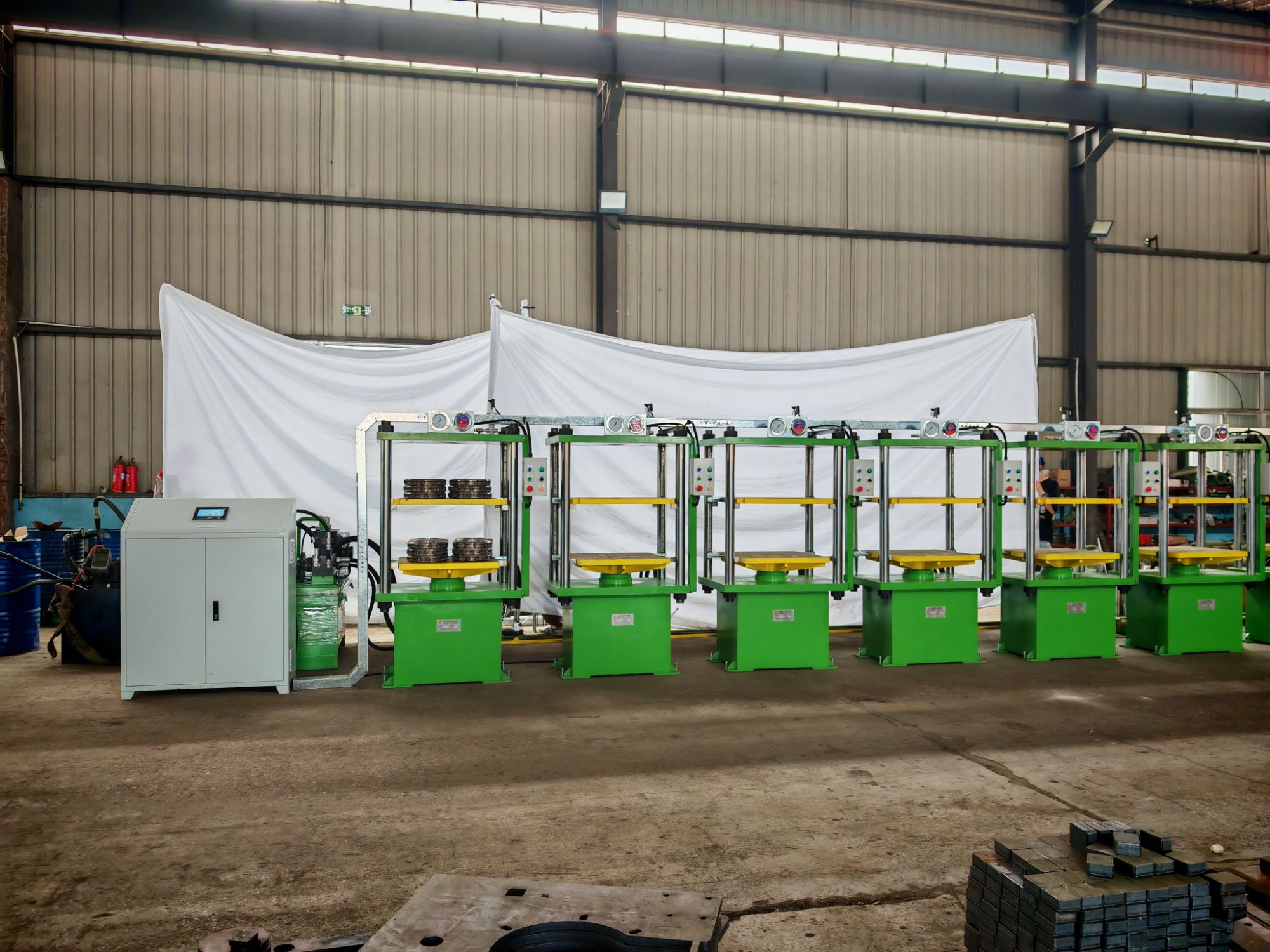
Maintaining wall thickness within a hair's breadth on extrusion lines is less about a single magic setting and more about how the melt behaves under pressure. Even a slight variation in screw speed or a temperature drift of two degrees can push the polymer flow into a different pattern, leaving thin spots that only show up after the tube has cooled. Operators who have run these machines for years learn to read the subtle cues: a faint ripple on the surface, a change in the sound of the puller, or a surge on the melt pressure gauge that lasts half a second too long.
Modern lines close this loop with in-line ultrasonic or laser measurement, but the real difference comes from how the control system reacts to that data. Instead of waiting for a trend to form, the best setups adjust the air ring and haul-off speed in tiny, continuous steps, almost like trimming the edge of a blown film bubble with your fingertips. The result is a wall that stays uniform enough to hold its roundness under vacuum, without the heavy gauge bands that used to be accepted as normal.
Splicing Without Weak Spots: The Art of Joint Integrity
A joint is rarely the strongest part of an assembly, but it does not have to be the weakest. The moment two lengths of material meet, the load path narrows, and every imperfection at that interface becomes a potential starting point for failure. True joint integrity is not about hiding the seam—it is about making the seam as predictable as the surrounding material. This begins with understanding how forces travel through the splice: tension wants to pull fibers apart, shear wants to slide surfaces, and bending wants to peel the joint open. A well-designed splice acknowledges each of these forces and gives them a clear, uninterrupted route.
In practice, the art lies in preparation. Surfaces must be clean, dry, and lightly roughened so that adhesives or friction can bite. For rope or cable, the twist and lay of the strands should be matched rather than fought—untwisting a few inches, interweaving the ends, and then letting the natural tension re-seat the fibers creates a mechanical lock that no knot can match. In wood, a scarf joint cut at a shallow angle exposes more long-grain surface, turning a brittle butt connection into a gradual transfer of stress. The common thread is patience: slow, deliberate alignment beats force every time, because a joint forced into place will always carry that tension inside itself.
Finally, verification separates a confident splice from a hopeful one. Flex the joint through its expected range of motion, then push it a little further. Look for any change in stiffness, any crackling sound, or any visible gap at the edges. A good joint will feel like one continuous piece, not two pieces holding hands. If the material fails in testing, it should fail away from the splice—proof that the joint is no longer the weak spot. When that happens, the splice has stopped being a repair and has become the strongest story in the structure.
Vulcanization Tweaks That Cut Cycle Time Without Sacrificing Durability
Shortening vulcanization cycles often feels like a trade-off: push the cure too fast and you risk under-crosslinked rubber with poor fatigue life; play it safe and your press sits idle while competitors ship more units. The trick lies in rethinking the heat history rather than simply cranking up temperature. Adjusting the reversion-resistant accelerator package can shift the cure curve to reach optimum crosslink density earlier, without the steep scorch risk that typically accompanies aggressive acceleration. In practice, this means replacing some of the primary sulfenamide with a small dose of a secondary ultra-accelerator, effectively flattening the plateau and letting you demold sooner while keeping tensile retention and tear strength intact.
Another overlooked lever is the pre-vulcanization stage of the compound itself. By fine-tuning the filler surface activity—whether through silane coupling adjustments or a partial substitution of carbon black with surface-treated silica—you reduce the heat sink effect during the early minutes of the cycle. The rubber reaches its activation energy faster, trimming the induction period without altering the final network density. We've seen cycle time drops of 8–12% on injection molded parts simply from this rebalancing, with abrasion resistance and compression set staying within spec.
Don't ignore the mold geometry and venting either, since trapped air pockets act as insulators that slow local cure and force longer holds. Better vent placement or micro-textured mold surfaces allow the rubber to flow and fill thinner sections sooner, so the whole part sees full temperature earlier. Combined with a slightly lower mold temperature but longer post-cure, this approach sidesteps the brittleness that comes from high-temperature vulcanization, giving you a shorter press cycle and a part that still passes long-term aging tests.
Machine Vision and Air-Loss Tests: A Zero-Leak Standard
On the production floor, machine vision doesn't just look for obvious cracks. It maps subtle surface irregularities around seals, welds, and mating surfaces that can turn into leak paths under pressure. Air-loss testing then quantifies what the camera suspects—applying a precise pressure differential and measuring decay over milliseconds.
The zero-leak benchmark isn't a single pass/fail number. It's a layered criterion: visual inspection must confirm geometric conformity, while the pressure decay curve stays below a threshold calibrated for each part family. Any drift beyond a few pascals triggers an automatic reject, but more importantly, it flags the upstream process variable responsible.
What makes this combination effective is timing. Vision catches defects before assembly or right after sealing, when rework is still cheap. Air-loss testing validates the final integrity under load. Together they close the gap between statistical sampling and 100% verification, which is why zero-leak claims now hold up in warranty audits rather than just marketing slides.
From Batch Records to Real-Time Dashboards: The Digital Shift on the Floor
Ten years ago, the most important document in a plant was often a smudged batch record hanging from a clipboard. Operators filled in readings after the fact, sometimes from memory, because stopping mid-task to write things down felt like a distraction. Supervisors collected those sheets at shift end, sorted them into binders, and only then started looking for patterns. By the time anyone noticed a drift in cycle time or a recurring temperature spike, the problem had already produced a week's worth of questionable output.
Now that same information streams onto dashboards above the line and on tablets in supervisors' hands. The data isn't a backward glance; it's a live feed. A press operator can see her machine's stroke count climbing past its normal band and call maintenance before a breakdown. A quality lead watches moisture readings tick upward on a dryer and adjusts airflow during the run, not after lab results come back two days later.
What's easy to miss is that the dashboards didn't just speed up reporting—they moved the decision point. The person who can fix an issue now sees it first, not the analyst who used to compile end-of-week reports. That shift, from documenting what already happened to seeing what's happening right now, is what actually changes how a floor operates.
FAQ
Raw rubber gets mixed with carbon black, processing oils, and curing agents in an internal mixer. The batch is then sheeted out and cooled to prevent premature vulcanization before being fed into the extruder.
Laser sensors scan the tube circumference continuously during extrusion, catching thickness drift within seconds. Older contact gauges often missed thin spots near the splice area, which led to blowouts later.
A poorly spliced joint creates a weak point that can separate under heat and pressure. Modern factories use hot-knife or ultrasonic splicing with automatic pressure control to create a bond nearly as strong as the parent material.
Many plants now use nitrogen-filled curing systems with variable-frequency drives on hydraulic pumps. This cuts steam consumption by roughly 20 percent and shortens cycle times without risking under-cure.
Dust and loose rubber particles are controlled by enclosed conveyors, ionized air rinses, and tacky mats at operator stations. Some lines also use vision systems to reject tubes with embedded debris before packing.
Pre-cure testing focuses on green tube dimensions and splice integrity. Air-leak tests on uncured tubes are not possible, so manufacturers rely on ultrasonic thickness mapping and automated splice imaging to predict defects.
Yes, newer lines use servo-driven sizing rings and recipe-based controls. Operators can load a new size program, and the extruder, cooling troughs, and curing molds adjust automatically within a few minutes.
Butyl rubber blends now include specialized nano-clays or recycled rubber powder. These additives increase tear strength while keeping the tube light enough to avoid excessive rolling resistance.
Conclusion
A closer look at a modern tire inner tube production line reveals how tightly controlled material preparation sets the tone for everything downstream. Custom compound blends are engineered for different tube grades, balancing elasticity, heat resistance, and cost without relying on a single off-the-shelf formula. Once mixed, the rubber moves to extrusion lines that maintain wall thickness within extremely narrow tolerances—often measured in hundredths of a millimeter—so each tube inflates evenly and resists weak spots. At the splicing stage, joint integrity gets special attention: operators use precisely cut ends, controlled pressure, and sometimes a thin overlay strip to ensure the seam is no weaker than the surrounding rubber.
Further down the line, vulcanization cycles have been tuned to cut minutes without sacrificing long-term durability, often by adjusting temperature ramps or mold pressure profiles rather than simply shortening the cure. Quality control now pairs high-speed machine vision with air-loss testing, catching pinholes, thin spots, or splice defects before tubes ever reach a warehouse. This zero-leak standard is reinforced by the digital shift on the factory floor: batch records, once kept on clipboards, now feed into real-time dashboards that track compound viscosity, extrusion dimensions, splice alignment, and test results. Together, these innovations turn a classic rubber product into a precisely manufactured, data-backed component.
Contact Us
Contact Person: Lareina
Email: [email protected]
Tel/WhatsApp: +86 17561696737
Website: https://www.auguauto.com/