

Switchgear Tulip Contact Factory: Precision Manufacturing for Reliable Electrical Connections
2026-09-14
Ask any switchgear engineer what keeps them up at night, and contact reliability will likely top the list. Tulip contacts may look simple, but their precision decides whether a circuit closes cleanly or arcs into failure. At MOLDVOLT, we build these components on a different standard—where micron-level tolerances and full traceability aren't optional extras. Here's a closer look at how our factory turns raw copper and engineering discipline into connections you can trust.
Why Tulip Contacts Fail—and How We Engineer That Out
Most tulip contacts don’t die from a single dramatic event. They degrade through small, compounding failures: the stamped fingers lose spring force after repeated mating cycles, microscopic fretting corrosion builds up at the contact interface, or localized heating softens the base metal until one finger no longer shares the load. Once that happens, the remaining fingers carry more current than they were designed for, accelerating the decline until resistance spikes and the connection becomes unreliable.
The usual fix is to add more plating or use a thicker gauge, but we found that only delays the same failure. Instead, we redesigned the finger geometry so the contact force stays within a narrow band across the full insertion depth—not just at the nominal seating point. That means the tulip doesn’t rely on a few over-stressed fingers early in the mating cycle. We also moved away from pure copper alloys toward a dispersion-strengthened material that holds its temper at temperatures where standard brass or phosphor bronze would already be annealing.
On the surface finish side, we apply a multi-layer plating with a hard underlayer and a controlled-thickness gold or silver top coat, depending on the environment. This reduces fretting debris and keeps the contact resistance stable over thousands of cycles. The result is a tulip contact that fails less because the common failure initiators—spring relaxation, thermal softening, and surface wear—are addressed together rather than one at a time.
From Raw Copper Bar to Finished Contact: No Step Skipped
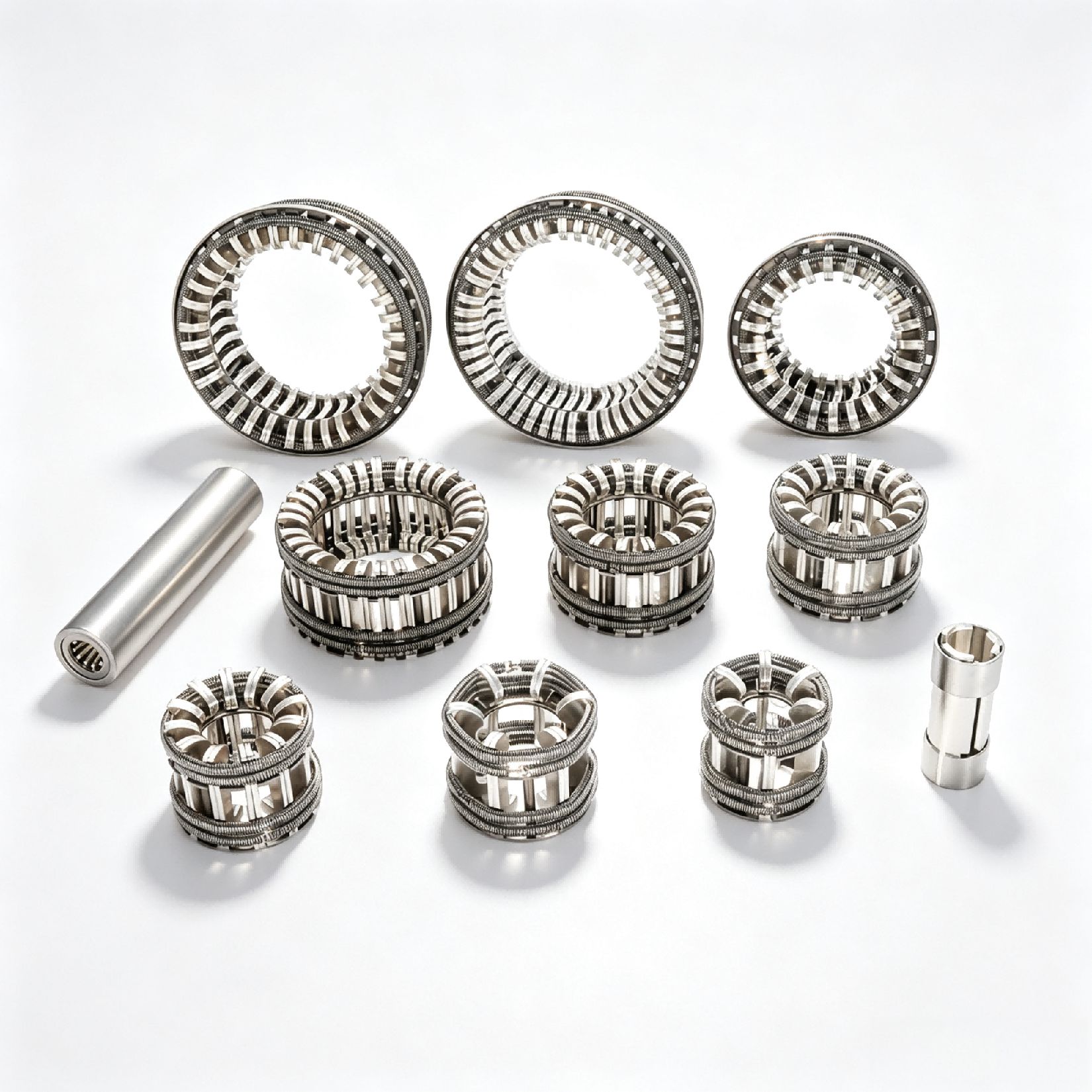
Every contact starts as a solid copper bar, but what separates a reliable component from a liability is what happens in between. We don't cherry-pick quality checks at the end—each phase, from initial cutting to final plating, gets the same unblinking attention. The bar is measured, sectioned, and then fed through progressive dies that shape it without stressing the grain structure. No shortcuts, no "good enough" tolerances.
Heat treatment isn't a checkbox here. The copper is annealed under controlled atmosphere so it keeps the right balance of hardness and conductivity. Then comes deburring, surface prep, and plating—each layer inspected under magnification before the next is applied. A contact that looks fine at arm's length can still fail under load, so we test every batch for dimensional drift and material fatigue, not just a random sample.
The result is a contact that doesn't just pass a spec sheet—it holds up in the field. By refusing to skip steps, we keep resistance low, mating cycles high, and end-user returns where they belong: near zero.
Tolerances That Keep Switchgear Assemblies Trouble-Free
A switchgear assembly only operates as reliably as its tightest mechanical interface. Frame fabrication tolerances within ±0.5 mm across a 2-meter bus compartment prevent subtle twisting that would otherwise transfer stress to insulators and busbar joints. When enclosure panels are punched and folded to these limits, door interlocks engage without binding and internal arc paths remain sealed—two details that field technicians rarely notice until a loose fit causes a fault.
Busbar alignment tolerances are equally unforgiving. A 0.3 mm mismatch between overlapping copper bars may look negligible on a drawing, but under short-circuit forces it concentrates current density and heats the joint unevenly. Machined connection pads, controlled torque sequences, and predefined flatness tolerances on contact surfaces keep resistance values stable. Similarly, circuit breaker racking rails demand lateral position tolerances of ±0.2 mm or better; deviations here lead to misaligned primary disconnects and dangerous partial insertion.
Thermal expansion is a tolerance problem most static assembly checks miss. Copper busbars grow roughly 0.017 mm per meter per degree Celsius, so slip joints and flexible connectors must be positioned within a calculated axial tolerance. If the gap between rigid sections is too small, expansion produces bowing and cracked post insulators; too large and the sliding contact area shrinks below its rated current path. Proven designs treat these clearances as active tolerances, verified at maximum rated temperature rather than at ambient shop conditions.
Custom Profiles Without Custom-Tooling Delays
Most customization workflows fall apart at the tooling stage. You know exactly what profile you need, but actually getting it into production means waiting for a vendor, scheduling a build, or hand-coding an exception. This approach removes that bottleneck entirely. The moment you define a custom profile, it's ready to use, no separate tooling pass, no approval queue, no overnight batch job.
The interface gives you direct control over the settings that affect your output. You can adjust thresholds, rename fields, or bind a profile to a specific team without touching a script. Changes save instantly and apply to the next run, which means you can test a variation in the morning and refine it by lunch. There's no hidden dependency on a CAD package, a compiler, or a proprietary configurator.
For teams that iterate often, this shifts the conversation from how long will it take to get the tool updated to what should we try next. Rolling back is just as quick, so experiments stay cheap and low-risk. Custom profiles stop being a special project and start behaving like a normal setting you can tweak whenever the need arises.
Batch Testing That Would Make a Utility Engineer Smile
Most utility engineers have learned to treat batch testing as a quiet workhorse rather than a headline feature. The real payoff comes when you can feed an entire substation’s worth of relay settings into a single script and get back a clean matrix of pass, fail, and marginal results before the first coffee cools. That kind of setup doesn’t happen by accident. It usually grows out of a few painful late-night troubleshooting sessions where a single mislabeled register forced a full re-run.
A batch test worth smiling about goes beyond just running the same command over and over. It groups assets by firmware version, tags outliers for manual review, and logs timestamps down to the millisecond. For a utility engineer, that means spending less time reconciling spreadsheets and more time interpreting trends. The best ones also include a dry-run mode, so you can catch a formatting error in row 47 before it cascades into a hundred false failures.
When the batch run finishes clean, the feeling is close to watching a well-tuned engine fire on the first crank. No alarms, no cryptic stack traces, just a concise summary and a confidence that the field crew can proceed. That’s the kind of batch testing that earns a rare, genuine smile from someone who has seen too many 2 a.m. false starts.
The Difference Between a Contact That Fits and One That Lasts
Many people mistake a good initial fit for a lens that will hold up. A contact that fits wraps around the cornea without pinching or sliding, and your optometrist can verify that in a single visit. But that snapshot doesn't tell you how the lens behaves after ten hours, after a week of rewetting drops, or after a month of handling. Fit is geometry; endurance is material science.
A lasting contact earns its keep through the small frictions of daily life. It resists protein buildup instead of turning cloudy by evening. Its edges stay smooth even after repeated cleaning, so blinking doesn't feel like sandpaper. And it keeps enough moisture near the eye without relying on constant drops. When you stop noticing the lens at hour twelve, you're experiencing the difference between a shape that matched your eye on day one and a material that still respects your eye on day ninety.
FAQ
A tulip contact is a type of multi-finger electrical connector shaped like a tulip flower. It grips a mating rod or tube to carry high current in switchgear, especially in circuit breakers and disconnectors. The segmented fingers maintain even contact pressure despite thermal expansion or slight misalignment.
We pair CNC machining with in-process laser measurement and automated sorting. Each finger is checked for diameter, surface finish, and spring force before assembly. This removes variations that can lead to hot spots under load.
We typically work with high-conductivity copper alloys such as CuCr1Zr or CuTe, often silver-plated or tin-plated depending on the operating environment. Springs are made from stainless steel or beryllium copper to retain clamping force over decades of use.
Yes. We reverse-engineer from drawings, samples, or on-site measurements, then adjust finger count, length, contact force, and plating thickness. Even single-piece prototypes are possible before full production runs.
Each assembly undergoes contact resistance measurement, insertion force testing, and visual inspection under magnification. For critical orders, we add temperature rise tests at rated current and mechanical endurance cycling to simulate years of operation.
We control plating bath chemistry and thickness with X-ray fluorescence, and use a nickel underlayer to block copper migration. Silver thickness ranges from 3 to 20 microns depending on the customer's current rating and environmental exposure.
Standard sizes often ship within three to four weeks. Custom designs with new tooling may take six to eight weeks, including sample approval. We keep common copper alloys and plating materials in stock to shorten turnaround.
Conclusion
In switchgear assemblies, tulip contacts often become the weak link when contact force drops, surfaces wear unevenly, or heat builds up at the interface. This factory starts with that failure mode and removes it through engineering choices rather than hope. Every batch begins as solid copper bar stock, which is cut, CNC-machined, formed into the multi-finger tulip geometry, and then plated with silver or tin in controlled thicknesses. No step is outsourced, so grain structure and hardness stay consistent. Dimensional tolerances are held tight enough that insertion force, finger alignment, and contact patch remain stable across thousands of operations. That stops the small gaps and offset fingers that lead to micro-arcing and premature erosion.
Custom profiles are produced without the usual wait for bespoke tooling because the forming cells use adjustable mandrels and modular die inserts, letting engineers alter finger length, curvature, or mounting features within the same production run. Before shipment, each lot passes a test sequence that includes contact resistance measurement, spring force verification, insertion and withdrawal cycling, and thermal rise checks at rated current. More than a simple dimensional pass, this testing confirms the contact will keep performing after repeated mate and demate. The real difference between a contact that fits and one that lasts is not the drawing itself but how repeatably the factory controls material, geometry, plating, and assembly. For switchgear builders, that repeatability means fewer field failures and a longer service life.
Contact Us
Contact Person: Hellen
Email: [email protected]
Tel/WhatsApp: 86-13634205622
Website: https://www.voltcabinet.com