

Professional Piezo Inkjet Printer: Revolutionizing Precision Printing
2026-06-30
Precision printing is no longer just about putting ink on paper—it's about achieving microscopic accuracy at production speeds. The professional piezo inkjet printer is driving this transformation, and Danmajet stands at the helm. With drop-on-demand control and unmatched reliability, this technology is opening new doors in electronics, biomedical devices, and beyond. Ready to see how it's rewriting the rules of precision? Let's dive in.
The Pulse of Precision: How Piezo Technology Redefines Accuracy
When a watch ticks, a motor hums, or a medical pump delivers a life‑saving dose, the difference between success and failure often comes down to the quiet pulse of piezoelectric materials. These crystalline structures respond to mechanical stress by generating an electric charge—or, conversely, deform with nanometer precision when voltage is applied. It’s this bidirectional dance that lets engineers sidestep gears, backlash, and thermal drift, the usual suspects that erode accuracy in conventional systems.
Consider a microscope stage driven by a piezo actuator: it can shift a specimen by fractions of a micron, hold it there without creeping, and repeat the move millions of times without wear. That’s not just repeatability; it’s a redefinition of what “steady” means. In inkjet printers, piezo‑driven nozzles eject droplets with exact timing and volume, enabling resolutions that brush up against the physical limits of fluid dynamics. And in semiconductor lithography, piezo‑controlled mirrors correct beam paths in real time, compensating for vibrations that would otherwise blur circuit patterns.
Piezo technology thrives in extremes where other actuators falter: cryogenic vacuums, intense magnetic fields, or the punishing g‑forces of a spacecraft launch. Its inherent stiffness eliminates the “softness” that leads to overshoot and ringing, giving control loops a crisp, instantaneous response. This isn’t just about doing things more precisely; it’s about unlocking entirely new capabilities—like manipulating single atoms or stabilizing laser frequencies for gravitational‑wave detectors. In a world that increasingly demands the infinitesimal, piezo technology makes the intangible tangible, one pulse at a time.
Beyond Paper: Unleashing Creativity on Unusual Surfaces
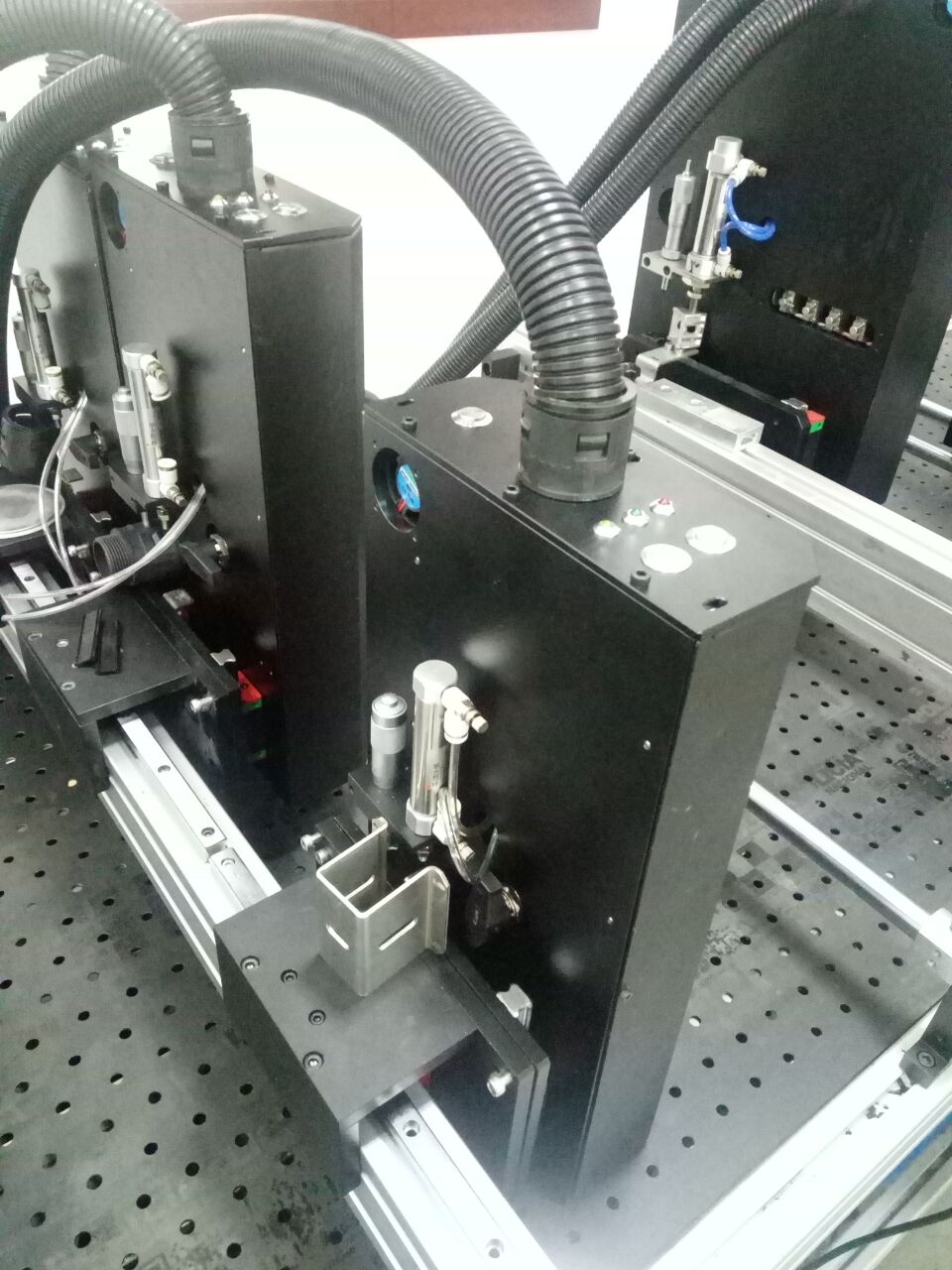
Artistic expression has long been confined to the familiar rectangle of paper, but what happens when we step beyond that boundary? The world is filled with unconventional canvases waiting to be transformed—rough tree bark that gives watercolors an organic texture, weathered wooden planks that add history to acrylics, or even ceramic tiles that make ink illustrations shimmer with a glossy finish. Each surface carries its own personality, inviting artists to adapt their techniques and discover new possibilities that a smooth white page could never offer.
Embracing unusual surfaces isn't just about novelty; it's about rethinking the relationship between medium and message. Painting on a vintage window pane, for instance, introduces natural light as an active element, while sketching on a stone slab grounds the artwork in a primal, earthy tactility. These choices challenge the creator to work with imperfections—knots, grain, cracks—turning them into integral parts of the composition rather than flaws to conceal. The result is often a more dynamic and unpredictable piece, one that feels alive and deeply connected to the material world.
Quiet Power: The Silent Efficiency of Piezo Printers
Walking through a busy office, you might not even notice a piezo printer at work. That’s the whole point. Instead of the aggressive whirring and grinding we’ve come to expect, these machines operate with an almost unsettling calm. The core mechanism uses electric charges to shape droplets, not heated bubbles or slamming printheads, so the physical noise levels drop dramatically. It turns printing into something that blends into the background—like a well-rehearsed orchestra pit rather than a construction site.
This quietness isn’t just about comfort; it changes how people interact with the device. Without the constant auditory cue, there’s a mental shift. You no longer brace for a racket when sending a large job. The absence of vibration also means fewer mechanical stress points over time, which quietly contributes to longer-lasting hardware. In spaces where focus matters—libraries, studios, medical offices—that hush becomes a functional asset, not just a luxury.
There’s an efficiency hidden in the silence. Piezo heads don’t fight ink the same way thermal systems do; they can precisely place tiny droplets without shaking the entire carriage. This translates to fewer misfires, less wasted motion, and ultimately less energy spent correcting errors. The power isn’t in being loud—it’s in doing the job so smoothly that you forget the machine is even there.
Ink Control Mastery: From Microdroplets to Macroscopic Art
At the heart of every printed image or painted stroke lies an invisible choreography—tiny droplets of ink, each precisely timed and placed. Mastering this microscopic dance is what turns raw pigment into seamless gradients and crisp lines. It’s not just about machinery; it’s about understanding fluid dynamics at a scale so small that surface tension and velocity become the artist’s secret tools. The leap from a controlled 2-picoliter droplet to a sprawling canvas is where precision births expression.
Artists and engineers alike have long grappled with the paradox of control: how do you harness something so fleeting and miniature to create enduring works? In fine art, techniques like stippling or airbrushing rely on a near-obsessive attention to droplet density and placement. Each speck of ink carries intent—too heavy and the paper buckles, too faint and the image loses voice. This balancing act transforms the humble droplet into a building block for texture, depth, and emotion, whether on a gallery wall or a magazine page.
Zoom out, and the cumulative effect of millions of these tiny decisions becomes a macroscopic spectacle—a billboard that halts a pedestrian, a mural that breathes life into a brick facade. The real mastery lies in the seamless fusion of science and sensibility: understanding when to let the droplets bleed into one another for a watercolor wash, and when to keep them solitary for a photorealistic edge. In this interplay, ink control ceases to be a technicality and becomes the quiet narrator of visual stories, from the smallest dot to the grandest composition.
Streamlined Workflows: Reducing Waste, Maximizing Output
Processes that accumulate unnecessary steps aren't just slow—they quietly drain resources and morale. We've seen firsthand how a single approval bottleneck can ripple into hours of idle time across a team. The fix rarely requires a massive overhaul. By mapping out each handoff and questioning whether every check adds real value, groups often discover that nearly a third of their routine tasks exist only because “that's how it's always been done.” Removing those layers isn't about cutting corners; it's about letting people focus on work that actually moves the needle.
When workflows are stripped down to what truly matters, output climbs without piling on extra hours. One team we observed replaced a multi-step review chain with a simple peer-check rhythm—errors dropped because accountability became immediate. They also retired status meetings that duplicated what a shared dashboard already told them. The result wasn't just faster delivery, but a noticeable lift in creative problem-solving. It turns out that when you stop burying talent under busywork, people start spotting opportunities rather than just completing tickets.
Tomorrow’s Prints Today: Anticipating Industry Needs
Tooling that once took weeks now emerges in hours, letting engineers validate concepts before committing to full-scale production. This shift doesn't just cut lead times—it recasts how we approach product evolution.
Instead of warehousing hundreds of variants, companies print what's needed, where it's needed. That flexibility turns volatility from a threat into a strategic advantage, ensuring that today's outputs match tomorrow's demands.
FAQ
It's a type of inkjet printer that uses piezoelectric crystals to eject ink droplets with extreme accuracy. Unlike thermal inkjets, it doesn't rely on heat, which allows for a broader range of ink types and more durable printheads.
The piezoelectric crystals change shape when an electric current is applied, creating precise pressure pulses that force ink out in controlled sizes and patterns. This fine control enables resolutions that can exceed 2880 dpi, making it perfect for detailed graphics and fine text.
They're widely used in textile printing, ceramic tile decoration, printed electronics, and even bio-medical applications. Any field that demands consistent droplet placement and versatility with different fluids can benefit.
Yes, because there's no heat involved, they can jet UV-curable, solvent-based, aqueous, and even latex inks. This flexibility makes them suitable for rigid and flexible substrates alike.
Professional units are built for high-volume, continuous operation with larger ink systems, automated maintenance routines, and advanced waveform controls. They also feature multiple printheads for faster throughput and can handle wider media.
Not at all. With distance-controllable printheads, they can print on slightly uneven or curved surfaces, and some industrial systems are designed for three-dimensional objects, like printing directly onto bottles or circuit boards.
Regular tasks include cleaning the printhead nozzles, maintaining proper ink pressure, and replacing inline filters. Periodic alignment checks ensure consistent quality. With proper care, piezo printheads can last for many years.
Conclusion
At the core of modern printing's evolution lies piezo technology, a departure from older thermal methods that relied on boiling ink. Instead, piezo printheads flex with electric pulses to eject droplets with pinpoint control, enabling a level of detail that redefines accuracy. This isn't just about sharper lines—it's about consistency across every print, from microdroplets that form delicate gradients to bold, precise edges required in technical diagrams or textile patterns. The quiet, vibration-free operation of these printers further sets them apart, allowing them to integrate seamlessly into studios, labs, or offices without disrupting the creative flow or work environment.
The versatility of piezo inkjet printers extends well beyond traditional paper. They empower creators to print on glass, metal, wood, ceramics, and even three-dimensional objects, opening doors for custom signage, bespoke interior décor, and rapid prototyping. Combined with advanced ink management that minimizes waste and maximizes output, these machines streamline production by reducing ink consumption and downtime. Looking ahead, their modular design and compatibility with a vast range of inks—from UV-curable to conductive—position them as tools not just for today’s demands but for emerging industrial applications, anticipating needs in fields like electronics and biomedical printing before they become mainstream.
Contact Us
Contact Person: Jacky
Email: [email protected]
Tel/WhatsApp: 086 15000607053
Website: https://www.danmajet.com