

Power Conversion System (PCS) Company Solutions for Next-Generation Energy Storage
2026-10-23
What if the biggest constraint on tomorrow’s energy storage isn’t the battery chemistry, but the power conversion layer that governs every charge and discharge? As next-generation projects chase higher utilization, tighter grid response, and longer lifetimes, PCS performance has quietly become the make-or-break factor. UNC has spent years sharpening its PCS solutions for exactly these demands—trading generic specifications for field-driven engineering. Here’s a closer look at the thinking behind their systems.
Rethinking Power Conversion Architecture for High-Density Energy Storage
Most high-density energy storage systems still inherit power conversion topologies designed for lower pack voltages and larger cabinets, where a single centralized inverter or DC-DC stage handles the entire stack. That approach forces every cell to operate through the same conversion ratio, ignoring variations in state of charge, impedance, and thermal environment. As cells get packed tighter, the mismatch between the converter's sweet spot and the battery's operating range becomes harder to hide. Rethinking the architecture starts with questioning why we convert the full system power at one point instead of distributing smaller, cell- or module-level stages that only process the difference between what the cells need and what the bus demands.
Partial power processing is one direction that rarely gets enough attention outside academic circles. Instead of a full-rated converter sitting between the battery and the load, a partial converter handles only a fraction—often 10–30%—of the total energy flow, while the rest passes through a direct or lightly regulated path. This slashes conduction losses, shrinks magnetics, and lets wide-bandgap devices operate closer to their thermal limits without derating the whole pack. The catch is control: you need a stable differential voltage reference, and the protection scheme must understand that a failure in the partial stage no longer isolates the battery by itself. But those problems are solvable with current sensing and modular bypass circuits, and the density payoff is immediate.
The real shift is treating power conversion not as a separate box bolted to the battery but as a layer integrated into the pack's thermal and mechanical design. Bus bars become short, capacitors move closer to the switching nodes, and cooling channels are shared between cells and semiconductors. When conversion stages are distributed, a single point of failure no longer takes down the entire string, and capacity can be added without re-rating the central inverter. That kind of architecture doesn't just improve kilowatts per liter on a datasheet—it changes how energy storage systems are assembled, maintained, and scaled in the field.
Stackable PCS Building Blocks for Right-Sized Storage Projects
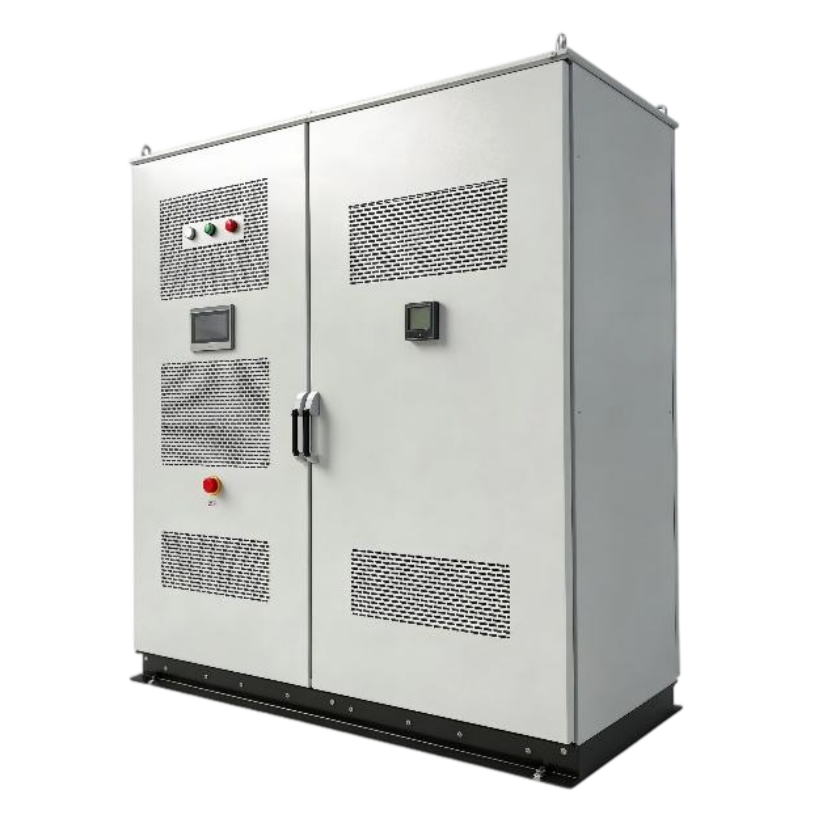
When a storage project calls for flexibility, stackable PCS building blocks shift the entire approach. Instead of forcing oversized cabinets into limited footprints, these modular units let teams scale capacity up or down by simply adding or rearranging layers. Each block locks securely onto the one below it, creating a stable vertical structure without sacrificing accessibility. This means a small parts room can start with two tiers and grow to five as inventory expands, all using the same core components.
The real advantage comes from tailoring the configuration to match actual throughput and retrieval patterns. A workshop storing bins of fasteners will configure shallow, closely stacked modules for quick access, while a distribution hub handling bulkier items may opt for deeper units with fewer tiers. Because the connection points are standardized, swapping out a damaged block or reconfiguring a row takes minutes rather than a full redesign. That reduces downtime and keeps storage aligned with changing project requirements.
Choosing stackable PCS blocks also avoids the trap of overbuying permanent racking. Teams often purchase fixed shelving based on peak inventory, only to find half the capacity unused for months. With a building-block approach, you add height or width only when needed, and you can break down unused sections for compact storage. The result is a storage system that works as hard as the people using it, without wasted space or idle infrastructure.
Grid-Forming Controls That Stabilize Weak Interconnection Points
Weak interconnection points often suffer from low short-circuit ratios and scant rotating inertia, which makes them prone to voltage swings and frequency drift after even minor disturbances. Grid-forming controls address this by actively synthesizing a voltage source at the inverter terminals instead of relying on a phase-locked loop to track an already-weakening grid. The inverter sets its own frequency and voltage magnitude reference, then adjusts instantaneous active and reactive power to hold those quantities steady. This capability effectively creates an island of stiffness within a softer network, preventing small events from cascading into larger excursions.
Practical field deployments usually pair grid-forming algorithms with carefully tuned virtual impedance and current-limiting logic. At very weak points, a simple droop curve may not be enough; observed grid impedance and its phase angle need to be measured or estimated so the control can adapt to changing short-circuit levels. Some plants use a hybrid approach, switching between grid-following and grid-forming modes based on local strength. The result is a smoother ride through fault events and fewer trips caused by protective relays seeing unstable frequency or voltage.
Thermal and Packaging Choices That Extend PCS Service Life
The biggest killer of PCS modules isn't usually peak load, but repeated thermal cycling. Choosing a cooling strategy that flattens temperature swings matters more than chasing the lowest absolute temperature. For example, a well-designed aluminum baseplate with phase-change thermal interface material can reduce hot spots that accelerate solder joint fatigue and capacitor aging. Active cooling via variable-speed fans or liquid cold plates should be matched to actual load profiles, not just nameplate ratings, because oversizing airflow often creates unnecessary dust ingress and humidity swings.
Enclosure and board-level packaging choices also determine how long a PCS survives in harsh environments. Conformal coating over high-voltage traces, gasketed connectors, and sealed cable entry points prevent moisture and salt fog from triggering partial discharge or corrosion. Potting the magnetics and using vibration-damped standoffs for large capacitors reduce mechanical stress during transport and operation. Selecting a corrosion-resistant enclosure material with a breathable membrane drain keeps internal humidity low without trapping condensation, which is a common cause of insulation breakdown in coastal installations.
Open Control Interfaces for Trading, Dispatch, and Fleet Orchestration
Open control interfaces connect trading, dispatch, and fleet orchestration into a single operational layer. Instead of relying on proprietary integrations, the platform uses mature protocols like OpenADR, IEEE 2030.5, and OCPP to communicate directly with distributed energy resources, EV charging infrastructure, and wholesale market APIs. This removes the need for custom adapters for every new device or market participant.
During live operations, these interfaces let aggregators adjust resources based on price signals and grid constraints. For instance, a single interface can send a charge command to a battery, request a power reduction from a charging station, and submit a bid curve to the market. That kind of cross-domain coordination is difficult with closed systems, but open interfaces keep data flows and control commands transparent, auditable, and replayable.
For fleet orchestration, open control interfaces allow charging schedules to work alongside vehicle dispatching, battery health management, and grid service participation. When new asset types or market rules appear, the interface layer can be extended without reworking the core scheduling logic. This lowers long-term maintenance effort and gives third-party developers a safe way to integrate and expand platform capabilities.
PCS Front-End Design for Lithium-Ion, Flow, and Solid-State Chemistries
For lithium-ion systems, front-end design prioritizes fast transient response and tight voltage regulation to handle the chemistry's steep charge/discharge curves and high C-rates. Input filtering and pre-charge circuits must limit inrush current while preserving efficiency across a wide state-of-charge window. Thermal derating is typically tied to cell temperature telemetry, not just ambient.
Flow batteries present a different challenge: their terminal voltage changes slowly and linearly with state of charge, but stack leakage currents and shunt paths demand continuous balancing. The front-end converter should include galvanic isolation to protect against electrolyte-related ground faults, and its control loop can be deliberately slow, favouring stability over speed. Low-voltage, high-current stacks often make a modular multi-level front-end more practical than a single high-power stage.
Solid-state chemistries promise higher energy density and safer operation, but their internal impedance can rise sharply at low temperatures and near full discharge. A front-end designed for solid-state packs needs a wide input voltage range, adaptive current limiting based on real-time impedance estimation, and robust protection against micro-short circuits during dendrite formation. Because these cells are less fault-tolerant, the front-end should integrate fast-acting solid-state disconnect switches rather than relying solely on contactors.
FAQ
Modern storage chemistries swing across wider voltage ranges and demand faster charge-discharge transitions. Our PCS units use multi-level topologies with silicon carbide switches, which gives them the headroom to track those swings without clipping output or adding bulky filtering. We also run a real-time digital control loop that reshapes the modulation pattern on the fly, so the converter stays stable even when the DC bus shifts sharply.
We avoid chasing one narrow efficiency point and instead look at the load profile a project actually sees. That leads us to adaptive switching that drops into a lower-loss mode during partial loads, paired with conservative thermal derating on the semiconductors. Firmware updates let us retune protection thresholds and control gains after new battery data comes in, so the same hardware can follow chemistry changes without pushing components past their safe operating area.
Yes, our converters can operate in grid-forming mode, where they actively set voltage and frequency instead of just following the grid. For a microgrid with intermittent solar or a weak feeder with voltage dips, this means the storage system can black-start a local network, ride through frequency excursions, and provide synthetic inertia. We implement a virtual synchronous machine algorithm that mimics physical generator response, so the PCS contributes stability rather than just injecting real power.
Thermal design is often the difference between a unit that hits datasheet numbers on day one and one that still hits them after five years of daily cycling. We use a combination of liquid cooling for the main power stack and targeted airflow for auxiliary circuits, with temperature sensors that feed into an adaptive derating curve. By keeping hot spots off the DC-link capacitors and gate drivers, we reduce aging effects like electrolyte dry-out and solder fatigue, which directly extends the useful life of the converter.
Instead of forcing a proprietary handshake, our PCS supports standardized CAN and Modbus profiles plus an edge gateway that can translate custom BMS registers. That means the battery vendor's state-of-charge and fault flags appear in the same control hierarchy as the converter's own limits, without days of custom coding. We also expose a configurable safety matrix, so project engineers can map specific BMS alarms to controlled ramp-down or trip actions during commissioning.
The usual culprits are hard-switching losses in the IGBTs, core losses in the output filter, and idle power draw when the battery is neither charging nor discharging. We moved to a soft-switching auxiliary resonant circuit that recycles energy during commutation, redesigned the magnetics with lower-loss amorphous cores, and introduced a deep-sleep mode that cuts standby consumption to under ten watts while maintaining readiness for fast reconnection.
We build in layered protection rather than relying on a single trip point. Fast overcurrent and differential protection isolate internal faults, while islanding detection disconnects the unit within two cycles if the grid disappears. Ride-through logic lets the converter stay connected during short voltage sags, but if the disturbance persists, a coordinated shutdown sequence discharges the DC bus safely before contactors open. Redundant gate-driver power supplies and a watchdog processor ensure that no single component failure can leave the power stack uncontrolled.
We use a distributed control architecture where each power block has its own high-speed local controller, and a central plant coordinator handles setpoint allocation over a deterministic fiber link. That avoids the latency you get when one big processor tries to manage everything. The power blocks can be hot-swapped for maintenance, and the plant coordinator automatically redistributes load among the remaining units, so a single module outage doesn't force the whole facility offline or slow down frequency response.
Conclusion
Modern energy storage demands more than incremental upgrades to traditional inverter designs. A growing number of PCS suppliers are abandoning fixed, monolithic blocks in favor of modular power stages that can be grouped and stacked to match the exact megawatt-hour footprint of a project. This rethinking of conversion architecture brings clear density gains: shorter busbar runs, lower inductance, and less wasted cabinet space. The practical benefit shows up in containerized systems where every rack of batteries can be paired with a matching power stage, cutting installation time and leaving room for future augmentation. Thermal design often decides whether these gains last. By separating heat-generating semiconductors from control boards and using directed airflow or liquid cold plates, the latest PCS platforms keep junction temperatures stable even under repeated peak shaving cycles. That directly extends service life and reduces the need for oversized cooling infrastructure.
Beyond hardware, next-generation PCS needs to behave as a true grid asset rather than a passive follower. Grid-forming controls let storage plants establish voltage and frequency at weak interconnection points, supporting islanded microgrids or remote industrial loads without relying on a stiff utility source. This becomes especially important as renewable penetration rises and grid strength declines. Equally critical is the control layer above the power stage. Open interfaces that expose real-time state, dispatch commands, and fleet-level orchestration allow asset owners to plug PCS into existing trading platforms or aggregator systems without proprietary lock-in. On the DC side, a well-designed front end must adapt to shifting battery chemistries—lithium-ion today, flow batteries with different voltage windows, and solid-state cells with stricter ripple limits. PCS suppliers that decouple the power stage from battery-specific tuning can serve multiple chemistries with the same hardware platform, reducing risk for developers who expect their storage technology mix to evolve over a project's lifetime.
Contact Us
Contact Person: Manager Leng
Email: [email protected]
Tel/WhatsApp: 8613764878967
Website: https://www.unc-energy.com