

OEM Steel Pipe Tower in China for Durable Power Transmission
2026-11-16
Every reliable power grid stands on the shoulders of structures built to endure. In China, OEM steel pipe towers have become the backbone of durable power transmission—and few names carry that engineering weight like Anbang. But what actually separates a tower that lasts decades from one that merely passes inspection? This post unpacks the materials, manufacturing precision, and testing protocols behind the towers quietly keeping the lights on.
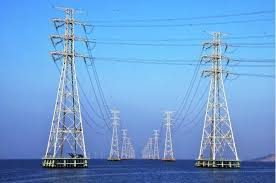
Custom Steel Pipe Towers Engineered for Harsh Grid Conditions
Instead of starting from a generic catalog, each tower begins with a site-specific load study. Wind speeds, ice accumulation, soil bearing capacity, and even the probability of microbursts shape the geometry of the pole. A tower destined for a coastal substation might use a thicker wall in the lower sections to resist salt spray corrosion, while one in a high-altitude desert gets a different taper to shed wind without excessive deflection. This level of tailoring means the final structure carries no unnecessary steel, yet still holds a comfortable margin above the calculated ultimate load.
Material selection goes beyond simply ordering ASTM A572 or A588. For areas with aggressive industrial fallout, we specify a duplex coating system—hot-dip galvanizing followed by a high-solids epoxy intermediate and a UV-stable polyurethane topcoat. Welds are full-penetration, inspected with phased array ultrasonic testing, and the entire pole is hot-dipped after all drilling and coping to avoid unprotected edges. In freezing climates, internal heating conduits or anti-condensation coatings prevent ice plugs from forming inside the hollow sections, which can otherwise lead to hidden corrosion or unbalanced loading.
Before shipment, each tower is assembled horizontally in the fabrication yard to verify bolt-hole alignment and fit-up of climbing steps, cable guides, and antenna mounts. Load tests are performed on a random sample from each production run using strain gauges at critical welds. The result is a structure that arrives on site ready to erect without field drilling or welding, and that continues to perform long after galvanic corrosion would have compromised a lesser pole.
Inside Chinese Manufacturing Hubs That Deliver Decades of Service
Walk through any industrial park in Dongguan or Shenzhen, and the roar of machinery blends with a quieter rhythm: the steady hum of relationships built over twenty, thirty, even forty years. These aren't just factories. They're communities where a tooling shop owner remembers when the first injection molding machine arrived in 1987, and where a quality inspector's father once ran the same stamping press his son now oversees. The result is a depth of knowledge that no fresh startup can replicate overnight.
What keeps global buyers returning isn't just competitive pricing or fast turnaround. It's the accumulated problem-solving instinct that comes from decades of trial, error, and gradual refinement. A plastic casing that warps in humid weather? The veteran floor manager already knows to adjust gate placement and cooling time before the prototype is even cut. A sudden shift in raw material supply? The purchasing team has three backup vendors who've been partners since the 1990s. This long-term reliability isn't advertised in brochures; it's woven into the daily operations.
But these hubs are also quietly reinventing themselves. Old assembly lines now feature robotic arms alongside workers who've been there for a generation. Apprenticeship programs pair retired mold makers with teenagers learning CAD and CNC programming. The service doesn't end when a shipment leaves the port either—many factories maintain repair depots and spare parts inventory for products they built a decade ago, honoring warranties long after competitors have moved on. That's what "decades of service" really means here: not just staying in business, but staying accountable.
Material Choices and Coatings That Keep Transmission Lines Standing
Hot-dip galvanizing has long been the workhorse finish for steel transmission towers, and for good reason. The zinc layer bonds metallurgically to the base steel, sacrificing itself slowly over decades while protecting the iron beneath from rust. In coastal or industrial zones, however, a single zinc coat may not be enough. Engineers often specify a duplex system—galvanizing followed by a high-solids epoxy or polyurethane topcoat—to seal the surface against chloride and sulfur compounds that accelerate corrosion.
Material selection goes beyond standard carbon steel. Weathering steel, sometimes called Corten, forms a dense oxide patina that slows further rusting and can eliminate the need for paint in mild climates. For areas with extreme humidity or salt spray, aluminum lattice towers offer a lighter alternative with natural corrosion resistance, though they demand careful connection design to prevent galvanic reactions with steel bolts. Concrete poles, often spun or prestressed, provide another path where steel supply is costly or where wildfire risk discourages metal structures.
Coatings continue to evolve. Thermal spray aluminum (TSA) applies a thick, ductile layer that outperforms liquid coatings in splash zones and on buried steel. Field repair has also moved toward moisture-curing urethanes and zinc-rich primers that can be brushed onto damaged areas without sandblasting. The goal is not merely to cover steel but to match the coating system to local environmental loads—temperature swings, UV exposure, salt deposition, and even bird droppings—so the line keeps standing without constant repainting.
From Raw Steel to Load-Tested Tower: A Production Walkthrough
Every tower begins as a coil of raw steel, stacked in the yard with no hint of the structure it will become. The first step is straightening and cutting: a decoiler feeds the strip into a leveler, then a shear snaps it into precise lengths based on the tower's design. These blanks move to a punch press, where holes for bolts, cable entry points, and alignment tabs are stamped in a single cycle. Operators check the first piece against a dimensional drawing before the line runs at full speed, because a half-millimeter error here compounds into a tower that won't bolt together on site.
Once punched, the flat pieces go to a press brake. A skilled operator bends each panel along pre-marked lines, forming the polygonal cross-section that gives the tower its stiffness. The angle must be held within a tolerance tight enough that mating edges meet without gaps, but not so sharp that the zinc coating cracks later. After bending, the components travel through a seven-stage powder coat line: wash, phosphate, rinse, dry, electrostatic spray, and cure. The finish isn't just for looks—it seals the steel against years of rain, salt, and UV exposure.
The final assembly is a full-scale load test. The tower sections are bolted together horizontally, with strain gauges attached at critical welds. Hydraulic rams apply a lateral force equal to the maximum wind load the tower is rated for, while dial indicators measure deflection. Only after the tower returns to its original shape without cracking or permanent set does it get a serial number and a test certificate. That piece of paper travels with the tower to the job site, proof that this particular stack of steel has already survived the worst day of its life before it ever leaves the factory floor.
How OEM Partnerships Cut Lead Times Without Sacrificing Strength
Close coordination between OEMs and their manufacturing partners often starts with shared production schedules and real-time inventory visibility. Instead of waiting for formal purchase orders, suppliers can pre-stage raw materials and prepare tooling based on rolling forecasts. This parallel workflow removes idle gaps that typically inflate lead times, while tensile and fatigue testing continues at each stage to confirm that faster throughput doesn't weaken the final product.
Joint engineering teams also play a key role by freezing design specifications earlier in the prototyping phase. When both sides agree on tolerances, material grades, and joining methods before production begins, there are fewer last-minute revisions that cause delays. Some partnerships go further by co-investing in dedicated test rigs and pre-qualified subcomponents, so a new order can move directly into full-rate assembly without re-running lengthy certification processes.
Flexible batch sizing and shared logistics networks further compress delivery times without sacrificing structural integrity. A partner factory might keep a buffer of pre-tested, high-strength fasteners or weld wire on hand, allowing quick changeovers between product lines. By aligning quality benchmarks and using in-line monitoring to catch deviations early, both parties maintain the same strength standards that would apply under slower, more traditional procurement cycles.
Field-Ready Designs for Varied Terrain and Voltage Requirements
Equipment that holds up in a single environment often falls apart the moment it leaves the pavement. The approach here leans into that reality by pairing a reinforced chassis with adjustable suspension geometry, so the same platform can handle loose gravel, muddy ruts, and uneven rock without sacrificing stability. Ground clearance is not treated as a static number; it shifts with load and terrain feedback, keeping the footprint predictable even when the surface is anything but.
Voltage flexibility is handled as a core design constraint rather than an afterthought. Input stages accept a wide range of AC and DC sources, with automatic phase detection and soft-start circuitry that prevents the kind of inrush spikes that trip breakers on weak grids. Rather than forcing users to choose a regional variant upfront, the hardware auto-configures for 110–240 V AC or 12–48 V DC, and isolates sensitive components behind redundant clamping and filtering.
Field validation is where these choices get tested honestly. Prototypes are run through repeated cold starts, high-humidity exposure, and sustained operation on uneven terrain with deep voltage sags. The goal is not to survive a spec sheet but to keep working through a week of unpredictable site conditions, and the design reflects that: accessible service panels, sealed connections, and no proprietary tools needed for common repairs.
FAQ
The towers use tapered or straight pipe sections made from high-strength steel like Q355B. Their circular cross-section reduces wind load better than angle steel, and the base plates can be matched to different foundation types. For uneven terrain, leg extensions or custom stub angles are provided, so the same tower family can be adapted without a full redesign.
Every tower is hot-dip galvanized after welding, inside and out, to at least ASTM A123 or ISO 1461 standards. We also seal the pipe ends where moisture could collect and add extra zinc thickness near the ground line. Before galvanizing, the steel is shot-blasted to remove mill scale, which improves coating adhesion.
Yes. Design starts from the client's conductor data, ice load, wind speed, and span length. We adjust pipe diameter, wall thickness, cross-arm length, and bolt patterns accordingly. Both single-circuit and double-circuit configurations are supported, including compact designs for narrow rights-of-way.
Welding is done by certified welders following approved procedure specifications. Critical joints are checked with ultrasonic testing or magnetic particle inspection, not just visual review. We also do random destructive tests on sample weld coupons. Each batch keeps traceability records linked to the steel heat number.
Yes, but the coating system should be upgraded. For coastal zones we recommend a duplex system: hot-dip galvanizing plus a high-build epoxy or polyurethane topcoat. This combination provides a barrier against chlorides and extends the maintenance interval. We can also increase the zinc coating to 100 microns or more on request.
We can produce a trial assembly of one complete tower section or a full-height mock-up in our yard. The client can inspect fit-up, bolt hole alignment, and overall geometry before approving the production run. For small batches, we keep the same jigs and fixtures to avoid quality drift.
Design follows IEC 60826, ASCE 10, or the client's national code. We calculate loads from wind, ice, conductor tension, seismic forces, and temperature changes. The tower is then modeled in PLS-Tower or similar software to verify that every member and connection has adequate strength under the worst load combination.
Yes. We provide detailed erection drawings, bolting schedules, and torque requirements. If needed, an engineer can visit the site to supervise the first few towers or train the local crew. We also mark each member with a unique part number that matches the packing list for easier sorting.
Conclusion
Chinese factories that specialize in OEM steel pipe towers for power transmission have moved well beyond one-size-fits-all production. Orders are engineered against specific wind zones, ice loads, and soil profiles, so the same 132 kV line in coastal Yancheng gets a different plate thickness and bolt pattern than a 500 kV corridor crossing rocky terrain in Sichuan. Q355B and Q420 high-strength plates dominate, but the real differentiator is the coating schedule: shot blasting to Sa 2.5, a zinc-rich primer, and a hot-dip galvanizing bath held to 85 microns minimum. Some plants add a polyurethane topcoat for substations near chemical plants where acid rain is a daily reality. Every joint is tracked with a heat number, and the full tower is trial-assembled in the yard before it leaves—if a diagonal doesn't fit within a 2 mm tolerance, it gets reworked on the spot, not in the field.
Working directly with an OEM partner changes the lead time equation. Because the mill, plasma cutter, bending brake, and galvanizing kettle sit on the same campus, a 300-ton order can move from drawing approval to container loading in six weeks without cutting corners on the load test. Prototype towers are pulled to 100% of specified load, then overloaded by 10–15% to check for permanent deformation. The advantage shows up in the details: pre-punched holes match the approved erection drawing, bundled members are sorted by segment, and packing lists follow the exact sequence a crew will need on site. For projects that span floodplains, permafrost, or mountain ridges, the design team offers modular leg extensions and adjustable base plates instead of forcing a standard tower into ground that cannot take it. That kind of field-ready thinking keeps a grid standing long after the warranty expires.
Contact Us
Contact Person: antor khan
Email: [email protected]
Tel/WhatsApp: 8613863903569
Website: https://www.qdabtower.com/