

OEM Steel Pipe Tower Company Delivers Custom Fabrication for Critical Infrastructure
2026-11-02
Ask any structural engineer what keeps them up at night on a critical infrastructure project, and steel pipe tower fabrication will be near the top of the list. A few millimeters of misalignment or a subpar weld can compromise an entire transmission line or communication backbone. That's why custom OEM fabrication isn't just a nice-to-have — it's a necessity. Anbang has spent years refining its process to deliver steel pipe towers that meet the strictest specs without overcomplicating the build. In this article, we're breaking down what true custom fabrication looks like, and why it matters for the infrastructure we all depend on.
Site-Specific Loads, Real Terrain: Why Custom Steel Pipe Towers Outperform Standard Designs
Standard steel pipe towers assume a flat, predictable site. Real terrain rarely cooperates. A custom tower starts with the actual ground under it—soil bearing capacity, slope angle, frost depth, and the way wind funnels through a valley or accelerates over a ridge. Those local conditions change the bending moment and foundation reactions far more than a catalog spec sheet admits. When a site sits halfway up a hillside with one corner on bedrock and the other on fill, a generic design either overbuilds to the point of waste or underbuilds to the point of risk.
Loads are just as site-specific. Wind isn't one number; it shifts with height, exposure, and topographic roughness. Seismic demands differ by soil profile and proximity to faults. Ice and snow add asymmetrical loads that standard designs rarely account for beyond a broad climate zone. Custom steel pipe towers let you match tube diameter, wall thickness, base plate geometry, anchor bolt pattern, and weld details to measured forces at that exact location. That usually means a lighter, cheaper structure because you're not carrying extra steel as a safety blanket, and you're not praying the generic wind map was close enough.
The difference shows up in the details. On a ridge with high gust factors, a custom tower might use a larger diameter but thinner wall at mid-height to resist buckling without adding dead weight. In a coastal area with salt spray, the steel grade and coating system get specified for that microclimate. Standard designs rarely offer that granularity. For any structure that has to stand in one place for decades, ignoring the actual terrain and load path is a strange way to save money.
From Pipe Blank to Weld-Mapped Assembly: Inside the OEM Fabrication Sequence
A pipe blank enters the shop as nothing more than a length of raw material, usually with a heat number tied to a mill test report. Before any cutting happens, the blank is checked against the isometric drawing and the project's pipe class specification—wall thickness, material grade, and diameter all have to match the demand. The first physical step is cutting to the required spool length, often with a band saw or orbital cutter, followed by end preparation. That bevel geometry is not arbitrary; it has to mirror what the qualified weld procedure expects, whether it's a 37.5-degree single V or a compound bevel for heavy wall.
Once the cut lengths are cleaned and fit, the root gap and alignment are set according to the WPS. Tack welds hold the joint in place, but they're made by the same qualified welders who will finish the seam—no shortcuts here. Every completed weld receives a unique identification number, and that's where weld mapping starts to matter. The weld map ties each joint to the welder, the date, the WPS, the filler metal lot, and any heat treatment or NDE results. It turns a simple pipe connection into a traceable record that an inspector can follow years later.
After individual welds pass visual inspection and the required NDE—whether RT, UT, or PT—the spools move into final assembly. Supports, flanges, and small-bore attachments are added, and the whole assembly is checked for dimensional conformity against the isometric. A hydrostatic or pneumatic test may follow, depending on the service. Only then does the weld-mapped assembly leave the OEM shop, with documentation that confirms every step from raw pipe blank to finished module was executed and recorded in sequence.
Traceability and NDT: The Quality Gates Behind Every Infrastructure-Grade Tower
Traceability in infrastructure-grade towers isn't about paperwork; it's about knowing exactly which heat of steel, which batch of bolts, and which welder touched every joint. When a tower has to survive decades of wind, ice, and thermal cycling, the ability to trace a failure back to a single mill certificate or welding procedure qualification can mean the difference between a targeted repair and a catastrophic collapse. This level of documentation creates a chain of custody that starts at the raw material supplier and only ends after the final torque check on the last bolt.
NDT steps in where visual inspection stops. Ultrasonic testing and phased array techniques probe welds for internal flaws that would otherwise hide beneath paint and galvanizing. Magnetic particle inspection catches surface-breaking cracks on flanges and base plates. For critical connections, radiographic testing provides a permanent image of weld integrity. These are not optional extras; they are the quality gates that decide whether a tower section moves to the next fabrication stage or gets cut out and reworked.
The real value of combining traceability with NDT shows up years after installation. When an owner needs to retrofit an existing tower, having a complete NDT history and material trace files allows engineers to calculate remaining fatigue life with confidence. Without that data, every decision becomes a guess. That's why infrastructure-grade tower specifications increasingly demand not just a test report, but a fully linked digital record from raw material to final assembly.
Power, Telecom, Rail: How Custom Pipe Tower Configurations Serve Different Critical Networks
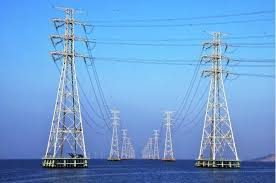
Power transmission lines stretch across rugged terrain, dense forests, and urban corridors, each demanding a tower that can handle specific mechanical loads, wind speeds, and clearance requirements. A one-size-fits-all pipe tower rarely survives long outside a narrow set of conditions. Custom configurations adjust leg spacing, brace patterns, and steel thickness to match conductor weight and ice loading, while taller or shorter heights keep live lines safely away from the ground or vegetation. In coastal salt-spray zones, designers might specify heavier galvanizing or additional cross-arm reinforcement, whereas high-altitude routes call for reduced wind surface and stronger anchor points. These tailored choices keep outages rare and maintenance crews safer.
Telecom networks present a different set of constraints. Towers must host multiple antennas, microwave dishes, and remote radio units without excessive deflection that degrades signal alignment. Custom pipe tower configurations for telecom often use smaller diameter pipes but tighter bracing to minimize sway under wind, while allowing internal cable routing and easy climbing access. Rooftop installations in cities push engineers to design stubby, high-capacity mounts that avoid penetrating waterproof membranes, whereas rural monopoles may need extra height to clear treelines but still fit on a narrow leased parcel. The result is a tower that fits its site like a tailored suit rather than an off-the-rack pole.
Railway electrification and signaling networks add yet another layer of specialization. Overhead catenary systems subject support structures to repetitive dynamic loads from pantograph contact, vibration from passing trains, and strict clearance envelopes along the track. Custom pipe towers here often feature reduced footprints to sit close to ballast without blocking maintenance access, along with non-conductive insulation or grounding details that differ from power line towers. Harsh weather exposure in mountain passes or tunnels means corrosion-resistant coatings and redundant bolt patterns become standard. By treating each network's physical and operational realities as design inputs, custom pipe tower configurations keep power flowing, signals clear, and trains moving without compromise.
Scheduling Custom Fabrication Without Compromising QA: An OEM's Balancing Act
For an OEM handling custom fabrication, the tension between production schedule and QA rarely shows up as a dramatic conflict—it's more like a slow leak. Every rush order, every tweak to a part spec, every last-minute material substitution quietly chips away at the inspection routines that keep defects from reaching the customer. The usual fix is to add more checkpoints, but that only pushes lead times out further. A better approach is to embed quality gates directly into the scheduling logic itself, so that a fabrication step isn't considered "done" until its measurements are logged and signed off—not as a separate phase, but as a condition for the next operation to start.
This doesn't mean turning QA into a bottleneck; it means rethinking what "on time" actually costs. When schedulers see inspection time as lost production time, they will always find ways to compress it. Instead, treat in-process verification as part of the cycle time estimate, not an add-on. For example, if a weld inspection takes twelve minutes, those twelve minutes belong in the routing, not in a separate QA queue that gets skipped when orders pile up. Once that mental shift happens, the schedule becomes a quality plan, not just a delivery date.
The hardest part is maintaining this discipline during peak demand. It helps to have visual signals on the shop floor—job travelers that can't be stamped complete without a QA signature, or software locks that prevent the next operation from being clocked in until the previous one passes. The goal isn't to slow things down; it's to make sure that the fastest path through the shop is also the one that meets spec. For an OEM, that balance is what keeps custom work profitable without eroding the reputation that brings in the next order.
Direct OEM Collaboration: The Underrated Advantage for Critical Infrastructure Projects
When a power grid fails or a water treatment plant goes offline, the cost per hour can dwarf the entire project budget. Yet many operators still source critical components through layers of distributors and resellers, losing direct access to the engineers who designed the equipment. Direct OEM collaboration strips away that distance. It puts your maintenance team in the same room as the people who understand the tolerances, failure modes, and lifecycle curves of every pump, breaker, and control module. This is not about cutting out middlemen to save a few percentage points. It is about getting the right technical answer at 2 a.m. when a substation alarms and your team needs to know whether a relay can be safely bypassed for six hours.
The real advantage shows up in long-term infrastructure planning. OEMs hold the field data from thousands of identical installations across different climates, load profiles, and failure histories. When you collaborate directly, that data becomes your data. A utility in the Midwest might learn that a specific bearing fails earlier in high-humidity coastal environments, allowing them to adjust preventive maintenance before the first failure occurs in their own system. Distributors rarely have this depth of insight because they handle multiple brands and lack the engineering feedback loop. Direct collaboration also shortens the path for custom modifications. If your facility needs a modified control enclosure or a non-standard communication protocol, an OEM can commit engineering resources early, preventing costly rework later.
Critics argue that OEM collaboration locks you into proprietary ecosystems. That is a valid concern, but it applies mainly when the relationship is one-sided. A mature collaboration includes access to drawings, firmware updates, training, and failure analysis. You negotiate these terms up front. The alternative—buying through third parties to maintain perceived flexibility—often leads to higher lifecycle costs, delayed emergency response, and the silent accumulation of technical debt. For infrastructure that must run for thirty or forty years, the underrated advantage is not price. It is the ability to pick up the phone and talk to the engineer who signed off on the design, not a sales rep reading from a spec sheet.
FAQ
They build steel pipe towers to exact customer specifications, focusing on custom fabrication rather than off-the-shelf products.
Utilities, telecommunications, and transportation agencies often need these towers for critical infrastructure like power lines, antennas, and monitoring systems.
It means they manufacture the towers themselves but can brand or adapt them for other companies, so the buyer gets a product built to their own engineering standards.
Standard designs rarely fit every site's load requirements, wind conditions, or space constraints, so custom work ensures the tower won't fail under extreme stress.
They typically work with high-strength carbon steel, sometimes weathering steel or galvanized finishes, depending on corrosion exposure and lifespan targets.
Yes, they have in-house cutting, rolling, welding, and testing equipment, so they can produce multiple towers in a single production run without outsourcing critical steps.
Every weld is inspected, dimensions are checked against CAD models, and load tests are performed on prototypes before full production begins.
Many projects include engineering review, foundation design assistance, and on-site installation guidance to make sure the tower performs as intended.
Conclusion
Custom steel pipe towers from a dedicated OEM address something standard catalogs miss: real-world site conditions. Rather than asking a project to adapt to off-the-shelf geometry, the fabrication starts with site-specific load data and terrain profiles, then moves through a controlled sequence from raw pipe blanks to weld-mapped assemblies. Every weld is traceable back to its heat number and inspected with NDT methods such as UT or MT, so the final tower carries a complete quality record, not just a certificate. This matters when a tower supports transmission lines on a ridge, a telecom array in a coastal wind zone, or a rail signal gantry beside a high-speed corridor.
Power, telecom, and rail networks each impose different deflection limits, connection details, and corrosion demands. A direct OEM collaboration lets engineers fine-tune wall thickness, flange patterns, and coating systems without the handoffs of multi-vendor supply chains. Scheduling remains a real tension: custom fabrication invites extra QA hold points, yet a mature OEM balances lead time by nesting similar pipe sizes, locking material early, and sequencing NDT so it never stalls welding. That balance—specific enough to perform, disciplined enough to ship on time—is what separates infrastructure-grade towers from commodity steelwork.
Contact Us
Contact Person: antor khan
Email: [email protected]
Tel/WhatsApp: 8613863903569
Website: https://www.qdabtower.com/