

OEM Skiing Socks Manufacturer for Custom Performance Winter Socks
2026-11-02
Every skier knows the misery of numb toes and damp liners halfway down the mountain. The fix often starts with a sock that fits your boot like a second skin—custom-made for your brand or team. Fuli Socks is an OEM skiing socks manufacturer that focuses on exactly that: custom performance winter socks with targeted cushioning, breathable zones, and a dialed-in fit. Before you order your next batch, here's what actually matters.
How We Build Custom Ski Socks That Actually Last
We start with the fiber itself, and this is where most socks go wrong. Instead of buying generic merino blends off the shelf, we work with a small spinner to wrap a high-tenacity nylon core in 19.5-micron merino. That puts soft wool against your skin and puts the abrasion-resistant nylon on the outside, where boots grind against the fabric. We also refuse to bleach the wool to a uniform white, because that strips the cuticle and weakens the fiber. Every batch gets tested for tensile strength and pilling before it ever reaches the knitting floor.
The next step is the knitting itself, and we don't use a single density across the whole sock. The heel and toe are knit tighter than the instep, which adds durability exactly where friction is highest. The shin gets a thicker terry loop for impact absorption, while the top of the foot stays flat so it doesn't bunch inside a tight boot shell. We also run a low-friction reinforcement yarn through the sole at a steeper angle than usual—this isn't just a thicker patch, it's a different stitch pattern that spreads load instead of concentrating it. The toe seam is hand-linked and pressed flat, so you won't feel a ridge digging into your toes after the first run.
Finally, every pair goes through a fit-specific production pass, not a one-size-fits-all template. We adjust the stitch count based on foot length and calf circumference, and we tweak the ankle compression for different skiing styles—a touring skier gets a slightly looser instep than a downhill racer. Before shipping, each sock is stretched over a foot form and inspected under tension. If the fabric doesn't snap back to shape within a few seconds, the pair is scrapped. We'd rather lose a batch than send out a sock that bags out after a season.
Material Choices for Sub-Zero Comfort
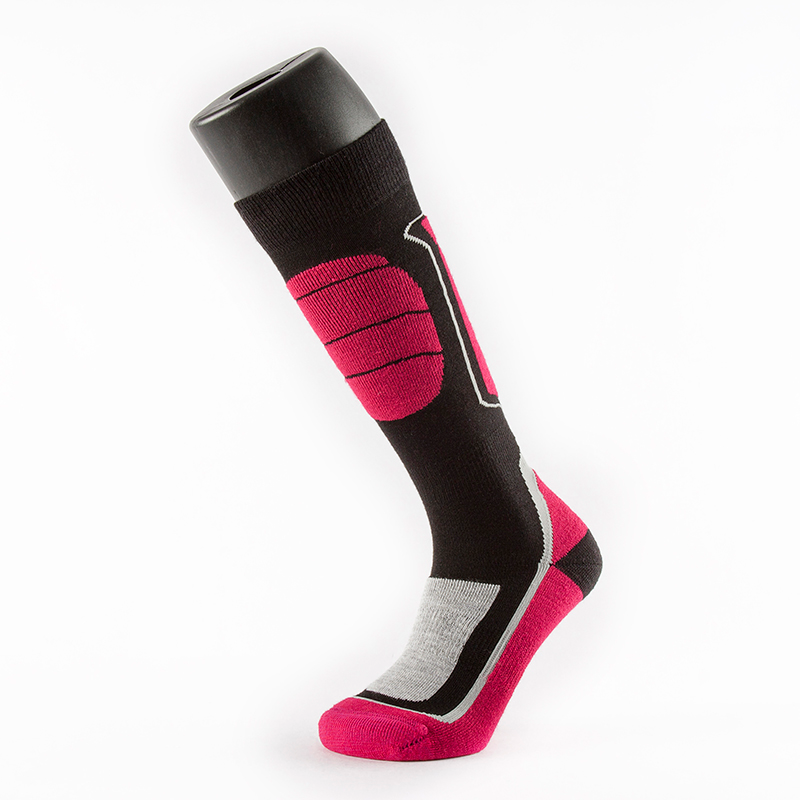
When the temperature plunges well below freezing, fabric selection stops being a preference and starts behaving like risk management. Merino wool remains the quiet workhorse for base layers because it holds warmth even when damp and resists odor over multi-day expeditions, but a growing number of polar explorers now pair it with silk-weight synthetics that wick faster during high-exertion climbs.
Mid-layer choices have moved beyond generic fleece. Aerogel-infused insulations, originally developed for aerospace, have made their way into sub-zero jackets, offering substantial loft without the bulk that traditionally limits mobility. Meanwhile, Polartec Alpha and similar active insulations regulate temperature so effectively during stop-and-go activity that they've replaced down for many guides who once swore by 800-fill goose down.
For the outermost shell, waterproof-breathable membranes are only part of the story. What separates a comfortable minus-forty day from a miserable one is often the face fabric's ability to shed spindrift and resist abrasion from ice screws and ski edges. A tightly woven nylon or polyester with a DWR treatment that actually survives repeated pack straps matter far more than marketing labels, and a growing number of serious cold-weather users are turning to waxed cotton blends for dry, wind-scoured environments where breathability matters less than total wind blockage.
From Design File to Finished Pair in 3 Weeks
A design file usually sits in limbo while factories quote lead times in months. We compressed that entire back-and-forth into a single, fixed window: upload the file, confirm the material callouts, and the countdown starts. No waiting on overseas sample rooms, no revising a tech pack five times because the first factory misread the stitch lines.
During those three weeks, your file moves through pattern grading, cutting, lasting, and finishing without you chasing updates. If something in the vector doesn't translate cleanly to a real upper, we flag it within the first few days and ask for a quick callout change, not a full resubmission. That keeps the timeline intact instead of restarting it.
Most delays come from handoffs, not the actual build. By keeping the design-to-production loop inside one team, a pair can go from a flat PDF or AI file to a boxed sample on your desk in 21 days. Not a soft estimate; the pair is finished, inspected, and ready to wear or show.
Pressure Mapping and Ankle Support
Uniform compression doesn't reflect how ankles actually bear load. Pressure mapping studies show the force shifts constantly between the deltoid ligament, the lateral complex, and the Achilles insertion, depending on stride angle and ground surface. Instead of guessing, designers use those pressure hot spots to vary cushioning and knit tension across the collar, arch, and heel counter. The result is support that follows the ankle's natural movement instead of fighting it.
The real benefit shows up in proprioception. When pressure data guides where a brace or sock provides more feedback, the body receives clearer signals about joint position before a misstep happens. That means the peroneal tendons and tibialis anterior don't have to work as hard to stabilize the ankle on uneven terrain. You get a sense of ground contact without the brace feeling like a cast.
Static measurements can mislead because they ignore the spikes that happen during a quick lateral cut or an unexpected dip in the trail. Dynamic pressure mapping captures those transient loads and lets manufacturers adjust strap angles or ribbing density in specific zones. The end product holds up under repetitive motion, yet stays flexible enough for all-day wear without numbing the top of the foot.
Small Batch Runs for Emerging Brands
Launching a new label often means tight budgets and limited warehouse space. Small batch production lets emerging brands test the market with a handful of styles instead of committing to thousands of units upfront. This approach keeps inventory lean and frees up cash for things that actually move the needle, like sampling, photography, or a second drop.
Another overlooked benefit is the room to experiment. When you're only producing fifty or a hundred pieces, a design that doesn't resonate isn't a financial disaster. You can tweak the fit, swap the fabric, or even kill a colorway without sitting on dead stock. That kind of agility is exactly what a new brand needs while it's still figuring out who its customer really is.
Finally, small runs open the door to better supplier relationships. Many factories and workshops prefer working with founders who start small and scale gradually. It builds trust, shows you understand production realities, and often leads to more flexible terms as your order volume grows.
Quality Checks That Catch Every Loose Thread
Every seam, stitch, and edge gets inspected under bright, angled light so nothing hides in shadow. We run a fingertip along each hem and turn garments inside out to catch loose threads before they become pulled loops or frayed edges.
Then a second pass focuses on stress points: underarm seams, pocket corners, zipper stops, and buttonholes. If a single stitch pops during a stretch test or the thread tension feels off, the piece is pulled and reworked right away. No exceptions, no “good enough” piles.
The final check happens after pressing and folding, because loose threads can emerge when fabric relaxes. This last sweep catches what earlier passes might miss, so only fully finished pieces go into the box.
FAQ
We lean toward a merino wool and nylon blend around 45% merino for temperature control and odor resistance, with nylon added at the heel, toe, and shin for abrasion resistance. For racers or high-output skiers we add a bit of spandex in the arch and cuff to keep the sock from sliding inside the boot.
Yes, our machines can run full terry, half terry, and flat knit panels in a single pass. That means extra padding can sit right where boot pressure builds—typically the shin and heel—while the instep and toe box stay thin for better boot feel.
For fully custom knit patterns we usually start at 300 pairs per colorway. If you're open to a stock construction with your logo embroidered or printed, we can drop the minimum to 100 pairs per size run.
Yes, once artwork and yarn specs are locked we knit a single size-run sample. You can test it on snow or in a boot fitting, and we only move to bulk after you sign off on the fit and feel.
We hold a control sample with the exact knit tension, yarn lot, and board size used for the approved sample. During production, one in every fifty pairs is checked against that control, and before packing we run random tests for stretch recovery and toe seam strength.
Sample development takes about 7–10 working days after we have your logo file and size breakdown. Bulk knitting then runs 25–35 days, with shipping time on top depending on where the goods are headed.
Yes, we can source and pack with custom printed polybags, header cards, or belly bands. Just send the dielines or artwork specs, and we'll fold that cost into the per-pair price.
Conclusion
Working with an OEM skiing socks manufacturer shouldn't mean settling for off-the-shelf patterns or mystery materials. We build every custom performance winter sock around the specific demands of alpine and backcountry use, from reinforced heel and toe zones to flatlock seams that refuse to rub. Instead of relying on a single fiber, our material blends combine merino wool's warmth and odor resistance with synthetic yarns for stretch retention and quick drying. The result holds its shape after dozens of wash-and-wear cycles, even when boots are buckled tight. Pressure mapping isn't a buzzword here; we test prototypes against real footbeds to fine-tune arch compression and ankle support zones, eliminating hot spots before production begins.
For emerging brands, the biggest hurdle is often minimum order quantity. That's why we run small batches without inflating costs or cutting corners. Upload your design file, and within three weeks we move from digital pattern to dyed, knitted, and finished pairs—no endless back-and-forth. Before anything ships, each sock passes a manual inspection that checks toe closures, cuff tension, and interior threads. Loose fibers are clipped, not hidden. This combination of honest materials, data-informed fit, and hands-on quality control means you're not just ordering socks; you're building a product line that can stand up to sub-zero descents and repeat customers who actually notice the difference.
Contact Us
Contact Person: Ryan Li
Email: [email protected]
Tel/WhatsApp: +86 13757342500
Website: https://www.fulisocks.com/