
OEM Shaving Foam Manufacturer Guide to Custom Formulations and Private Label Success
2026-08-31
Shaving foam might seem like a commodity—until your customers ask for something yours can’t deliver. Custom formulations are the new battleground, and private label brands need a partner who understands both the chemistry and the consumer. Wilson is that partner: an OEM shaving foam manufacturer obsessed with turning unique ideas into shelf-ready products. In this guide, we’ll explore how Wilson approaches everything from ingredient selection to scent profiling, so you can launch a foam that doesn’t just compete—it leads.
Why Most Shaving Foam Formulas Irritate Skin—and How a Custom OEM Fixes That
Walk down any drugstore aisle and you'll see dozens of shaving foams promising a smooth, comfortable shave. Yet for a surprising number of people, that foam leaves behind redness, tightness, and stinging. The root cause isn't just sensitive skin—it's the formula itself. Most mass-produced shaving foams lean heavily on inexpensive surfactants like sodium lauryl sulfate, which strip away the skin's natural lipid barrier in seconds. Add to that high levels of artificial fragrance, harsh preservatives, and a pH that often sits far above the skin's natural acid mantle, and you have a product that actively works against your skin during one of the most friction-heavy grooming rituals.
A custom OEM approach flips this entirely. Instead of tweaking an off-the-shelf base, a manufacturer can build a foam from scratch around a specific skin profile—whether that's dry, acne-prone, or post-shave reactive. The surfactant system can be swapped for gentle, coconut-derived glucosides that cleanse without defatting. The pH can be tuned to sit between 4.5 and 5.5, matching the skin's own acidity and keeping the barrier intact. What's more, skin-soothing actives like allantoin, bisabolol, or oat beta-glucan can be dosed at clinically meaningful levels—not just sprinkled in for label appeal. Even the propellant and foam density can be adjusted to minimize that classic cooling-but-drying alcohol kick.
This level of control also solves the scent problem. Many irritation complaints trace back to synthetic fragrance blends that contain known sensitizers like linalool or limonene. An OEM partner can formulate a truly unscented version, or use a skin-safe, low-allergen essential oil blend at a concentration that adds pleasure without penalty. The result is a shaving foam that feels like a skincare step, not a necessary evil—and that's the difference between a product people tolerate and one they actually look forward to using.
The Real Cost of Private Label Shaving Foam: What Brands Get Wrong
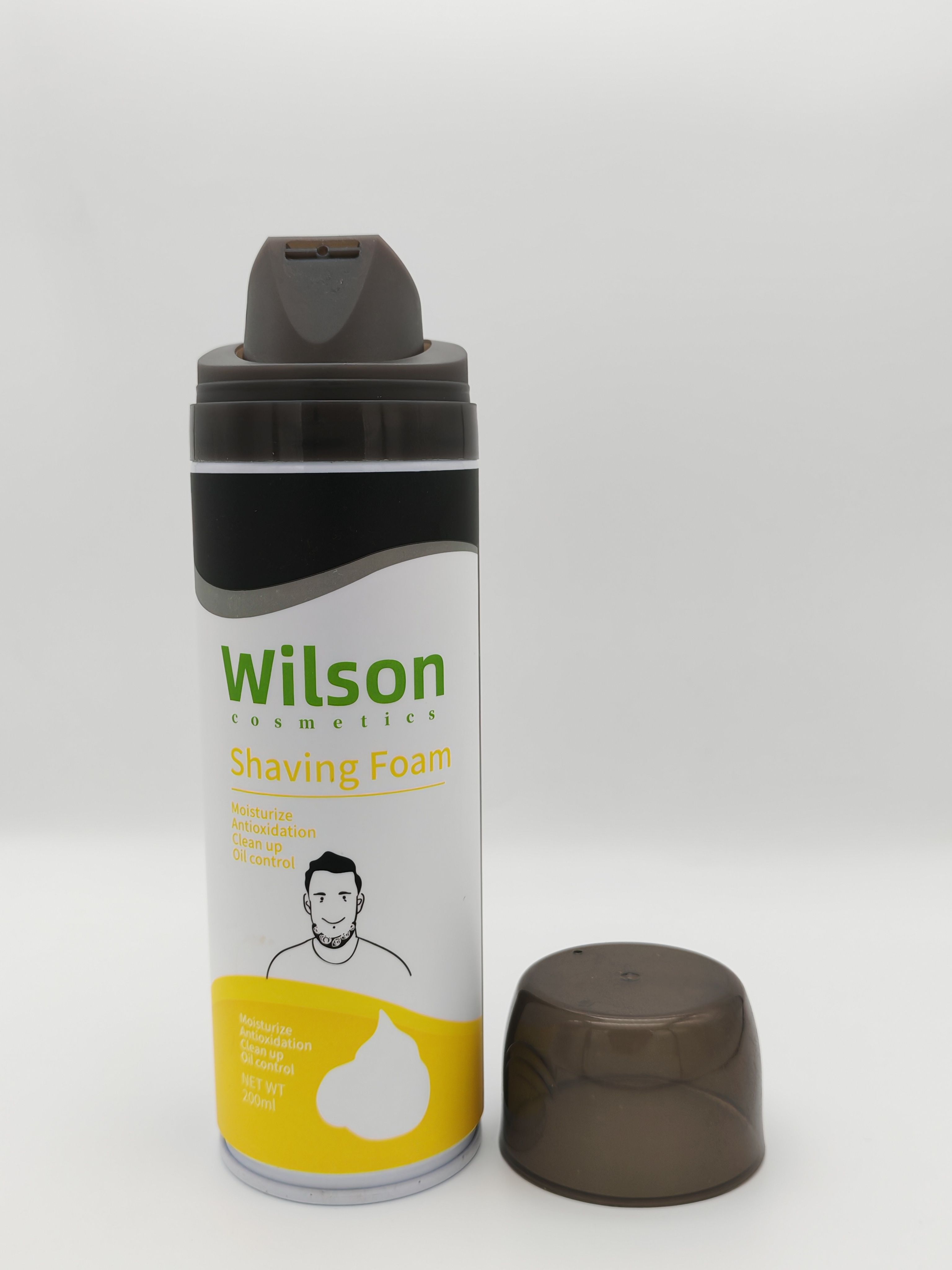
The price tag on a can of private label shaving foam rarely tells the whole story. Brands often chase the lowest possible unit cost, swapping premium surfactants for cheaper alternatives that leave skin feeling stripped or cause razor drag. The result isn't savings—it's a quiet erosion of trust. A customer who gets nicks and irritation won't simply shrug it off; they'll abandon the product after one bad shave and never look back. When you factor in the lost repeat purchases and the negative word-of-mouth that spreads faster than any ad campaign, that bargain formula suddenly costs far more than it saved.
Another blind spot is foam density and collapse rate. Many private label brands test lather in ideal conditions but ignore how it behaves on a wet face under real-world timing. A foam that thins out within thirty seconds forces users to apply twice as much per shave, doubling the actual cost per use. Worse, it creates the impression of a watered-down product, even if the ingredient list looks identical to a national brand. Consumers don't compare lab specs—they compare the feel of a full, cushiony lather that stays put. Skimping on stabilizers or propellant quality to shave a few cents off the bill of materials ends up costing the brand its perceived value.
Packaging gets overlooked just as often. A cheap valve or a poorly designed nozzle leads to sputtering, clogging, or uneven dispensing. That means wasted product trapped in the can, messy bathroom counters, and frustrated users who can't get the last 10% out. Those hidden losses add up across thousands of units, quietly devouring margins that the brand thought it had locked in. Smart private label programs treat the entire experience—lather quality, dispensing reliability, and post-shave skin feel—as the real cost equation. Miss any part of it, and the discount you offered becomes the reason customers switch to a competitor who got it right.
Building a Signature Scent and Texture Without a Chemistry Degree
You don’t need a lab coat to build a scent that feels like yours. Start with a handful of small jars, some neutral carrier oil, and whatever dried herbs, citrus peels, or spices you already have in the kitchen. Fill each jar with a different ingredient, let them steep for a few days, then sniff them side by side. Notice how dried rosemary sharpens over time, or how orange peel turns sweeter on day three. That changing character is your palette, and your nose learns it faster than any textbook could teach.
Texture follows a similar trial-and-error path. Melt a little shea butter with coconut oil, whip it as it cools, and feel what happens. Too greasy? Add a pinch of arrowroot powder or cornstarch and compare. Too stiff? Swap in more liquid oil like jojoba or sweet almond. The goal isn’t perfection on the first try, but knowing how your skin responds to each shift. One extra spoonful of beeswax can turn a thin lotion into a balm that stays put through a whole morning.
Keep a small notebook next to your jars and record what you reach for again and again. Combine two base infusions, let the blend rest for a week, then smell it with fresh attention. The scent that keeps pulling you back, the texture you stop adjusting because it already feels right, those repeated choices are your signature. Precision helps later, but early on, your own preferences are the only formula that matters.
How to Vet an OEM Manufacturer for Shaving Foam Before Sending a Deposit
Shaving foam is a pressurized aerosol product, so the usual cosmetics checklist is not enough. Before you send any money, ask the manufacturer to show their dangerous goods production permit or aerosol filling license alongside the standard business registration. Verify that the address on every document matches the actual plant location. A proper shaving foam OEM should also hold ISO 22716 or GMP certification for cosmetics, and ideally a separate clearance for handling flammable propellants like butane or propane. If they hesitate to share these files or give you blurred copies, treat that as a red flag.
Next, move beyond the marketing samples. Request a small pilot run on the exact filling line that would handle your order. Test the cans for seal integrity, spray pattern consistency, and pressure stability after storing them in both cold and warm conditions for at least two weeks. Check that the foam does not collapse quickly and that the valve does not clog after repeated use. Ask for third-party lab reports covering microbiology, heavy metals, and skin irritation. Better yet, send a few finished cans to an independent lab yourself. A factory that is confident in its work will not object to that.
Finally, negotiate payment terms that protect you. Aim for a deposit of thirty percent or less, with the balance due only after a pre-shipment inspection you or your agent can attend. Write the exact quality parameters into the contract, including foam density, pH range, and acceptable leakage rate. Ask for a small quality guarantee holdback, usually around five to ten percent for ninety days. Also request contact details for at least two existing clients who buy aerosol foam products, and actually call them to ask about late deliveries and how the factory handles complaints. If the manufacturer refuses a video tour of the filling room or keeps pushing for full upfront payment, walk away before your deposit disappears.
Custom Formulation Timelines: What Actually Happens From Brief to First Batch
Most brands assume the clock starts when a formulator gets the brief. In practice, it starts the moment a brand realizes their current product can't meet a new claim, texture goal, or cost target. That gap between realization and a written brief often eats up two to four weeks. The brief itself isn't just a document; it's a negotiation. Marketing wants a 12-month shelf life, a specific viscosity, and a fragrance that survives heat testing. The lab needs to know which of those are hard limits and which are flexible. Without that clarity, the first two weeks of formulation become a guessing game with expensive raw materials.
Once the brief is locked, formulators typically run a compatibility screen on the actives and preservatives first. This is where many timelines collapse. An active that works beautifully in a serum may destabilize in an emulsion with a low pH. Reformulating around that incompatibility can add three to five weeks, not because the chemistry is slow, but because each iteration needs stability testing at accelerated temperatures. Smart brands build this buffer into the timeline from day one. They also send a reference sample to the lab early, so the formulator can benchmark texture and skin feel against something tangible instead of a paragraph of adjectives.
The final stretch is rarely about the formula itself. It's about packaging compatibility, fill tests, and micro challenge results. A batch can hit every spec in a glass beaker and then separate inside a specific airless pump due to shear during filling. That's a two-week setback most timelines don't mention. The brands that hit their launch dates are the ones that treat the first batch as a prototype, not a finished product. They plan for at least one failed stability pull and one packaging adjustment. When you see a smooth launch, it's usually because the timeline had room for those corrections all along.
Private Label Shaving Foam Mistakes That Make Products Sit on Shelves
Many private label shaving foams end up gathering dust because brands skimp on the actual foam quality. A formula that is too watery or collapses seconds after dispensing feels cheap and frustrating. Buyers quickly notice when the lather does not cushion the razor, leading to nicks and razor burn. Once a customer has that experience, no discount will convince them to try the product again, and retailers start reducing shelf space.
Another frequent mistake is packaging that fails to communicate any real benefit. Some labels look like generic imitations of leading brands, with no clear reason to choose them over cheaper or more familiar options. Private label products lack big advertising budgets, so the package itself must do the selling. If the front label does not mention a unique angle like aloe for sensitive skin, a mild unscented formula, or a richer lather, consumers simply walk past it without a second thought.
Ignoring feedback from test groups and store buyers also keeps products locked in inventory. Some brands push forward with overpowering fragrances or heavy preservatives that cause irritation, even after early warnings. Others set a price that is only slightly below premium brands but far above the quality delivered, so shoppers stick with what they know. Without honest small-batch testing and a willingness to adjust the formula or packaging before a full rollout, these shaving foams become permanent residents of the clearance aisle.
FAQ
Look beyond the equipment list. A dependable partner will walk you through previous formulation challenges, share stability test results openly, and assign a single point of contact who understands your target market. Ask for samples made with your intended fragrance and packaging compatibility rather than generic lab batches.
Yes, if you focus on fewer variables. Start with a proven base and change only the fragrance, cooling agent, or post-shave feel. Many manufacturers offer modular customization where you select from pre-validated ingredient options. That keeps tooling and testing costs low while still giving you a distinct product.
The cushion density and rinse-off feel matter more than exotic additives. A higher ratio of stearic acid or a well-chosen emollient blend can make the foam feel richer. Cooling agents like menthol need careful dosing to avoid burning. Preservative selection also affects skin tolerance, so request a challenge test before finalizing.
Typically four to six months if no unusual packaging is involved. The first month covers formulation alignment and sample approval, the second month handles stability and compatibility testing, then production, filling, and labeling take another six to eight weeks. Delays usually come from fragrance reworks or label artwork changes, not from manufacturing itself.
Most manufacturers set a baseline based on raw material batches and filling line setup. You can sometimes reduce the initial run by accepting stock packaging or sharing a production slot with another brand. The trade-off is less flexibility in scent or label finish, so clarify what you are willing to compromise before asking for a lower MOQ.
Stability testing, preservative efficacy testing, and label compliance checks often catch people off guard. Shell or canister tooling may carry a one-time charge if you want embossed logos. Freight for aerosol products also differs from standard liquids because of hazardous material classification, so ask for incoterms early.
Localize lightly. Hard water areas may need a better chelating agent, while humid climates benefit from a less greasy after-feel. Fragrance preferences also shift by region, but the core foam structure can stay consistent. A good OEM partner will offer regional tweaks without charging for a full reformulation each time.
Use a limited run with stock packaging and one signature scent. Sell through a small retail pop-up, subscription box, or direct-to-consumer trial kit. Collect feedback on lather texture, scent strength, and post-shave tightness. Then refine the formulation for the full production run based on real user comments rather than internal guesses.
Conclusion
Most mass-market shaving foams trigger tightness and redness because they lean on harsh detergents and an alkaline pH that strips the skin's acid mantle. A custom OEM lets you swap those for milder, sulfate-free surfactants, bring the formula closer to skin pH, and add calming ingredients like allantoin or bisabolol without pushing costs into unrealistic territory. The real budget mistake is not the base price per unit but ignoring hidden fees—stability testing, fragrance adjustments, packaging compatibility trials, and minimum order quantities that don't match your sales cycle. Once you lock down the non-negotiables (skin feel, foam density, scent character), a good manufacturer can often work within a modest range instead of charging for endless reformulations.
You don't need a chemistry background to create a signature scent and texture; the OEM's in-house perfumer and formulator can translate reference products or descriptive language into a repeatable profile. Before sending any deposit, request samples from current clients, ask how ingredients are sourced and traced, and confirm whether the facility can handle your packaging type without manual workarounds. Timelines from brief to first production batch typically span eight to sixteen weeks, covering raw material lead times, lab-scale iterations, stability storage, and a small user trial—cutting this short almost always backfires. The products that end up sitting on shelves usually share avoidable flaws: trend-chasing too late, vague label claims, packaging that leaks or clogs, or no real-world feedback from the people meant to buy it.
Contact Us
Contact Person: Simon
Email: [email protected]
Tel/WhatsApp: +86 13267966849
Website: https://www.wilsoncosmetic.com