

Low Power Consumption Air Compressor Factory: The Smart Path to Energy-Efficient Production
2026-08-19
The most expensive air in your plant is often the kind you never notice—a slow leak here, an oversized motor there, a compressor that runs all night just to keep up with daytime demand. For years, manufacturers accepted this quiet waste as a cost of doing business. But a low power consumption air compressor factory can flip that equation. Seize Air doesn't just sell machines with better energy ratings; it designs systems that expose and eliminate the hidden drains on your compressed air budget. In this article, we'll unpack the smart path to energy-efficient production and show why choosing the right factory partner changes everything.
The Real Cost of Running a Traditional Air Compressor
When most shops budget for an air compressor, they look at the sticker price and stop there. The actual expense unfolds month after month on the utility bill. A traditional rotary screw or piston compressor often runs at full load even when demand drops to 40 or 50 percent, because the motor idles against a closed inlet valve or cycles on and off with heavy inrush currents. Over a five-year span, electricity can account for 70 to 80 percent of total cost of ownership. For a 50 hp unit running two shifts, that regularly means $40,000 to $60,000 in energy alone—far more than the initial purchase.
Maintenance adds another layer that rarely gets line-item attention. Oil changes every 1,000 to 2,000 hours, separator elements, air filters, condensate drains, and belt adjustments all stack up. A single unexpected failure—a blown hose, a seized airend, a burned contactor—can idle an entire production line. Downtime from a traditional compressor isn't just the repair bill; it's lost labor, missed shipments, and idle downstream equipment. Many facilities keep a rental unit on standby because the risk is so predictable.
Then there are the quieter costs: air leaks that waste 20 to 30 percent of output, pressure drops across aging piping, and the need to run at 110 psi just to get 90 psi at the point of use. Traditional systems often demand a dedicated dryer and extra filtration to hit consistent dew points. All of this churns away in the background, quietly inflating the real price of every cubic foot of air. Only when you track kilowatt-hours per hundred cubic feet delivered does the true cost become visible.
Inside a Low-Power Design: What Changes on the Factory Floor
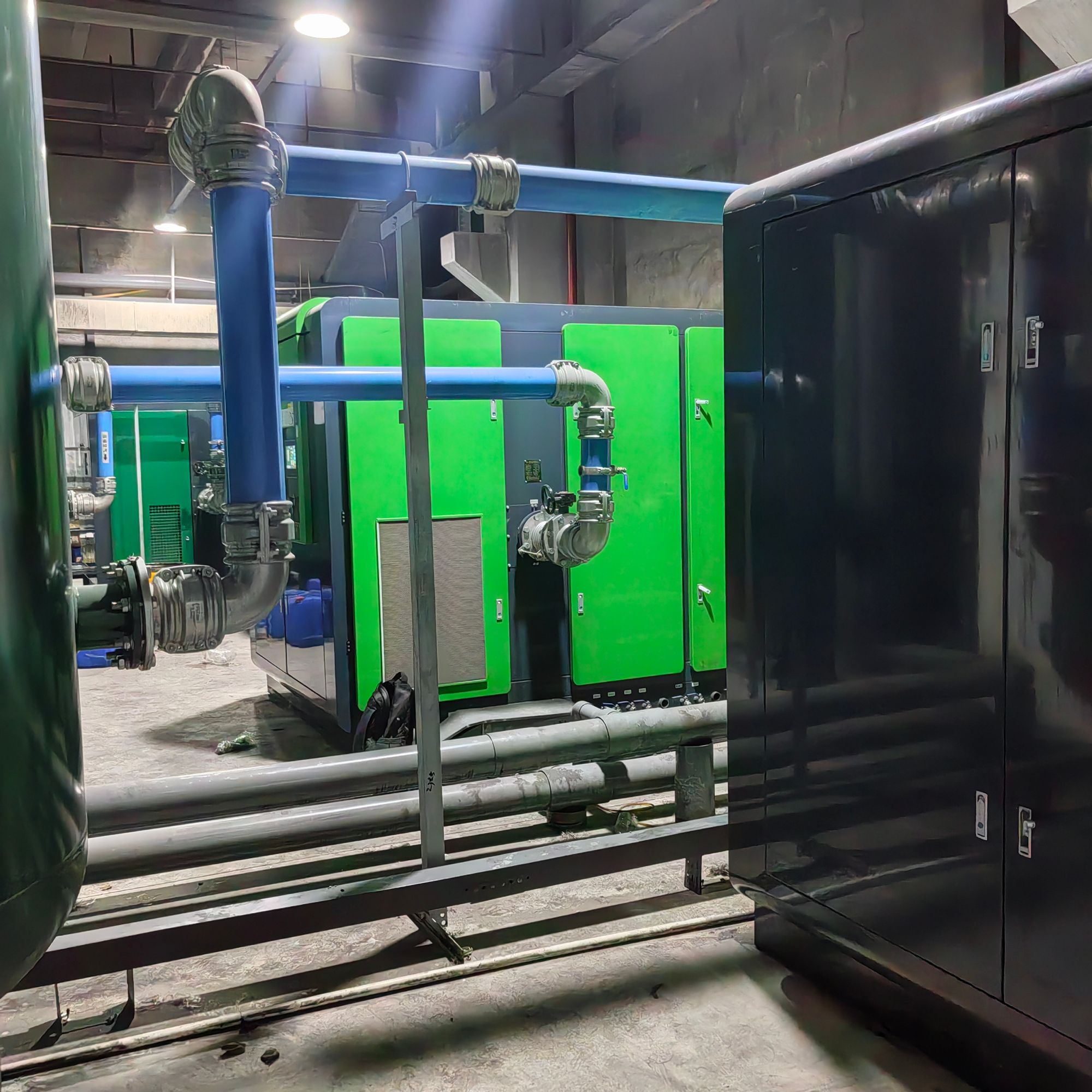
When a product shifts to a low-power architecture, the assembly line doesn't just swap chips. Workstations get recalibrated for tighter voltage tolerances; pick-and-place machines are programmed to handle thinner substrates that warp more easily under standard reflow profiles. Ovens often see revised thermal curves because low-power designs tend to use components with different heat capacities, and the old ramp rates can cause micro-cracks near the battery connector.
Test benches are where the most visible changes happen. Legacy fixtures designed for always-on power states can produce false failures on devices that sleep or enter deep power-down modes. Operators learn to insert wait states before probing, and some lines install dedicated low-current measurement stations because standard multimeters can't resolve nanoamp-level leakage. ESD protocols also tighten: low-power chips often lack the same clamping diodes, so wrist straps and ionizers get checked twice per shift instead of once.
On the material side, solder paste selection changes. Low-power boards frequently use low-temperature solder to protect heat-sensitive energy harvesting modules, which forces reflow ovens to hold zones at lower peaks for longer. Rework stations get new nozzle sizes for tiny passives that sit closer together. And surprisingly, the biggest adjustment is cultural: line leads start tracking idle power of the factory's own test equipment, because a low-power product built on an energy-hungry line undermines the whole point.
Smart Air Management: More Than Just a Buzzword
Walk into most modern buildings and you'll find a thermostat on the wall, maybe a timer, perhaps a basic schedule. That's not smart air management. Real smart air management starts when the system stops waiting for a person to tell it what to do and starts reading the room on its own—temperature shifts near windows, CO2 buildup in a crowded meeting space, humidity spikes after a rainstorm. Instead of running on a fixed clock, it blends live sensor data with occupancy patterns and weather forecasts to decide when to ventilate, when to recirculate, and when to simply hold steady.
The difference shows up in places you might not immediately notice. In a school, air quality can stay consistent between first period and the chaotic hallway rush without anyone touching a dial. In an office tower, zones that empty out after 4 p.m. stop receiving full heating or cooling while still maintaining baseline ventilation—cutting waste without sacrificing comfort. These aren't futuristic add-ons; they're practical adjustments that quietly pay for themselves over time.
What often gets lost in the buzzword cycle is that intelligence here isn't about flashy dashboards or voice commands. It's about a building learning its own rhythms and responding in small, constant ways. The best smart air systems are boring in the best sense—they work in the background, rarely need manual overrides, and make people forget the air was ever something they had to think about.
How Energy-Efficient Compressors Hold Up Under Heavy Loads
Energy-efficient compressors often get a reputation for being tuned for light-duty cycles, but the reality is more interesting when you push them hard. Modern designs lean on variable-speed drives and smarter unloading controls, which means they don't just throttle back to save power—they adjust the motor's output to match demand spikes without losing pressure stability. Under sustained heavy loads, this translates into fewer thermal swings and less mechanical stress on bearings and valves, because the compressor isn't constantly cycling between full bore and idle.
The real test comes when ambient temperatures climb or the duty cycle stays above 80 percent for hours. Here, efficient models hold their own by pairing high-efficiency airends with oversized coolers and low-resistance filtration. Instead of heat soaking and losing capacity, they shed excess temperature more effectively, keeping oil and seals within safe operating ranges. That means the rated free air delivery doesn't sag as much when the work gets punishing—a key reason heavy manufacturing lines have switched to these units without giving up reliability.
Maintenance intervals also tell a useful story. Components that run cooler and with less vibration tend to wear more slowly, even when the compressor runs near its upper limit day after day. Operators who used to expect shorter service life from energy-saving equipment are finding the opposite: the same design choices that cut power consumption also reduce the kind of fatigue that leads to premature failures under load. It's not magic—just better engineering that works hardest when the pressure is on.
Calculating the Payback: Energy Savings That Show Up on the Bill
A quick look at the math can be misleading if you only divide installation cost by a generic savings estimate. Real payback periods shift with your local utility rates, how often equipment runs, and even the time of day you draw power. Start by pulling a full year of past bills—not just one month—so seasonal spikes and dips aren't hiding in the average.
Compare your baseline usage against the expected drop after the upgrade. If a new heat pump is rated to use 1,200 fewer kilowatt-hours per year and your blended electricity rate is $0.14, that's $168 saved annually before any rate changes. But many utilities use tiered or demand-based pricing, so the savings on the margin can be higher when you eliminate your most expensive hours.
Say you spend $2,400 on insulation and air sealing. If the resulting comfort upgrade cuts your heating and cooling bills by $45 per month during the peak season and $15 per month in mild months, you might recover the upfront cost in just over three years. After that, the savings land directly in your pocket every billing cycle—no rebate needed to make it real.
From Factory to Future: Making Low Power the Default
For decades, the factory floor ran on a simple assumption: power was cheap, and performance was king. Machines hummed at full tilt, sensors blinked around the clock, and energy efficiency was an afterthought tied to cost-cutting campaigns rather than design philosophy. Today, that assumption is collapsing under its own weight. Rising energy prices, tighter carbon budgets, and the sheer density of connected devices have forced a rethink. The old logic of retrofitting efficiency onto existing systems is giving way to a new baseline, where low power is not a feature you switch on, but the default state from the first schematic.
Making low power the default means changing the conversation at the very start of product and system design. It means asking not how we can reduce consumption after the fact, but why a component is awake at all when it has nothing to say. Sleep states, duty cycling, and energy harvesting move from exotic options to standard building blocks. In industrial settings, this shift is already visible in wireless sensors that report only on change, actuators that draw near-zero quiescent current, and microcontrollers that spend most of their life in deep sleep. The factory of the future will not be filled with louder, faster machines; it will be filled with quieter, more deliberate ones that know when to act and when to rest.
The transition is not painless. Legacy equipment, safety regulations, and the inertia of proven processes all push back against a low-power-first mindset. Yet the companies that embrace this default early are discovering unexpected advantages: lower heat loads mean longer component life, fewer battery replacements mean less maintenance downtime, and a smaller energy footprint opens doors in markets where sustainability is a precondition. Low power is no longer a compromise for weak performance. It is the foundation of a factory that is not only cleaner and cheaper to run, but also more resilient, more adaptable, and more ready for whatever the next decade brings to the production line.
FAQ
The main difference lies in the design philosophy. These factories integrate high-efficiency motors, variable speed drives, and smart load management from the start. Every component is selected to minimize energy loss, and the production process itself often includes testing for specific power consumption rather than just output capacity.
Smart controls continuously monitor demand and adjust motor speed to match real-time airflow needs. Instead of running at full speed with frequent unloading, the compressor stays in its most efficient operating range. This avoids wasted energy during partial load and prevents pressure overshoot.
You will typically see permanent magnet synchronous motors, two-stage compression elements, efficient air-end designs, low-pressure-drop piping, and heat recovery systems. Some facilities also use digital twins to simulate energy flows and fine-tune assembly processes before mass production.
In most cases, yes. Electricity accounts for a large share of a compressor's lifetime cost, often far more than the purchase price. A machine that uses 15 to 20 percent less energy can pay back the price difference within a few years, and then keep generating savings.
Look beyond marketing claims. Ask for third-party test reports on specific power, check whether the factory uses automated quality control, review real-world case studies, and confirm the availability of local service support. A careful look at the actual production process often reveals more than a brochure.
Yes, they are designed for continuous operation. The efficiency gains come from smarter control and better component matching, not from reducing output. Many models perform well under demanding conditions because they avoid overheating and mechanical stress caused by constant start-stop cycles.
Compression generates a lot of heat that is normally wasted. These facilities often capture that heat and use it for space heating, water preheating, or even drying processes within the plant. Reusing thermal energy lowers total energy demand and improves the overall efficiency of the production site.
The benefits go beyond lower electricity bills. Energy-efficient production reduces carbon footprint, extends equipment life due to smoother operation, and creates a stronger selling point for customers who care about operating costs. It also positions the factory as a forward-thinking partner in a competitive market.
Conclusion
Running a traditional air compressor often hides the real expense behind a steady hum. The electricity meter barely tells the whole story—wasted heat, pressure drops across aging piping, and the compressor cycling on and off during low demand all chip away at margins. A low-power factory rethinks that entire system. Instead of simply swapping in a more efficient motor, the floor itself changes: variable-speed drives match air output to actual use, two-stage compression squeezes more air from each kilowatt, and smart controllers idle machines instead of letting them run unloaded. The result is a workspace that runs cooler and quieter, with fewer emergency service calls.
Smart air management turns out to be practical rather than a buzzword once sensors start feeding data into a central controller. The system can trim pressure setpoints overnight, bring a backup compressor online before demand spikes, and flag small leaks before they become expensive habits. Under heavy loads, well-designed efficient compressors hold their rated flow without overheating because better cooling passages and tighter tolerances keep the unit within its efficient band. The payback shows up directly on the utility bill, often within two to three years after accounting for rebates and reduced maintenance. When factories stop treating compressed air as a fixed overhead and start treating it as a managed utility, low power becomes the obvious default for any new line or expansion.
Contact Us
Contact Person: Mia
Email: [email protected]
Tel/WhatsApp: +86 19821985894
Website: https://www.seize-air.com