
Leading Exhibition for Fine Chemicals Connects Global Innovators and Market Leaders
2026-08-23
Fine chemicals power everything from lifesaving drugs to sustainable materials, yet the real breakthroughs rarely happen in isolation. At ICIF, the leading exhibition for fine chemicals, global innovators and market leaders don't just exchange business cards—they spark collaborations that shape entire industries. So what makes this gathering the place where connections turn into competitive advantage? Let's take a closer look.
Where Fine Chemical Innovators Meet Their Next Business Partner
Finding the right collaborator in fine chemicals often means sifting through countless directories, hoping that a profile matches your specific synthesis or scale-up challenge. What you actually need is a place where technical depth meets commercial readiness—where a specialist in chiral building blocks can talk directly to a team planning a pilot campaign, and where a custom synthesis lab can showcase its novel catalytic route without layers of corporate noise. That is the kind of environment built here: a focused network for innovators who care about yield, purity, and reproducibility as much as they care about timelines and cost.
Rather than relying on broad matchmaking algorithms or generic supplier lists, this space prioritizes direct engagement. A process chemist looking for a partner to handle high-pressure hydrogenation will find researchers who have actually run those reactions at scale, not just sales teams quoting a brochure. Likewise, a start-up with a promising API intermediate can meet established manufacturers who understand regulatory documentation and impurity profiling. The conversations that start here tend to move quickly from “Do you have capacity?” to “Can we run a trial batch next month?” because both sides arrive with a clear sense of what is technically feasible.
What makes this meeting point different is the shared assumption that innovation in fine chemicals is rarely a solo act. Whether it is a new enantioselective step, a greener solvent system, or a more efficient crystallization protocol, breakthroughs usually happen when a discovery team connects with a partner who has complementary equipment and experience. Here, those connections are not left to chance. The community is curated around real project needs, so by the time you reach out to a potential business partner, you already know that their capabilities align with your current stage of development—and that they are ready to move forward, not just exchange business cards.
A Global Stage for Chemistry That Actually Reaches the Market
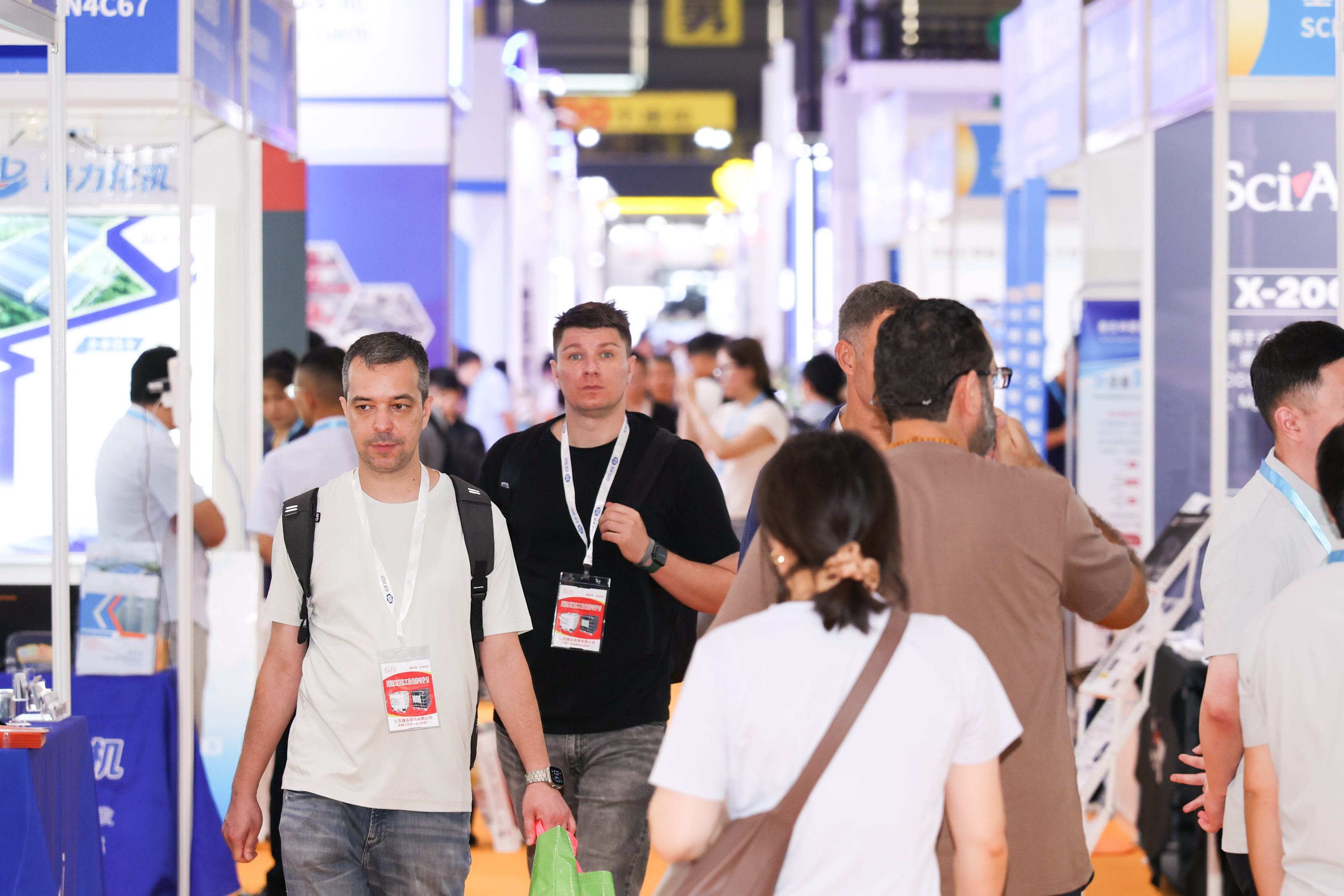
Chemistry conferences often showcase beautiful science that never leaves the poster hall. This stage is different. It brings together researchers, manufacturers, and investors from more than forty countries, and the focus stays on what actually ships, scales, and sells. From a novel polymer additive that survives ten thousand hours of UV exposure to a biocatalytic route that cuts solvent use by seventy percent, the projects on display have already moved past proof of concept.
The real value is in the conversations that happen after the keynote. A lab director from Singapore might sit down with a specialty chemicals buyer from Rotterdam and walk away with a co-development agreement for a flame-retardant coating that meets both EU and ASEAN standards. Those moments don't come from generic matchmaking software; they come from a curated floor where every exhibitor has submitted data on production cost, regulatory status, and first customer feedback.
What makes the event feel different is its quiet impatience with hype. You won't see a long row of booth signs promising to 'revolutionize' anything. Instead, you see tangible objects: a sealed battery cell that cycled two thousand times without swelling, a textile swatch dyed with a metal-free process, a recyclable epoxy that separates cleanly from carbon fiber. That's chemistry with a passport and a delivery date.
Inside the Conversations Reshaping Specialty Chemicals
In boardrooms and on plant floors, specialty chemical producers are moving past generic sustainability pledges and into harder questions about molecular design, feedstock flexibility, and product lifetime. The most energized discussions now center on how to decouple performance from legacy inputs like PFAS or solvent-heavy systems without sacrificing the properties customers refuse to compromise on. Leaders are asking not just whether a replacement works, but whether it can scale across multiple production sites, survive regulatory shifts in different regions, and still meet cost targets that procurement teams will actually accept.
At the same time, conversations with downstream customers are becoming less transactional and more architectural. Automotive, electronics, and personal care brands want suppliers who can co-develop formulations around circularity metrics and carbon intensity, not just deliver a spec sheet. This is pushing specialty chemical firms to open up their R&D pipelines earlier, share lifecycle data more transparently, and rethink how they capture value from services like reformulation support or take-back logistics. The suppliers gaining traction are those treating these dialogues as product strategy, not compliance box-ticking.
From Lab Curiosity to Commercial Reality in Fine Chemicals
The journey of a fine chemical often begins as a footnote in a research notebook—a curious byproduct, an unexpected crystal, a reaction that behaved strangely under pressure. Those anomalies rarely survive the leap from bench to plant without someone stubborn enough to ask why. What starts as a gram-scale oddity in a fume hood eventually becomes a specification, a certificate of analysis, a line item in a supply agreement. The shift is rarely glamorous. It involves mundane realities: solvent recovery economics, impurity profiles, batch consistency across seasons, and the quiet anxiety of scaling up a reaction that was only ever run three times in a lab.
Commercialization forces a different kind of discipline. A reaction that tolerates a 5% yield loss at lab scale becomes a cost problem at ten thousand liters. Impurities that were once mere peaks on a chromatogram now carry regulatory weight. The fine chemicals sector survives on this translation—turning intellectual curiosity into reproducible, profitable manufacturing. It demands respect for the unglamorous: rigorous documentation, supplier audits, waste stream mapping, and the humility to accept that a beautiful synthesis means little if it cannot survive contact with a production schedule.
Yet the edge still belongs to those who remember the original curiosity. The best process chemists are not just engineers of cost reduction; they are detectives of mechanism, still fascinated by why a reaction misbehaves. That dual identity is what makes a fine chemical credible in commerce. It is not merely a product that happens to be made in small volumes. It is a material whose entire manufacturing logic was born from a specific intellectual puzzle, and whose market value depends on both the elegance of the solution and the grit required to make it boring enough to trust.
Why Market Leaders Keep This Exhibition at the Top of Their List
Most senior teams don't return to a trade show for the booth traffic. They come back because this particular floor consistently delivers the kind of face-to-face conversations that normally take months to arrange. Buyers with actual budget authority walk the aisles without the usual gatekeepers, and a twenty-minute demo here often replaces three rounds of scheduled calls. That compression of the sales cycle is hard to ignore when quarterly targets are on the line.
Beyond the meetings, the event functions as a quiet competitive benchmark. Walking the halls reveals which features rivals are actually pushing, which distribution partners are shifting allegiances, and which product categories are getting real attention rather than press-release hype. The closed-door roundtables and invitation-only buyer sessions add another layer: participants talk about pricing pressure, logistics bottlenecks, and regional demand shifts with a candor you rarely get on a webinar. For leaders who treat market intelligence as a quarterly discipline, missing this exhibition means paying more for the same information later or learning it from a competitor's announcement.
The Fine Chemical Event That Works Like a Strategy Session
Most trade shows hand you a lanyard and a floor plan. This one sits you down with a blank worksheet and a room full of people who actually know how to read a supply-demand curve. The sessions aren't lectures — they're working groups where you map out your own plant's capacity against next quarter's raw material forecasts, then defend your numbers to the person across the table.
The organizers deliberately keep the attendee list small enough that a conversation can move from a panel discussion to a hallway debate to a bar napkin without losing momentum. You won't find a single booth selling generic "solutions." Instead, you'll find former plant managers and procurement leads running scenario drills: what happens to your margins if a key intermediate gets hit with new export restrictions? How do you renegotiate a multi-year catalyst supply contract when the supplier's own feedstock costs jump 20%?
By the end of the second day, the real deliverable isn't a bag of brochures. It's a revised sourcing strategy, two new contingency suppliers you've already vetted in person, and a much clearer sense of which of your assumptions were actually tested — and which were just comfortable. That's what a strategy session is supposed to do, and this event finally does it for fine chemicals.
FAQ
Instead of just rows of booths and generic pitch sessions, it deliberately places inventors and decision-makers in the same room. The emphasis is on real problem-solving conversations, not just lead collection.
You'll find a mix of R&D leaders from specialty chemical firms, procurement heads from pharma and agrochemical companies, independent innovators, and investors scouting for scalable technologies. It's a cross-section of people who can actually move projects forward.
Through curated matchmaking sessions, informal breakout discussions, and shared project showcases. The format pushes past the usual exchange of business cards and encourages teams to map out pilot collaborations on the spot.
Expect everything from greener synthesis routes and high-purity intermediates to novel catalysts and process intensification methods. The common thread is practical scalability rather than lab-only curiosity.
Because the audience includes the exact people who can license, fund, or co-develop a new process. A single well-timed conversation with a manufacturing director can shortcut months of cold outreach.
Yes, but not in the way most trade shows are. Instead of just meeting existing clients, producers get an early look at emerging technologies that could lower their production costs or open new application areas.
It uses shorter, themed sessions and intentionally limits the number of parallel tracks. The goal is depth over volume, so attendees leave with a handful of actionable contacts rather than a stack of forgotten brochures.
Many walk away with signed NDAs, concrete pilot trial agreements, or at least a shortlist of partners for joint development. The focus is on building momentum during the event itself.
Conclusion
This exhibition is not a passive showcase—it is where fine chemical innovators walk in with novel synthesis routes, performance additives, or scale-up problems and walk out with signed NDAs, pilot commitments, and distribution leads. The floor is deliberately curated so that every aisle connects a specialty chemical company with a procurement team that actually has budget authority. Instead of endless brochure exchanges, the event runs scheduled matchmaking sessions, technical briefings, and quick-fire problem-solving tables. The subtitle “Where Fine Chemical Innovators Meet Their Next Business Partner” captures the transactional energy, but the real pull is the caliber of attendees: R&D directors, plant managers, regulatory specialists, and supply chain leads all moving through the same halls. Market leaders keep this exhibition at the top of their list because it works like a strategy session, not a trade show parade.
The global reach matters because fine chemicals ignore borders—a catalyst tweak in Osaka can de-bottleneck a reactor in Ludwigshafen. Here, lab curiosities get tested by commercial eyes. A poster on selective fluorination can spark a conversation about kilogram supply, then a pilot campaign, then a multi-year contract. The conversations reshaping specialty chemicals often happen in small meeting rooms adjacent to the floor, where chemists huddle with C-suite executives over phase diagrams and cost models. It is not unusual for a Monday morning introduction to become a Thursday afternoon term sheet. That is why this event remains the most efficient way to turn fine chemical innovation into commercial reality—one handshake, one data point, one pilot batch at a time.
Contact Us
Contact Person: Shaozhen Zhou
Email: [email protected]
Tel/WhatsApp: 0086-18612117599
Website: https://en.icif.cn/