

Industrial NPT Ball Valves: The Complete Selection and Performance Guide
2026-11-16
Selecting an industrial NPT ball valve seems simple—until a single leak, a pressure spike, or a wrong material choice turns a routine operation into a costly shutdown. Whether you're specifying for high-cycle automation or a compact manual shutoff, the gap between 'good enough' and truly reliable often comes down to details most catalogs skip. At UPTAI, we've seen those details reshape performance in thousands of installations. This guide strips away the jargon and gives you a straightforward path to valve selection that holds up under real-world conditions—without the trial and error.
Why NPT Threads Dominate High-Pressure Valve Connections
NPT threads create an increasingly tight seal as they are wrenched together, making them inherently suited for high-pressure environments where leaks are simply not an option. Unlike parallel threads that rely on an O-ring or gasket, the tapered design forces the flanks of the male and female threads to crush into one another, eliminating spiral leakage paths even under severe vibration or thermal cycling.
Another reason NPT dominates is the sheer convenience of field assembly and repair. With no separate sealing washers to misplace or degrade, a few wraps of PTFE tape or a dab of thread sealant is all it takes to achieve a bubble-tight connection up to 10,000 psi in smaller sizes. This simplicity reduces downtime during maintenance and avoids the need for precisely machined flat surfaces that plague alternative coupling styles.
The standard’s century-long evolution has also bred a vast ecosystem of compatible fittings, valves, and tools, giving system designers a risk-free path to interoperability. From petrochemical manifolds to hydraulic power units, the confidence that an off-the-shelf NPT fitting will mate reliably with any brand of valve minimizes supply chain surprises and keeps critical infrastructure running safely at pressures that would blow apart lesser connections.
Material Pairings That Prevent Galling and Seizure Under Thermal Cycling
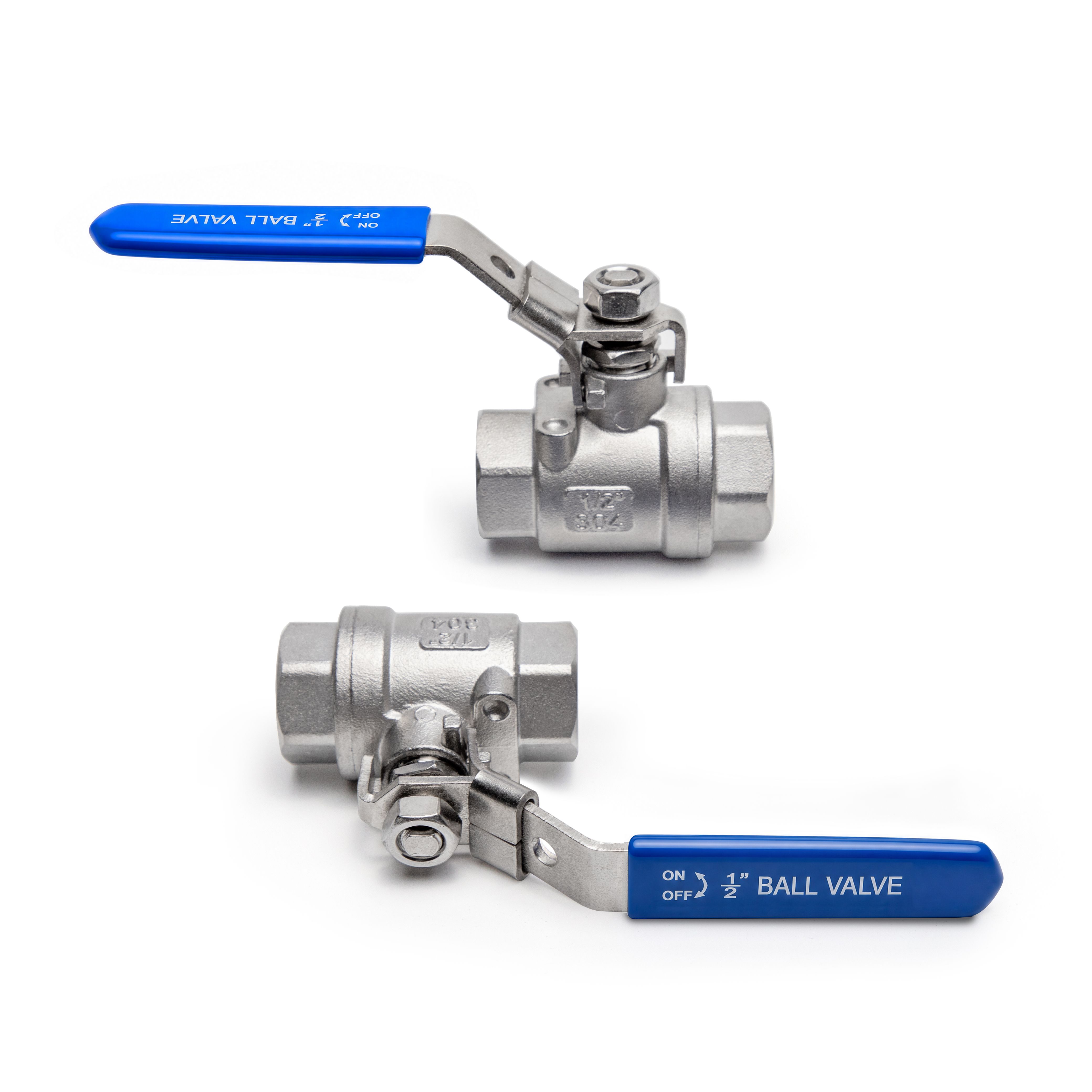
Material selection in assemblies that experience repeated thermal cycling requires more than just matching coefficients of expansion. When two surfaces slide or bear against each other under fluctuating temperatures, the thinning and breakdown of oxide layers can trigger microscopic cold welding, leading to galling or full seizure. Pairings that rely on stable, self-replenishing surface films—such as nitrided steel against a high-nickel stainless alloy—tend to interrupt metal-to-metal contact before adhesion initiates, even as thermal stresses push components out of their design clearances.
Certain ceramic-metallic combinations take a different approach by fundamentally altering the nature of the interface. Silicon carbide running against a graphitic carbon composite, for instance, exploits the self-lubricating properties of graphite to maintain slip under extreme heat and pressure swings. In steam valve and nuclear equipment applications, the deliberate formation of tenacious magnetite layers on ferritic steels paired with cobalt-based hardfacings can dramatically raise the temperature window where friction welding is avoided—provided the oxide scale is compact and well-adhered enough to survive thermal shock.
Another underappreciated factor is the role of geometric stiffness in preserving these protective films. A columbium-alloy fastener threaded into an aluminum-bronze bushing may perform well in a static oven test, yet gall within a few dozen thermal cycles if differential growth distorts the thread flanks enough to breach the interfacial layer. Designing the joint so that relative sliding re-distributes load rather than concentrating it at a handful of asperities often makes the difference between a pairing that survives years of thermal service and one that locks up during the first over-temperature event.
Decoding Bore Sizes and Flow Coefficients for Your Specific Media
When you’re sizing a valve for a process, the bore diameter and the flow coefficient aren’t just numbers on a datasheet—they’re a direct response to what’s moving through the line. A thick, sticky polymer demands a generously sized bore and a valve trim that won’t choke the flow, while a light hydrocarbon at high vapor pressure might let you step down a size without losing throughput. The trick is tying these two parameters to the fluid’s viscosity, density, and even its tendency to flash or cavitate. Ignore the media’s personality, and you’ll end up with a valve that erodes prematurely or simply can’t hit the target flow range.
Flow coefficient charts give you a theoretical capacity, but they rarely tell the whole story. Water is the baseline, but swapping in a slurry with 30% solids or a shear-sensitive emulsion changes the effective Cv dramatically. What you’re really decoding is how the media interacts with the seat geometry. A full-bore ball valve, for instance, might show a stellar Cv on paper, yet with a fibrous medium, those same straight-through passages can turn into a trap for clogs. Sometimes a reduced port with a slightly lower nominal Cv actually ends up passing more over time simply because it resists buildup and keeps the flow consistent.
The material reality is that no single bore size works universally for every fluid, even if the pressures and temperatures match. You have to look at the actual clearance, the speed through the gap, and whether your media can handle the shear or will degrade. For clean, incompressible liquids, a higher Cv buys you capacity headroom; for compressible gases near the choke point, a slightly larger bore might just shift where the choked flow limit sits rather than improving it linearly. Learning to read these trade-offs for your specific media—rather than relying on generic valve catalogs—is what keeps systems running smoothly long after the initial install.
How Fire-Safe Designs Survive When Standard Valves Fail
When standard fire safety valves succumb to extreme heat or pressure, the difference between containment and catastrophe often comes down to design philosophy. Fire-safe designs are not merely upgraded versions of conventional valves; they abandon reliance on soft seals that melt or warp. Instead, they incorporate metal-to-metal seating and graphite-based packing that hold integrity well beyond the failure point of ordinary components, allowing them to function as a last line of defense when the rest of the system is compromised.
A key survival mechanism lies in how these valves manage thermal expansion. In a raging fire, metal bodies distort and sealing surfaces shift in ways that typical designs can't accommodate. Fire-safe valves are engineered with secondary sealing paths and spring-loaded elements that compensate for this distortion, maintaining a tight shutoff even as the valve body distorts. This isn't just about withstanding a test temperature for a few minutes—it's about preserving operability long enough for emergency crews to isolate fuel sources and prevent a runaway blaze.
The true test emerges after the fire is suppressed. Many valves that technically survive a burn test fail when cooling down, because gaskets shrink and seats crack under thermal shock. True fire-safe designs are validated through full thermal cycling, proving they can hold pressure during cool-down and still operate afterward. This resilience is built into the geometry and material choices, not added as an afterthought, ensuring that escape routes remain clear and secondary disasters are avoided even when the primary safety layers have been destroyed.
Installation Pitfalls That Void Performance Guarantees
Most homeowners never read the fine print tucked at the end of a warranty booklet, but it's there that performance promises often unravel. The moment a product is installed against the manufacturer's specified tolerances—whether that means insufficient clearance around a heat pump, a poorly leveled air handler, or a slope that traps condensate instead of draining it—the coverage evaporates. It's not dramatic. It's simply the reality of how technical documentation intersects with on-site decision-making. The best product in the world behaves like a lemon if it's forced to run outside its designed envelope, and no guarantee holds water when the root cause traces back to an installation shortcut.
Then there’s the domino effect of using unapproved ancillary materials. A flashing detail that looks clean can silently void a roofing warranty because the installer substituted a budget sealant that chemically attacks the membrane. Same story with piping insulation that can’t handle the sustained discharge temperature of a tankless unit; the warranty evaporates the minute that insulation fails and causes a cascade of errors. Manufacturers don’t leave wiggle room for “it seemed fine at the time.” The installation manual isn’t a suggestion—it’s the legal boundary of what they’ll stand behind. Cross that line, and the performance guarantee you relied on was never really in play.
Even subtler pitfalls lurk in the commissioning phase. Rushing through a startup checklist because the job is behind schedule can leave a system running with factory-default parameters that don’t match the building’s actual load profile. Six months later, when comfort complaints roll in, the service tech pulls the logs and finds the equipment has been cycling outside its warranted duty cycle—effectively dooming any chance of a no-cost repair. A simple missed step, like failing to document the measured air flow or leaving a dip switch in the wrong position, becomes the loophole that transforms a premium, “lifetime” guaranteed system into an expensive orphan nobody will cover.
Seat and Seal Technologies Rated Beyond Their Pressure Limits
Designing valve seats and seals that operate reliably above their nominal pressure ratings demands a complete rethinking of material interfaces and load distribution. It is not simply a matter of choosing a harder elastomer or a stiffer spring. Engineers focus on creating a self-energizing geometry where increasing media pressure actively drives the sealing element tighter against the mating surface, transforming a potential failure point into a performance advantage.
Material selection often breaks away from standard polymers and enters the realm of engineered thermoplastics and composite structures. For example, seals reinforced with non-metallic fibers or layered with dissimilar hardness profiles can withstand extrusion gaps that would instantly destroy a conventional O-ring. The seat itself is frequently machined with a controlled micro-groove finish, deliberately introducing a surface roughness that promotes a mechanical interlock with the seal material under high load, effectively turning the two components into a cohesive unit rather than a passive boundary.
Beyond static integrity, dynamic cycling presents the real challenge. A seal rated beyond its standard limits must handle rapid decompression without suffering explosive gas expansion damage. This is often mitigated by integrating pressure-relief pathways directly into the seal profile, allowing trapped gases to vent slowly. In some innovative designs, the seal cross-section mimics a labyrinth or a chevron stack, where each lip handles a fraction of the overall pressure drop, ensuring that no single element ever sees the full force that the assembly was originally told could not be tolerated.
FAQ
NPT ball valves excel under high pressure because their tapered threads create an increasingly tight seal as pressure rises. The metal-to-metal connection, combined with proper thread sealant, maintains integrity even when handling aggressive media or thermal cycling. They also feature a full-port design that minimizes pressure drop and turbulence, which is critical for maintaining flow efficiency in process lines.
The choice hinges on pressure and size. Floating ball valves work well up to about 6 inches and moderate pressures, as the ball is pushed against the downstream seat to seal. For larger diameters or high-pressure systems, trunnion-mounted balls are better because they distribute the load to bearings, reducing torque and seat wear, which ensures consistent operation over thousands of cycles.
You need to look beyond just the body material. While stainless steel 316 is common, check the compatibility of the ball, seats, and stem seals with your specific media. For harsh acids, consider Hastelloy or Alloy 20. The seats might require reinforced PTFE or PEEK for chemical resistance and thermal stability. Don't overlook the stem packing—live-loaded PTFE or graphite ensures a reliable external seal in fugitive emission applications.
Yes, they can handle steam, but standard seats may fail quickly. For saturated steam up to around 250 psi, specify metal-seated or graphite-reinforced PTFE seats. You also need a blowout-proof stem design to prevent pressure-driven stem ejection. In high-cycle steam lines, look for valves with anti-static devices and cavity relief features to manage thermal expansion of trapped media.
Avoid using excessive thread tape or dope—two to three wraps of PTFE tape in the direction of the threads is usually sufficient. Over-tightening can crack the valve body or deform the threads, especially in brass or thin-walled stainless steel. Always use a backup wrench on the valve body when connecting piping to prevent torque transmission into the valve seats or stem. Leave the valve in the half-open position during soldering or welding adjacent connections to prevent seat scorching.
NPT ball valves shine in smaller sizes (typically 2 inches and below) where disassembly for maintenance is frequent. They allow for compact piping configurations without heavy flanges or specialized welding procedures. However, in larger lines or where frequent cleaning-in-place is required, flanged or welded connections may be preferred to avoid thread contamination or galling. NPT is also ideal for instrumentation lines and sampling points where a direct-threaded connection simplifies layout.
Fire-safe valves incorporate secondary metal seats that engage when the primary soft seats burn out during a fire, preventing catastrophic leakage. They also use graphite stem seals and gaskets that withstand high temperatures. These designs are typically mandated in refineries, chemical plants, and offshore platforms where fluid loss during a fire could escalate hazards. Certification to API 607 or ISO 10497 is the standard requirement to verify the fire-safe capability.
The primary culprit is operating the valve in the partially open position, where high-velocity flow scours the seat edges. Abrasive particles in the media also grind down the soft seating surfaces. To extend life, maintain a minimum flow velocity that prevents sediment buildup, install strainers upstream, and consider hard-faced seats like Stellite for slurry service. Regular cycling prevents seizure and distributes lubricant evenly across the sealing surfaces.
Conclusion
Selecting industrial NPT ball valves demands attention to far more than pressure ratings and body materials—the thread geometry itself is a critical factor that keeps high-pressure systems from becoming failure points. NPT connections thrive in aggressive service because their tapered design creates a progressively tighter metal-to-metal seal as assembly torque increases, a trait that maintains integrity under pulsating loads that would walk a parallel-threaded joint loose. Yet that same wedge effect can become destructive during thermal swings if the mating components aren’t chosen with galling resistance in mind. Pairing a hardened trim with a slightly softer but compatible barstock body, and leaning on intermediate alloys like Nitronic 60 for stem-to-ball interfaces, prevents the cold welding that otherwise locks up valves after just a few heat-up and cool-down cycles. Flow path design then enters the equation when we correlate full-port versus reduced-port bores with actual Cv requirements for liquids carrying suspended solids or flashing condensate—a mismatch here throttles throughput silently until process KPIs start drifting.
Performance hinges equally on what happens when the valve is pushed past its catalog limits, whether by fire exposure or by flawed installation sequences that distort seat pockets. Fire-safe constructions earn their certification by surviving a specific thermal gauntlet: the primary soft seals sacrifice themselves to heat, allowing a secondary metal-backed ring to drop into position and maintain a minimal leakage path long enough for emergency shutdowns to complete. That failsafe vanishes if field crews over-tighten end connections without counter-holding the valve body, which twists the internal bore alignment and seats the ball against a permanently elliptical opening. Meanwhile, seat technologies rated beyond their stamped pressure class rely on lip geometries that use system energy to boost sealing force as differential rises, effectively borrowing the media’s own aggression to protect the stem packing and end connectors. These interconnected choices—material chemistry, bore profile, installation discipline, and pressure-energized seal architecture—determine whether a simple quarter-turn valve becomes a reliable workhorse or a recurring maintenance log entry.
Contact Us
Contact Person: Adonis
Email: [email protected]
Tel/WhatsApp: 8615858822657
Website: https://www.uptaivalve.com