

Industrial Air Conditioning Maker: Key Factors to Evaluate Before Choosing Your Next System
2026-11-02
When it comes to industrial air conditioning systems, the choices can be overwhelming—and the wrong decision often leads to costly downtime or inefficiency. Before you invest in your next unit, it’s worth digging into the key factors that separate a reliable workhorse from a maintenance headache. At Tongbaote, we understand that every facility has unique cooling demands, and this guide will help you evaluate your options with confidence.
Pin Down Your Actual Heat Load Before Trusting Capacity Ratings
Manufacturers publish BTU ranges for a reason: they are averages based on a standardized test room, not your space. A southern-facing lounge with a large single-pane window and a server rack tucked in the corner can easily demand 30 percent more output than a north-facing bedroom of the same square footage. If you size equipment from the label alone, you inherit either a unit that short-cycles in mild weather or one that never reaches setpoint on the hottest afternoons.
Start by measuring the room’s volume and the surface area of every exterior wall. Add the real electrical draw of always-on devices — not just lights, but audio gear, monitors, network hardware. Then factor in occupant count and ventilation losses. Those numbers, converted to BTU/h with a simple conduction formula, give you a load figure that reflects what the space actually does from 2 p.m. to 6 p.m., not what the factory assumed at 9 a.m.
Only after you have that measured load should you compare it against a unit’s advertised capacity. Look for the rating at your expected outdoor temperature and indoor humidity, not the single number on the box. That way a 9,000 BTU label stops being a promise and becomes a data point you can check against your own arithmetic.
Part-Load Efficiency Often Trumps Full-Load Specs in Real Operations
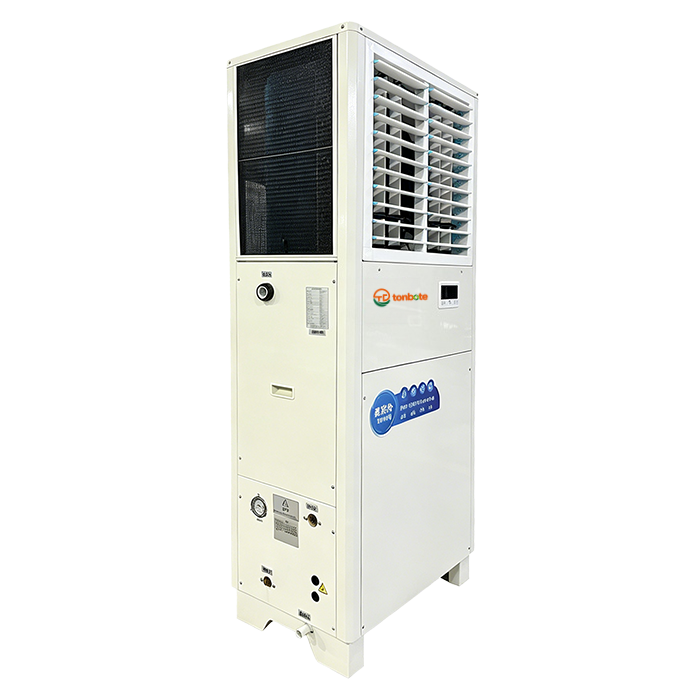
Most HVAC and industrial equipment rarely runs at the exact capacity listed on the nameplate. A chiller sized for peak summer cooling may spend 80% of its life at 30–50% load, and that's where the real energy bill gets written. Full-load COP or EER numbers are easy to compare on paper, but they don't reflect the part-load control logic, variable-speed drive behavior, or cycling losses that dominate actual performance.
Systems with excellent part-load efficiency often deliver lower operating costs even when their full-load specs are unimpressive. Think of a modular boiler plant that can stage individual units or a compressor with a wide turndown ratio. These designs avoid the short-cycling and constant starts that erode efficiency in oversized equipment. In real operations, how a machine handles 20, 40, or 60 percent of rated capacity tells you far more than the peak number ever will.
Environmental Stressors Like Corrosion Dust and Vibration Demand Field Proof
Lab results don't survive first contact with a working site. Dust gets into connectors and slowly erodes contact surfaces. Corrosion eats through thin coatings around bolts and seams. Vibration works every fastener loose, then starts on the circuit board. Any one of these can knock a unit offline; together they turn a promising design into a warranty claim.
Proving a product in the field means putting it where these stressors are unavoidable. It isn't enough to mist it in a chamber for an afternoon. The seals need to hold against fine, abrasive dust that settles into every groove. The housing has to shrug off salt, industrial runoff, and humidity swings without blistering. Mounting points and internal components must tolerate continuous vibration from compressors, tracks, or traffic without losing electrical continuity.
The difference shows up after a season or two. Equipment that was only tested indoors starts showing rust blooms and intermittent faults. Units that were actually run outdoors, bolted to machinery, and left in the weather reveal their flaws early and get fixed before shipment. That kind of evidence—not a clean spec sheet—is what field proof actually costs and ultimately buys.
Your Current Controls Architecture Should Dictate the Integration Approach
Integration efforts often fail when teams start with a preferred pattern—like REST APIs or message queues—and then try to force it onto an existing control system. The smarter starting point is a hard look at what your current controls architecture already supports. Does it rely on serial Modbus RTU? Is it a modern EtherNet/IP setup with implicit messaging? Are there gateways, historians, or proprietary middleware already sitting between the PLCs and the business network? These details aren’t implementation trivia; they define the realistic integration envelope. For example, a plant running dozens of legacy PLC-5s over Data Highway Plus cannot simply “add an API.” A workable approach might involve a protocol converter that polls tags and exposes them via OPC UA, or a small edge device that translates and buffers data. Trying to retrofit direct TCP sockets onto that network would be both costly and fragile.
Different control architectures naturally favor different integration methods. A centralized DCS with a proprietary historian and a well-defined OPC DA interface tends to integrate cleanly through that historian or a dedicated OPC tunnel—not through raw fieldbus taps. On the other hand, a distributed network of smart sensors and micro-PLCs connected via MQTT-ready gateways might invite a lightweight broker-based approach. The key is to map out data paths, scan rates, and failover behavior already designed into the controls layer. If the architecture already provides deterministic, low-latency access to a subset of tags for a specific purpose (like a safety system), that same path may not be suitable for high-volume analytics data. Respecting those internal boundaries prevents overloading control networks with non-critical traffic.
A pragmatic integration strategy treats the existing controls architecture as the foundation, not an obstacle to be bypassed. Where gaps exist between what the architecture offers and what the application needs, bridge them deliberately—using protocol gateways, edge compute nodes, or selective duplication of data into an operational data store. But avoid the temptation to design a parallel “ideal” integration layer that ignores how the plant actually runs. The best integrations feel almost invisible because they work with the grain of the controls system: polling where polling is native, subscribing where subscriptions are supported, and buffering at the edge when the control network can’t handle direct external queries. That alignment reduces maintenance burden, improves reliability, and makes future changes less disruptive.
Regional Service Response and Parts Availability Can Make or Break Uptime
Uptime rarely hinges on a single sophisticated component; it often comes down to how quickly a regional service team can diagnose and resolve a failure. A nearby depot with pre-positioned critical spares can turn a potential multi-day shutdown into a same-afternoon fix, while customers in areas with thin coverage quickly learn that every hour of waiting erodes trust more than any warranty clause can restore.
Parts availability is not just about warehouse stock levels. The real test is whether the right bearing, drive, or control board is within a few hours of the machine when the fault occurs. Regional distributors who stage inventory based on local asset registries—not national averages—can dispatch a courier before the fault code is fully interpreted. This kind of proximity quietly outperforms larger, centralized warehouses that ship overnight to the wrong time zone.
Response time alone fades if the arriving technician lacks the part or the authority to replace it without layers of approval. The strongest regional setups pair local decision-making with real-time parts visibility, so a service van can reroute mid-route and arrive with the needed component already in hand. That combination of local knowledge and stock transparency is usually what separates a one-hour nuisance from a week-long production halt.
Harsh Duty Cycles Make Total Cost of Ownership the Real Decision Metric
When equipment runs around the clock in punishing conditions, the purchase price becomes almost irrelevant. A machine that fails every few hundred hours, even if it was cheap to buy, will bleed money through downtime, emergency repairs, and lost production. The real question is not what you pay upfront, but what you pay per operating hour over the entire life of the asset.
Harsh duty cycles amplify every weak point. High temperatures, abrasive materials, constant vibration—these stressors don't just shorten component life; they make failures unpredictable and expensive. A drivetrain that would last a decade in light use might need a rebuild every year in a steel mill. Smart buyers look past the spec sheet and ask: what does it cost to keep this thing running when it never gets a break?
Total cost of ownership shifts the focus from capital expense to operational reality. Energy consumption, maintenance labor, consumable parts, and the cost of an unexpected stoppage all stack up fast. In many harsh applications, the difference between two machines with similar upfront tags can exceed six figures over five years. That is why TCO, not sticker price, separates a sound investment from a money pit.
FAQ
Look beyond the equipment itself. A dependable maker will have engineering depth to handle unusual loads, corrosive environments, or tight temperature tolerances. Ask for a track record in your specific industry like food processing, pharmaceuticals, or data centers, and dig into how they handle custom coil coatings, redundant compressors, and controls integration. The real difference shows up when the system has to run 24/7 without drift.
It is not just about the electricity bill, though that is significant for industrial cooling. Higher-efficiency systems often qualify for utility rebates and reduce peak demand charges. Calculate the total lifecycle cost over ten or fifteen years: a more efficient unit can pay back the premium in three to five years in a heavy-duty setting. Also consider part-load performance, because industrial systems rarely run at full load all day.
That depends on the process. If you are cooling a server room with stable load, a well-chosen commercial unit may be fine. But if you are dealing with high ambient temperatures, airborne particulates, or strict humidity control, a custom-built industrial unit prevents premature failures. A reputable maker will assess your exact heat load and airflow requirements before proposing anything.
Downtime costs money. Look for designs with slide-out blowers, easily removable filters, and clear access to coils and compressors. Ask about the availability of spare parts. Some makers keep critical components in stock for decades, while others treat them as disposable. A maker that offers remote diagnostics and predictable service intervals can save you from midnight emergency calls.
Request third-party certifications for refrigerant handling and energy efficiency, like AHRI or Eurovent. Ask directly about their phase-out plan for high-GWP refrigerants and whether they offer low-GWP options that match your local codes. A serious maker will be transparent about compliance documentation and will not make vague promises about green features.
In-house teams can provide tighter quality control on large custom jobs, but local contractors may offer faster response times if they are already familiar with your facility. The key is clear communication. A good maker will provide detailed installation drawings, startup checklists, and training for whichever team you use, so the system is commissioned correctly.
Ignoring the building's existing controls infrastructure. A unit that cannot communicate with your building management system forces you to run standalone controls, which wastes energy and complicates troubleshooting. Verify that the maker supports common protocols like Modbus or BACnet, and ask for a demo of how the unit reports alarms and performance data.
If your process has unusual requirements like sub-zero storage, explosive atmospheres, or ultra-clean rooms, choose a specialist. Generalists often adapt standard designs, which can lead to compromises. However, a broad maker with strong application engineers can work well for more standard industrial cooling. Look for case studies that closely match your operational reality.
Conclusion
Choosing an industrial air conditioning system starts with questioning the numbers on the datasheet. Most facilities never operate at the full-load conditions manufacturers highlight, so pin down your actual heat load profile first—running a detailed thermal audit against real production cycles reveals whether the rated capacity will hold up or simply waste energy. In day-to-day operations, part-load efficiency often has a far bigger impact on your power bill than the full-load spec, because compressors rarely run flat out. Ask for performance curves at 25%, 50%, and 75% load instead of one headline number. Environmental stressors also separate durable machines from showroom units: if your site deals with corrosive fumes, abrasive dust, or constant vibration from presses and conveyors, demand field proof from similar installations, not just accelerated lab tests. Finally, your existing controls architecture should drive how the new system integrates—retrofitting a unit that cannot speak your BMS protocol will add hidden engineering costs and delay startup.
Beyond installation, uptime depends heavily on regional service response and parts availability. A manufacturer with a nearby parts depot and technicians who know your specific industry can restore cooling in hours, while a distant supplier may leave a production line down for days. Look beyond the initial quote: harsh duty cycles, frequent cycling, and contaminated condensers accelerate wear, so compare total cost of ownership over a realistic lifespan. Include energy consumption at part load, expected compressor rebuilds, coil cleaning frequency, and the cost of losing one shift of production. The best choice is rarely the cheapest unit or the one with the highest nominal efficiency; it is the system whose real-world operating profile, service network, and integration path match the way your plant actually runs day after day.
Contact Us
Contact Person: Wanshu Chen
Email: [email protected]
Tel/WhatsApp: +86-13662871206
Website: https://www.mbcee.com