

HVAC Retrofit Solutions for Improved Building Efficiency
2026-11-16
Your building’s HVAC system may be quietly working against you—drawing more power, cycling inefficiently, and pushing utility bills higher every month. A full replacement feels like the clean answer, but it's often the most expensive and disruptive one. Retrofitting existing equipment with smarter controls, variable-speed drives, and energy recovery can unlock 15–30% efficiency improvements without gutting the mechanical room. Yet not every retrofit pays off. In this post, we cut through the noise and share the retrofit solutions that consistently deliver. At Tongbaote, we've proven these strategies across numerous buildings—and we're laying them out step by step.
Retrofit Your Rooftop Units With Smart Controls Before Summer Peak Rates Hit
Most rooftop units still run on fixed schedules that ignore how utilities actually bill during summer afternoons. As soon as peak rates kick in, every unnecessary compressor cycle hits harder on the demand charge line. Retrofitting existing RTUs with smart controls lets you trim runtimes during those windows without sacrificing comfort—think dynamic setpoint adjustments, staging delays, and demand-based locking that kicks in only when the meter is about to spike.
The payback window is shorter than many facility teams expect because you are not replacing the entire unit. A small controls upgrade can read zone temperature, outdoor conditions, and even real-time price signals to decide when to pre-cool in the morning and back off in the afternoon. That pre-cooling strategy works especially well for buildings with thermal mass, where you can shift load away from 3 p.m. to 7 p.m. and still keep occupants reasonably comfortable.
Don’t wait until the first full summer bill arrives to realize how much those afternoon peaks cost. Installing controls on a few test units now gives you enough data to tune schedules before the hottest weeks hit. Once you see the interval data, it becomes obvious which units are short-cycling or fighting each other, and those corrections often cover the retrofit cost before the season ends.
Heat Pump Retrofits That Cut Gas Dependence in Older Buildings
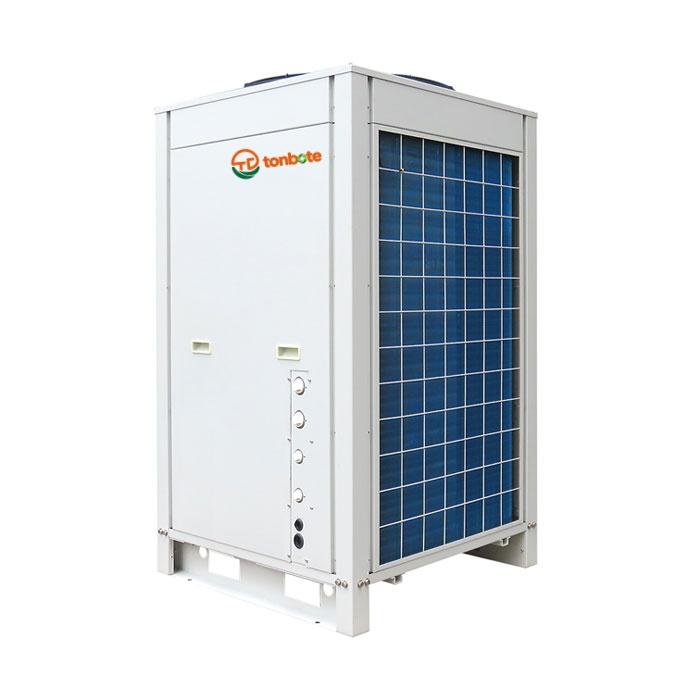
Older buildings often get dismissed as poor candidates for heat pumps, but that assumption falls apart when you look at how the retrofit is sequenced. The first step is rarely swapping the boiler itself. It's tightening the thermal envelope—windows, insulation, air sealing—so the peak heating load drops enough for an air-to-water heat pump to handle most of the winter. In masonry buildings with radiators, running lower supply temperatures for longer periods can work surprisingly well without ripping out every pipe. Where that falls short, adding a small buffer tank or a few fan-coil units in the most demanding zones keeps the gas boiler in standby rather than as the primary source.
Another approach that fits older stock is a cascaded or hybrid design. Instead of one large heat pump doing everything, use two or three smaller units staged to cover the shoulder seasons and mild cold, leaving the existing gas system for only the harshest days. This cuts gas use by 60 to 80 percent without requiring a complete electrical service upgrade. Controls matter more than equipment size here: outdoor reset curves, room sensors, and setback schedules tuned to the building's thermal mass keep the heat pump from short-cycling and let the gas side idle. The result is a retrofit that lowers carbon and fuel bills while preserving the character of the building—no gut renovation needed.
Demand-Controlled Ventilation: Why Overventilating Empty Rooms Is Costing You
Most commercial buildings run ventilation systems at a fixed rate, pushing conditioned air into every room regardless of whether anyone is actually there. A conference room that sits empty for six hours a day still receives full airflow, which means heating or cooling air that serves no purpose. That wasted energy shows up directly on utility bills, often accounting for a surprisingly large share of monthly operating costs.
Demand-controlled ventilation flips this approach by using occupancy sensors and carbon dioxide monitors to adjust airflow in real time. When a room is unoccupied, dampers close or fan speeds drop, so you stop paying to condition empty space. The technology isn't new, but many facility managers overlook it because the upfront sensor installation feels like a hassle. Yet the payback period is typically under two years, especially in buildings with highly variable occupancy like schools, offices, and event spaces.
Beyond the direct energy savings, cutting overventilation reduces wear on HVAC equipment and lowers peak demand charges. Some building codes now require demand-controlled ventilation in certain spaces, but even where they don't, the financial case is hard to ignore. If your utility bill seems higher than it should be, start by asking how much air you're paying to move through rooms nobody is using.
Variable Frequency Drives on Exhaust Fans: The Quickest Payback You're Ignoring
Most facility managers can recite the energy-saving playbook for chillers and compressors, yet exhaust fans still run at full speed around the clock. A variable frequency drive changes that by matching fan speed to real demand, whether it's airflow from a lab hood, kitchen exhaust, or parking garage ventilation. The result is often a 30 to 60 percent drop in fan energy use, with no impact on safety or comfort.
The overlooked part is how quickly these projects pay for themselves. Because exhaust fans are frequently oversized and run continuously, even a modest speed reduction produces outsized savings. Many installations recover their cost in under two years, sometimes in less than twelve months when utility rebates are factored in. Unlike lighting retrofits or chiller replacements, the hardware and installation are relatively simple, so capital risk stays low.
Maintenance teams also notice quieter operation and extended belt and bearing life once fans stop running flat out. Fewer vibration failures and fewer unplanned shutdowns add to the financial case. If your energy audit hasn't flagged exhaust fans for VFD upgrades, it may be leaving the fastest money on the table.
Energy Recovery Ventilators: Keep the Heat You Already Paid For
Most ventilation systems solve the stale air problem by simply blowing heated indoor air outside and pulling in cold outdoor air. That works, but it throws away every bit of warmth your furnace just added. An energy recovery ventilator takes a different route. Before the exhaust air leaves your home, it passes through a heat-exchange core. That core captures thermal energy from the outgoing air and uses it to preheat the incoming fresh air, so your heating system doesn't have to start from scratch.
The savings show up most when temperatures drop. Instead of feeding your furnace a steady diet of freezing air, the ERV delivers air that has already been warmed to within a few degrees of your indoor temperature. You get continuous fresh air without the constant spike in your heating bill. It is a quiet, passive way to hold onto energy that would otherwise slip out through the vents.
Some models even transfer moisture along with heat, which helps keep indoor humidity more stable during dry winter months. The result is a fresher home and an HVAC system that runs less often, not because you opened a window, but because the outgoing air worked for you one last time before leaving.
Retro-Commissioning Existing HVAC: Find the 20% Energy Waste Hiding in Plain Sight
Most building operators assume their HVAC systems run at peak efficiency because nothing has visibly broken. Yet hidden in plain sight are disconnected sensors, ignored setpoints, and dampers stuck in the wrong position—each quietly stealing energy around the clock. Retro-commissioning digs into these overlooked details and often uncovers a startling truth: nearly 20% of HVAC energy use is pure waste.
The process isn't about replacing equipment or chasing shiny new controls. It starts with comparing how the system was designed to run against how it actually performs today. Air handlers that never shut down, simultaneous heating and cooling in the same zone, VAV boxes fighting each other—these are routine finds during a retro-commissioning walkthrough. Fixing them typically requires only recalibration, minor repairs, or adjusting control sequences, not major capital.
The payoff goes beyond lower utility bills. Properly tuned HVAC systems also improve occupant comfort, reduce maintenance calls, and extend equipment life. Buildings that undergo retro-commissioning often see energy savings of 10% to 20% with payback periods under two years—making it one of the most cost-effective energy measures a facility can implement.
FAQ
Look for systems where the core components—compressors, heat exchangers, and ductwork—are still in reasonable shape but energy use keeps climbing. Frequent hot and cold spots, rising utility bills, and constant minor repairs often point to control and distribution problems that a retrofit can fix without tearing out the main equipment.
Adding CO2 sensors with demand-controlled ventilation lets the system bring in only as much outside air as needed, while occupancy sensors and smart thermostats trim runtimes in empty zones. Even simple schedule and setpoint adjustments through a modern controller can cut fan and cooling loads by double digits.
Duct sealing, programmable thermostats, variable frequency drives on fans and pumps, and fixing broken economizers usually pay for themselves within 12 to 24 months. These target waste that already exists, so the savings show up immediately on the next utility bill.
Yes. Installing heat recovery ventilators captures energy from exhaust air, while demand-controlled ventilation and pressure resets stop over-ventilating spaces that don't need it. In many office and school buildings, the ventilation system is the largest avoidable load after lighting.
A building automation system acts as the central brain, pulling data from sensors and adjusting setpoints, fan speeds, and valve positions in real time. It also enables fault detection—flagging stuck dampers or drifting sensors before they erase the savings from new equipment.
Start with a visual inspection for sagging, crushed sections, and obvious leaks, then run a duct leakage test to quantify losses. If leakage is high but the layout is still sound, sealing joints and adding insulation often costs far less than replacement. Major airflow imbalances or corroded liners are stronger reasons to replace sections.
Yes. Variable frequency drives on chiller compressors and condenser water pumps, condenser water temperature reset, boiler burner tuning, and flue gas heat recovery can all lift part-load efficiency. Regular tube cleaning and water treatment also restore lost capacity without swapping the unit.
Oversizing new components based on old peak loads, ignoring the building envelope, and skipping commissioning after installation are the biggest traps. A retrofit that adds efficient equipment but leaves duct leaks and broken sensors in place will underperform even with the best hardware.
Conclusion
Older buildings rarely get the attention their HVAC systems deserve until utility bills climb or tenants complain. One of the smartest pre-summer moves is adding controls to rooftop units so they don't run at full blast when peak rates hit and nobody is around. Coupling that with heat pump retrofits can steadily reduce gas dependence in aging properties, shifting a large part of the load to efficient electricity without ripping out all the ductwork. Meanwhile, demand-controlled ventilation puts an end to the habit of overventilating empty conference rooms or storage areas—sensors let air move only when occupants actually need it. For exhaust fans that run nonstop, variable frequency drives often deliver the quickest payback on the entire retrofit list because slowing a fan by 20 percent cuts energy use nearly in half.
Energy recovery ventilators go a step further: they reclaim heat from outgoing air so the building doesn't keep paying to condition air it's about to throw away. But before chasing every upgrade, a retro-commissioning pass is worth its weight in avoided waste. Many systems hide 20 percent energy loss in stuck dampers, miscalibrated sensors, or forgotten schedule overrides that no one notices until someone looks closely. Fixing those baseline issues first makes every later retrofit more effective. Taken together, these measures form a practical sequence—tighten controls, recover what you already paid for, then electrify and modulate what remains. The result is a quieter, more comfortable building with a noticeably lower operating cost, not just a stack of equipment upgrades.
Contact Us
Contact Person: Wanshu Chen
Email: [email protected]
Tel/WhatsApp: +86-13662871206
Website: https://www.mbcee.com