

Ground Mount Solar Racking Manufacturers in China: Who Are the Top Players?
2026-08-04
China is the undisputed hub of solar manufacturing, but not all ground mount racking suppliers are created equal. With so many names vying for attention, how do you identify the ones that truly deliver? In this deep dive, we spotlight the standouts—like Topfencesolar, a brand combining engineering grit with real-world performance. Whether you’re scaling a utility project or optimizing commercial installs, separating leaders from followers has never been more critical.
Who Really Dominates China’s Ground-Mount Solar Racking Market?
While international names often grab headlines, the reality of China's ground-mount solar racking sector is defined by a cluster of aggressive, vertically integrated domestic manufacturers. Companies like Arctech Solar, Nextracker (though US-headquartered, its supply chain is deeply Chinese-linked), and Jiangsu Guoqiang Zinc-plating Industrial have carved out dominant positions, not just through pricing, but by blending structural engineering with in-house galvanizing and smart tracking technologies. Their scale is staggering: a handful of top-tier firms now control over 60% of the domestic utility-scale racking capacity, leveraging proximity to sprawling solar parks in Xinjiang and Qinghai.
What separates the true market leaders is their ability to pivot from pure steel fabrication to offering integrated solutions—think pre-assembled modules, robotic cleaning compatibility, and AI-driven yield optimization. Regional champions like Xiamen Corigy New Energy have surged by marrying aggressive R&D spending with brutally efficient logistics networks. Meanwhile, smaller players face a squeeze: margins have contracted to razor-thin levels, forcing the industry into a survival-of-the-fittest mode where only those with proprietary tracking algorithms or patented anti-corrosion treatments can maintain double-digit market share.
The dominance is also geographic. Guangdong and Jiangsu provinces act as the industrial crucible, housing component ecosystems that enable just-in-time delivery at costs Western rivals can't match. Yet this consolidation masks a fragility: overcapacity is rampant, and several Tier-2 racking makers survive only through opaque local government subsidies. The real rulers of the market are those who've turned this glut into advantage—using excess capacity to flood export markets, while simultaneously locking in domestic EPC giants through long-term framework agreements that leave little room for newcomers.
Beyond the Specs: What Makes a Top-Tier Racking Manufacturer Stand Out?
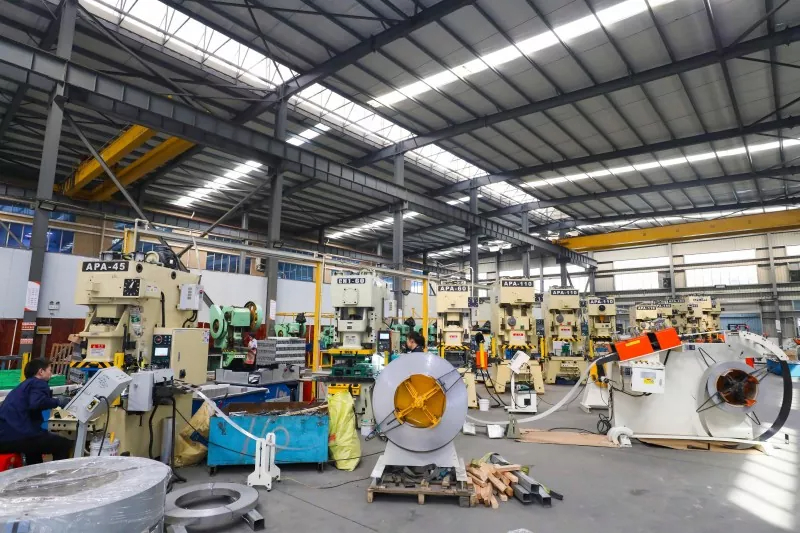
Spec sheets and load capacities only tell part of the story. The manufacturers that truly stand out invest in deep, front-end engineering—sending experienced engineers to analyze a site’s specific material flow, picking patterns, and even seasonal inventory swings before a single beam is designed. They don’t just sell racks; they craft storage ecosystems that account for forklift turning radii, seismic zone requirements, and the subtle impact of narrow aisle configurations on daily productivity. This level of customized planning often reveals hidden inefficiencies that off-the-shelf solutions can’t address, from temperature fluctuations in cold storage to the way certain SKU velocities demand dynamic slotting rather than static shelving.
Equally critical is what happens after installation. A top-tier manufacturer provides more than a warranty card—they become a long-term partner, offering on-site safety audits, load integrity inspections, and adaptive reconfigurations as operations evolve. Their support teams understand that a racking system isn’t a one-time purchase; it’s a backbone of the supply chain that must flex with business growth. This means proactive communication about new OSHA or local safety regulations, training for warehouse staff on damage recognition, and swift engineering support when an unexpected product line demands a layout overhaul. It’s this blend of upfront ingenuity and enduring commitment that separates a transactional vendor from a genuine strategic ally.
Small Workshop or Industrial Giant: The Surprising Diversity Among Players
When you first glance at this sector, it’s easy to assume a landscape dominated by massive industrial conglomerates churning out standardized products. Yet step a little closer and the picture fractures into something far more compelling. Tucked away in rural workshops and repurposed garages, artisans and small-scale operators quietly craft niche goods that defy mass production. They rely on intuition passed down through generations, tweaking recipes with a pinch of this or a dash of that, achieving a character no factory line could replicate. These micro-entities exist alongside sprawling factories, each thriving in their own ecosystem without directly colliding.
The contrast isn’t just about size—it’s a clash of philosophies. On one end, you have the giants who thrive on economies of scale, their operations driven by data analytics, automation, and supply chains that span continents. On the other, you find bespoke producers who might only turn out a few dozen units a week, but whose work carries a signature that commands a loyal, premium-paying clientele. What’s fascinating is that these two worlds often intersect in unexpected ways; the industrial player might secretly source a unique component from a local artisan, or a small workshop might use a global online platform to reach customers the giant can’t touch.
Far from a tidy hierarchy, this diversity creates a messy, vibrant patchwork. A family-run outfit with three employees can influence trends just as powerfully as a boardroom of executives, because in an age where authenticity and storytelling matter, origin and process can outweigh output numbers. The surprising takeaway isn’t that one model is winning—it’s that they all are, carving out niches that somehow coexist, compete, and even complement each other. The real story here isn’t about scale; it’s about the astonishing range of ways to succeed without a blueprint.
How Material Science and Design Innovations Are Shaping the Leaders
The race for market dominance has quietly shifted from pure performance metrics to the materials that make devices possible. Companies at the forefront are leveraging advanced composites and nano-coatings to create products that are not only lighter and stronger but also more sustainable. This isn't just about incremental improvements; it's a reimagining of what consumer electronics can be. By integrating bio-based polymers and recycled alloys, leaders are setting new benchmarks that competitors struggle to match, all while aligning with global environmental expectations.
Design innovation goes hand in hand with material breakthroughs, transforming how users interact with technology. Seamless, unibody enclosures and adaptive surfaces are no longer futuristic concepts, but tangible differentiators. These designs demand materials that can bend, flex, or self-heal, pushing research into shape-memory alloys and advanced ceramics. The result is a ecosystem of devices that feel more personal and resilient, creating an emotional connection that fosters brand loyalty beyond specifications.
The leaders emerging today are those who view material science as a strategic asset rather than a supply chain detail. They invest in proprietary research, forging partnerships with material startups and academic labs. This approach yields exclusive textures, finishes, and functionalities that cannot be easily replicated. It's a quiet revolution where the feel of a device, its thermal efficiency, and even its disassembly for recycling become competitive advantages. In this landscape, innovation is as much about molecules as it is about megabytes.
From Domestic Projects to Global Supply: The Reach of Chinese Masters
The journey of Chinese masters began firmly on home soil, where rapid urbanization and ambitious infrastructure demands forged a generation of architects, engineers, and designers capable of tackling colossal projects. From the intricate steel weavings of landmark skyscrapers to the sprawling high-speed rail networks, these professionals honed their craft in a crucible of scale and speed unmatched elsewhere. Their domestic achievements not only redefined cityscapes but also cultivated a deep understanding of how to balance technical precision with cultural narrative, laying a foundation that would soon attract international attention.
As their reputations grew, the skills refined through decades of domestic projects began to flow outward, transforming global supply chains and design paradigms. Chinese firms started exporting entire systems—not just materials—offering integrated solutions that blend cost efficiency with sophisticated engineering. In regions like Africa, Southeast Asia, and Latin America, their involvement often goes beyond construction, introducing modular building techniques and renewable energy integrations that were first trialed in China's own rapid development. This has reshaped expectations around project delivery, making advanced infrastructure more accessible to developing economies and challenging conventional Western-centric models of export.
Today, this influence is visible in the quiet proliferation of Chinese design philosophies and construction standards across diverse landscapes. Whether it’s a stadium in Qatar echoing the structural logic of a Beijing landmark, or a port expansion in Sri Lanka modeled after Shanghai’s efficiency, the reach is subtle yet profound. The shift from domestic focus to global supply represents more than economic expansion; it marks a diffusion of a distinct practical wisdom—one that prioritizes resilience and adaptability, often derived from the lessons of China’s own steep development curve. This quiet shift continues to reframe global dialogues around infrastructure, innovation, and cultural influence.
The Unspoken Criteria: What Smart Developers Look for in a Partner
It’s rarely about the number of languages someone claims to know or the fancy frameworks on their resume. After a few years in the trenches, most developers learn that raw technical chops are just the entry ticket. What they’re really scanning for—often without admitting it out loud—are signals that point to a deeper compatibility. They want someone who doesn’t just write code but thinks about the people who’ll have to maintain it six months later. They’re watching how you react when a build fails at 5 p.m., or whether you take ownership of a corner case you missed during code review. The unspoken question is always: can I trust this person when things get messy?
Smart developers also tend to value partners who push back, not ones who nod along to every suggestion. A silent teammate might feel easy to work with at first, but that lack of friction often hides apathy or a fear of conflict. The best collaborators ask “why” a lot—not to undermine your idea, but because they genuinely care about understanding the trade-offs. They’ll suggest an alternative structure or point out that something you assumed was trivial might explode in scale. And if they’re wrong, they’ll say so and learn from it, rather than doubling down. That kind of intellectual honesty builds a sort of shorthand over time, where you spend less time explaining intent and more time actually shipping.
There’s also a quiet appreciation for partners who know when to drive and when to ride along. Someone who insists on owning every high-profile feature becomes exhausting, but equally draining is the person who needs constant hand-holding or waits for permission before making a call. The developers you want to keep working with have a well-calibrated internal gauge for complexity—they take initiative on the tricky pieces that play to their strengths but willingly step back on simpler tasks so the team can move faster overall. It’s not about ego; it’s about velocity and respect for collective time. When that balance is right, you find yourself reaching out for the next project without even having to think about it.
FAQ
Several Chinese manufacturers have established a strong presence in ground mount solar racking. Arctech Solar stands out with its extensive global track record, while Xiamen Grace Solar and Versolsolar are also recognized for their engineering capabilities and large-scale project deliveries. Other notable names include Chiko Solar and Baoding Jiasheng, each carving out niches in different regional markets.
The offerings are diverse, ranging from fixed-tilt structures for utility-scale projects to single-axis and dual-axis tracking systems. Many manufacturers like Arctech specialize in trackers that boost energy yield, whereas firms like Grace Solar provide robust fixed solutions suitable for uneven terrain. Customized designs for challenging soil conditions and wind loads are also common.
Leading manufacturers invest heavily in R&D, using finite element analysis and wind tunnel testing to validate designs. They typically use high-strength steel (e.g., Q235B, Q345B) with hot-dip galvanization or advanced coatings like Magnelis to combat corrosion. Full-scale mechanical testing and compliance with international standards are standard practices among top players.
Innovation is becoming a key differentiator. Arctech’s multi-point drive tracking system reduces steel usage while improving stability. Others integrate smart monitoring for real-time tracking adjustments. Some manufacturers offer pre-assembled components to speed up on-site installation, cutting labor costs and construction time.
Reputable manufacturers hold ISO 9001 for quality management, along with product-level certifications like TÜV Rheinland, UL 3703, or CE marking. For corrosion resistance, check adherence to standards like ASTM B117 salt spray testing. Additionally, many leading firms comply with local building codes and international standards such as ASCE 7 or EN 1991 for structural design.
Chinese suppliers generally offer a significant cost advantage due to lower labor and material costs, though quality levels have risen to match Western standards. The final price depends on steel thickness, coating type, and system complexity. Tracking systems from competitors like Nextracker or PV Hardware may carry a premium, but Chinese alternatives often achieve payback periods of 2–4 years in high-irradiation regions.
Lead times range from 4 to 8 weeks for standard designs, while customized large orders may take up to 12 weeks. Most manufacturers ship via sea freight in 40-foot containers or break-bulk vessels for oversized components. They handle logistics through major ports like Shanghai or Xiamen, with delivery to project sites often coordinated through local agents to manage customs and inland transportation.
Conclusion
The ground-mount solar racking industry in China is shaped by a handful of dominant players that combine massive manufacturing scale with deep engineering know-how. These leaders set themselves apart through rigorous material science—using high-strength, corrosion-resistant alloys and advanced coatings—to ensure decades of structural integrity in harsh environments. Their in-house design teams continuously refine geometries for better wind and snow load distribution, pushing beyond standard specifications to deliver real-world durability. This technical edge, paired with fully automated production lines that minimize human error, allows them to consistently meet bankability requirements for utility-scale projects worldwide.
Beneath the surface, however, the market reveals a startling mix of participants, from backyard workshops assembling basic steel frames to industrial titans operating global supply chains. This fragmentation forces smart developers to look past glossy brochures and assess manufacturers on unspoken criteria: track record in similar climatic zones, transparent failure rate data, and the agility to customize mounting solutions for local grid codes. As Chinese firms expand from domestic mega-projects to exports in over 100 countries, the gap between commodity providers and true engineering partners widens. The masters earn trust through responsive after-sales support and a culture of continuous innovation, proving that leadership is built not just on competitive pricing, but on the nuanced understanding that every megawatt-hour depends on the integrity of the steel holding the panels in place.
Contact Us
Contact Person: Nancy
Email: [email protected]
Tel/WhatsApp: +86-13365923720
Website: https://www.topfencesolar.com/