

Freezer Glass Door Solutions That Stop Fog and Cut Energy Costs
2026-11-19
Fogged glass isn’t just a visibility problem—it’s a signal that your freezer is bleeding energy through the door. ART builds freezer glass door solutions designed to break that cycle: clearer displays, drier aisles, and lower cooling loads from the moment they’re installed. In the next few minutes, you’ll see what actually stops condensation, why heated glass often works against you, and how the right door pays for itself faster than most operators expect.
When Freezer Glass Fogs Up, Sales Drop Before Anyone Checks the Thermostat
A fogged door on a freezer case never looks like an emergency. Staff walk past, wipe the glass, maybe adjust a vent, and move on. But the mist is already doing damage. Shoppers who cannot see the product in three seconds usually keep walking. The drop in sales gets noticed later as a supply chain issue or a slow afternoon, not as a visibility problem.
Often the real culprit sits behind the case, not in front of it. A thermostat set a few degrees too low, a worn door gasket, or a defrost cycle running too long can push moisture onto the glass. By the time someone checks the temperature log, the sales dip has already been recorded. That delay between symptom and diagnosis is what hurts margins most.
Fixing it starts with reading the glass as a signal. If fog appears every day around the same time, something in the cooling pattern is off. Checking the thermostat before assuming the room humidity is too high saves both energy and lost transactions. Clear glass is not a cosmetic detail; it is the first few inches of a purchasing decision.
The Heated Door Glass Upgrade That Uses Less Power Than a Lightbulb
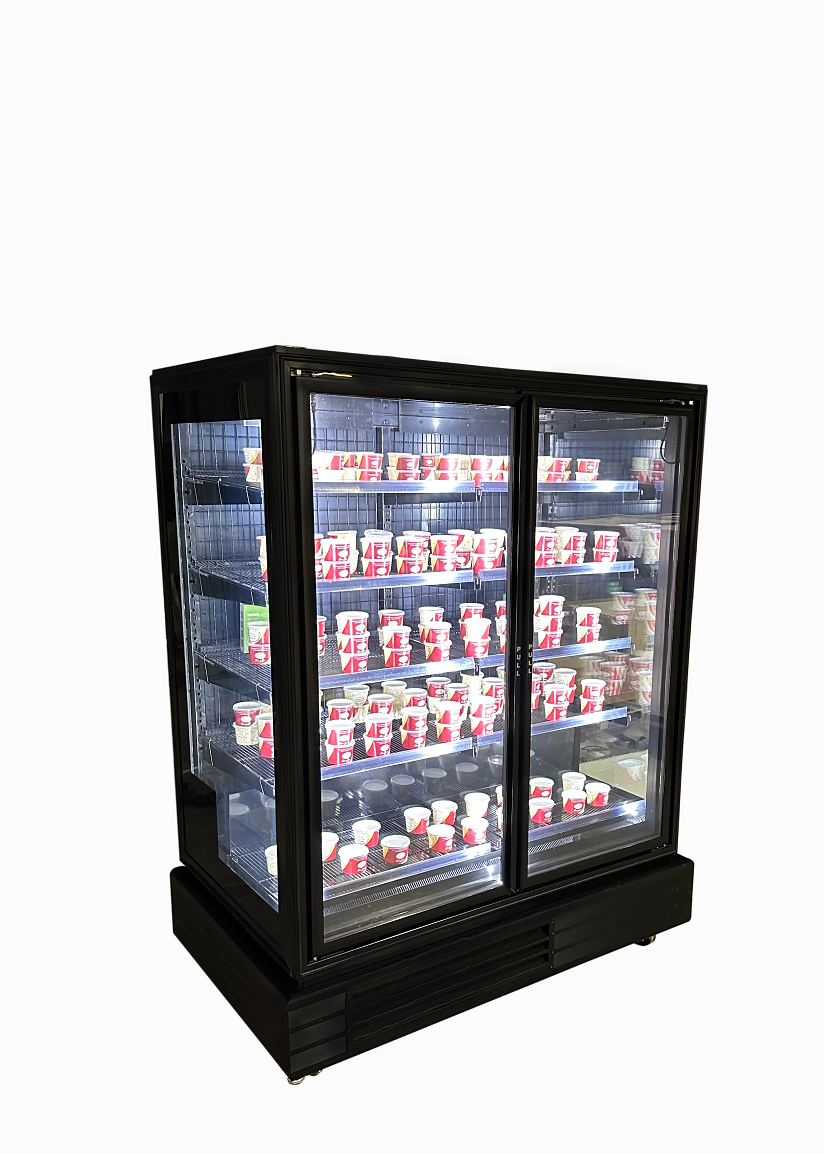
Most heated glass upgrades quietly demand hundreds of watts, which adds up to real strain on an EV battery or a winter utility bill. This version does the same job of clearing frost and fog while sitting comfortably below forty watts. For context, a typical household LED bulb draws around nine or ten watts, and many laptop chargers pull more than this entire glass panel. The trick lies in a thin, evenly distributed conductive coating that warms the surface directly instead of blasting hot air against it. That means ice melts quickly, condensation disappears in a couple of minutes, and the surrounding cabin or room doesn't get roasted in the process. You get clear sightlines without watching your range estimate or energy meter take a nosedive.
What makes the low draw feel different in daily use is not just the number on a spec sheet. It is the lack of compromise. Other heated glass systems tend to run hot near the edges, leave a blurry patch in the middle, or cycle on and off so aggressively that the glass clicks and pops. This one spreads warmth across the pane with enough consistency that a single pass of a hand can't find obvious cold zones. The result is a quiet, gradual clearing effect that feels more like sunlight doing the work than a forced electrical blast. Because the panel sips power so gently, it can stay active longer without triggering thermal cutoffs or forcing the climate system to fight against it.
The benefit becomes clearest on short drives or in buildings where every watt is counted. On a cold morning, a conventional defroster may need several minutes at high output before you can safely pull away. This glass begins softening the ice layer almost immediately, using less energy over that entire warm-up than a bathroom exhaust fan uses while you brush your teeth. And unlike traditional blower-based approaches, there is no dry, scorched air hitting your face. The cabin stays cooler and more comfortable, the glass remains transparent without streaking, and the power saved can go toward actual driving range. It is one of those rare upgrades where efficiency, comfort, and convenience point in the same direction.
Why Anti-Sweat Door Heaters Are No Longer the Only Option
For decades, anti-sweat door heaters were the default solution for keeping glass doors free of condensation in humid environments. The logic was simple: warm the glass just enough to prevent moisture from settling. But that warmth comes at a price, both in energy costs and in the constant, low-level heat leaking into refrigerated spaces. As utility bills climb and efficiency standards tighten, relying on a single electrical strategy no longer makes sense for every store or kitchen.
The real shift comes from better control rather than more heat. Modern controllers now use pulse-width modulation or adaptive algorithms to match door heater output to actual dew point conditions. Instead of running at full wattage all day, these systems pulse power only when condensation risk actually exists. That means the door surface stays clear without the blanket of heat that used to radiate into the cooler. In many cases, energy use drops by half or more, while the glass still performs its job.
Beyond electronic controls, alternative door constructions have changed the equation. Triple-pane glass, low-emissivity coatings, and insulated frames reduce the temperature difference between the room and the door surface, so condensation forms far less often in the first place. Some installations even get away with no active heating at all, relying on passive thermal breaks and airflow design. The result is a wider menu of choices, each tuned to a specific climate, door type, and usage pattern rather than a one-size-fits-all heater.
Thermal Breaks and Edge Seals: The Overlooked Fix for Cold Aisle Condensation
Condensation in a cold aisle rarely announces itself as a thermal bridging problem. It shows up as dampness on the bottom of a rack, beads along a floor track, or a thin film around a cable cutout. When humidity and supply air temperatures look fine on paper, the usual response is to lower the dew point further, yet the moisture persists. This is often because metal components that penetrate the cold aisle envelope carry outside or plenum heat directly to cold surfaces, creating microclimates below the dew point.
Breaking that conductive path matters more than adding fan speed or adjusting setpoints. Thermal break materials inserted between metallic framing, door thresholds, and panel edges interrupt heat flow without requiring major airflow redesign. Edge seals work alongside them by closing small gaps where warmer, moisture-laden air enters and meets chilled surfaces. The combination addresses the mechanism rather than just the symptom, which is why it can resolve localized condensation that leaves the main environmental controls untouched.
The practical upside is that these fixes tend to be passive, low-maintenance, and relatively cheap to retrofit compared to overhauling air distribution. In many cases, simply isolating a steel support from a chilled slab or replacing a compressed foam gasket around an end-of-row door is enough to shift the localized surface temperature above the dew point. That kind of targeted change often delivers clearer results than chasing lower humidity levels across the entire room.
How Grocers Stop Wiping Freezer Doors and Start Cutting Peak Demand
Freezer doors fog because the glass sits at the edge between cold case air and warm store air. For years the standard fix was a constant anti-condensate heater running along the frame, plus a staff member on a loop with a squeegee. That approach quietly burns electricity all day and forces labor into a task that never ends. The pivot starts when grocers treat door fog as an energy control problem rather than a cleaning problem. By cycling frame heaters only when surface sensors detect actual condensation risk, stores can keep glass clear without feeding watts into dry air.
The next shift is timing. Glass-door freezers and coolers can absorb a brief temperature drift without harming product, so their defrost cycles and anti-fog heaters can be moved out of the late afternoon peak. Instead of every case firing at once when the store is busiest, controls stagger the loads and delay non-critical heating until overnight or until a demand response signal passes. Some chains also trim peak demand by pre-cooling cases in the early morning, letting compressors coast through the expensive hours while doors stay clear.
The result is less a technology upgrade and more a change in what the store optimizes for. A freezer door is no longer something to wipe; it becomes a flexible load that can be dialed back for 30 or 45 minutes without anyone noticing. That reframing is what allows a grocery chain to cut demand charges, reduce compressor runtime, and still present a dry, readable door to every shopper.
Specs That Matter for Replacement Glass Doors in Walk-In Freezers
Replacement glass doors for walk-in freezers rarely fail because the glass breaks. More often, the seal degrades, the frame corrodes, or the door simply no longer sits square in the opening. Before ordering a swap, measure the rough opening and the existing panel rather than relying on model numbers that may have changed across production runs. Pay attention to the hinge side, handle placement, and whether the original unit used a pressure-release port. Missing one of those details tends to turn a quick replacement into a custom fabrication job.
Thermal performance is controlled by more than the glass thickness. Triple-pane assemblies with low-emissivity coatings and argon or krypton gas fills reduce frost accumulation, but only if the frame and heater wire are matched to the freezer's temperature range. Check the wattage and voltage of the existing door heater, because an undersized circuit will leave condensation along the sweep gasket. For low-temp rooms running below -10°F, specify insulated frames with thermal breaks and non-corrosive hardware, since stainless steel alone does not prevent ice buildup where the door meets the floor track.
FAQ
Fogging is usually about moisture load, not just a bad seal. Warm, humid store air hits the cold outer glass and condenses, especially near entrances, produce misters, or busy aisles where doors open frequently. Standard doors often cannot keep the outer pane above dew point under those conditions.
The heating layer sits inside the glass assembly and runs at a very low wattage. Its purpose is to keep the outer surface just above dew point, not to radiate noticeable heat into the store. Many systems use sensors to switch on only when humidity or surface temperature crosses a set threshold.
Retrofitting is often possible when the frames and hinges are still in good shape. Replacement glass packs and add-on door heaters can be matched to common case sizes, but a site check is needed to confirm frame depth, hinge load limits, and wiring capacity before committing.
A low-E coating reflects infrared heat back toward its source while letting visible light pass through. On a freezer door, that means warm aisle heat stays out and cold air stays in, which reduces the compressor workload and helps maintain steadier case temperatures.
Yes. Triple-pane glass with insulating gas fill, hydrophobic surface treatments, better door seals, and stronger air curtains can all reduce condensation before it becomes visible. These methods often work alongside heated glass rather than replacing it.
The savings depend on store climate, case age, and the number of doors. Many facilities see refrigeration energy use fall by 15 to 30 percent after replacing old single-pane doors, with faster payback in humid areas where anti-condensate heaters had been running continuously.
They are fairly low maintenance, but strong ammonia-based cleaners can damage coatings and gaskets. Soft cloths, mild detergents, occasional checks of door alignment, and sensor calibration are usually enough. If fogging returns in patches, the heating circuit or sensors should be inspected.
Ask how they test condensation resistance, what energy data they can share from similar installations, whether field retrofits are supported, and how long the heating elements and coatings are warrantied. Real case data from comparable stores is more useful than a polished spec sheet.
Conclusion
Fogged freezer doors quietly eat into margin long before anyone notices a temperature shift. Shoppers pass by cloudy glass, and the lost impulse purchases rarely show up in a maintenance log. A newer heated glass upgrade pulls just a few watts per door, often less than a standard lightbulb, which makes constant low-level warmth practical without a punishing energy bill. At the same time, anti-sweat door heaters have stopped being the default answer; stores now weigh them against thermal breaks and edge seals that attack condensation at the frame and gasket level rather than simply cranking heat into the glass.
For many grocers, the real change is operational: fewer wiped doors, cleaner displays, and a measurable dip in peak demand when dozens of doors are no longer drawing heat at full load. Replacement glass choices deserve closer attention to visible light transmission, coating placement, and frame conductivity, because these details determine whether a walk-in freezer stays clear during busy hours without wasting energy. The best fixes don't feel dramatic from the aisle, but they show up in steadier temperatures, lower runtime for compressors, and a shopping experience that doesn't ask customers to look past the fog.
Contact Us
Contact Person: Ellen
Email: [email protected]
Tel/WhatsApp: +86-535-2229725
Website: https://www.artrefrigeration.com/