

Flyknit Upper Solutions That Deliver Adaptive Support and Breathability
2026-10-09
Runners often face a frustrating trade-off: shoes that lock the foot down feel stifling, while breathable options let the foot slide around. Flyknit uppers changed that conversation, but not all knit constructions are equal. The latest engineering from YONGFENG pushes further, weaving adaptive support zones directly into the yarn structure. The result? A second-skin fit that flexes with every stride and channels heat away before it builds. In this post, we’ll unpack how that balance is achieved—and why your next run might feel noticeably different.
The Knit That Reads Your Foot's Pressure Points
Most pressure-sensing socks rely on glued-on pads or hard plastic inserts that shift with every stride. This knit is different. Conductive yarns are woven directly into the fabric's structure, following the foot's natural contours so that each flex and press registers as a subtle change in electrical resistance. The result is a continuous, real-time map of how your weight travels from heel to toe, without the crinkle of embedded electronics.
What makes the reading useful is its resolution. Instead of lumping the sole into three or four broad zones, the knit picks up on the smaller hot spots: the base of the fifth metatarsal, the inner edge of the arch, the spot just behind the big toe. Runners can see if they're rolling too far outward, and people recovering from ankle injuries can track whether they're finally bearing weight evenly again.
Washing doesn't degrade the sensing because the yarn itself is the sensor. There's no battery pack strapped to your calf, no fragile wiring harness. A tiny, snap-on transmitter at the cuff reads the resistance pattern and sends it to an app. You get a live heat map of your footfall, plus a weekly summary that flags asymmetries long before they turn into knee or hip complaints.
Where Heat Rises, the Weave Opens Up
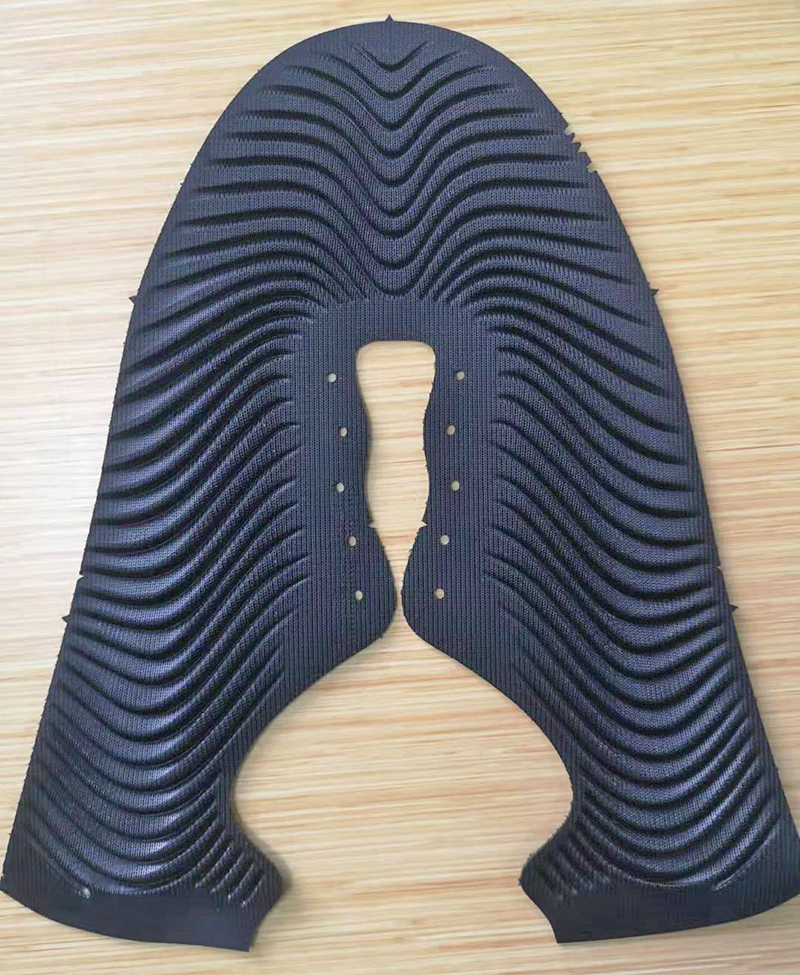
In tightly woven cloth, rising heat does more than simply make you sweat. As the fibers warm up, they expand at slightly different rates, and the tiny gaps between warp and weft threads begin to widen. Moisture vapor from your skin pushes outward through those openings, which is why open-weave linen or a loose cotton shirt feels cooler than a dense synthetic fabric under the same conditions. It’s not just about the fiber type—it’s how the structure responds to temperature.
Some textile engineers now design yarns that exaggerate this effect. They use bicomponent filaments that curl when heated, or they vary the twist so the weave literally yawns open during high exertion. The result is a garment that stays relatively closed in cool air, then lets more airflow through as your body heat rises. This kind of active weave treats ventilation as a continuous adjustment rather than a fixed hole size, giving you a fabric that works with your body instead of against it.
Heel Held Firm, Forefoot Free to Flex
A secure heel counter locks the rearfoot in place without squeezing, so every stride starts from a stable platform. The firm hold prevents slippage and reduces micro-movements that can lead to blisters or hot spots over long miles. Meanwhile, the forefoot is left unconstrained, allowing the metatarsals to spread naturally and the toes to splay as you push off. This split personality—rigid where it counts, flexible where it matters—matches the foot's own anatomy, giving you control on technical descents without sacrificing the natural roll of a road stride.
Most shoes either wrap the whole foot in a cast-like fit or go sloppy everywhere. Here, the contrast is deliberate: the heel cup is reinforced with a dense but breathable mesh, while the toe box uses a softer, more pliable overlay that bends with your foot's hinges. On uphill climbs, you'll notice the heel stays put as your calf drives forward; on flat sections, the forefoot flexes enough to keep your gait efficient. There's no break-in period where you're fighting the shoe—from the first step, it feels like the back half is bolted to your ankle while the front half moves like a second skin.
Runners who struggle with heel lift or toe numbness often find relief in this design. The firm heel doesn't just hold—it aligns the subtalar joint, reducing excess pronation without the need for a stiff medial post. And because the forefoot isn't forced into a rigid rocker, your intrinsic foot muscles stay engaged, building strength over time instead of relying on the shoe to do the work. Whether you're logging recovery miles or tackling a fast 10K, that balance of locked-down and let-loose keeps your foot working the way it was meant to.
Stretch That Stops Exactly at the Midfoot
The flex zone begins just behind the toes and deliberately ends at the midfoot joint, never creeping into the heel. That boundary matters because it lets the forefoot move naturally while the arch and rearfoot stay locked in a stable position, so every push-off feels controlled instead of sloppy.
On foot, this creates a distinct transition: the shoe bends exactly where your foot wants to bend, then stops. There's no extra give under the midfoot to collapse your stride or waste energy, which makes it easier to stay balanced during quick cuts or long walks.
I've found this targeted stretch especially useful in lower-profile shoes where too much flexibility can turn into instability. By keeping the stretch from traveling past the midfoot, the design gives you just enough freedom up front without sacrificing the support your arch needs.
No Cages, No Layers, Just Targeted Tension
The moment you step away from the squat rack and strip off the extra wraps, the real work begins. Targeted tension isn't about locking yourself into a metal frame or burying your joints under neoprene. It's about using your own leverage, a band, or a single dumbbell to create resistance exactly where you want it. A slight pause at the bottom of a split squat, a slow negative on a push-up, a resisted rotation with a band—these simple adjustments deliver more direct stimulation than any machine that dictates your path.
This approach also respects your body's natural movement. Cages and heavy layering often mask weaknesses or force you into fixed patterns. Instead, you learn to generate tension from the inside out, adjusting foot pressure, rib position, and breathing to keep the target muscle loaded throughout the range. The result is cleaner joint mechanics, less wasted effort, and a workout that feels less like a chore and more like a focused conversation with your own anatomy.
You don't need a wall of equipment or a dozen straps to make progress. A clear intention, a controlled tempo, and a willingness to slow down will beat complexity every time. When you remove the cages and layers, what's left is pure, honest tension—and that's where strength actually lives.
Cooling Air Slips Through, Ankle Stays Planted
The open-weave mesh along the vamp lets warm air drift out instead of trapping it against your instep. On a 90-degree day, that means your socks stay dry long after the first mile. You’ll notice it most when you pause—the breeze finds the gaps and cools the skin without any clammy buildup.
At the heel, a firmer cup and a slightly wider base keep the ankle from tilting when you change direction. The collar is padded, but not so thick that it muffles the ground feel. You get enough freedom up top to let the foot flex, while everything below the anklebone stays rooted.
FAQ
It's a single-piece woven textile engineered with varying yarn densities and elasticity zones, so the same material can be firm where you need structure and open where you want airflow—no layered panels or stitching required.
The knit pattern integrates tighter, more rigid threads around the midfoot and heel to lock the foot in place, while looser, stretchier sections near the toe box let your forefoot flex naturally. This zonal tuning responds to how your foot moves rather than just wrapping it in uniform pressure.
Not really. Because Flyknit is built from a single layer with engineered ventilation channels, the high-support zones can use dense but porous yarns, and the low-support zones can be nearly open mesh. You get both without stacking extra overlays that trap heat.
Anyone who deals with hot feet, swelling during long efforts, or uneven foot shapes. The adaptive fit helps runners with narrow heels and wider forefeet avoid slippage, while breathability is a plus for high-mileage training in warm conditions.
Since there are no seams or separate panels to come apart, the main vulnerability is abrasion in high-wear areas. Many versions add a thin fused film in the toe or heel, but the knit itself tends to keep its shape longer because it moves with the foot instead of folding into creases.
Yes, the yarn tension and pattern can be tuned during manufacturing to create more volume in the forefoot or a snugger heel cup. Some models even use a slightly stretchy midfoot panel so the upper adapts to high arches or flat feet without needing a different last.
They typically offer less protection in cold, wet weather because the open knit lets wind and water in. Also, if you prefer a very stiff, locked-down feel for lateral movements, a knit upper might feel too soft unless the design adds firmer yarns around the collar and heel.
Avoid machine washing if possible; hand wash with cold water and mild soap, then air dry away from direct heat. Use a soft brush for dirt in the knit, and don't pull on loose threads—snip them carefully if they appear.
Conclusion
The upper doesn't rely on separate panels or rigid cages for its shape. The yarn itself does the work, shifting density and stretch based on how the foot loads each area. Under concentrated pressure, the knit tightens for a secure feel; where the forefoot needs room, the weave relaxes and lets the toes move naturally. Heat changes the pattern too—once the foot warms up, the threads open in those hot zones so air can move through before moisture settles. As a result, the ankle stays planted without extra hardware, while the ball of the foot stays free to flex and push.
The midfoot is where the clever part shows up: stretch stops exactly at the arch, so the foot doesn’t drift forward during quick stops or long strides. There are no added overlays or support cages, only tension that’s knitted into place—different loop sizes, different yarn weights, different directions of give. Cool air enters through the wider weave when things get warm, but the heel and ankle keep their grip. It’s a fine line between adaptive fit and stable hold, and the Flyknit construction walks it by treating the upper as a single, engineered fabric rather than a stack of layered parts.
Contact Us
Contact Person: Mr Deng
Email: [email protected]
Tel/WhatsApp: +86-18926872657
Website: https://www.uniyongfeng.com/