
Flame Resistant Clothing OEM: A Comprehensive Guide to Custom Manufacturing
2026-07-19
When it comes to protecting workers in high-risk environments, not all flame resistant clothing is created equal—and neither are the manufacturing partners behind them. For businesses looking to develop custom FR apparel, navigating the OEM landscape can feel overwhelming. That’s where DROTEX steps in, redefining what it means to combine safety, customization, and reliability in every stitch. Whether you’re launching a new line or scaling production, understanding the ins and outs of flame resistant clothing OEM is the first step toward outfitting your workforce with gear they can trust.
Selecting the Right Flame-Resistant Fabrics for Your Workforce
Finding the ideal flame-resistant (FR) fabric isn’t just about meeting basic safety compliance—it’s about understanding the specific hazards your team faces daily. Start by assessing the work environment: are your employees exposed to electric arcs, flash fires, or molten metal splashes? Each risk demands a different fabric treatment or fiber blend. For instance, arc-rated garments need to minimize burn injuries through proper insulation, while flash fire protection focuses on self-extinguishing properties. Collaborating with safety managers and reviewing incident reports can uncover overlooked threats, ensuring the chosen fabric truly aligns with real-world conditions rather than a generic checklist.
Beyond hazard protection, comfort directly influences whether workers actually wear their protective gear consistently. Lightweight, breathable fabrics reduce heat stress and fatigue, especially in physically demanding roles or hot climates. Look for moisture-wicking properties and soft hand feel—features that make all-day wear far more tolerable. Durability also plays a critical role; FR garments that shrink excessively, lose shape, or fade after repeated industrial laundering often get abandoned. Ask fabric suppliers for performance data on tear strength, abrasion resistance, and colorfastness to industrial wash processes. A fabric that maintains its integrity over time keeps your workforce safer without constant replacement.
Finally, never overlook the hidden costs and care requirements. Some treated cotton fabrics require special laundering to retain their FR properties, while inherent FR synthetics may withstand harsh cleaning cycles better. Evaluate the total cost of ownership—purchase price plus lifespan, repairs, and re-treatment expenses. Engage employees in the selection process; their firsthand feedback on fit, mobility, and comfort can prevent costly missteps. Involve a trusted supplier who offers on-site wear trials, so your team can test options under actual work conditions. This hands-on approach builds confidence in the gear and fosters a stronger safety culture where protection becomes second nature, not an afterthought.
Tailoring Protective Gear to Your Brand and Safety Standards
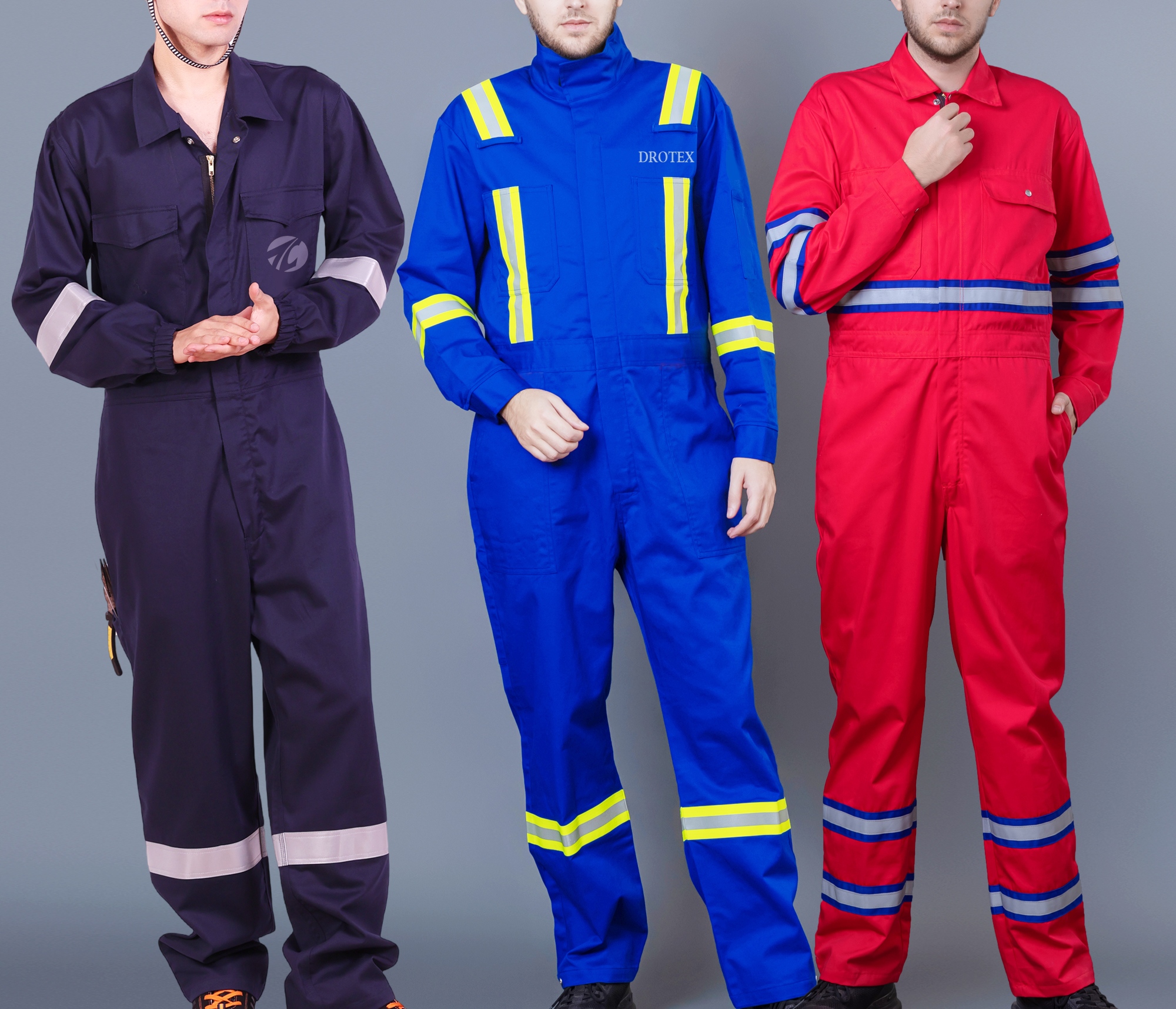
Personalizing protective equipment goes beyond simply adding a logo. It involves understanding the daily realities of your workforce—temperature extremes, range of motion requirements, and common hazards. By collaborating directly with manufacturers, you can refine designs to boost wearer comfort and compliance. For instance, adjustable straps, breathable liners, and reinforced high-wear zones can be seamlessly integrated to mirror your operational demands.
Safety regulations vary across industries and regions, so your gear must reflect the specific certifications needed—whether it's ANSI, NFPA, or EN standards. A tailored approach ensures materials and construction meet these benchmarks without superfluous bulk. This precision not only upholds legal requirements but also reassures employees that their well-being is the top priority. It transforms mandatory equipment into a trusted tool they feel confident relying on.
Brand identity can be woven into the very fabric of protective gear through custom colorways, reflective patterning, and ergonomic fits that align with corporate aesthetics. This subtle branding reinforces a sense of unity and professionalism on site, while still prioritizing function. When gear feels like a natural extension of the team's identity, it fosters pride and encourages consistent use, closing the gap between policy and practice.
Navigating Global Safety Certifications for FR Clothing
When expanding into new markets, flame-resistant clothing manufacturers quickly discover that compliance isn't a one-size-fits-all endeavor. Each region imposes its own testing protocols, documentation demands, and labeling standards. The European Union relies on EN ISO 11612 for heat and flame protection, while North America looks to NFPA 2112 for flash fire scenarios. Brazil has its own rigorous NR-10 and NR-12 supplements, and Australia leans on AS/NZS 4824. Beyond the big names, countries like India, China, and members of the Gulf Cooperation Council are refining their frameworks, often blending international benchmarks with local tweaks. Keeping track of these requires more than a regulatory spreadsheet—it demands an understanding of how each system defines risk, what test methods prove performance, and how frequently certificates must be renewed.
The real challenge lies in the finer details that go unnoticed until a shipment is held at customs. Some regulators demand third-party lab testing from accredited bodies within their own jurisdiction, while others accept globally recognized labs like UL or Intertek. Material traceability is another friction point: a single component sourced from a new supplier can invalidate an existing certificate if the certification body wasn't notified. Then there is the question of garment design—a reflective trim placement accepted in Canada might not meet EU high-visibility requirements embedded in EN 20471. Smart manufacturers avoid treating certifications as a checkbox exercise and instead integrate compliance into product development from the first sketch, engaging with notified bodies early to identify overlapping requirements and minimize redundant testing.
Building a resilient global certification strategy means moving beyond the minimum. The most agile brands maintain a central repository of technical files, complete with fabric test reports, seam strength data, and heat transfer performance logs that can be quickly repackaged for different jurisdictions. They also invest in ongoing dialogue with regulators to anticipate shifts, such as the recent tightening of PFAS restrictions that impacts many durable water-repellent finishes on FR garments. By viewing certifications not as hurdles but as a competitive edge—proof that the product has been independently scrutinized—companies can turn a complex landscape into a market differentiator that reassures safety managers and procurement teams worldwide.
Ensuring Durability and Performance in Every Stitch
Durability begins with thread choice. We use high-tenacity bonded nylon for seams that resist abrasion and UV degradation, even in harsh outdoor conditions. Each spool is tension-tested before it ever reaches the machine, eliminating weak points before they can form.
Stitch consistency isn't just about appearance—it directly influences how loads are distributed across a seam. Our technicians calibrate every sewing station daily, checking needle penetration, thread delivery, and bobbin tension. This keeps stitch formation uniform from the first inch to the last, preventing stress concentrations that lead to premature failure.
At critical joints, we reinforce with bar-tacking patterns that spread force over a wider area. Combined with overedge finishing to lock raw edges, these details ensure the product holds up wash after wash, wear after wear. It's not flashy, but it's what keeps your gear going when it matters most.
Balancing Budget and Protection in Custom FR Apparel
Striking the right balance between cost and safety in flame-resistant workwear often feels like walking a tightrope. Companies want to protect their teams without draining the budget on overly engineered garments that exceed actual job-site hazards. The key lies in understanding the specific risks your workers face daily—whether it's electric arc flashes, flash fires, or molten metal splashes—and then matching those risks to fabrics that provide adequate protection without unnecessary layers or expensive add-ons. By thoroughly assessing hazard categories and required ATPV ratings, you can avoid overspending on excessive protection while still meeting compliance standards.
It's also worth looking beyond the upfront price tag. Cheaper options might save money initially, but if they wear out twice as fast or require specialized laundering, the long-term cost quickly surpasses that of mid-range, durable alternatives. Investing in garments with reinforced stitching, high-quality zippers, and fabrics that retain their flame resistance after multiple washes can dramatically extend the service life. Some manufacturers now offer modular designs—like zip-off sleeves or convertible collars—that adapt to different tasks, giving you more versatility from one garment and reducing the need to purchase separate sets.
Finally, consider customization as a strategic lever, not just an aesthetic perk. Adding reflective trims or color-coded panels directly into the fabric during manufacturing can eliminate the need for separate high-visibility vests, saving money and simplifying the PPE program. Collaborating with suppliers who offer in-house customization often cuts out middleman markups and ensures the protective qualities remain intact. By viewing FR apparel as a long-term investment rather than a recurring expense, you can build a program that safeguards workers and the bottom line simultaneously.
From Design Brief to Delivery: The OEM FR Manufacturing Journey
Taking a concept from a sketch to a finished flame-resistant garment involves far more than simply cutting and sewing. It starts with listening — really listening — to a client’s specific needs, whether that’s for arc flash protection, petrochemical exposure, or wildland firefighting. At this stage, every detail of the design brief matters: the intended work environment, compliance standards, preferred fabrics, and even the smallest trim choices. We work closely with brands to translate rough ideas into technical specifications that will guide every subsequent step.
Then the real collaboration begins. Fabric sourcing often becomes a deep conversation around weight, breathability, and inherent versus treated FR properties, while pattern-making balances mobility with safety coverage. Prototypes are built and rigorously tested, not just against certification labs, but in practical wear trials that reveal how a garment behaves on a moving body during a 12-hour shift. Adjustments are made — sleeve articulation tweaked, pocket placement reconsidered — until the sample becomes something workers can trust.
Finally, production kicks into gear with the same attention to detail. Quality control isn’t a checkpoint at the end of a line; it’s woven into every stage, from cutting tables to stitch inspection. Each shipment leaves the factory reflecting the original vision, fully certified and ready for the field. That’s the rhythm of our FR journey — a continuous loop of feedback and refinement, where design briefs evolve into protective gear that performs without excuses.
FAQ
OEM stands for Original Equipment Manufacturer. In flame-resistant clothing, an OEM partner produces garments based on your unique specifications, from fabric selection and design to labeling and packaging. Instead of buying off-the-shelf, you get fully customized protective wear built to your exact safety and branding needs.
Begin by outlining your protection requirements, industry standards, and design ideas. Then, reach out to a manufacturer experienced in FR textiles. They will typically guide you through material sourcing, prototyping, compliance testing, and sample approval before moving into bulk production.
Look for proven expertise with flame-resistant materials, relevant certifications (like ISO or NFPA compliance), a transparent supply chain, in-house testing capabilities, and flexibility in minimum order quantities. A factory that understands both safety standards and garment construction will ensure consistent quality.
Absolutely. Many manufacturers offer low MOQs and scaled production runs to accommodate emerging brands. The key is to find a partner willing to work closely with you on design tweaks and smaller batch runs without compromising on compliance or turnaround times.
Rushing the prototyping stage, using unverified fabrics to cut costs, overlooking regional certification differences, and assuming all FR materials behave the same way during sewing are major mistakes. Always prioritize thorough testing and clear communication of specifications to avoid expensive reworks.
From the start, specify which standards apply (e.g., NFPA 2112, EN ISO 11612). Request fabric and garment test reports from accredited third-party labs. A reputable OEM provider will handle certification submission and keep you updated on any standard changes that might affect your product line.
Conclusion
Creating custom flame resistant clothing through OEM manufacturing goes far beyond simply picking a fabric off the shelf. It begins with a careful evaluation of your workforce’s real-world hazards—whether that means electric arc flashes, flash fires, or molten metal splashes—and then selecting inherently flame-resistant fibers or properly treated blends that won’t wash out or degrade over time. The right fabric doesn’t just meet a spec sheet; it balances breathability, weight, and comfort with uncompromising thermal protection, because a garment that sits unworn in a locker offers zero safety. From there, the process weaves in brand identity and compliance: reflective taping, pocket placement, embroidered logos, and colorways can all be dialed in without sacrificing the garment’s protective integrity. This customization extends deep into fit as well, accommodating diverse body types and layering needs, so every worker can move naturally and stay protected throughout a shift.
Behind the scenes, a proficient OEM partner steers you through the maze of global certifications—NFPA 2112, EN ISO 11612, ASTM F1506, and more—ensuring that finished garments carry the right marks for your operating regions. Durability isn’t left to chance either: reinforced stress points, industrial-grade stitching, and rigorous wash-and-wear testing guarantee that each piece holds up shift after shift, laundry cycle after laundry cycle. Cost always matters, but it’s about smart engineering—reducing waste in pattern cutting, optimizing panel layouts, and sourcing intelligently—so protection never becomes a line-item trade-off. Finally, the journey from your initial design brief to boxed delivery is a collaborative pipeline of sampling, feedback loops, quality gates, and transparent timelines, turning a technical specification into a wearable shield that fits your people, your brand, and your budget without compromise.
Contact Us
Contact Person: Sandy
Email: [email protected]
Tel/WhatsApp: 86150 8310 5120
Website: https://www.frdrotex.com