

Far Infrared Heating Reactor Supplier Qualities That Ensure Reliable Performance
2026-10-31
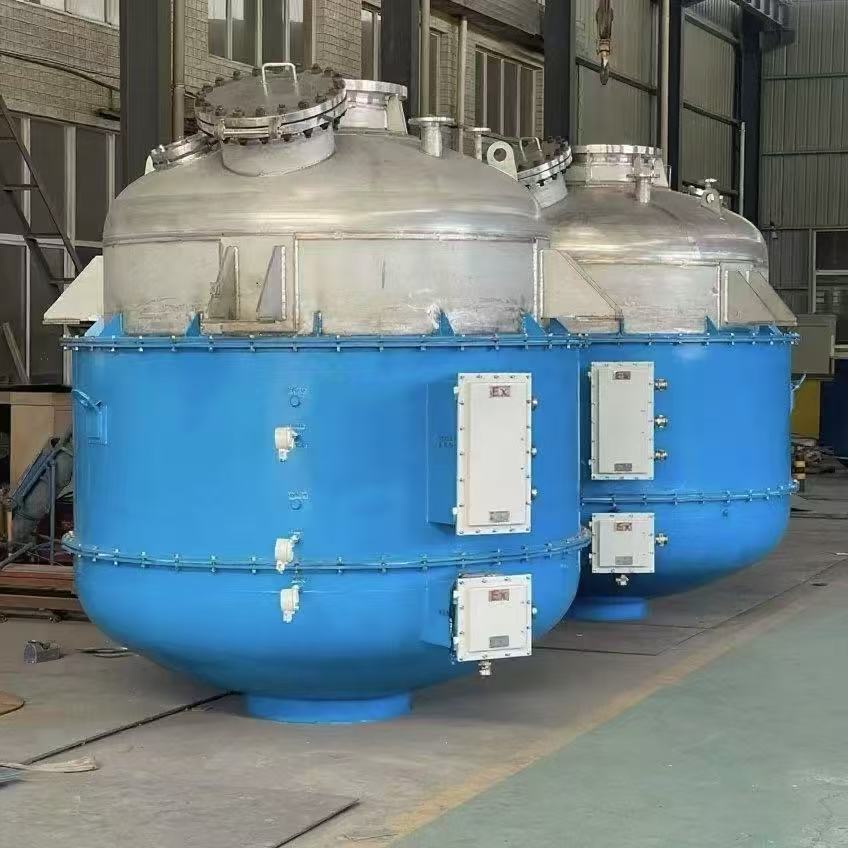
What separates a far infrared heating reactor that runs flawlessly for years from one that quietly erodes your throughput? It rarely comes down to the equipment alone—it’s the supplier’s grip on thermal uniformity, material selection, and responsive engineering support. In this guide, we unpack the supplier qualities that directly shape reliable performance, and highlight how Shenzhou Chemical Industry turns these principles into everyday operational confidence.
When Wavelength Precision Decides Reaction Yield
Photochemical pathways rarely tolerate sloppy energy input. A shift of just three or four nanometers can switch a substrate from a clean singlet excited state into a triplet manifold, rerouting the entire mechanism and collapsing the yield. In practice, this means a reaction optimized at 365 nm may fall apart at 370 nm, even when both wavelengths appear visually identical.
Narrow-band LEDs have quietly replaced broadband lamps in many synthetic labs for exactly this reason. Instead of dumping photons across a wide spectrum—and hoping the desired chromophore wins the absorption race—a precision source delivers energy almost exclusively to the intended transition. That selectivity suppresses side reactions and makes scaling up far less unpredictable.
The real challenge comes when lamp output drifts over time or when different batches of so-called identical LEDs show slight peak shifts. Combining wavelength-locked drivers with in-line spectroscopic monitoring turns this weakness into a controlled variable, letting chemists hold the photonic energy window tight enough that the yield becomes a function of chemistry, not of equipment lottery.
Suppliers Who Test Beyond the Data Sheet
Most component vendors treat the data sheet as the finish line—once every parameter is documented, they consider the part ready for market. A small group of suppliers, however, view that document as merely the starting point. They run parts through thermal cycling far beyond the stated range, probe for edge-case latch-up conditions that never appear in official specs, and intentionally stress devices until failure to map the true margins no customer will ever see on paper. This kind of testing doesn't change the printed numbers; it changes how trust is built before a design ever leaves the lab.
What separates these suppliers isn't fancier equipment or bigger budgets, but a refusal to treat validation as a checklist exercise. They regularly share anonymized overstress results with long-term clients, co-develop application-specific burn-in profiles that mimic real field abuse rather than generic JEDEC routines, and often maintain internal failure-analysis libraries that track subtle parametric drift across production lots. When an engineer asks about behavior at -40°C under full load after three years of vibration, these vendors can pull out data instead of a guess, because someone already ran that test—even though no customer had ever requested it.
The practical payoff shows up quietly. Designs spec'd from these vendors tend to survive first-article qualification with fewer surprises, field return rates dip below industry baselines for comparable parts, and emergency sourcing conversations become less fraught because the supplier already characterized how their silicon behaves when pushed past the datasheet's conservative corners. For any team that has spent a sleepless week debugging a marginal power stage or an intermittent timing violation at temperature extremes, that kind of unadvertised diligence is worth more than a hundred glossy reliability reports.
Custom Builds for Reactors That Don’t Fit Standard Molds
When a reactor vessel deviates from standard dimensions or has unusual port placements, off-the-shelf molds simply won't close around it. The flanges may sit at odd angles, the shell thickness could vary across sections, or the overall length might exceed what typical forming equipment can handle. Attempting to force a standard mold often leads to stress points, uneven wall support, or dangerous gaps in insulation. That's where a custom build becomes not just a preference but a practical necessity.
The process starts with a detailed site survey or CAD model import, capturing every irregularity that would break a standard fit. Instead of working from a fixed template, the fabrication team designs formwork and support structures around the actual reactor geometry. This often involves adjustable clamping rings, segmented mold sections, or modular insulation jackets that can be assembled in place. Material choices shift too—sometimes a more flexible elastomer is needed for oddly curved surfaces, or a high-temperature composite for a section that sits too close to a heat source. Every weld and seam is mapped to avoid interference with existing piping or access hatches.
The payoff is a reactor that performs as if it were built around the mold, not the other way around. Thermal loss drops because insulation follows every contour exactly. Maintenance crews can remove and replace sections without fighting misaligned brackets. And most importantly, the reactor runs safely within its design parameters, without the hot spots or cold zones that plague forced-fit solutions. It's the difference between a component that merely occupies space and one that truly integrates with the system.
Material Pairings That Survive Thermal Shock
Ceramic-to-metal joints often fail when a furnace cycles from 1200°C to room temperature, but a few combinations hold because their expansion rates nearly match. Zirconia coupled with niobium survives repeated quenching, as both move less than one percent over that span. The trick is not finding zero mismatch but pairing materials whose strain stays under the bond line's fracture limit—so cracks never get a foothold.
Graphite and molybdenum work for a different reason: graphite's layered structure absorbs stress by sliding along basal planes, while molybdenum stays rigid. This pairing shrugs off thermal swings that would shatter alumina on steel. In induction furnaces, the graphite-molybdenum interface remains intact after hundreds of cycles, mostly because the graphite side sacrifices its own surface rather than peeling away from the metal.
For low-cost applications, borosilicate glass sealed to tungsten wire still outperforms fancier pairs. The glass softens just enough near 500°C to relieve stress without losing its shape, and tungsten's expansion curve stays gentle across the same range. That combination has lasted decades in vacuum tubes and halogen lamps, proving that thermal shock survival depends less on strength than on letting the weaker side flex first.
The Difference a Live Engineer Makes During Startup
At 2 a.m. during a cold start, a live engineer reads the differential pressure across the first-stage separator and notices a 0.7 bar drift before the control system flags it. That kind of catch is not in the manual.
Startup sequences rarely follow the P&ID exactly. Valves stick, instruments lag, and the DCS logic may hold an interlock longer than the physical process requires. A live engineer can separate harmless startup noise from actual equipment strain, documenting the date, time, and exact setpoint override so the morning handover isn't a puzzle.
The real difference shows when a vendor representative joins by video call and defers to on-site judgment. Instead of waiting for a second opinion or a ticket escalation, the engineer can run a quick pressure decay test, adjust the purge rate, and keep the heat-up curve within 30°C per hour. That flexibility keeps a scheduled 72-hour startup from becoming a week of troubleshooting.
Performance Data You Can Verify, Not Just Promises
When a vendor hands you a spec sheet, the numbers often feel more like marketing than reality. We take a different approach: every performance figure we publish comes from tests you can replicate in your own environment. Our benchmarks run on standard hardware, with the same configurations we document publicly, so you can run the identical workload and see for yourself whether the results hold up.
Instead of cherry-picking ideal scenarios, we share the raw logs, the test scripts, and even the failures we encountered along the way. If a particular query took longer than expected under heavy concurrency, you’ll find that in the report — not hidden in a footnote. This transparency means you are not trusting our word; you are re-running our tests and drawing your own conclusions.
Ultimately, verifiable performance data changes the conversation from “take our word for it” to “here’s how to check it yourself.” We’d rather you spend an afternoon validating our numbers than spend months regretting a decision based on a slide deck.
FAQ
Look closely at how the emitter array is arranged and whether the supplier shares thermal mapping data for your specific vessel size. A dependable supplier will discuss watt density, wavelength match to your material, and zoning logic rather than quoting generic specs.
Ask for temperature deviation figures across the reactor wall under full load, not just idle conditions. Evidence from third-party thermocouple tests or a trial run with your own process fluid gives a much clearer picture than a spec sheet.
Far infrared emitters run hot, and different shell alloys expand at different rates. A supplier that chooses materials based on your operating pressure, temperature cycling frequency, and chemical exposure prevents warping, micro-cracks, and early emitter failure.
Consistency comes from controlled welding procedures, post-weld heat treatment, and documented inspection points. Ask whether the same team handles your project from design to final testing, because handoffs often introduce tolerance drift.
It is often the difference between a system that works on paper and one that works in your plant. A supplier willing to adjust emitter spacing, reflector angles, or control zoning based on your actual heat-up profile will reduce cold spots and energy waste.
Look for response time commitments, on-site troubleshooting options, and a spare parts list that includes emitters, sensors, and control boards. If they can provide maintenance logs or remote diagnostics, that suggests they expect the reactor to run for years, not just until the warranty ends.
At minimum, look for electrical safety certification for the control cabinet and pressure boundary compliance for any vessel or flange work. Beyond that, a quality system with traceable material certificates and documented weld inspections indicates a supplier that manages risk instead of hoping for the best.
Conclusion
A far infrared heating reactor supplier earns trust only when the delivered system performs under real process conditions, not just in a catalog. Wavelength precision often separates a batch that meets spec from one that falls short; a supplier who understands emitter-to-target distance, surface emissivity, and spectral matching will tune the output to the chemistry instead of forcing the chemistry to fit a standard heater. Testing beyond the data sheet is equally telling—look for vendors who run load simulations, thermal mapping, and long-duration cycling before shipping, because those results reveal drift, hot spots, and control lag that spec sheets never mention. Custom builds then close the gap when glass-lined vessels, unusual geometries, or aggressive solvents rule out off-the-shelf arrays. The best partners engineer the heater around the reactor, adjusting zone density, frame design, and reflector curvature, rather than bolting on a generic panel and hoping for uniform flux.
Material pairings matter just as much once the system heats and cools across wide temperature swings; mismatched thermal expansion between emitters, insulation, and vessel cladding can crack joints or warp frames, so suppliers should demonstrate proven combinations that survive repeated thermal shock. Startup support is where a live engineer changes the outcome—remote documentation cannot notice a subtle power oscillation or a misrouted purge line, but an experienced field engineer will tune PID parameters, verify safety interlocks, and train operators on the actual installed layout. Finally, reliable suppliers share verifiable performance data: logged temperature uniformity, energy consumption per batch, and heater efficiency under your load, not just a polished brochure. Those numbers, checked against independent sensors and historical runs, let you confirm that the promised wavelength output, ramp rates, and thermal stability show up in your process day after day. Together these habits separate a vendor who sells heaters from a supplier who ensures dependable far infrared reactor performance.
Contact Us
Contact Person: Mr. Wang
Email: [email protected]
Tel/WhatsApp: 8613705299955
Website: https://vip.e-baixing.com/szhgyw