

Export Uniaxial Geogrid: Smart Strategies for Global Infrastructure Development
2026-05-18
As global infrastructure demands surge, the need for reliable ground reinforcement solutions has never been greater. Uniaxial geogrids, with their high tensile strength and soil stabilization capabilities, are transforming how we approach roads, retaining walls, and slope engineering. Yet, unlocking their full potential requires more than just off-the-shelf products—it calls for smart sourcing, strategic logistics, and premium quality. At WEN FENG STONE, we’ve seen how the right geogrid can slash long-term costs and accelerate project timelines. But what separates a standard grid from a truly high-performance one? And how can project planners navigate the complexities of international supply chains to get exactly what they need? In this blog, we peel back the layers on export-oriented uniaxial geogrid strategies—from material innovation to compliance pitfalls—so you can build with confidence, wherever your next project takes you.
Tapping into Uncharted Territories: Where Uniaxial Geogrids Shine
Uniaxial geogrids have quietly revolutionized the way we approach soil reinforcement, yet their most impressive achievements often unfold far from the beaten path. Think of steepened slopes clinging to mountain roadsides, where conventional gravity walls would buckle under the pressure. In these precarious settings, uniaxial geogrids work as silent anchors, weaving through compacted layers to create a composite mass that resists lateral earth forces with almost stubborn resilience. It’s less about brute strength and more about the clever distribution of tensile loads—transforming unstable ground into steadfast infrastructure that blends naturally with the terrain.
Venture into mining regions or remote industrial sites, and you’ll find uniaxial geogrids playing a critical role in applications that rarely make the glossy brochures. Tailings dams, for instance, demand reinforcement that can withstand not just static loads but the corrosive whims of chemical-laden runoff. Here, the high tensile modulus and junction integrity of uniaxial geogrids become indispensable, allowing for taller, steeper containment structures that would otherwise be unthinkable. They also shine in reinforced soil slopes that form part of haul roads—bearing the relentless grind of heavy trucks while stabilizing cuts and fills in terrain too aggressive for standard solutions.
What truly sets uniaxial geogrids apart is their ability to unlock value in marginal lands where others see only cost overruns. Picture brownfield developments grappling with weak, heterogeneous fill, or coastal projects fighting saline water tables and erosion. The uniaxial geogrid’s longevity and chemical inertness turn these nightmares into manageable puzzles. By enabling steep vegetated faces or supporting rail ballast over soft subgrades, they expand the definition of buildable land—quietly making the impossible routine and the uncharted, well, charted.
Building Smarter, Not Harder: The Geogrid Advantage in Modern Projects
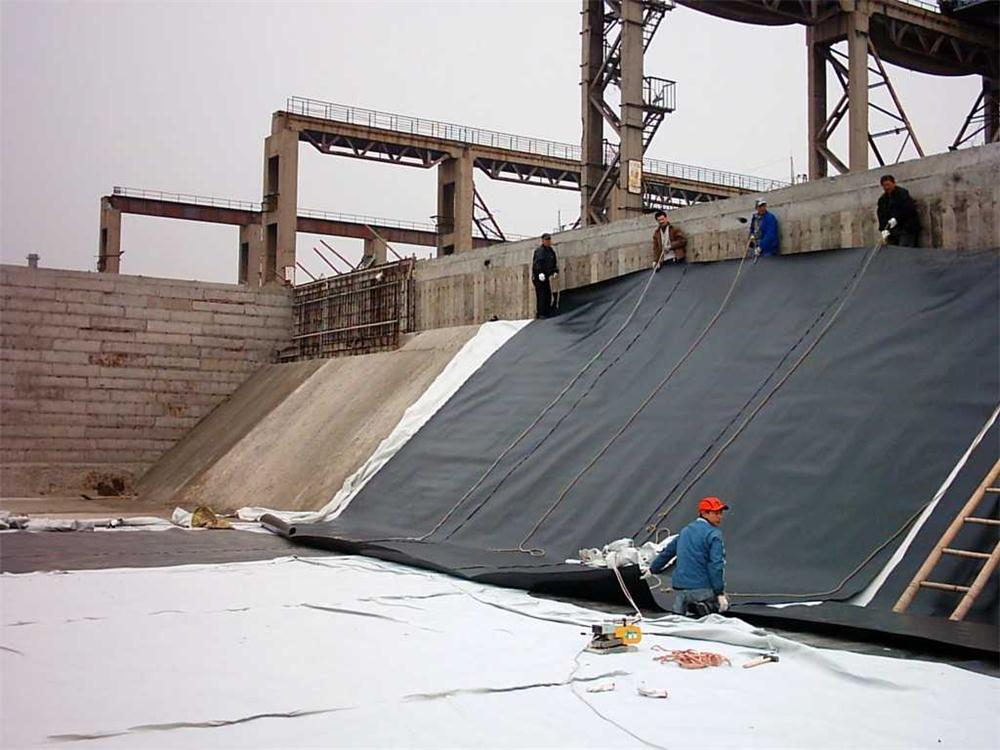
On almost any modern construction site, the ground itself is often the biggest unpredictable variable. Instead of hauling in mountains of aggregate or pouring deep concrete slabs to tame weak soils, more teams are turning to geogrid reinforcement. It’s a shift that doesn’t just trim material costs—it changes how we think about load distribution. By locking soil into a stiff, interconnected matrix, the geogrid spreads pressure over a wider area, turning marginal subgrades into reliable foundations without the traditional brute-force approach.
The real efficiency comes from how seamlessly geogrid integrates with on-site soils. Rather than excavating unsuitable material and shipping in engineered fill, crews can often use what’s already there, simply strengthening it layer by layer. This cuts truck trips, slashes fuel consumption, and keeps projects moving faster. Contractors notice the difference immediately—fewer delays from wet weather, less compaction equipment running, and a noticeable drop in backfill volumes. It’s not about doing more with less; it’s about letting the ground do a share of the work.
Beyond the immediate savings, the long-term performance is what truly sets this method apart. Pavements stay level longer, slopes resist erosion without massive retaining structures, and overall maintenance needs shrink. In an industry where durability and upfront investment are constantly weighed against each other, geogrid quietly tips the scales by making structural strength an inherent part of the terrain itself. It’s smarter building, not because the work is simpler, but because the ground becomes an active partner instead of a problem to be overcome.
From Factory to Foundation: Streamlining Geogrid Export Success
Every roll of geogrid that leaves our production line carries more than just tensile strength and dimensional stability. It carries the trust of engineers and contractors who rely on its performance in critical infrastructure projects. That’s why our export process begins long before the product reaches the shipping dock. We scrutinize raw material sourcing, monitor extrusion and welding in real time, and conduct batch-level testing that often exceeds international standards. Each shipment is documented with a granular chain of custody, so the geogrid arriving at a port in Rotterdam or a jobsite in Singapore is identical in every measurable way to the one that passed quality assurance on our factory floor.
Logistics can make or break an exporter’s reputation, and nowhere is this more true than with heavy, space-consuming materials like geogrid. We’ve dismantled the usual headaches by pre-engineering loading configurations that maximize container utilization without compromising roll integrity. Custom palletization and weatherproof wrapping are standard, not upcharges. We stay ahead of customs delays by maintaining a living library of tariff codes, free trade agreements, and local compliance mandates for our key markets. The result is a delivery rhythm that feels less like an international transaction and more like a local supply chain.
The real measure of streamlined exporting shows up on the foundation layer. When contractors unroll our geogrid and find consistent aperture sizes, predictable stress-strain performance, and zero surprises, the seamless journey from our factory to their site pays off. That reliability doesn’t come from a single department—it’s engineered into every step, from the calibration of production machinery to the final inspection of shipping documents. By refusing to treat export as an afterthought, we turn a potential bottleneck into a quiet competitive advantage for the projects that depend on us.
Global Roads, Reinforced: A Look at Uniaxial Geogrid Applications
Uniaxial geogrids have quietly become a backbone of modern road construction across continents. Their primary role is to provide tensile reinforcement in one dominant direction, making them ideal for stabilizing embankments, retaining walls, and steep slopes along highway corridors. Unlike traditional methods that rely on thicker aggregate layers, these polymer grids distribute loads more efficiently, cutting down on material usage without sacrificing long-term performance. From the autobahns of Germany to the expanding expressways in India, engineers turn to uniaxial geogrids when dealing with poor subgrades or challenging terrain, especially where differential settlement could spell disaster for pavement longevity.
What makes this technology stand out is its adaptability to local materials and conditions. In regions with soft, compressible soils, uniaxial geogrids are often rolled out beneath reinforced soil slopes or bridge abutments, effectively locking granular fill in place and creating a composite mass that resists deformation. This approach slashes the need for deep pile foundations or extensive soil replacement, which can be both costly and logistically impractical. Road widening projects in mountainous areas, for example, benefit hugely from geogrid-reinforced walls that achieve steeper, more stable profiles with a smaller construction footprint, minimizing earthwork and disruption to existing traffic flows.
Looking ahead, the use of uniaxial geogrids is expanding beyond conventional roadways into climate-resilient infrastructure. In flood-prone zones, they help elevate roads above water levels by reinforcing approach fills and protecting against scour, while in seismic regions, their ductility allows roads and bridge supports to absorb ground movement without catastrophic failure. Even in temporary haul roads for mining or logging operations, these grids deliver a robust, reusable solution that goes easy on the environment. As the push for sustainable construction grows, uniaxial geogrids are proving that durable transport networks can be built with less raw material, lower emissions, and a lighter touch on the landscape.
Navigating Regulatory Waves in International Geogrid Trade
The international geogrid market is a landscape of shifting rules and standards that demand constant attention from suppliers and buyers alike. Each country brings its own set of technical specifications, environmental mandates, and import protocols, turning what could be a straightforward transaction into a complex dance of compliance. For instance, a geogrid that meets European CE marking requirements might face additional testing for soil interaction under American ASTM standards or Japanese JIS guidelines. These divergent demands force manufacturers to maintain multiple product lines or invest in adaptable production processes, while traders must become fluent in the regulatory dialects of every market they touch.
Beyond the technical weave of polymers and ribs, the real challenge lies in the political and economic currents that reshape trade barriers overnight. Tariff adjustments, anti-dumping duties, and sudden shifts in bilateral trade agreements can render a previously lucrative route unprofitable. Recent years have seen several nations impose stricter origin verification for synthetic materials, aiming to curb circumvention of duties through third-country transshipment. This has led to a surge in demand for transparent supply chain documentation and a growing preference for regional sourcing strategies to sidestep the turbulence. Companies that once relied on a single low-cost manufacturing hub are now diversifying their footprints, placing production closer to end markets to insulate themselves from geopolitical shocks.
Staying afloat in these regulatory waters requires more than reactive compliance—it calls for proactive intelligence and relationship-building with local authorities. Many successful traders embed regulatory experts within their teams, not just to interpret the rules but to anticipate where the next wave might crest. Participation in industry associations and standards committees gives early signals of pending changes, while fostering trust with customs officials can smooth clearance frictions. In some regions, pilot programs and innovation clauses even allow for negotiated exceptions or accelerated approvals for novel geogrid applications, provided the applicant demonstrates rigorous performance data and environmental responsibility. Ultimately, those who view regulation not as a blockade but as a navigable current are the ones who turn compliance into a competitive edge.
Pioneering Durability: Innovations Driving Geogrid Demand
The relentless push for longer-lasting infrastructure has placed geogrids at the center of a materials revolution. No longer confined to simple stabilisation roles, modern geogrids are being re-engineered from the molecular level up. Advanced polymer blends and proprietary coating techniques now yield products that shrug off chemical attack, UV degradation, and extreme thermal cycling, effectively extending the service life of roads and retaining walls by decades. These are not incremental improvements; they represent a fundamental rethinking of how reinforcement interacts with the surrounding environment.
One breakthrough gaining traction is the integration of self-monitoring capabilities. By embedding optical fibres or conductive elements within the geogrid structure, engineers can now detect strain, temperature shifts, and even early signs of deformation in real time. This fusion of geosynthetics and sensor technology transforms passive reinforcement into an active asset, enabling predictive maintenance and dramatically reducing the risk of catastrophic failure. Adoption has been swift in seismically active zones and critical transport corridors where the cost of downtime is measured in millions per hour.
Perhaps the most profound shift is how digital modelling amplifies these material innovations. High-fidelity simulation tools now allow designers to model the precise interplay between soil, aggregate, and a geogrid’s three-dimensional geometry under dynamic loads. This has unlocked optimised patterns that improve interlock and load distribution while using less raw material. Combined with manufacturing advances that make complex aperture shapes economically viable, the result is a new class of geogrids that deliver unprecedented strength-to-weight ratios. The demand is not being driven by regulation alone—it is being pulled by the undeniable economics of doing more with less and building structures that endure.
FAQ
Uniaxial geogrids are high-strength polymeric grids designed to reinforce soil in one primary direction. Their elongated apertures lock in aggregate, boosting load-bearing capacity and reducing deformation. Globally, they're becoming essential for cost-effective retaining walls, steep slopes, and road bases because they cut material use and construction time without sacrificing durability.
It's about understanding local engineering standards and soil conditions first. Manufacturers should forge partnerships with regional distributors and engineering firms, offer tailored technical support, and provide specimens for pre-construction testing. Attending infrastructure expos and presenting case studies from similar climates builds credibility. Pricing flexibility and reliable logistics are also critical to break into markets dominated by traditional reinforcement methods.
They significantly lower the environmental footprint by minimizing the need for quarried aggregate and cement. Reinforcing native soil reduces excavation and hauling, cutting carbon emissions. Projects using geogrids often achieve longer service lives with less maintenance, aligning with green building certifications. Plus, they enable construction on challenging sites, preventing habitat encroachment.
One major pitfall is assuming a single product fits all regions. Variations in soil pH, temperature swings, and loading requirements demand customized polymer blends or coatings. Another is neglecting to train local crews on proper installation techniques, leading to failures. Bypassing rigorous quality certifications specific to the target country can also result in rejected shipments and reputational damage.
Consider a highway expansion through mountainous terrain in Southeast Asia. Traditional methods would have required massive retaining walls and extensive land disturbance. By designing mechanically stabilized earth walls with uniaxial geogrids, engineers preserved the natural slope, reduced concrete usage by 40%, and halved the construction timeline. The project stayed within budget and became a benchmark for mountain road construction in the region.
Uniaxial geogrids excel in applications where primary stress flows in one direction, like retaining walls and steep slopes. Their high tensile modulus in the longitudinal direction prevents elongation under sustained loads, ensuring long-term structural integrity. Biaxial or triaxial grids distribute loads evenly in multiple directions, which is better for platforms over soft soils, but uniaxial grids provide superior strength-to-weight ratios for lineal reinforcement tasks.
With the push for resilient cities and climate-adaptive infrastructure, investments are flowing into flood defenses, coastal protection, and reinforcement of aging transport networks. Uniaxial geogrids are ideally positioned for these because they reinforce earth structures that resist erosion and seismic events. Additionally, the emphasis on low-carbon construction materials will continue to drive adoption, especially in developing nations building large-scale transport corridors.
Conclusion
Exporting uniaxial geogrids demands a strategic approach that goes beyond mere logistics, embracing innovation, market intelligence, and quality assurance. These high-strength reinforcement materials are carving out new roles in infrastructure projects worldwide, from stabilizing soft soils under highways to reinforcing retaining walls in challenging terrain. By identifying regions where traditional construction methods stumble—such as areas with poor soil conditions or steep gradients—exporters can spotlight the unique value proposition of uniaxial geogrids. This means tailoring solutions to local engineering needs while streamlining the journey from manufacturing plants to project sites, ensuring that every shipment preserves its performance integrity through careful handling and documentation.
Success in the global arena also hinges on navigating trade regulations with agility and embedding durability at every stage. Manufacturers are pioneering advanced polymer blends and production techniques that boost long-term performance and resist environmental degradation, directly answering the call for smarter, more resilient infrastructure. To truly differentiate, exporters must couple these technical strides with deep regulatory insight—securing certifications, understanding tariff structures, and building partnerships that smooth cross-border transactions. Ultimately, smart strategies rest on a blend of technical excellence, regulatory fluency, and a genuine commitment to solving on-the-ground construction challenges. By fusing these elements, uniaxial geogrid exporters can lay the groundwork for safer roads and stronger foundations around the world, all while standing out in a competitive landscape without resorting to empty buzzwords.
Contact Us
Contact Person: Jennifer LEE
Email: [email protected]
Tel/WhatsApp: 8618553418999
Website: https://vip.e-baixing.com/wenfengshitong