

Custom Recloser Design Essentials for Smarter Grid Protection
2026-11-02
Grid faults don't wait for off-the-shelf fixes, and neither should your protection scheme. Yet many utilities still force standard reclosers into applications with unique coordination, communication, and environmental demands. Custom recloser design closes that gap—when you know which parameters genuinely matter. In this post, we'll walk through the essentials that separate a true smart-grid asset from a box that merely trips and recloses. Drawing on field insights from Deepwill, you'll learn how small design tweaks can prevent large-scale outages and give your network the adaptive edge it needs.
Adaptive trip curves that reshape themselves around live grid conditions
Conventional trip curves are static, sized for the worst-case fault at commissioning and left unchanged for years. A grid with solar inverters, storage, and shifting load patterns rarely matches that original snapshot. Adaptive curves replace that frozen assumption with protection boundaries that recalculate from live measurements—fault current availability, feeder impedance, load composition—so the relay responds to what the network actually looks like right now.
The adjustment happens in the background, often within a few protection cycles. When distributed generation pushes fault levels up in one segment, the curve tightens to clear genuine faults faster. When a large motor starts or a capacitor bank switches, the same curve relaxes just enough to avoid nuisance tripping without giving up sensitivity to real short circuits.
The practical payoff is fewer avoidable outages and more confident coordination across reclosers, fuses, and downstream breakers. Instead of forcing every device to respect a single conservative profile, the protection scheme reshapes itself around the day’s actual operating envelope—whether it is a cloudy afternoon with high inverter output or an overnight valley with heavy industrial load.
Enclosure designs that won't surrender to salt, storms, or solar heat
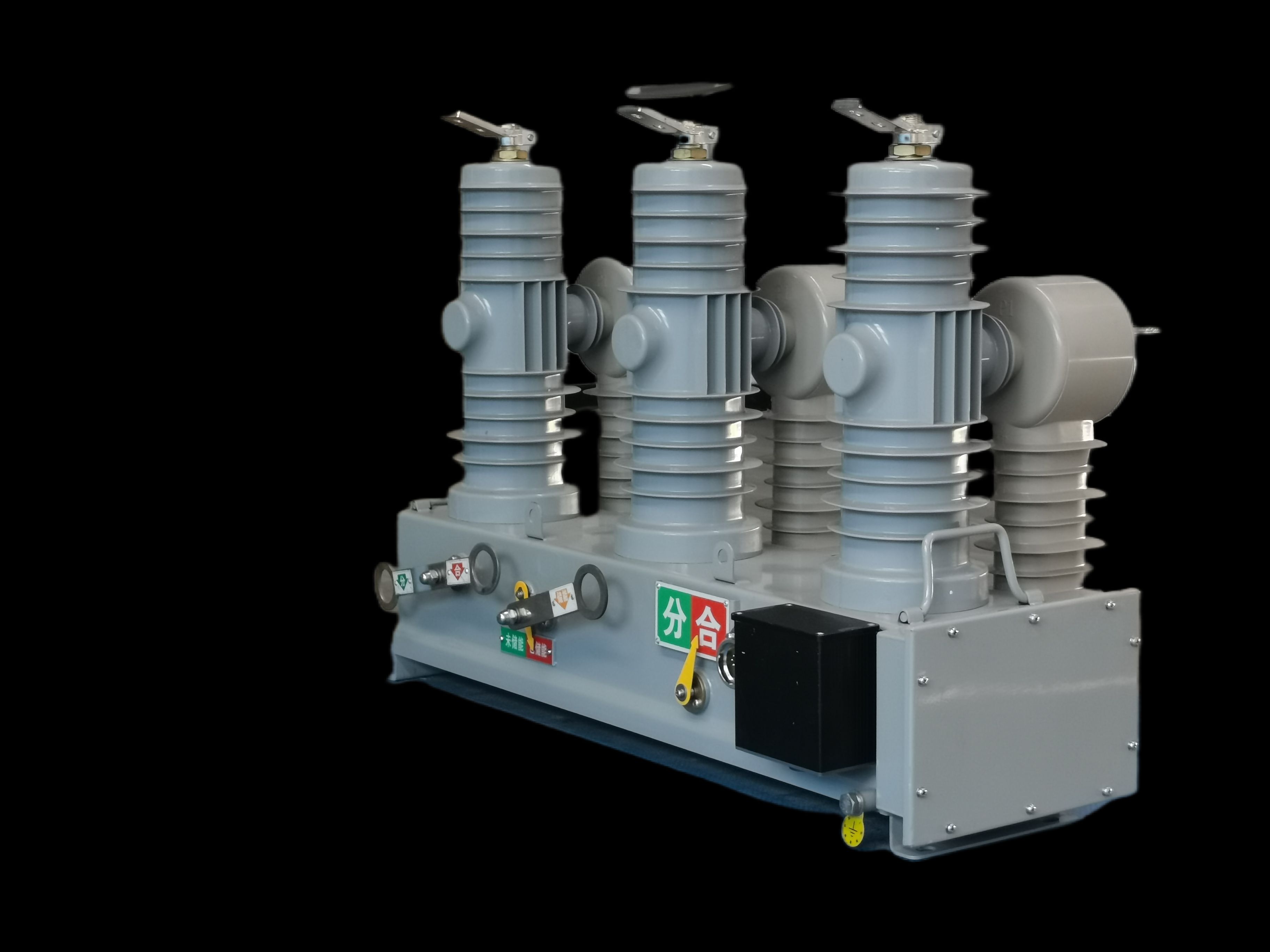
Salt spray doesn't just sit on a surface—it creeps into seams, pits aluminum, and corrodes hinges within months. The first line of defense is material choice. 316L stainless steel holds up far longer than powder-coated carbon steel, but even that can show tea staining near the coast. For truly aggressive marine environments, fiberglass-reinforced polyester or polycarbonate blends offer better resistance without the weight penalty. Look for enclosures with rounded corners and minimal horizontal ledges where salt-laden moisture can pool.
Storm-driven rain and wind pressure demand more than a basic gasket. Continuous poured-in-place polyurethane gaskets outperform die-cut foam because they don't develop gaps at the corners. Latches should be stainless or marine-grade, with a design that compresses the gasket evenly rather than just at the catch point. A raised lip or gutter around the door opening helps channel water away before it even reaches the seal. For installations in hurricane zones, consider models tested to withstand wind-driven rain at speeds above 100 mph—cheap enclosures often fail at the top hinge first.
Direct solar heat can push internal temperatures past what electronics tolerate, and simply adding vents invites dust and insects. Better designs use a double-wall or insulated roof that creates a natural thermal break. Light-colored surfaces reflect more infrared, but avoid glossy finishes that show scratches. For larger enclosures, a passive cross-flow ventilation system with filtered intake and exhaust ports can keep air moving without letting in salt fog. If active cooling is unavoidable, specify a thermostatically controlled fan with a corrosion-resistant motor and a positive pressure seal to keep out humid, salty air.
Bidirectional fault clearing for grids that now flow both ways
Legacy distribution protection was built around a simple assumption: current runs from the substation to the load, and a fault downstream trips the nearest breaker. Rooftop solar, battery storage, and vehicle-to-grid export have quietly erased that assumption. When a feeder hosts generation behind the meter, a fault can be fed from both ends, and a conventional overcurrent relay may see reverse current it was never designed to clear.
Bidirectional fault clearing starts with directional elements that can tell the difference between load current flowing out and fault current flowing back toward the substation. That distinction matters because opening the wrong device can leave an island energized or delay restoration. Utilities are pairing these directional relays with faster communications between reclosers and sectionalizers so that both upstream and downstream sources are tripped within a coordinated window.
The practical fix often blends hardware changes with revised protection settings. Some feeders add line current differential schemes, while others rely on adaptive logic that changes pickup thresholds as local generation output rises and falls. Either way, the goal is the same: isolate only the faulted segment, keep the healthy parts of the grid alive, and avoid sending crews to hunt for a fault that already cleared itself.
Telemetry that keeps dispatch in the loop without adding delay
Telemetry feels like a live feed of every truck, every sensor, every little hiccup on the road—but the magic isn't in dumping all that data on dispatch. It's in keeping them informed without turning their screen into a firehose. The system streams just enough: vehicle speed, engine load, brake temperature, even the telltale vibration in a wheel bearing. Dispatch sees a muted pulse rather than a screaming alarm, so they can keep eyes on the whole fleet without chasing ghost warnings.
The trick is edge filtering. Instead of pushing raw CAN-bus chatter to the back office, the onboard unit decides what matters. A sudden drop in oil pressure? That goes straight through, tagged with location and timestamp. A normal fluctuation in coolant temp as the truck climbs a grade? It gets smoothed into a rolling average, not a page. This means the decision loop stays short: the driver gets an advisory, dispatch gets a heads-up, and neither one waits for a server round-trip that could cost seconds when a tire is losing air.
What dispatch actually sees is a timeline of exceptions, not a data dump. A trailer door opening in a no-stop zone triggers a quiet flag. A hard braking event gets plotted against the route and weather. Because the telemetry arrives with context already attached—which trailer, which driver, what the last maintenance check flagged—a dispatcher can act or ignore in one glance. No pull-down menus, no export to CSV, no delay. Just the signal that deserves a human decision, right when it matters.
Self-healing sequences that distinguish a twig from a transformer fault
In the field, a momentary brush of a branch against a live conductor can produce a fault signature that looks alarmingly similar to an internal winding failure. The key lies in watching how the event unfolds over the following cycles. A twig contact typically creates a self-extinguishing arc; the current trace shows a sharp spike, then a rapid decay as the organic material burns away, often clearing itself before protection schemes even trip. By contrast, a transformer winding fault tends to persist or recur, with current waveforms revealing progressive insulation breakdown and no natural clearing pattern.
Time-stamped disturbance recordings make this distinction practical. Engineers look for a telltale sequence: initial high-magnitude transient, brief period of irregular conduction, then a clean return to normal voltage and current within a few hundred milliseconds—classic twig behavior. If the recording shows repetitive restrikes, growing zero-sequence current, or gas accumulation alarms from the Buchholz relay, the evidence points toward an internal fault. The self-healing nature of the event becomes the primary diagnostic clue, far more reliable than a single snapshot of the fault magnitude.
Practical experience from utilities shows that many unexplained momentary outages attributed to transformer weakness were later traced back to vegetation contact. Reviewing multiple events over weeks can reveal a seasonal pattern, with twig faults clustering during windy or stormy periods. Transformer faults, on the other hand, tend to appear without such meteorological correlation and often worsen over time. Documenting the self-healing sequence for each incident builds a powerful operational database that separates nuisance trips from genuine equipment deterioration.
Security baked into the firmware, not bolted on after the fact
Security that actually works starts deep inside the hardware, not as a patch applied later. When protection is woven directly into the firmware, every boot sequence verifies code integrity before it ever reaches the operating system. That means attackers can't simply modify a driver or inject malicious instructions during startup—the core checks happen first, in a place that's nearly impossible to bypass without physical access and specialized equipment.
Think of it as building a vault into the foundation rather than adding a lock to the door after the building is up. Firmware-level security gives you immutable root of trust, encrypted storage of cryptographic keys, and secure enclaves that keep sensitive operations isolated from the main processor. This approach also cuts down on the endless cycle of emergency patches and zero-day fire drills, because the attack surface shrinks dramatically when the lowest layers are already hardened.
The result is a device that doesn't rely on constant vigilance or add-on software to stay safe. It simply refuses to run anything that hasn't been validated from the moment power is applied. For embedded systems, IoT gear, or any hardware that lives in the field for years, that's the difference between a nuisance and a nightmare.
FAQ
Customization lets utilities match interrupting capacity, voltage class, and control logic to the exact feeder behavior instead of relying on one-size-fits-all hardware. That flexibility pays off when you have high penetration of distributed generation or unusual fault current profiles, where a generic recloser either over-trips or misses faults entirely.
Start with the maximum available fault current at the installation point, then leave headroom for future system changes like added generation or looped feeds. The rating should exceed the calculated worst-case bolted fault, and the interrupting medium — vacuum, oil, or SF6 — should be chosen for the duty cycle you expect, not just the nameplate kA.
Look for native support of DNP3, IEC 61850, and Modbus TCP rather than proprietary stacks. That keeps the device interoperable with SCADA, peer-to-peer protection schemes, and newer distribution automation platforms. Latency matters too; a recloser that can't report status within tens of milliseconds adds unnecessary risk to fast restoration schemes.
Because the difference between a tree branch brushing a line and a downed conductor is in the current waveform, not just the magnitude. Customizing the pickup, time-current curves, and high-impedance fault detection lets the recloser delay or avoid a trip for transient events while still isolating real faults before damage spreads.
Use adaptive settings that shift curves based on real-time system topology and fault location data. Instead of fixed coordination margins, let the recloser tighten its time delays when it's the only protective device upstream, then widen them when it senses downstream reclosers or fuses. That preserves selectivity without dragging out clearing times.
IEEE C37.60 and IEC 62271-111 cover recloser performance, but for grid resilience you should also test beyond the type tests: cold-start operation at rated fault current, multiple sequential operations without cooling, and behavior under voltage sags or frequency excursions. Field validation with staged faults on a test feeder reveals issues lab tests miss.
Ambient temperature range, salt fog or industrial pollution, UV exposure, and wildlife contact risk drive the enclosure choice. A sealed stainless steel or polymer cabinet may be overkill for a mild climate but essential near coastal substations. Also consider internal condensation management — a heater or breather can prevent nuisance flashovers more effectively than a bigger bushing.
Continuous recording of operations, fault currents, and contact wear indicators lets you schedule maintenance before a failure, not after an outage. Trending the arcing time per interruption and comparing it to the manufacturer's contact life curve gives a much better replacement trigger than calendar age. It also helps identify recurring fault locations through event replay and waveform capture.
Conclusion
Modern reclosers are no longer static switches; they're decision-making nodes that read the grid's pulse in real time. The first essential is adaptive trip coordination—curves that reshape themselves as load, temperature, and fault current shift, so a momentary branch contact doesn't trigger a lockout while a persistent bolted fault still gets cleared without hesitation. This intelligence has to live in an enclosure that treats coastal salt spray, hailstorms, and solar heat as everyday conditions, not failure modes. Powder-coated stainless hardware, pressure-equalizing vents, and UV-stable gaskets keep electronics dry and cool long after the warranty expires. Equally critical is bidirectional fault clearing: with rooftop solar and battery storage pushing current back through feeders, the recloser must identify and interrupt faults from either direction with equal confidence, often using directional elements that adapt to changing source impedance.
Beyond the switchgear itself, two software disciplines separate smarter reclosers from legacy devices. Telemetry must keep the dispatch center informed without adding latency to protective decisions—publish-subscribe protocols and event-driven reporting beat polled SCADA loops by sending only what changed, when it changed. Self-healing sequences then use that data to distinguish a twig brushing a conductor from a failing transformer winding; the recloser tests, waits, and re-energizes only if the downstream segment proves stable, reducing outage minutes without sacrificing safety. Underpinning all of this is firmware security that's part of the development lifecycle, not a patch later. Signed boot images, hardware root of trust, and strict role-based access prevent the smart grid from becoming an attack surface. Together these essentials turn a recloser from a dumb breaker into a resilient, observant guardian of distribution reliability.
Contact Us
Contact Person: Julion
Email: [email protected]
Tel/WhatsApp: 8617351370631
Website: https://www.deyunelectric.com