

Chinese High Voltage Generators: Innovation, Reliability, and Industry Applications
2026-05-23
High voltage generators are the unsung heroes behind modern industry, silently powering everything from remote mining operations to cutting-edge medical equipment. But not all generators are created equal—especially when it comes to the innovation and reliability emerging from China. Hichai Power stands at the forefront of this revolution, crafting solutions that tackle the toughest energy challenges with precision and endurance. In this post, we’ll explore how Chinese high voltage generators are reshaping industries worldwide, and why Hichai Power is a name worth knowing.
Pushing Voltage Limits: How Chinese Engineering Redefines High-Output Generators
For decades, generator design followed a predictable path—incremental gains in voltage output came at the cost of size, weight, and thermal management headaches. Traditional insulation systems and winding geometries simply couldn’t cope once field strengths inched beyond certain thresholds. Chinese engineering teams have flipped this script by rethinking dielectric materials from the ground up, deploying nanocomposite insulation that withstands electric fields once thought impractical for air-cooled stators. The shift isn’t just about swapping one material for another; it involves a complete redesign of slot geometries and cooling channels that jointly suppress partial discharge, allowing generators to run at significantly higher terminal voltages without ballooning in physical dimensions. The result is a new class of machines that push voltage ceilings while remaining compact enough for retrofits in existing plants.
Beyond materials, the real breakthrough lies in how these generators regulate extreme electrical stress during transient events. Instead of adding bulkier insulation or reducing output—the typical band-aid fixes—engineers adopted adaptive field grading layers that redistribute stress dynamically as load conditions fluctuate. Combined with optimized end-winding support structures and real-time monitoring embedded directly into the stator core, the designs maintain stability even under fault-induced overvoltages. This holistic approach, blending precision manufacturing with intelligent control, has dissolved the old trade-off between voltage rating and operational headroom. The impact is already visible in ultra-high-voltage transmission corridors, where these generators now interface directly with grid voltages that previously demanded step-up transformers the size of small buildings.
Built to Last: Reliability Features That Set Chinese Generators Apart
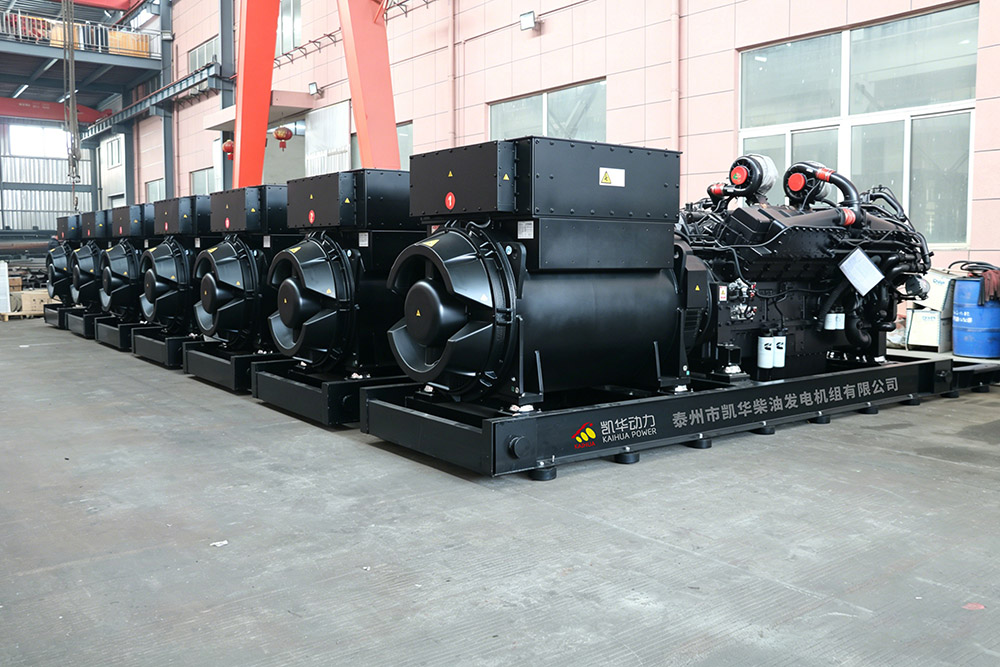
When it comes to generator reliability, the engineering philosophy behind many Chinese models centers on rugged simplicity and rigorous testing. Manufacturers often subject their designs to extreme load simulations and environmental stress tests long before any unit reaches the market. This means that the frame, alternator, and engine are not just assembled but deliberately over-engineered to handle unexpected surges and continuous operation. The focus is on eliminating common failure points—like vibration-induced loosening or overheating—through reinforced mounting systems and advanced cooling channels that work quietly in the background.
Beyond the hardware, the real differentiator lies in the intelligent management systems embedded within these generators. Real-time monitoring automatically adjusts output to match demand, preventing the kind of strain that leads to premature wear. Features like low oil shutdown, overload protection, and automatic voltage regulation are standard, not optional extras. Some units even include self-diagnostic capabilities that alert you to maintenance needs before a minor issue becomes a breakdown. It's this layer of active protection that keeps the generator performing consistently, whether it's powering a remote worksite or backing up a critical home system.
Durability is also about adapting to the environment. Many Chinese generators now feature enhanced corrosion resistance, with specially treated enclosures and moisture-sealed electronics that shrug off rain, dust, and humidity. The portability isn't sacrificed either—reinforced frames and heavy-duty wheels are common, making them easy to move without compromising structural integrity. Combined with easy-access design for routine checks, these units are built to remain serviceable for years, not just survive the warranty period.
From Factories to Fields: Real-World Applications of High Voltage Generators
High voltage generators are the silent workhorses powering some of the most demanding industrial processes. Inside factories, they enable electrostatic precipitators to strip particulate matter from exhaust streams, keeping air quality in check. They also drive X-ray inspection systems that peer through dense materials to detect microfractures in aerospace components or welds in automotive frames, ensuring safety without slowing production lines.
Venture outdoors and the role shifts but remains critical. A portable high voltage unit might energize an electric fence stretching miles across ranchland, deterring wildlife with a sharp but harmless pulse. In agriculture, these generators are finding a place in cold plasma seed treatments, where controlled discharges boost germination rates and reduce reliance on chemical fungicides—a quiet revolution promising healthier crops from the ground up.
Field researchers, too, depend on them. Geologists use high voltage pulses to probe subsurface layers via induced polarization, mapping mineral deposits or groundwater reserves without breaking ground. Even art conservators step outside the lab with compact generators to perform on-site electrostatic cleaning of delicate sculptures, gently lifting centuries of grime. From a humming factory floor to a sunbaked field, these devices bridge the gap between heavy industry and delicate, real-world problem solving.
Smart Systems and Silent Efficiency: The Next Generation of Power Delivery
The new wave of power delivery doesn't announce itself with noise or bulk. Instead, it slips into devices quietly, optimizing every watt through adaptive circuitry that learns usage patterns. These smart systems manage energy so precisely that waste becomes a relic of the past, all while operating in near-total silence—no humming transformers, no buzzing coils.
At the heart of this transformation is a blend of real-time monitoring and predictive algorithms. Voltage fluctuations are smoothed before they happen, and thermal loads are balanced across components without human intervention. The result is not just efficiency but a kind of elegance: phone chargers that dim their indicator lights when you're asleep, and laptop adapters that enter a micro-sleep state when the battery hits 100%, drawing virtually no power.
For the end user, the experience is invisible. There's no need to toggle settings or read manuals. A bedside lamp powered over USB-C negotiates the exact current it needs, then fades out with a soft touch. An office full of monitors and docking stations hums along at a fraction of yesterday's power draw, all while the AC grid interface talks to local storage to avoid peak rates. It's power delivery that not only works but thinks—and does so without ever raising its voice.
Why Global Industries Are Turning to Chinese HV Generators for Critical Power
In recent years, a quiet shift has been occurring in the realm of high-voltage power generation. Once dominated by a handful of Western and Japanese manufacturers, the market for critical power solutions is now seeing a surge of interest in Chinese-built HV generators. It’s not just about cost anymore—engineers and procurement specialists are discovering that these machines bring a compelling mix of advanced engineering, rapid customization, and dependable performance that rivals legacy brands.
What’s driving this change? For one, Chinese manufacturers have invested heavily in R&D, embracing digital excitation systems, hybrid insulation materials, and IoT-enabled monitoring as standard features rather than costly add-ons. The result is a new generation of generators that maintain voltage stability under fluctuating loads with remarkable precision—a must for data centers, semiconductor fabs, and hospitals where even a millisecond of deviation can spell disaster. In field tests, these units often meet or exceed IEC and IEEE standards, and they’re backed by localized service hubs that drastically cut downtime.
Beyond specs, there’s a growing confidence in the supply chain. Lead times that used to stretch beyond a year for custom-built units are now slashed nearly in half, thanks to vertically integrated manufacturing ecosystems. And with global projects demanding tighter budgets, the total cost of ownership—spanning initial purchase, maintenance, and lifecycle efficiency—has made Chinese HV generators an increasingly strategic choice for industry leaders looking to secure mission-critical power without compromise.
Beyond the Specs: Real-World Reliability Tests and Performance Standards
When a device leaves the lab, it enters a world far less forgiving than any data sheet can capture. Standardized benchmarks often measure performance under ideal conditions—room temperature, steady voltage, and pristine signal strength. Yet daily use exposes hardware to unpredictable variables like sudden drops, thermal shocks from moving between air-conditioned rooms and sweltering cars, or the slow accumulation of dust in a fan vent. That’s why rigorous reliability testing goes beyond checking whether a component meets its listed megahertz or milliamps. It involves deliberately pushing products to their breaking points through accelerated life tests, where they endure rapid temperature cycling, high-humidity environments, and repeated mechanical stress until failures emerge. Only by understanding these failure modes can engineers design resilience into the final product—ensuring it functions not just on day one, but years later under real-world strain.
Industry performance standards also reflect this shift toward holistic durability. Certifications like IP ratings for water and dust ingress, MIL-STD-810 for environmental extremes, or IEC 60068 for vibration and shock aren’t just checkboxes; they represent a shared vocabulary for comparing how devices survive outside the showroom. However, the most telling evaluations often come from custom testing regimens that simulate actual user behavior—yanking a cable at an angle, pocketing a phone with keys, or operating a touchscreen with wet hands. These real-world simulations bridge the gap between theoretical limits and practical longevity, separating gear that merely impresses on paper from gear that earns trust through seasons of use. After all, a spec sheet can promise a 1 million cycle switch life, but only repeated, merciless cycling in dusty or humid conditions reveals whether it will still click when it matters.
FAQ
Innovation stems from heavy investment in R&D, integration of smart technologies, and the push for higher efficiency and compact designs to meet diverse industrial demands.
They are engineered with robust insulation systems, rigorous testing standards, and proven performance in fields like medical imaging and power transmission, ensuring consistent uptime.
Key sectors include electrostatic precipitation, X-ray equipment, industrial coating, cable testing, and scientific research, where precise high voltage is essential.
A blend of cost-effectiveness, rapid customization, and adherence to international standards gives them a competitive edge without compromising quality.
Yes, many models feature enhanced cooling, dust-proof enclosures, and humidity resistance, making them suitable for challenging industrial settings.
Digital control interfaces, IoT-enabled monitoring, and modular architectures now allow for real-time diagnostics and easier scalability.
Advanced protection circuits, automatic shutdown features, and compliance with global safety certifications minimize risks of overvoltage or arc faults.
Absolutely, many Chinese firms offer bespoke voltage ranges, form factors, and integrated subsystems to match specific application requirements.
Conclusion
Chinese high-voltage generator design has moved steadily beyond incremental tweaks into territory where voltage ceilings are pushed without sacrificing long-term dependability. Engineers are layering digital excitation, adaptive insulation monitoring, and modular inverter stages into compact frames that would have been unthinkable a decade ago. These advances are not lab curiosities—they show up in mining operations running 24/7 at altitude, in offshore wind converter platforms, and in emergency backup systems for semiconductor fabs where a split-second dropout is intolerable. The real story is the marriage of raw output with ruggedness: salt-fog testing, sustained overload trials, and multi-year field data from installations in humid coastal grids and dusty inland rail corridors all feed back into iterative design. Instead of chasing headline kilovolt numbers, the engineering culture prizes repeatable performance under thermal stress and voltage fluctuations that kill lesser units.
This pragmatic mindset also explains why high-voltage generators from China are increasingly found in critical-path applications far beyond their domestic market. Food processing plants in Southeast Asia rely on them for uninterrupted cold-chain power, desalination arrays in the Middle East run on them with minimal derating, and European data center operators appreciate the pairing of intelligent load-sharing software with noise levels low enough for urban brownfield sites. Silent enclosure designs borrow airflow geometry from high-speed rail cooling, while on-board diagnostics predict bearing wear and winding degradation weeks in advance—maintenance shifts from reactive to planned without expensive retrofits. Global adoption is not just about unit cost; buyers cite transparent compliance testing against IEC standards, plus the ease of integrating Chinese-built switchgear and remote monitoring modules that speak the same industrial protocols. The sum is a power delivery paradigm where reliability is demonstrated rather than advertised, and where adaptability to local grid conditions gets built in at the firmware level rather than bolted on as an afterthought.
Contact Us
Contact Person: Ms. Lu
Email: [email protected]
Tel/WhatsApp: 8618917899306
Website: https://www.hichaipower.com