

China Plastic Prototyping Service Solutions: Accelerate Your Product Development with Precision
2026-06-01
Bringing a new plastic product from concept to reality demands speed without sacrificing precision. At ProtoMat, we understand that every day counts in product development. Our prototyping services bridge the gap between your design vision and functional, high-fidelity parts, so you can test, iterate, and refine with confidence. Whether you need a single prototype or a low-volume production run, we deliver clean, accurate results that help you outpace the competition. Ready to see your ideas take shape faster than ever?
From Concept to Reality: The Speed of Chinese Prototyping
Walk through any electronics market in Shenzhen and you'll feel the pulse of a manufacturing ecosystem that operates at an entirely different tempo. A rough sketch on a napkin can become a functional prototype in under a week—not because of magic, but because every supplier, mold maker, and engineer you need sits within a few subway stops. There's no need to email CAD files across time zones and wait three days for a quote; the person who can mill your enclosure lives above the shop that stocks the exact microcontroller you need. The sheer density of talent and resources collapses the distance between an idea and its first physical breath.
What outsiders often mistake for chaos is actually a deeply fluid supply chain built on trust and handshake deals. Factories don't just handle production—they actively solve design problems, suggesting material swaps or component substitutions in real time because they've seen a thousand iterations of your product niche before. A startup founder might find themselves huddled with a factory boss at 10 p.m., tweaking a PCB layout while a sample run hums on in the background. This culture of round-the-clock iteration, paired with machinery that rarely sits idle, turns what would be a month-long back-and-forth elsewhere into a three-day sprint.
Then there's the silent engine behind it all: a workforce that treats prototyping not as a one-off project but as a constant state of flow. Engineers here move between startups and factories so often that institutional knowledge becomes communal—best practices for shaving two days off a lead time are shared as casually as restaurant recommendations. The result is an environment where the risk of trying something new feels low because the system is designed to absorb failures quickly and pivot without ceremony. A concept doesn't inch toward reality here; it gets shoved, pulled, and pressure-tested until it either breaks or ships, and more often than not, it ships.
Precision Molding: Where Microns Matter
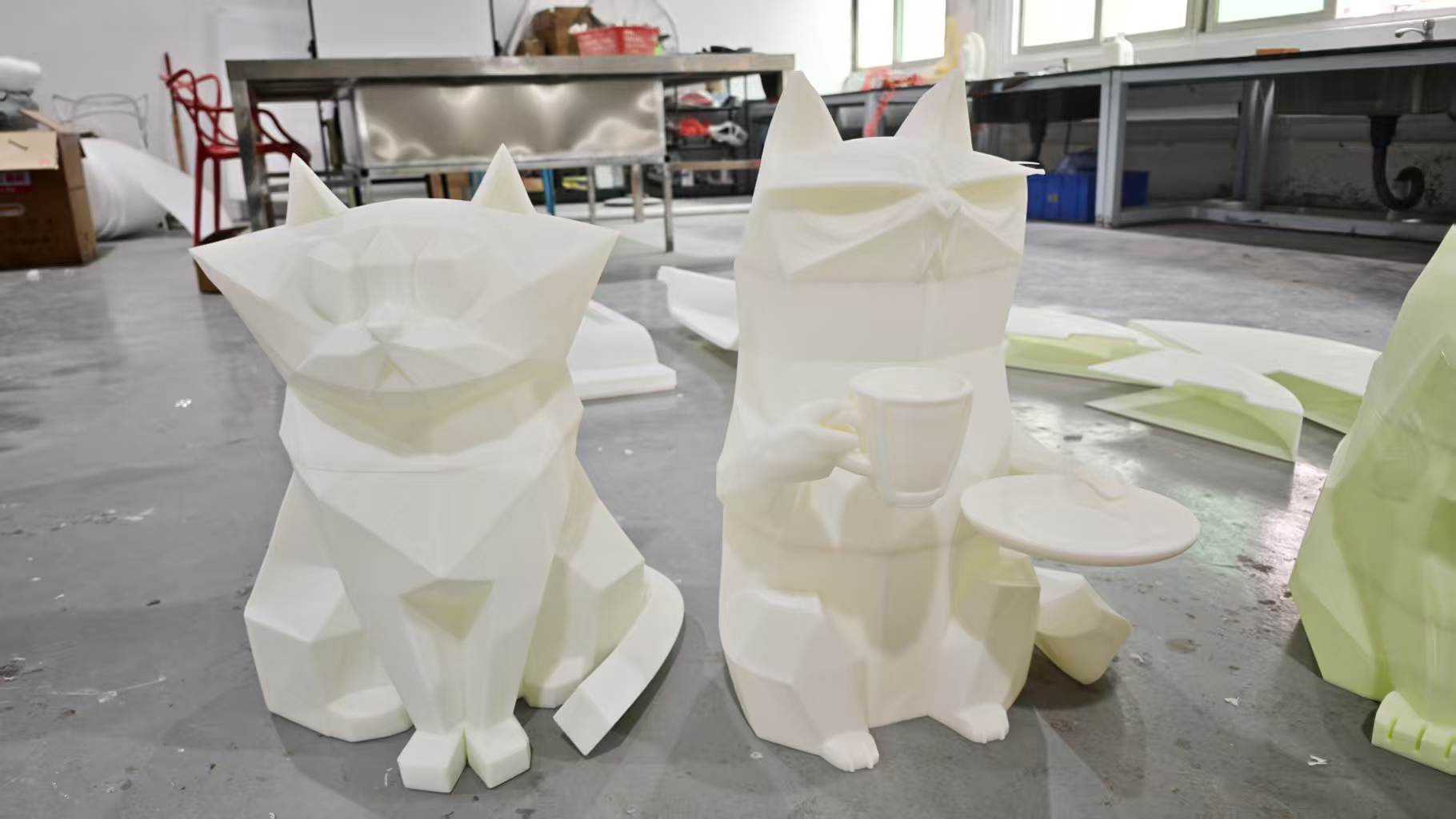
In the realm of precision molding, every micron tells a story. It’s the difference between a part that fits seamlessly and one that fails under stress. Our approach goes beyond standard tolerances, leveraging advanced tooling and real‑time process monitoring to hold dimensions that others might consider unachievable. From microfluidic channels to complex optical housings, each component is a testament to obsessive attention to detail—where a single micron can define performance, reliability, and the trust our clients place in us.
Achieving sub‑micron accuracy isn’t just about sophisticated machinery; it’s about the mindset that permeates our entire workflow. We treat every project as a fresh challenge, analyzing material behavior under extreme conditions and refining mold geometries through iterative simulation. The result is a molding process that doesn’t just meet blueprints—it anticipates potential variances and preempts them. When microns matter, there’s no room for “close enough,” and that philosophy drives every decision on the shop floor.
Real‑world applications demand more than theoretical precision. Whether it’s a surgical instrument that must pass five‑sigma quality gates or an aerospace connector enduring thermal swings, our parts prove that micro‑scale control translates into macro‑scale dependability. We’ve built a reputation on turning the impossible into routine, where each molded piece emerges from the press not as a compromise, but as a quiet affirmation that master craftsmanship and cutting‑edge engineering can indeed coalesce at the micron level.
Material Mastery: Choosing the Right Plastic for Your Prototype
Picking the right plastic for a prototype isn't just about grabbing whatever's cheapest or most familiar. The material you choose shapes how your design performs, feels, and even how quickly you can iterate. A flexible prototype might demand a TPU that bends without breaking, while a rigid, high-detail model could call for a tough resin like ABS-like photopolymer. Every plastic has its own quirks—some handle stress better, others resist heat or chemicals. Missing these nuances can lead to prototypes that fail tests or mislead your engineering decisions.
Think about the end-use environment early on. Will the part face constant friction? Acetal or nylon might be your go-to for their low wear and self-lubricating properties. Need optical clarity? Polycarbonate or acrylic can give you that glass-like transparency with varying degrees of impact resistance. And don't overlook the prototyping method itself. FDM printing favors PLA for ease but warps with ABS, while SLA resins offer stunning detail but can be brittle. Matching the plastic to both your prototype's purpose and your fabrication method saves you from frustrating do-overs and wasted material.
It's also worth challenging assumptions. Sometimes a “lesser” material surprises you: polypropylene, often dismissed as cheap packaging, makes incredible living hinges that can outlast engineered plastics. Testing a few candidate materials side by side—even with simple cobbled-together rigs—often reveals what data sheets miss, like how a surface texture feels in hand or how a snap-fit behaves after a hundred cycles. Finding your material mastery isn't instant; it's a layer of knowledge that turns a good prototype into a reliable stepping stone toward production.
Seamless Collaboration Across Time Zones
When your team spans from Singapore to San Francisco, the traditional 9-to-5 workday becomes a relic. True seamless collaboration means no one is ever left waiting for a reply or blocked by someone else's bedtime. It's about building workflows where asynchronous communication is the default, and real-time meetings are the exception, reserved only for moments that genuinely benefit from a shared clock.
The key lies in smart documentation and transparent handoffs. Instead of burying updates in email threads, teams use living documents, recorded walkthroughs, and threaded chat platforms that let every member contribute in their own peak hours. A designer in Berlin can leave contextual feedback on a prototype; a developer in Bangalore wakes up to clear action items, not vague comments. This rhythm turns time zones from a hurdle into a continuous cycle of progress.
But technology alone won't fix it—cultural habits matter just as much. It requires a deliberate shift from "reply immediately" to "reply thoughtfully," and from expecting instant decisions to trusting colleagues to move forward autonomously. When everyone respects each other's offline hours and over-communicates context, the distance dissolves. The result isn't just productivity; it's a team that feels more connected, precisely because they aren't forced to be online at the same time.
Scaling from Prototype to Production Without the Headaches
Moving from a functional prototype to a full production system often feels like navigating a minefield. The code that worked flawlessly on a developer's laptop suddenly crumbles under real user loads, and assumptions about data integrity or integration points become painfully exposed. Instead of treating the transition as a last-minute hurdle, it helps to weave production readiness into the fabric of development from day one. This means designing for observability, error handling, and scalable infrastructure early on, rather than retrofitting these crucial layers after the fact. By keeping deployment pipelines consistent between environments and stress-testing the prototype in a staging mirror, you catch the gnarly edge cases before they reach your users.
One of the biggest headaches is the hidden complexity of dependencies and configuration drift. Prototypes rarely account for the subtle differences between environments: network latencies, database connection limits, secret management, and the sheer volume of concurrent requests. A pragmatic approach is to containerize the application and lean on infrastructure as code from the very beginning. That way, the prototype isn't a throwaway artifact but an evolving skeleton that matures into production. Additionally, baking in feature flags and gradual rollout capabilities allows you to decouple deployment from release, turning a high-risk big bang launch into a controlled, measurable process.
Finally, the human side of scaling often gets overlooked. The tight feedback loops that made prototyping fast can become bottlenecks if the team doesn't adapt. Shifting from a “move fast and break things” mindset to a culture of resilience requires clear ownership, blameless post-mortems, and automated safeguards. Investing in chaos engineering experiments and game days while the stakes are low builds muscle memory for handling failures gracefully. When the inevitable surprises hit, your team can respond with calm precision rather than panic, making the leap from prototype to production feel less like a leap of faith and more like a well-rehearsed step forward.
Why Global Brands Trust China for Rapid Prototyping
It’s not just about lower costs, though that’s often the starting point. What keeps global brands returning to China for rapid prototyping is the sheer velocity of execution. A design file sent late on a Monday can translate into a physical part by Wednesday morning, thanks to a deeply integrated supply chain where material suppliers, mold shops, and finishing services sit within the same industrial cluster. This compressed timeline lets engineering teams iterate almost in real time—catching flaws early, refining fit and function without the usual wait. When a prototype needs to mirror production-grade quality, the local ecosystem delivers because every process, from CNC machining to multi-axis 3D printing, is optimized for speed without sacrificing precision.
Behind this speed is a workforce accustomed to the unconventional. Chinese prototyping houses routinely handle projects that require creative problem-solving—combining older craftsmanship with newer additive techniques, sourcing obscure components overnight, or reinterpreting western design specs that don’t neatly fit local production norms. This adaptability builds trust over time. Brands discover that their complex, iterative demands are met not with hesitation but with a practical, can-do mindset. Moreover, the sheer volume of prototyping work flowing through these facilities means they’ve seen almost every design mistake you can make. Instead of merely following a drawing, engineers often flag potential manufacturing issues early, acting as an informal extension of the client’s own R&D team.
Perhaps most telling is the quiet confidence that emerges after a few successful cycles. When a prototype delivered from China matches the performance of a final part—heat-resistant, snap-fit, surface-finished—it reshapes how internal stakeholders view the entire development process. That reliability, repeated across dozens of programs, is why manufacturing contracts often follow prototyping ones. There’s a layer of subtle due diligence at play: brands trust China not just because it’s fast or affordable, but because it has consistently proven it can deliver a physical, testable version of their idea that feels solid and real, often with fewer cycles than expected.
FAQ
China combines advanced manufacturing infrastructure with cost efficiency. Local service providers offer fast turnaround, diverse material options, and skilled engineers who can handle complex geometries, all while keeping unit costs significantly lower than in Western markets.
Most projects move from CAD file to physical part within 3–7 business days, depending on complexity and chosen technology. Express services can even deliver 24-hour CNC-machined or 3D-printed samples, letting you validate designs almost overnight.
For optical clarity, CNC machining with polishing or vacuum casting using transparent polyurethane resins often outperforms 3D printing. When additive is required, SLA with a clear resin plus post-processing can achieve near-glass transparency.
Yes, many seamlessly bridge into low-volume injection molding or vacuum casting runs of 50–10,000 units. This removes the need to switch suppliers between prototype validation and market testing, saving weeks.
Reputable shops use CMM inspection, laser scanning, and provide first-article inspection reports. ISO 9001 or similar certifications are common, and many will share real-time measurement data via secure portals before shipping.
Absolutely. Overmolding and insert-molding are routine requests. For prototypes, shops often combine machined or printed cores with secondary molding processes to mimic production-intent multi-material parts.
Structured NDAs, watermarked files, and split-shipping components across multiple vendors are common practices. Many trusted providers now also hold international data security certifications and work with Western legal frameworks.
Finishing services include painting, pad printing, laser engraving, texture replication, and even PVD coating. This means your prototype can truly mirror the final product's appearance and feel for stakeholder reviews or trade shows.
Conclusion
Turning a sketch into a functional plastic part within days rather than weeks is no longer a distant possibility—it’s the norm when you tap into China’s prototyping ecosystem. The pace at which local shops move from digital file to first article feels almost unreal until you’ve held the result in your hands. What sets top-tier providers apart isn’t just speed; it’s the relentless focus on micron-level tolerances that keeps every snap-fit, thread, and seal behaving as designed. Pair that with a deep bench of engineering-grade resins, from glass-filled nylons to optically clear polycarbonates, and you have a material palette that matches the demands of medical devices, automotive components, and consumer electronics alike. Seasoned teams guide material selection early, often flagging potential warpage or chemical compatibility issues before they become costly mistakes.
Coordination across continents used to be a friction point, but dedicated project managers now turn time-zone gaps into overnight progress loops. You send feedback in the evening and wake up to revised parts on a conference table. That rhythm doesn’t break when volumes climb either; shops that prototype with production in mind reuse the same tooling philosophy, so scaling from a handful of samples to thousands of units doesn’t require retooling or requalification—just a conversation about capacity. It’s this blend of technical rigor, responsive communication, and practical manufacturing experience that explains why household-name brands keep these factories at the center of their product development cycles.
Contact Us
Contact Person: Joe
Email: [email protected]
Tel/WhatsApp: +8613799507208
Website: https://www.3dprotomat.com/