

China LED Face Mask Guide and What to Know Before Buying
2026-08-16
Considering an LED face mask but overwhelmed by the choices? China has become a powerhouse for beauty tech, producing everything from budget knockoffs to genuinely advanced devices. If you're about to invest, a little homework goes a long way—especially around wavelength output, safety certifications, and whether a brand actually stands behind its claims. One name that keeps coming up in honest reviews is Omeina, known for balancing performance with real user trust. Before you hit 'add to cart,' here's the no-nonsense guide to buying a China-made LED mask that delivers.
Why Most LED Face Masks Overpromise and Underdeliver
Most LED face masks promise a spa-grade experience, but the reality often falls short. The issue starts with the hardware: many consumer devices use a limited number of LEDs, spaced too far apart to deliver the clinically tested dosage of light energy. Without adequate irradiance—typically measured in milliwatts per square centimeter—the skin simply doesn't receive enough photons to trigger meaningful collagen production or bacterial reduction. Manufacturers rarely disclose these numbers, leaving buyers to trust marketing photos of glowing masks rather than verified output data.
Another overlooked factor is wavelength purity. Red and near-infrared light can work, but only within narrow bands—usually 630–680 nm for red and 800–880 nm for NIR. Cheaper masks often use LEDs with broad or shifting wavelengths, so a portion of the emitted light falls outside the effective therapeutic window. This doesn't just reduce results; it can create an uneven treatment pattern where some areas of the face get less benefit than others. Even worse, a few devices mix in blue light without proper eye protection, raising safety concerns that never appear in the glossy ads.
Finally, real user habits expose the gap between promise and performance. Clinical studies typically involve 10–20 minute sessions, three to five times per week, over several months. But most at-home users give up after a few weeks because the mask is uncomfortable or the routine feels like a chore. When you add inconsistent usage to already low light output, the outcome is predictable: a expensive gadget that ends up in a drawer. The few masks that do work solve all three at once—high irradiance, precise wavelengths, and a design people actually stick with.
Wavelengths, Irradiance, and the Numbers You Should Ignore
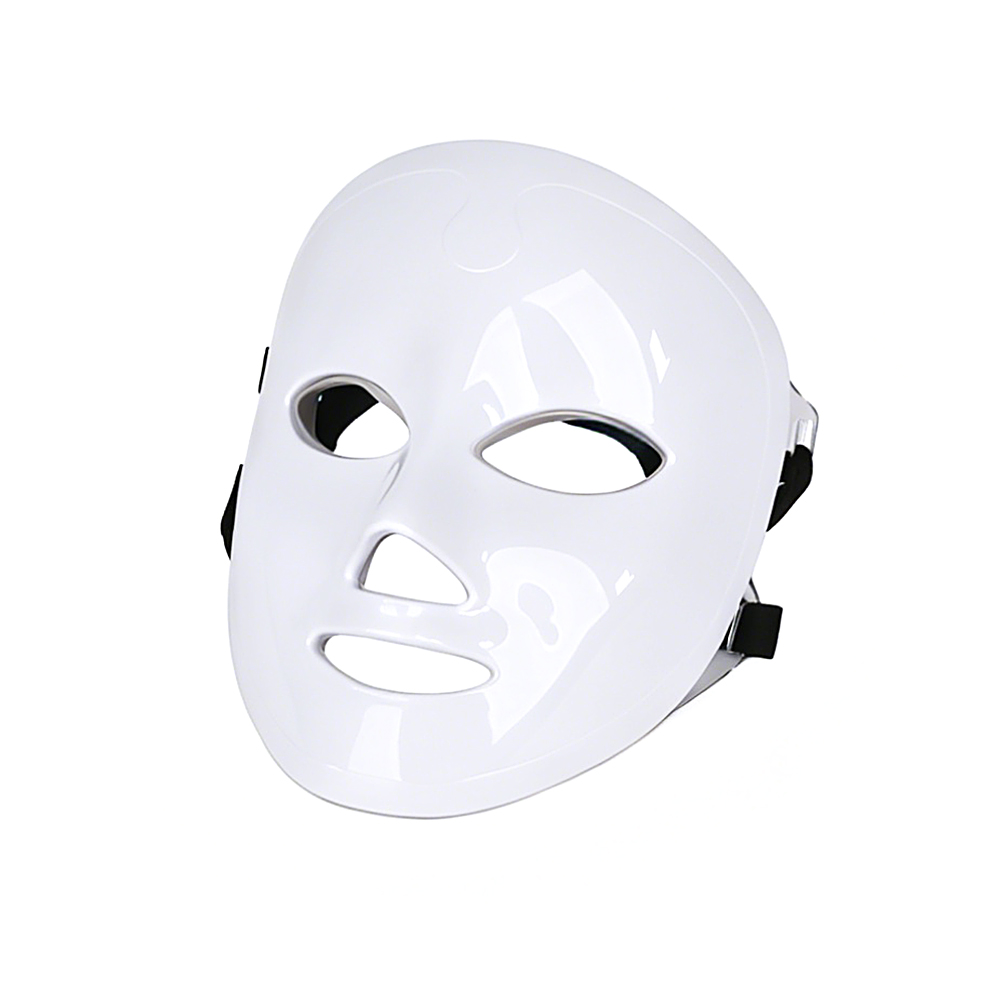
Look at nearly any light therapy device and you’ll see a parade of numbers: 660 nm, 850 nm, 100 mW/cm², 50 J/cm². It’s easy to get lost in the spec sheet, but the truth is many of those figures are just noise. Wavelength matters, sure, but only if it actually reaches the target tissue. Irradiance is often measured right at the surface, which tells you almost nothing about what’s happening an inch beneath your skin. Distance, angle, skin tone, hydration—these shift the real delivered dose far more than the box ever admits.
Most people obsess over getting the “perfect” wavelength or the highest power output, but that’s a trap. Once you’re in the therapeutic window—roughly 600 to 900 nm for most applications—the differences between specific nanometers are smaller than the marketing suggests. What matters more is how long you use the device, how consistently, and whether the actual light output matches what’s printed on the label. Cheap meters and optimistic lab conditions inflate numbers all the time.
So next time you’re comparing devices, ignore the fancy graphs and the four-digit wavelength claims. Instead, ask: How was the irradiance measured? At what distance? Over what beam area? If the answer isn’t clear, the number is probably meaningless. Focus on a device that feels practical to use regularly, because that’s the number that actually counts.
The Unvarnished Truth About Chinese LED Mask Factories
Walk into any trade show in Shenzhen and you'll see rows of near-identical LED masks, all promising the same red and near-infrared wavelengths for a fraction of the Western price. But peel back the glossy spec sheets and you'll find a mess of shortcuts. Many factories use diodes that drift far from their claimed nanometers after a few months, or skimp on the optical diffusers that keep light evenly distributed. A $40 mask might look like a $400 one in photos, but the difference is in the details nobody photographs: the solder joints, the pulse-width modulation flicker, the actual irradiance at skin distance—not the inflated numbers on a marketing PDF.
Then there's the certification game. A factory will show you an FDA registration number and a CE mark, but those often refer to the power adapter or a general electronics test, not the mask's light output or eye safety. Some buyers assume all Chinese suppliers are the same, but there's a wide split between the five or six factories that do proper in-house spectroradiometry and the hundreds that simply assemble parts from the same component markets in Huaqiangbei. The real differentiator isn't the housing design—it's whether anyone actually measured the irradiance with a calibrated sensor, and how often they retest when they switch diode suppliers.
The unvarnished truth is that great LED masks do come out of China, but they're rarely the cheapest ones listed on Alibaba. You can't judge by factory size or photo quality. You have to dig into test reports that show wavelength tolerance, uniformity maps, and flicker percentage under real load. If a supplier can't produce those within a day, they're likely reselling someone else's product with a new logo—and that's the part nobody puts in the brochure.
The Real Difference Between a $20 Mask and a $200 One
At first glance, a $20 mask and a $200 one might seem to serve the same purpose, but the gap goes far beyond branding. The cheaper option often relies on a single active ingredient, like hyaluronic acid or charcoal, with a basic delivery system that sits on the skin’s surface. The pricier counterpart typically layers multiple actives—think peptides, ceramides, and stabilized antioxidants—formulated for deeper penetration. It’s not just about what’s inside, though; the fabric or gel matrix matters. A premium mask uses biocellulose or hydrogel that adheres like a second skin, locking in moisture and preventing evaporation, while budget versions often use thin cotton sheets that dry out in minutes. You’re paying for the chemistry and the engineering of how ingredients reach your skin.
Another hidden differentiator is the concentration and purity of those ingredients. A $20 mask may list “vitamin C” on the label, but it could be a weak derivative or present in a concentration too low to notice any change. High-end masks invest in clinically tested percentages, often backed by independent studies rather than marketing claims. They also avoid cheap fillers, fragrances, and alcohol that can irritate sensitive skin. Consider the preservative system too: expensive formulas use gentler, more sophisticated alternatives, whereas budget masks might rely on parabens or formaldehyde releasers. For someone with reactive skin, that difference alone can be worth the extra cost.
Finally, think about the experience and long-term results. A drugstore mask might give you a temporary plumping effect that fades by morning, while a luxury mask aims to improve skin barrier function or stimulate collagen over weeks of use. The $200 price tag often includes patented complexes, rare botanical extracts, or bio-fermented ingredients that are expensive to source and stabilize. That doesn’t mean every expensive mask is worth it—plenty of mid-range options outperform overpriced ones. But the real difference is whether the formula is designed for a quick cosmetic fix or a sustained, measurable change in skin health. If you’re a mask minimalist, the $20 one may be enough; if you’re chasing resilient, visibly firmer skin, the investment starts to make sense.
How to Test a Mask Without a Lab and When to Walk Away
Start with a simple light test. Hold the mask up to a bright window or lamp. If you can clearly see the outline of your fingers through all layers, the filtration is likely too thin. A decent mask should block enough light that the material looks opaque or nearly so. Then check the inner meltblown layer by carefully cutting one mask you're willing to sacrifice: it should feel papery, not like a standard cotton sheet, and it shouldn't tear as easily as tissue.
For a quick water resistance check, pour a small amount of water into the outer layer while holding the mask like a bowl. A surgical-style mask with a hydrophobic outer layer should hold the water for several seconds without leaking through. If it soaks through immediately, that mask won't do much against droplets. Also try the breath test: you should feel noticeable resistance when inhaling sharply. No resistance means the material isn't filtering properly, while too much resistance makes it unsafe for longer wear.
Walk away if the mask fails any of these basic checks, if the package has no manufacturer information, or if the seller can't show independent test results. A strong chemical smell, visible pilling, or layers that separate with gentle pulling are also red flags. If a mask costs less than a cup of coffee and claims N95-level protection, that's another reason to leave it on the shelf. Your lungs are worth more than a bargain.
What Your First Two Weeks with an LED Mask Will Actually Feel Like
The first session feels more like a strange ritual than a skincare step. You lie there with the mask warming your face, the red glow pressing against your closed eyelids, and you half-expect something dramatic to happen. It doesn't. Maybe your skin looks a little pink afterward, or maybe just the same. The real surprise comes on day three or four, when you catch your reflection and notice the fine lines around your eyes look less deep—not gone, just softened in a way makeup can't fake.
By the end of week one, the novelty fades and the routine starts to feel almost meditative. You learn to schedule the ten minutes when nobody needs you, because the mask makes reading or scrolling awkward. Some nights your skin feels tighter, other nights a bit dry if you skipped moisturizer. Then around day nine or ten, a coworker or partner might glance at you and ask if you've been sleeping better. That's the odd part: the change is gradual enough that you doubt it yourself until someone else points it out.
Week two is where subtle turns into noticeable. The redness around your nose has calmed, old acne marks look flatter, and your skin drinks up serum like it's been waiting for this all along. You stop checking the mirror every hour and just trust the process—which is exactly when the mask stops being a gadget and starts being part of your unwinding. Not a miracle, but a quiet shift that makes your bare face feel a little more familiar.
FAQ
Look for independent verification rather than the seller's word. A cheap diffraction grating or a smartphone spectrometer app can give you a rough idea of the emission peaks. Also check if the seller provides a spectral power distribution chart from a third-party lab, not just a stock image. If they refuse to share this, treat the wavelength claims as marketing fluff.
Yes. Watch out for listings that use generic photos from other brands, promise “medical grade” results without any device registration, or offer extremely low prices for features like 7-color therapy. Real therapy masks usually focus on two or three wavelengths, not a rainbow of LEDs. Also avoid sellers who can't answer basic questions about irradiance or treatment time.
For anti-aging, stick with red light around 630–660 nm and near-infrared around 830–850 nm. For acne, blue light around 415 nm is best, but it can be harsh, so some masks combine blue with red to balance irritation. Avoid masks that only list vague color names like “red” without the nanometer range.
Check the power output. For home devices, you want low irradiance, typically under 50 mW/cm² at the skin surface, so you can use it for 10–20 minutes without eye strain or heat damage. If the seller advertises “high power” or “fast results,” that's often a sign it may be too intense or poorly shielded. Also make sure the eyes are protected, either with built-in goggles or by closing your eyes and keeping the mask at the correct distance.
Not always, but some are surprisingly close. The LED chips themselves are often sourced from the same few factories in Shenzhen. The bigger differences are in build quality, comfort, timer settings, and whether the wavelengths are precise or just “close enough.” If you're willing to tolerate a slightly flimsier frame or a shorter warranty, a well-reviewed Chinese mask can deliver solid results at a fraction of the price.
Most masks ship with lithium-ion batteries, which can slow down air freight or require special labeling. Expect delivery to take anywhere from 10 days to a month depending on the shipping method. Customs fees are usually minimal for personal use, but check your country's import threshold. Also keep the original packaging in case you need to return a defective unit.
Consistency beats intensity. Start with 3–4 sessions per week for about 10 minutes, and don't expect dramatic results before 8–12 weeks. Overusing it won't speed things up and can actually irritate your skin. Pair it with a simple, hydrating routine and avoid applying heavy actives right before a session, because LED light can increase sensitivity.
They forget to check the return policy and after-sales support. Many small Chinese sellers won't honor a warranty once the package leaves the country, so buy from a platform with buyer protection or use a credit card that allows chargebacks. Also take a video when unboxing to record any physical damage—this makes disputes much easier.
Conclusion
Most LED face masks you see online are built to grab your attention, not to change your skin. They flash impressive numbers—wavelengths, irradiance, mW/cm²—but most of those specs are either inflated or meaningless in practice. I've walked through enough Shenzhen trade shows to know that the factory selling a $20 mask and the one pushing a $200 version often share the same plastic mold, the same LED strips, and the same vague test report. The real differences hide where you can't photograph them: the density of diodes, the consistency of light output across the curved surface, and whether the power supply actually delivers what the label says. If a brand refuses to show you a third-party irradiance map or acts offended when you ask about binning, walk away.
After you unpack a mask, the first two weeks rarely feel like a spa revelation. Your skin might get slightly warm, a little red, or just... nothing. That's normal. The cheapest masks often feel flimsy and sit unevenly on your face, which means the light hits your cheeks but skips your forehead. A better test without a lab: turn it on in a dark room and look at the reflection on a white wall—if you see obvious dark spots or uneven patches, the optics are junk. Also check the controller. If it gets hot enough to fry an egg after ten minutes, the mask won't last. The honest truth about Chinese LED mask factories is that a handful make excellent devices for OEM brands, but they won't sell you one unit at a time, and they won't be impressed by your DTC story. You're better off buying from a brand that shows real, unretouched photos of the mask's light pattern and offers a no-questions return policy after two weeks of use.
Contact Us
Contact Person: Tina Liu
Email: [email protected]
Tel/WhatsApp: 8618681405932
Website: https://www.omeinabeauty.com/