

China Energy Saving HVAC Systems: Innovations Driving Sustainable Building Efficiency
2026-10-24
When building owners in China look for energy savings, HVAC systems are no longer an afterthought—they are the fastest path to lowering operating costs. The latest wave of equipment doesn't just promise lower bills; it delivers measurable reductions through variable-speed compressors, heat recovery ventilation, and AI-driven load matching that adapts to how buildings actually perform. For engineers and property managers, this shifts the buying decision from simple capacity ratings to real-world seasonal efficiency under China's diverse climate zones. That's where a brand like Tongbaote has been gaining attention, with systems designed specifically around the grid constraints and humidity challenges common in Chinese commercial projects. This post explores the innovations making that possible—and the practical questions to ask before your next retrofit.
Oil-Free Magnetic Chillers Quietly Take Over High-Rise Cooling
The mechanical room on the 34th floor no longer smells like lubricant. That’s the first thing most building engineers notice after the switch. Oil-free magnetic chillers use magnetic bearings to levitate the compressor shaft, eliminating the oil management system that used to require quarterly filter changes and annual oil sampling. For high-rise towers where every square meter of mechanical space is charged back to tenants, losing the oil sump, oil pump, and separator frees up room for other equipment—or simply makes the chiller plant quieter and easier to service.
What really drives adoption, though, is part-load efficiency. A conventional chiller spends most of its life below 60% capacity, but its efficiency often falls off a cliff in that range. Magnetic bearing compressors hold a nearly flat efficiency curve, which matters in high-rises where cooling demand swings with sun exposure and occupancy. Some property managers report a 20–30% drop in chiller plant energy use after swapping out an aging screw or centrifugal unit, and because the magnetic bearings don't touch, there's no mechanical wear to slowly degrade performance.
Noise was once the dirty secret of high-rise cooling: tenants on upper floors could feel the vibration of a chiller spooling up. Oil-free magnetic chillers run at lower sound levels and with less structure-borne vibration, which lets architects place them closer to occupied spaces without extra sound attenuation. As more buildings chase green certifications and tenants scrutinize operating costs, the quiet migration to oil-free magnetic technology feels less like a trend and more like the new baseline for high-rise design.
Variable Refrigerant Flow Tunes Output to Real-Time Occupancy
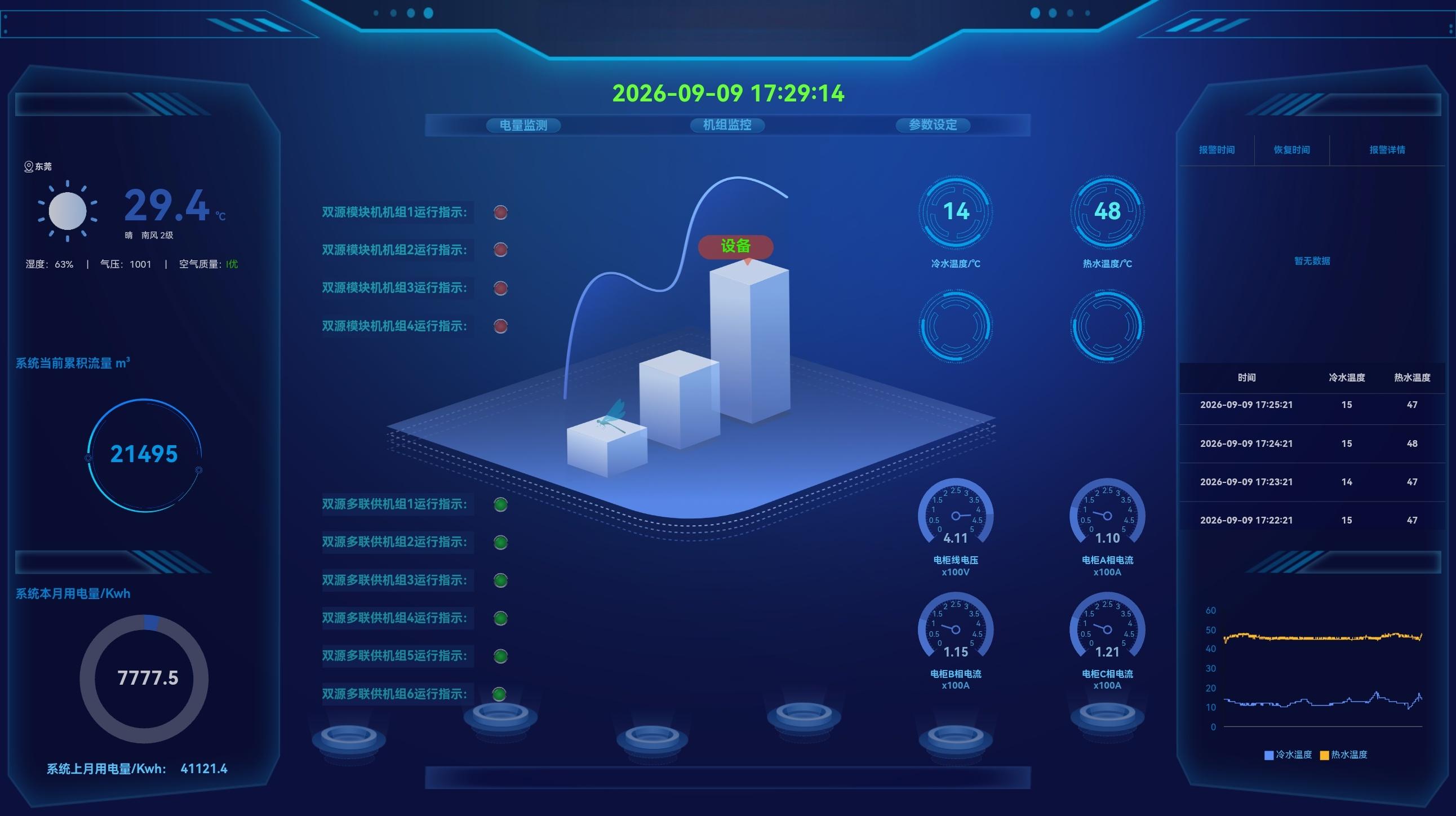
Variable refrigerant flow systems have shifted from fixed-capacity operation to a far more responsive control logic. Instead of running at a constant output and hoping the thermostat setting matches the load, the system reads occupancy data from sensors installed throughout the space. When a meeting room fills up, the compressor and fan speeds adjust almost immediately to serve that zone, while unoccupied areas are allowed to coast at a minimum setting. This granular response cuts the mismatch between delivered capacity and actual demand.
The real advantage shows up in spaces with irregular schedules. A floor that is busy at 9 a.m. may be nearly empty by 2 p.m., yet a conventional system would keep conditioning at the same rate. With real-time occupancy as an input, the VRF controller redistributes refrigerant flow to where people actually are, rather than where the floor plan assumes they will be. That means fewer hot and cold spots, less short-cycling, and a noticeable drop in energy use without anyone having to adjust a setpoint.
The tuning process itself is continuous rather than a one-time commissioning task. Occupancy patterns shift from week to week, and the system keeps updating its response as sensor readings change. Because the adjustment happens at the individual zone level, the overall building load profile becomes smoother, which helps the outdoor unit run in a more efficient range. The result is a quieter, more stable indoor environment that follows the building's actual rhythm instead of fighting it.
District Cooling Networks Flatten Peak Demand in Dense Cities
In dense urban districts, individual cooling systems tend to switch on almost simultaneously during afternoon heat, creating a sharp spike in electricity use. A district cooling network replaces dozens of separate chillers with a central plant that sends chilled water through underground pipes to multiple buildings. Because offices, apartments, and retail spaces have different cooling schedules, the combined peak load on the network is much lower than the sum of independent building peaks.
Many systems also use large thermal storage tanks to make ice or chilled water at night when power demand is low, then release that stored cooling during the day. In places like Dubai's Business Bay, the district cooling network serves clusters of high-rises, absorbing load fluctuations through aggregation and thermal inertia. This approach can trim peak electricity demand by roughly 20 to 30 percent in hot climates, easing strain on urban grids.
Compared with rooftop air conditioners starting up all at once, a shared cooling loop smooths the demand curve and often runs more efficiently at partial load. Planners see district cooling as a practical way to strengthen energy resilience while avoiding costly upgrades to power infrastructure.
Smart Sensors Stop Cooling Empty Floors and Hallways
Motion and occupancy sensors now tie directly into HVAC zoning systems, so when a hallway sits empty between meetings or after hours, the cooling setpoint backs off automatically. No more chilled air blowing into corridors that see ten minutes of foot traffic all afternoon.
The same logic applies to entire floors. If a sensor network detects zero presence for a configurable window—say thirty minutes—the air handlers serving that zone reduce output or cycle down. It's not a coarse schedule based on guesswork; it's real-time occupancy data making the call.
Building managers often see the savings within the first utility cycle, especially in offices with hybrid work patterns where some floors sit vacant on random days. The sensors quietly earn their keep, and no one has to remember to turn down the thermostat before a long weekend.
Heat Recovery Retrofits Convert Exhaust into Winter Warmth
Older buildings often waste a surprising amount of usable heat through exhaust vents, but a new wave of retrofits is changing that. By installing heat recovery units inside existing ductwork, property managers can capture thermal energy from outgoing stale air and use it to preheat incoming fresh air. The result is a noticeable drop in heating costs during cold months, without the need to replace the entire ventilation system.
One practical approach involves compact plate exchangers that fit into narrow mechanical rooms or ceiling voids. These units transfer warmth from the exhaust stream to the supply stream without mixing the two airflows, keeping indoor air quality intact. Field measurements from several mid-rise apartment buildings show a 30 to 40 percent reduction in peak winter heating demand after the retrofit, with payback periods often under five years.
Beyond the energy savings, occupants tend to report steadier indoor temperatures and fewer cold drafts near windows. The retrofit also works well with existing boilers or heat pumps, since the preheated air reduces the load on the primary heating source. For buildings aiming to cut carbon emissions without a major renovation, exhaust heat recovery offers a quiet, cost-effective upgrade that pays dividends every winter.
Solar-Thermal Assist Pushes Industrial Parks Toward Net Zero
At the core of many industrial parks, a quiet shift is underway. Steam and hot water—long generated by natural gas or coal—are increasingly being produced by parabolic troughs, linear Fresnel reflectors, and flat-plate collectors positioned on rooftops or adjacent brownfield sites. These solar-thermal systems feed directly into district heating loops and process lines, cutting the park's reliance on fossil fuels without forcing tenants to redesign their operations.
What makes the assist particularly effective is thermal storage. Large insulated water tanks or molten salt reservoirs soak up midday solar gain and release it during evening shifts or cloudy stretches. This flattens the mismatch between solar availability and industrial demand, allowing even energy-intensive facilities like food processors, textile mills, and chemical plants to maintain steady temperatures while shrinking their carbon footprint.
Because heat accounts for roughly half of industrial energy use, displacing even a fraction of it with solar-thermal capacity moves a park measurably closer to net zero. The approach also pairs well with on-site photovoltaic generation and waste-heat recovery, creating an energy stack that is less vulnerable to price swings and tighter emissions rules.
FAQ
China has moved beyond simple component upgrades by integrating smart controls, heat recovery, and low-GWP refrigerants into whole-system designs. The focus is on cutting real-world energy use across seasons, not just meeting nominal efficiency ratings.
Variable refrigerant flow systems paired with AI-driven demand forecasting, magnetic bearing chillers, and advanced enthalpy recovery ventilators are among the most influential. They adapt to occupancy and outdoor conditions instead of running at fixed output.
Many new projects combine dedicated outdoor air systems with radiant cooling and desiccant dehumidification. This separates latent and sensible loads, allowing chillers to run at higher evaporator temperatures and sharply reducing compressor work.
Yes. Updated green building codes, mandatory energy-efficiency ratios for public buildings, and subsidies tied to heat pump adoption have pushed developers and manufacturers toward systems that outperform older models under partial-load conditions.
Often, yes. Modular heat pumps, wireless zone sensors, and cloud-based optimization can be added to existing hydronic or ducted systems. The savings from improved sequencing and variable-speed retrofits typically repay the work in three to five years.
Heat pumps are central because they shift heating away from coal-fired boilers and reduce reliance on direct electric resistance. Large-scale air-to-water and ground-source installations in northern cities now serve entire districts, with coefficient of performance values often above 3.5 even in winter.
They continuously tune setpoints, valve positions, and fan speeds based on occupancy patterns, weather forecasts, and thermal mass. This avoids the common performance gap where well-rated equipment wastes energy due to poor sequencing or simultaneous heating and cooling.
Look for proven part-load efficiency, local service networks, and compatibility with existing building automation. Systems that provide transparent operational data and align with China’s updated green building standards tend to deliver more dependable long-term savings.
Conclusion
In China's dense high-rise districts, the shift toward energy-saving HVAC has moved beyond incremental tweaks. Oil-free magnetic chillers now handle cooling loads in many towers, eliminating the friction and oil management headaches of older compressor designs while cutting power use substantially. Alongside them, variable refrigerant flow systems adjust delivery room by room according to occupancy data, so a half-empty office floor no longer gets the same chilled air as a packed conference hall. District cooling networks add another layer: several buildings share a central plant, which smooths out the late-afternoon demand spike that once forced utilities to fire up inefficient peaking units.
The savings also come from smarter control and recovered heat. Occupancy-linked sensors automatically reduce airflow to vacant hallways and unoccupied zones, preventing thousands of cubic meters of conditioned air from being wasted each day. In colder months, heat recovery retrofits capture warmth from exhaust air and reuse it to preheat incoming fresh air, trimming boiler loads without sacrificing indoor comfort. For industrial parks, solar-thermal assist systems supply a meaningful share of low-temperature heat for processes and space heating, moving several sites closer to net-zero targets. These innovations, when combined, are reshaping how Chinese buildings manage energy, making efficiency a default rather than an afterthought.
Contact Us
Contact Person: Wanshu Chen
Email: [email protected]
Tel/WhatsApp: +86-13662871206
Website: https://www.mbcee.com