

China 4G Core Network Evolution: Architecture, Challenges, and Key Insights
2026-05-27
The evolution of China's 4G core network marks a pivotal shift in telecommunications, blending robust architecture with emerging challenges. As operators strive for seamless connectivity and service agility, understanding the underlying framework becomes essential. From network function virtualization to distributed gateways, the journey reveals both technical breakthroughs and strategic hurdles. At the heart of this transformation, companies like IPLOOK are driving innovation with scalable solutions tailored for modern demands. Dive into the key insights shaping China's 4G landscape and discover what lies ahead for mobile networks.
What Sparked the Shift to 4G in China
The insatiable appetite for mobile data became impossible to ignore as smartphones grew smarter and apps more data-hungry. Streaming video, real-time gaming, and social platforms were pushing 3G networks to their breaking point. People wanted instant access to high-definition content without buffering wheels and dropped connections. The old infrastructure simply couldn’t keep pace with how the country lived, worked, and played on the go.
At the same time, three major carriers saw a golden opportunity to reinvent their revenue streams. Voice and SMS revenues were flattening out, but data was exploding. Rolling out 4G wasn’t just about faster downloads—it was a strategic move to capture a booming digital economy. Early trials in cities like Shanghai and Beijing showed staggering uptake, and the message was clear: invest now or risk becoming irrelevant.
Government backing added rocket fuel to the transition. National broadband policies made spectrum allocation a priority, while subsidies and tax incentives nudged carriers to blanket even rural areas with LTE towers. This wasn’t a purely market-driven shift; it was a coordinated push to build a connective backbone for everything from mobile payments to smart city projects. The result was a rollout so rapid it reshaped daily life almost overnight.
Unpacking the Evolved Packet Core Architecture
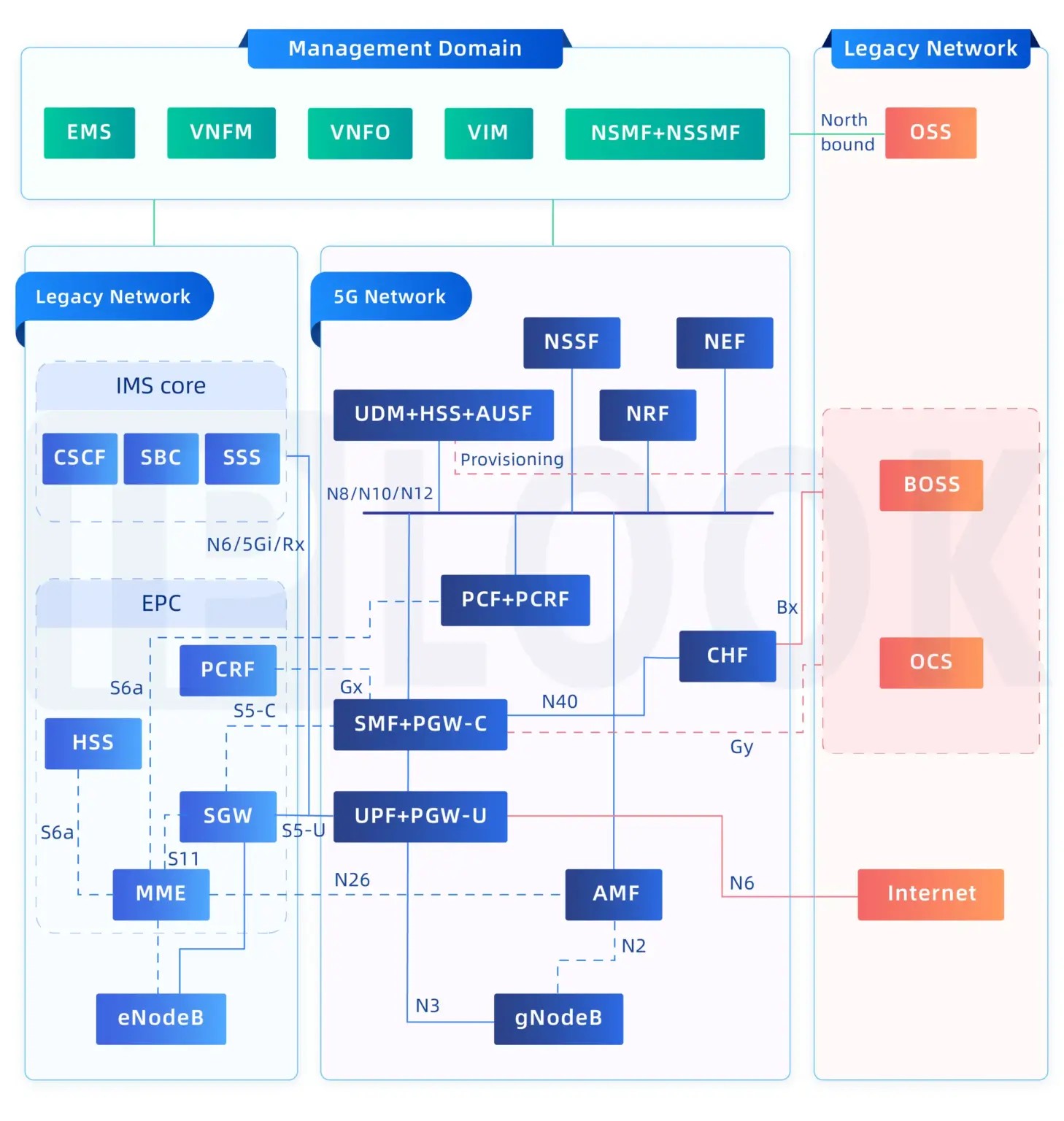
At its heart, the Evolved Packet Core (EPC) is a flat, all-IP architecture that moves away from the hierarchical circuit-switched cores of 2G/3G. It was designed to support LTE radio access and to handle both voice and data natively over IP, improving scalability and reducing latency. The shift to a packet-only core simplified the network, enabling operators to manage soaring data demands without maintaining separate voice infrastructure.
Functionally, the EPC is composed of a handful of key nodes, each with a distinct role. The Mobility Management Entity (MME) handles signaling and tracking of user devices, while the Serving Gateway (SGW) routes and forwards data packets. The Packet Data Network Gateway (PGW) acts as the anchor point toward external networks, managing IP address allocation and policy enforcement. Together, these elements decouple control and user planes, which allows for flexible scaling and efficient resource use—an approach that has since become foundational in 5G core design.
One often overlooked aspect of the EPC is how it introduces fine-grained quality-of-service and policy control through the Policy and Charging Rules Function (PCRF). This node dynamically applies policies for bandwidth, prioritization, and charging, making it possible to deliver consistent experiences for everything from VoLTE calls to high-definition video. By abstracting policy decisions from network enforcement, the EPC paved the way for today’s software-driven, sliceable core networks.
Navigating the Scale-Up: China’s Unique Deployment Hurdles
Scaling a product in China is rarely a matter of simply replicating a model that worked elsewhere. The infrastructure, regulatory landscape, and user expectations form a dense thicket that demands local recalibration at every turn. Even something as foundational as cloud deployment can become a labyrinth when you factor in data localization mandates, cross-border data transfer restrictions, and the requirement to partner with domestic service providers. One misstep in compliance can stall a launch for months, making it essential to treat legal vetting as a continuous, not preliminary, step.
Beyond the legal maze, operational scaling collides with the sheer heterogeneity of the Chinese market. User behavior varies drastically between a first-tier city like Shanghai and a third-tier inland town, and so do the digital ecosystems they inhabit. While WeChat might be the de facto platform in one region, Douyin or local forums could dominate elsewhere. Crafting a deployment strategy that accounts for these fractured user journeys demands a ground-level understanding that generic market research often misses—it’s the difference between a mechanic who follows the manual and one who has rebuilt the engine themselves.
The pressure doesn’t ease once the infrastructure is in place. Performance and reliability are judged against domestic giants who have set a blistering pace for load times and uptime. Meanwhile, the algorithmic curation that governs visibility on platforms like Taobao or Meituan isn’t a set-it-and-forget-it lever; it’s a living beast that needs constant feeding with localized content and engagement data. Overcoming these hurdles isn’t about finding a shortcut—it’s about embracing a rhythm of persistent iteration that many international teams find disorienting at first.
How Virtualization Quietly Reshaped Core Networks
Core networks used to be a rigid world of purpose-built hardware—boxes that did one thing and did it well, until they didn’t. Upgrades meant swapping out physical gear, a slow and expensive dance that stifled innovation. Virtualization crept in not with a bang, but through small, pragmatic steps. Operators started moving network functions from proprietary chassis onto standard servers, running them as software. This shift didn’t just cut costs; it fundamentally changed how services were built and deployed. Suddenly, a function that once needed a dedicated appliance could be spun up as a virtual machine in minutes, opening the door to a more fluid architecture.
The quiet part of this transformation lay in how it reshaped operational thinking. With virtualization, network capabilities became abstracted from the underlying hardware. This allowed for dynamic scaling—resources could be dialed up or down based on real traffic, not just peak predictions. It also brought software-style agility to a world accustomed to long development cycles. Features that once took months to roll out could now be tested and deployed iteratively. Behind the scenes, the very notion of what a network node is began to blur, with multiple virtualized functions cohabiting the same physical footprint. It wasn’t a headline-grabbing overhaul, but a steady erosion of the old hardware-defined boundaries.
Perhaps the most profound shift was in how the industry approached resilience and innovation. In the past, redundancy was built into expensive hardware pairs; with virtualization, you could simply spin up another instance elsewhere. This changed the economics of reliability, making robust infrastructure accessible even to smaller players. Meanwhile, the foundation was quietly laid for new concepts like network slicing, where a single physical network could be partitioned into multiple virtual ones, each tailored to a specific service or customer. All this happened in the background, often unnoticed by end users, yet it fundamentally reprogrammed what telecom networks can do.
Lessons from the Field: Operational Realities
Setting up an operation on paper always looks clean—until the first real day hits and the internet is down, the truck is stuck in mud, and half the staff didn’t show up. The gap between planning and reality is where most projects stumble, not because the idea was bad, but because nobody accounted for the messy, human, and logistical friction that comes with actual fieldwork.
There’s a rhythm you only find by being present: the unspoken agreements with local suppliers, the way a community’s trust hinges on a single conversation over tea, and the fact that “urgent” files travel faster by motorcycle than through any cloud service. No dashboard or report captures these undercurrents, yet they decide whether an initiative sinks or survives.
After enough failed deliveries and last-minute pivots, you learn to stop fighting the chaos and start reading it. The real operational lesson is that resilience isn’t built from backups and protocols alone—it’s built from relationships, patience with uncertainty, and the humility to accept that the field will always rewrite your plan.
Where 4G Foundations Meet 5G Ambitions
The leap from 4G to 5G isn't a sudden break but an intricate dance where mature LTE networks provide the rhythm. While 5G dreams of unprecedented speed and ultra-low latency, its rollout leans heavily on the existing 4G architecture, from core network elements to widespread tower infrastructure. This symbiotic relationship allows carriers to deliver immediate coverage while gradually introducing standalone 5G, ensuring that the transition feels less like a disruptive overhaul and more like a natural evolution—one where today's robust connectivity underpins tomorrow's transformative services.
Dynamic spectrum sharing epitomizes this intertwined existence, enabling operators to flexibly allocate frequencies between 4G and 5G based on real-time demand. Rather than waiting for exclusive 5G airwaves, networks can intelligently serve both generations of devices, maximizing efficiency and user experience. It's a strategic bridge that turns the so-called generational divide into a seamless continuum, where a single infrastructure can adapt to the mixed realities of the device ecosystem without compromising on performance.
Beyond the technical synergy, this convergence reshapes how we think about network reliability and edge capabilities. The ubiquitous reach of LTE acts as a safety net for 5G's millimeter-wave ambitions, filling coverage gaps and maintaining connections when users step outside dense urban cores. Meanwhile, the low-band 5G that rides on 4G anchors enables tomorrow's massive IoT deployments to materialize today, proving that the truest innovation often lies not in replacing the old, but in reimagining its potential within a bolder blueprint.
FAQ
Massive mobile data traffic growth driven by video and social media forced operators to rethink packet-switched cores, moving from a flat IP model to more distributed, service-oriented frameworks.
It adopted a control and user plane separation (CUPS) early on, with software-defined networking principles to handle unpredictable load surges, especially during events like Singles' Day.
Interoperability with hundreds of legacy 2G/3G nodes, strict regulatory compliance for lawful interception, and solving the 'tidal effect' where urban cell towers face extreme peaks then near-zero usage.
Tight synchronization between evolved packet core elements and microwave backhaul proved essential, as even minor timing misalignments cascaded into voice over LTE (VoLTE) call drops in high-speed rail corridors.
It forced the adoption of stateless session management, allowing user contexts to float across virtualized gateways—without this, single-node failures would have knocked millions offline in seconds.
Operators used NFV to decouple gateway and mobility management functions from proprietary hardware, slashing time-to-market for new services and enabling dynamic scaling during congestion.
Yes, the underestimation of signaling storms from instant messaging apps—Tencent's WeChat, for instance, generated heartbeat traffic that repeatedly overwhelmed signaling controllers, forcing a redesign of keep-alive throttling mechanisms.
Conclusion
The shift to 4G in China was ignited by a perfect storm of factors: an explosive rise in mobile data demand, a national push toward digital inclusion, and the need to leapfrog aging 3G infrastructure. The adoption of the Evolved Packet Core (EPC) became central, introducing a flat, all-IP architecture that replaced traditional circuit-switched cores. This architectural overhaul separated control and user planes, boosting efficiency and paving the way for massive scale. But scaling in China was never a simple copy-paste. The sheer geographic spread—from megacities to remote villages—demanded a delicate balance of centralized EPC clusters for dense urban zones and distributed gateways for rural coverage. Adding to the complexity, operators had to retrofit and interoperate with a sprawling legacy of 2G and 3G systems, often under fierce time constraints to meet regulatory targets and consumer expectations. The scale-up wasn't just about adding boxes; it meant rethinking fiber backhaul, synchronization, and power across thousands of sites, not to mention navigating the labyrinth of multi-vendor integration in a market known for equipment diversity.
Virtualization crept in more subtly than the headlines suggested, yet it reshaped the core network's very DNA. Starting with network functions virtualization (NFV) trials in the late 2010s, Chinese operators gradually virtualized the EPC, running mobile gateways, MMEs, and HSS on commercial off-the-shelf hardware. This quiet revolution brought newfound agility but also fresh operational pain—orchestration complexity, performance tuning of virtualized packet forwarding, and the cultural shift from hardware-think to software-think. Field experience taught hard lessons: robust monitoring, automated failover, and meticulous capacity planning became non-negotiable to tame the dynamic, resource-sharing nature of virtualized environments. Meanwhile, these 4G foundations were always being laid with an eye on the horizon. The EPC's support for LTE-Advanced features like carrier aggregation and its ability to anchor non-3GPP accesses planted the seeds for 5G's dual-connectivity and interworking. China's strategy ensured that the massive 4G footprint didn't become a stranded investment; instead, it evolved into a sturdy springboard for 5G, with cloud-native principles and control-user plane separation (CUPS) already echoing the service-based architecture to come.
Contact Us
Contact Person: Shimmy
Email: [email protected]
Tel/WhatsApp: 85253392231
Website: https://www.iplook.com