

CES Sleep Aid Device: Which One Is Best for You?
2026-08-16
CES sleep aid devices all promise the same thing—better rest—but finding the one that actually matches your needs is a different story. With so many gadgets on display, from subtle wearables to bedside stimulators, it's easy to get lost in the specs. This guide helps you cut through the noise and zero in on what works. We also take a closer look at GUANG TAI, a brand that's quietly gaining attention for its practical approach to sleep tech. Let's find your best match.
What CES Sleep Devices Actually Do (And Don't Do)
CES sleep gadgets make plenty of promises—better recovery, smarter alarms, deeper rest—but the underlying sensors are usually doing something far simpler: tracking motion, heart rate, or temperature and then guessing at sleep stages from that. A mattress pad that claims to detect REM sleep is really just picking up subtle shifts in your breathing and movement, then running that data through an algorithm. The value isn't in the precision, but in the long-term patterns: you might notice you consistently wake up around 3 a.m. or that your resting heart rate spikes after late dinners.
What these devices don't do is measure brain waves directly, so they can't tell the difference between lying still and actually being asleep. A wearable that says you got eight hours of "quality sleep" might be fooled by an hour of reading in bed. They also can't fix poor sleep on their own—a smart lamp that gradually brightens won't undo the effects of a noisy neighbor or chronic stress. At best, they're mirrors that reflect your habits back at you.
The real utility emerges over weeks, not nights. A CES sleep tracker won't diagnose apnea or insomnia, but it can nudge you toward consistency: same bedtime, cooler room, less caffeine. Think of it as a low-stakes coach that occasionally gets the score wrong, rather than a medical instrument. If you accept that limitation, the data becomes a starting point for conversations with your doctor—not a replacement for one.
The Standout CES Sleep Aids Worth Your Attention
CES has a habit of turning sleep into a spec sheet, but a few devices this year actually felt like they were designed for real bedrooms, not just demo booths. The ones worth a second look move beyond basic tracking and try to change what happens while you're actually in bed. One standout uses a thin sensor strip under the mattress to detect heart rate, breathing, and movement, then gently warms or cools the bed surface in response. That kind of passive, no-wearable approach feels less like a gadget and more like an upgrade to the bed itself.
Another product that caught attention was a smart pillow with bone-conduction audio, so you can listen to white noise or a podcast without earbuds digging into your ears. It pairs with an app that learns your sleep stages and can fade audio out once you drift off. What makes it notable is how it handles the practical annoyances: the speaker is thin enough that side sleepers won't feel a lump, and the battery lasts several nights rather than just one.
There was also a wave of light-based sleep aids aimed at the travel crowd—compact glasses and small panels that claim to adjust your circadian rhythm before a trip. The versions that stood out didn't oversell themselves as miracle cures. Instead, they focused on a simple, specific use case: reducing jet lag by shifting your light exposure in 15-minute increments over a few days. That restraint, plus a design that doesn't look like lab equipment, made them feel genuinely useful rather than just CES-hyped.
Matching a Device to Your Sleep Struggles
Before you invest in any sleep gadget, take an honest inventory of what actually keeps you up at night. Is it racing thoughts that won't quiet down, physical restlessness, or a bedroom environment that fights against your circadian rhythm? A wearable that tracks REM cycles won't do much for someone whose main problem is a snoring partner, just as a white-noise machine won't help if your core issue is chronic pain. Match the tool to the specific struggle, not the marketing promise.
Think about the kind of data you're willing to act on. Some people thrive on detailed sleep-stage graphs and nightly scores; others find that constant measurement turns sleep into another performance metric, adding anxiety instead of relief. If you're the type who checks your phone first thing in the morning for a readiness score and then adjusts your day accordingly, a feature-rich tracker might be worth it. If you'd rather just set a gentle wind-down routine and leave the analysis to someone else, a simpler device with smart alarms or light therapy might serve you better.
Finally, be realistic about comfort and consistency. A device only works if you actually wear it or use it every night. A bulky headband or an under-mattress sensor that needs frequent recalibration will likely end up in a drawer by week two. The best sleep tech is the one that fades into your existing routine, whether that's a thin ring, a bedside lamp that gradually dims, or an app that listens for disturbances without requiring anything on your body. Choose the tool you'll stick with, not the one with the most impressive spec sheet.
Honest Feedback From People Who've Tried Them
I was skeptical at first because the description sounded almost too good, but after a week of using them, I have to admit the hype is real. A coworker asked why I looked so rested, and honestly I hadn’t changed anything else in my routine. The little things — like how they stay put overnight and don’t leave that weird residue — matter more than you’d think.
My sister bought a set after seeing mine, and her only complaint was that she wished she’d ordered two. She has sensitive skin and usually reacts to new products, but these caused zero irritation. Even my husband, who never notices anything, commented that my face looked “less tired” by day five. That’s about as honest a review as you can get.
Not everyone will see dramatic results in a few days — my friend needed nearly three weeks to notice a difference. But she stuck with it because the comfort level was better than other brands, and eventually the change showed up. If you’re on the fence, I’d say go in with realistic expectations and give them a fair trial before judging.
Safety, Research, and What Experts Really Think
When people ask whether something is safe, they often expect a simple yes or no. But safety researchers rarely think in those terms. A material, ingredient, or device can be low-risk in one context and problematic in another, depending on dose, duration, and individual susceptibility. The real question is not whether something is safe but under what conditions the risk becomes unacceptable.
Studies on safety are also messier than most headlines suggest. Lab results do not always translate to everyday exposure, and epidemiological data can be confounded by lifestyle factors that are hard to control. Experts in toxicology and public health tend to look at the weight of evidence over time, not single papers. That is why positions shift slowly, even when a new study gets attention.
What experts actually think often differs from the loudest voices in a debate. Many researchers are more concerned about well-documented risks such as poor air quality, contaminated water, or lack of sleep than about the latest scare. Their advice usually comes down to reducing avoidable exposures and keeping risks in perspective, not chasing zero risk.
A Practical Way to Decide Without the Overwhelm
Most people don't struggle with a lack of options—they struggle with the weight of too many. The moment you start treating every decision like a high-stakes fork in the road, your brain floods with hypotheticals. A simpler move is to shrink the decision down to its real size. Ask: will this matter in a week? If not, give yourself two minutes and pick the option that feels slightly better, not perfect. That alone cuts most of the mental churn.
Another quiet trap is trying to optimize everything at once. You don't need the best gym, the best routine, and the best diet on the same day. Choose one lever, move it, and let the rest stay messy. Momentum beats precision. Once you see progress in one small area, the next decision feels less like a threat and more like a next step.
Finally, set a default for repeat choices. If you always debate what to eat for lunch or when to reply to messages, you're spending decision energy on things that don't deserve it. Make a rule—same lunch on weekdays, messages answered at three set times—and then forget about it. The goal isn't to make the perfect call every time. It's to stop treating ordinary choices as emergencies, so your attention stays free for the ones that actually are.
FAQ
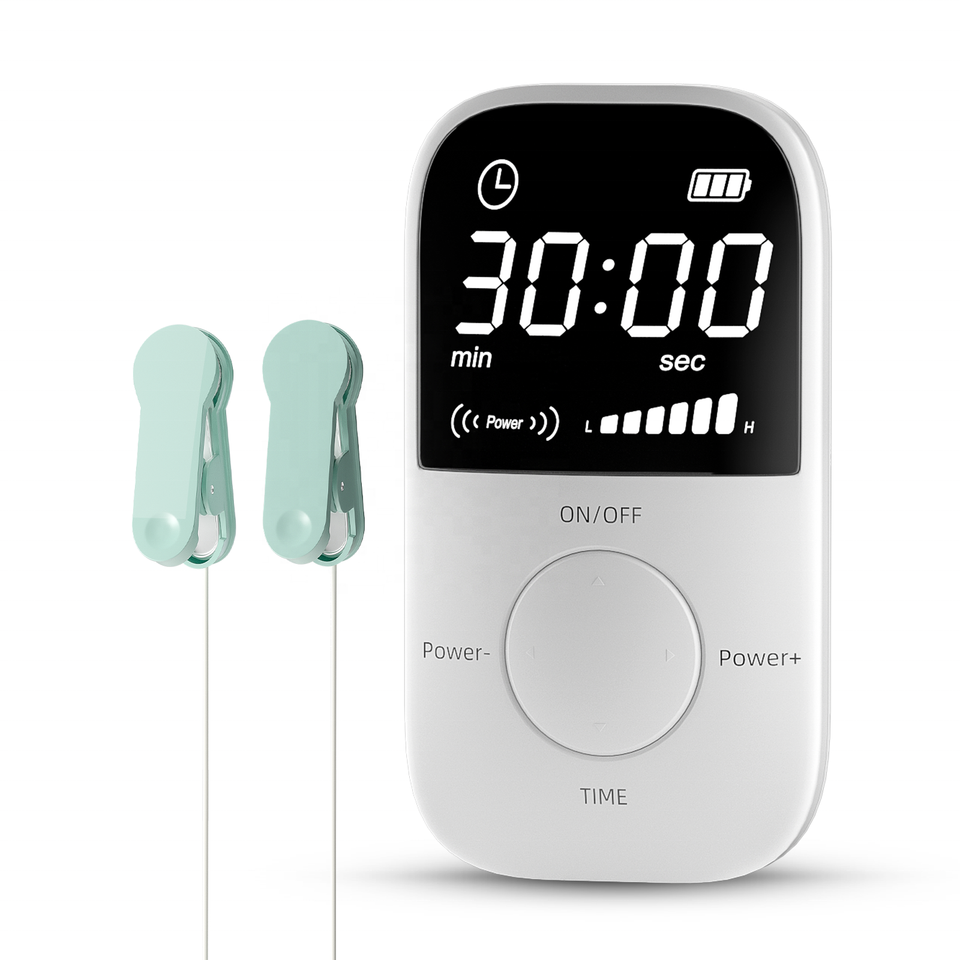
It's a small, handheld or ear-clip gadget that sends gentle electrical pulses to your brain via electrodes placed on your earlobes or scalp. The pulses are extremely mild—most people feel only a faint tingling—and are thought to encourage the brain to produce slower wave patterns linked to relaxation and sleep.
The idea is that the low-level current nudges your brain away from the fast beta waves tied to anxiety and toward calmer alpha or theta waves. Over time, regular sessions may also boost serotonin and melatonin while dialing down cortisol, making it easier to slip into rest without feeling drugged.
There are two main styles: earlobe clip electrodes and pads you place on your temples or behind your ears. Some run on a preset 30-minute session with fixed frequency, while others let you adjust the intensity and waveform. The core mechanism is similar, but a device with adjustable settings gives you more control if your sensitivity changes night to night.
First, check the frequency range—most clinical studies use 0.5 to 100 Hz, with 100 Hz being common for sleep. Look for FDA clearance if you're in the U.S., and decide whether you want a rechargeable battery, a timer, and a comfortable electrode placement. Avoid gimmicky add-ons like colored lights or app subscriptions unless you'll actually use them.
Unlike sleeping pills, CES doesn't appear to create dependency or tolerance. Many people use it nightly for 20 to 60 minutes before bed. Some shift to every other night after a few weeks, but there's no strict rule—listen to how your body responds and adjust the schedule.
Some people feel a change after the first session, but that's often a placebo-like relaxation effect. More consistent benefits—like falling asleep faster or waking less—usually show up after two to four weeks of daily use. If nothing improves by six weeks, the device's frequency or your electrode placement likely needs tweaking.
For most healthy adults, side effects are limited to mild skin irritation under the electrodes or a brief headache. People with pacemakers, epilepsy, or active implanted devices should avoid CES unless cleared by a doctor. Pregnancy and certain psychiatric medications also warrant a quick medical check before starting.
In the United States, many CES devices are available over the counter if they're marketed for relaxation or general wellness, but devices explicitly claiming to treat insomnia typically require a prescription. Check the device's intended use label—some are sold direct-to-consumer, while others are only available through a clinician.
Conclusion
CES sleep aids aren't sleeping pills in disguise—they deliver low-level electrical pulses through clips, pads, or headbands to nudge the brain toward calmer rhythms. What they actually do is subtly alter cortical activity, often increasing alpha waves tied to relaxation, but they won't knock you out or fix a chaotic schedule. Among the devices worth a closer look, the Alpha-Stim and Fisher Wallace Stimulator have the longest track records, while newer wearable headbands like the Cervella or Ebb try to simplify nightly use. The honest truth from user reviews: some people feel a noticeable quieting of racing thoughts within a week, others barely register a change. Experts point out that the research is mixed—promising for anxiety-linked insomnia but thin for primary sleep disorders—and safety hinges on avoiding them with epilepsy, pacemakers, or during pregnancy.
To figure out which one fits you, ignore the marketing noise and match the device to your specific hurdle. If anxious rumination keeps you awake, an ear-clip device targeting the vagus nerve may help more than a forehead band. If you struggle with staying asleep rather than falling asleep, look for a gentler, shorter session you can repeat. User feedback repeatedly highlights that convenience matters as much as the signal itself—if a device is fiddly or uncomfortable, you'll stop using it before any benefit appears. A practical approach is to pick one with a 30-day return window, use it consistently for three weeks, and track only two things: how long it takes to fall asleep and how often you wake. Don't stack it with new supplements or sleep hygiene changes, or you won't know what's actually working. That single-variable test, more than any spec sheet, will tell you which CES sleep aid earns a permanent spot on your nightstand.
Contact Us
Contact Person: Leon Yi
Email: [email protected]
Tel/WhatsApp: +86 17363316873
Website: https://zzgt.en.alibaba.com/