

Blown Film Masterbatch: Top Solutions for Superior Film Quality
2026-07-29
In the competitive world of film manufacturing, achieving superior quality often hinges on the smallest details—like the masterbatch you choose. From enhancing strength and clarity to ensuring consistent processing, the right blown film masterbatch can transform your production line. At Xinwancai, we understand the science behind exceptional film, and we're here to share the top solutions that make all the difference. If you're tired of compromises and ready to elevate your film's performance, this is where your journey begins.
Boost Film Strength with Advanced Reinforcing Masterbatches
Advanced reinforcing masterbatches are engineered to significantly elevate the mechanical performance of plastic films, delivering superior tensile strength, puncture resistance, and tear propagation resistance. By dispersing high-performance reinforcements like mineral fillers, fibers, or nanoscale additives uniformly throughout the polymer matrix, these masterbatches create a robust internal structure that resists deformation and failure under load, making them ideal for demanding packaging, agricultural, and industrial film applications.
The key to their effectiveness lies in optimized particle morphology and surface treatment, which promote strong interfacial adhesion between the reinforcement and the base resin. This prevents micro-void formation and stress concentration, ensuring that the film maintains its integrity even when stretched, punctured, or exposed to harsh environmental conditions. Additionally, the precise let-down ratios allow processors to tailor property enhancements without sacrificing clarity or processability, achieving a balance that bulk reinforcement methods cannot offer.
Beyond strength, these masterbatches can also improve dimensional stability and downgauging potential, enabling producers to reduce material usage while meeting or exceeding performance specifications. The result is a more sustainable film solution that doesn’t compromise on durability—helping brands and converters meet circular economy goals without increasing cost or complexity.
Streamline Production: Anti-Block and Slip Additives for Faster Processing
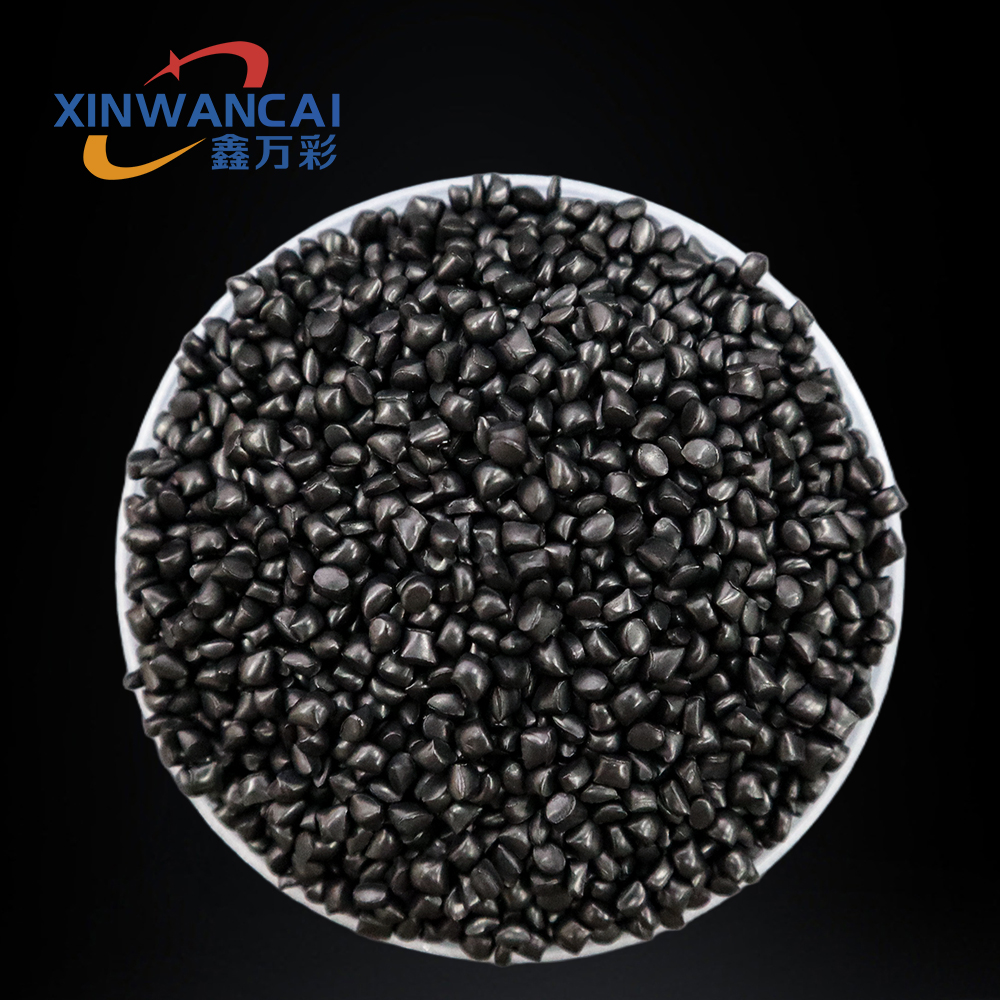
In high-speed film extrusion, friction is the enemy. Anti-block additives create microscopic roughness on polymer surfaces, preventing layers from sticking together during winding or storage. Slip agents, on the other hand, migrate to the surface to reduce the coefficient of friction, enabling smoother movement through converting equipment. Together, they eliminate slowdowns caused by blocking or excessive drag, allowing lines to run at full capacity without interruption.
The real-world impact is immediate: fewer jam-ups on rollers, less scrap from damaged films, and consistent output rates that keep downstream operations in sync. By incorporating these additives directly into the resin, processors bypass the need for secondary treatments or manual interventions, trimming seconds from cycle times and hours from shift schedules. It’s a straightforward formula for maintaining momentum in demanding production environments.
Achieve Crystal Clarity: Optical Brighteners and Nucleating Agents
Optical brighteners work by absorbing invisible ultraviolet light and re-emitting it as visible blue light, effectively masking the natural yellowish tint that many polymers develop during processing. This fluorescence effect counteracts discoloration and makes the material appear whiter and more luminous. The result is a visually striking clarity that enhances product appeal, especially in packaging and consumer goods where a pristine look signals quality and cleanliness.
Nucleating agents take a different approach by controlling the crystallization process during cooling. They provide a high density of sites for crystal formation, leading to an extremely fine and uniform crystalline structure. Smaller crystals scatter less light, significantly reducing haze and boosting transparency. For semi-crystalline polymers like polypropylene, this means a shift from a milky, opaque appearance to one that rivals glass-like clarity without the added weight or fragility.
When used together, optical brighteners and nucleating agents create a synergy that achieves exceptional clarity. The nucleating agent establishes the ideal crystal morphology, while the brightener neutralizes residual color cast, ensuring the material looks truly crystal-clear. This combination is particularly valuable in demanding applications such as medical devices, clear food containers, and precision optical components—where both aesthetics and functional transparency are non-negotiable.
Go Green: Biodegradable and Recycled Content Masterbatches Without Sacrificing Quality
The push toward sustainability has ushered in a new era for masterbatch technology, where performance no longer has to take a back seat to environmental responsibility. By leveraging advanced compounding techniques, manufacturers now offer biodegradable masterbatches that break down naturally without leaving microplastics behind, yet still deliver the same vibrant colors and dispersion quality as conventional options. These solutions incorporate bio-based carriers and additives that meet stringent compostability standards, making them ideal for single-use packaging and agricultural films.
Recycled content masterbatches are rewriting the rules by turning post-consumer and post-industrial waste into high-value color and additive concentrates. Through meticulous purification and stabilization processes, these masterbatches achieve cleanliness and consistency on par with virgin materials, enabling closed-loop recycling without compromising on mechanical properties or aesthetic finish. The result is a seamless drop-in solution for brands looking to boost their recycled content percentages while maintaining precise color matching and UV stability.
Behind the scenes, rigorous testing and smart formulation ensure that going green doesn’t mean downgrading. From enhanced thermal resistance for processing stability to custom carrier resins that mimic the host polymer, every detail is engineered to preserve the original material’s integrity. Whether it’s a biodegradable grade for a compostable coffee pod or a recycled-content masterbatch for a durable automotive part, the quality benchmarks remain uncompromised—proving that sustainability and performance can thrive together.
Elevate Visual Appeal: Custom Color and Effect Masterbatches
Transforming ordinary plastic into a captivating visual experience starts with the precise formulation of masterbatches that do more than just add color. By incorporating custom pigments and specialty effect additives, you can achieve depths of shimmer, iridescence, or even a soft-touch matte finish that feels as good as it looks. These effects aren't just surface-level; they integrate seamlessly into the polymer matrix, ensuring that the visual appeal remains consistent even after molding, extrusion, or thermoforming processes.
What sets custom solutions apart is the ability to fine-tune every aspect of the visual output to align with a brand's identity. Whether it's a subtle metallic fleck that catches the light on a luxury packaging surface or a bold, color-shifting effect that signals innovation in consumer electronics, the palette of possibilities is nearly limitless. Working directly with colorists lets you dial in the exact hue, effect intensity, and transparency, avoiding the compromises that come with off-the-shelf products.
Behind the scenes, advanced dispersion technology ensures that even the most complex effect pigments—such as pearlescent flakes or photochromic particles—are distributed evenly throughout the base resin. This translates into flawless, streak-free surfaces and consistent batch-to-batch repeatability, which is critical for high-volume production runs. The result is a product that not only stands out on the shelf but also maintains its visual integrity across all manufactured parts, reinforcing a premium perception without sacrificing manufacturability.
Reduce Costs, Not Quality: High-Load, Multi-Functional Masterbatch Solutions
In an industry where every penny counts, balancing cost efficiency with uncompromising quality can feel like a tightrope walk. High-load masterbatch solutions flip the script—they let you push pigment and additive concentrations to levels conventional carriers can’t handle, without sacrificing dispersion or consistency. By packing more functionality into each pellet, you reduce the volume of masterbatch needed per kilogram of finished product. That means lower transport costs, less inventory space, and shorter cycle times on the production floor. The real elegance lies in the chemistry: proprietary wetting agents and hyper-dispersants ensure that even at extreme loadings, the polymer matrix remains unbroken, delivering vibrant color and robust UV stabilization or flame retardancy across your entire output.
Beyond just cutting raw material expenses, these concentrates open the door to simplified logistics and streamlined processing. Imagine cutting your masterbatch-to-resin let-down ratio from 4% to 2%—that’s half the number of sacks moving through your warehouse, half the feeder line changes, and half the chance of introducing contamination. Multi-functional grades take it further by combining color with slip, antistatic, or processing aid capabilities in a single granule, erasing the need for multiple additive batches. This consolidation reduces wear on dosing equipment, curtails cleanup time between jobs, and dramatically shrinks the margin for human error during blending. The result is a leaner, more predictable operation that hums along with fewer interruptions.
Skeptics worry that higher loads mean compromised mechanical properties or surface defects, but modern high-load masterbatch technology has quietly outpaced those concerns. Advanced carrier resins and finely tuned additive packages preserve the host polymer’s impact resistance, tensile strength, and clarity—even in thin-gauge films or intricate injection-molded parts. Trials on lines running high-load, multi-functional concentrates consistently show equivalent or improved physical properties compared to standard separate-additive approaches, alongside lower overall compound cost. For manufacturers looking to protect margins without cheapening their products, this isn’t a compromise; it’s a strategic upgrade that strengthens your competitive position from every angle.
FAQ
A blown film masterbatch is a concentrated blend of pigments or additives encapsulated in a carrier resin, designed for easy dispersion during the film blowing process. It’s added to the base polymer before extrusion, melting and uniformly distributing color or functional properties throughout the film bubble, ensuring consistent appearance and performance without altering the core equipment setup.
Fluoropolymer-based processing aids are especially effective at reducing melt fracture. They coat the die lip, enabling smoother flow at high shear rates, which dramatically improves film clarity and surface uniformity. Silicone-based additives also help by lowering friction and preventing build-up, resulting in a flawless film finish.
Match the carrier resin to your base polymer—commonly LDPE or LLDPE for polyethylene films. The carrier must have a similar melt flow index and molecular structure to ensure homogeneous mixing. When in doubt, a universal carrier with broad compatibility can prevent phase separation and maintain film strength.
Yes, many modern masterbatches combine multiple functional additives in one formulation. For example, a tailored blend could include hindered amine light stabilizers for UV protection and finely dispersed silica or talc for anti-blocking. This synergy preserves film longevity outdoors while making it easy to handle during installation.
Opacity and whiteness depend on the titanium dioxide grade, its particle size, and dispersion quality. Rutile TiO2 with optimal particle size around 200–300 nm scatters light most efficiently. Proper dispersion prevents agglomerates, which could cause gel defects and reduce hiding power, so a well-formulated white masterbatch is critical.
Uneven pigmentation often comes from incompatible carriers or poor melt blending. Using a masterbatch with a lower viscosity carrier than the base resin aids dispersion, while extended mixing sections in the screw design improve homogenization. Starting with a pre-dispersed single-pigment system can also eliminate streaking challenges in high-clarity applications.
Specialty masterbatches containing nano-fillers or clarifying agents can reinforce film strength at reduced thickness. For instance, a masterbatch with fine calcium carbonate or metallocene-catalyzed resin enhances dart impact and tear resistance while maintaining high transparency, enabling significant downgauging without compromising performance.
A masterbatch for high-speed lines must have high thermal stability and precise additive loading to avoid volatiles that cause bubble fluttering. Low-dusting, free-flowing pellets ensure accurate dosing, while surface-active additives can stabilize the bubble by modifying melt elasticity, leading to consistent gauge control even at elevated outputs.
Conclusion
Blown film manufacturers are constantly seeking ways to enhance film quality without compromising efficiency or sustainability. Advanced reinforcing masterbatches, for instance, significantly boost film strength, allowing for downgauging while maintaining durability. To streamline production, anti-block and slip additives play a crucial role, preventing film layers from sticking together and ensuring smooth processing at high speeds. When optical clarity is a priority, optical brighteners and nucleating agents can transform a standard film into a crystal-clear, high-gloss product that stands out on the shelf. At the same time, the industry's shift toward greener practices is being met with biodegradable and recycled content masterbatches that deliver on performance without harming the planet. These solutions make it possible to produce eco-friendly films that still meet rigorous quality standards.
Of course, aesthetics matter just as much as function. Custom color and effect masterbatches allow brands to create visually striking films with unique finishes, from pearlescent to metallic, elevating product appeal. Cost efficiency remains a top concern, and high-load, multi-functional masterbatches offer a smart way to reduce expenses without cutting corners. By combining several additives into a single, highly concentrated masterbatch, processors can use less material, simplify inventory, and achieve consistent results. Whether the goal is strengthening, clarifying, greening, beautifying, or cost-cutting, the right blown film masterbatch solution exists to turn challenges into competitive advantages.
Contact Us
Contact Person: JACK
Email: [email protected]
Tel/WhatsApp: 86 18650130917
Website: https://www.xinwancai.com/