

Best Piezo Ceramic Materials for High-Performance Actuators and Sensors
2026-10-30
Piezo ceramic materials are the silent muscles behind precision motion, turning electrical signals into nanometer-scale movements and vice versa. But when your actuator or sensor has to survive harsh environments or deliver repeatable force over millions of cycles, material choice stops being a catalog pick and becomes a design decision. In this post, we explore the best piezo ceramic options for demanding high-performance applications — and why Siansonic has become a trusted source for engineers who need more than a datasheet promise.
Why Hard-Doped PZT Still Anchors Precision Actuation
Hard-doped PZT persists in precision actuation because its domain walls are pinned so firmly that motion becomes almost purely extrinsic, leaving little room for the hysteresis that plagues soft compositions. The dopants—typically acceptors like iron or manganese—create oxygen vacancies that migrate to domain boundaries, forming defect dipoles which lock the polarization state. Once poled, the ceramic behaves more like a linear elastic element than a nonlinear ferroelectric, giving designers a repeatable stroke down to the sub-nanometer level. This is not a compromise but a quiet triumph: the material trades raw strain for an almost mechanical fidelity that no soft PZT can match under DC bias.
Thermal stability is another reason hard PZT remains the anchor. Soft dopants make the material eager to move, but that eagerness fades with temperature, shifting capacitance and depoling the stack when heat rises. Hard PZT, with its stabilized domain walls and lower dielectric losses, holds its piezoelectric coefficient within a narrow band across a wide operating range. In cryogenic stages or hot actuator bays, the hard ceramic simply ignores what soft grades fear. That predictability means a flight controller or a mirror segment actuator can be calibrated once, not constantly re-tuned.
Moreover, the mechanical Q of hard PZT is high enough to suppress spurious resonances that would otherwise corrupt fine positioning. In a stacked actuator, every off-axis mode becomes a source of ringing; hard doping damps the internal friction without adding electronic complexity. The result is a component that behaves like a precision screw turned by an electromagnetic hand—slow, deliberate, and utterly trustworthy. That is why, even as single crystals and relaxors crowd the laboratory bench, the hardened ceramic still sits at the heart of every interferometer leg and every mask aligner on the production floor.
Lead-Free Formulations That Actually Hold Up
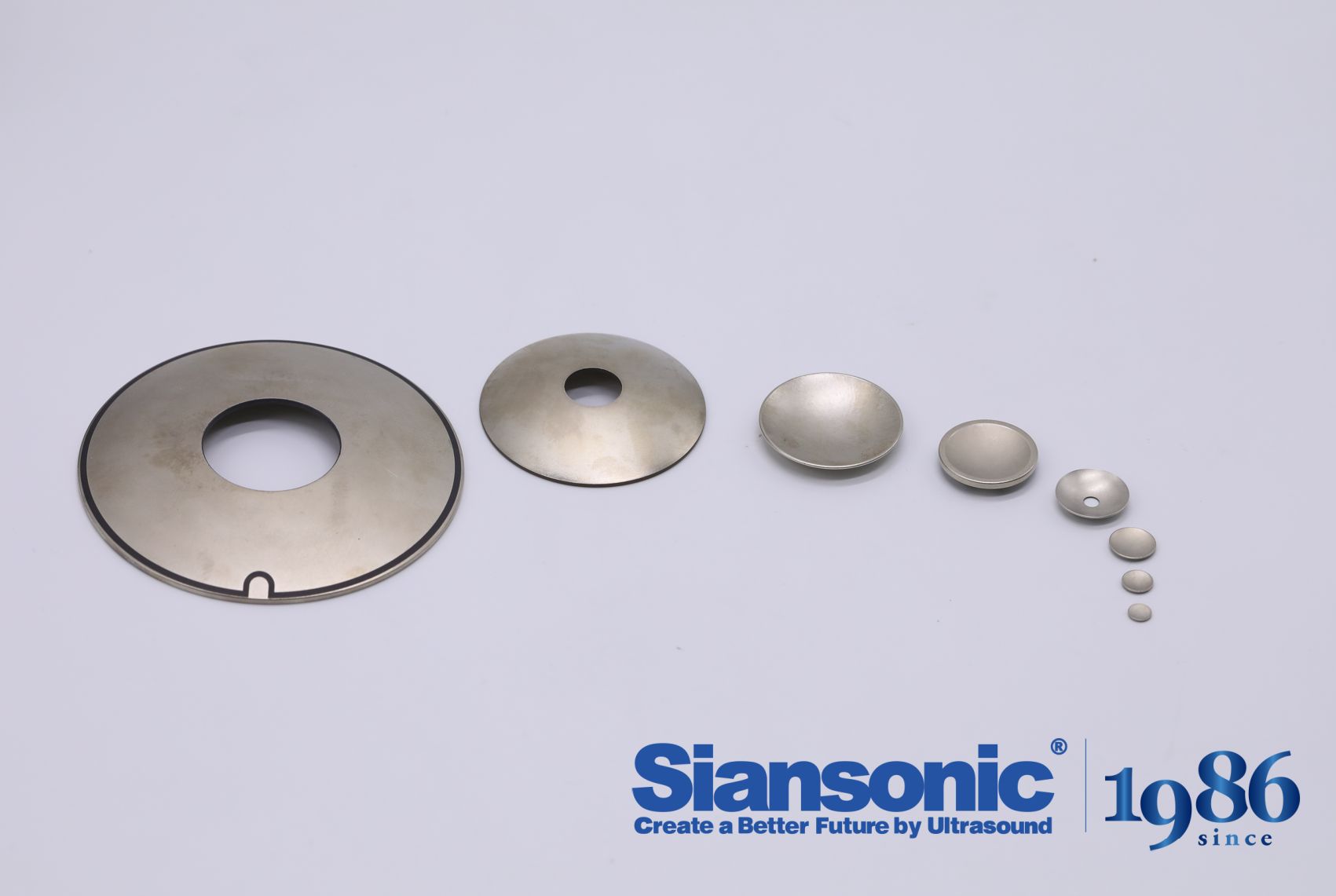
Early lead-free solder got a bad name because factories simply swapped alloys while keeping reflow profiles tuned for tin-lead. The real breakthrough came with formulations designed around the entire process, not just the metal mix. SAC305 still dominates, but adding small amounts of nickel, cobalt, or germanium to tin-copper or tin-silver-copper systems produces finer grain structures and fewer voids after thermal cycling. Those microalloyed joints don't look much different under a microscope, yet they survive far longer on boards that flex or run hot.
Bismuth-tin alloys have moved past their brittle phase. Modern Sn-Bi solders with 1–3% silver or copper, and sometimes a trace of antimony, handle drop impacts far better than the old 58Bi/42Sn eutectic. The trick isn't magic chemistry—it's controlling cooling rate so bismuth doesn't segregate into coarse plates. Reflow ovens with tighter ramp-down control and boards designed to avoid large thermal mass near joints let these low-temperature alloys hold up in consumer electronics that get dropped regularly.
A formulation only holds up if the flux and board finish are matched to it. Lead-free solder on immersion silver or OSP boards can develop weak intermetallic layers when copper dissolves too quickly, especially with aggressive water-soluble fluxes. Teams that test with thermal shock from -40°C to 125°C, not just simple thermal cycling, tend to catch these failures before production. Pairing a bismuth-free SAC variant with a low-residue no-clean flux and a nickel-gold or matte tin finish gives joints that stay intact after thousands of cycles.
The Coupling Factor Trade-Off: Soft vs. Hard Ceramics
When comparing piezoelectric materials for transducer applications, the coupling factor becomes a central point of compromise between soft and hard ceramics. Soft ceramics, often doped with donor ions, deliver higher coupling coefficients and greater strain per unit field, which makes them attractive for sensors and low-power actuators. Yet this sensitivity comes with a price: they exhibit larger dielectric losses and are more prone to depoling under high drive or elevated temperatures. In contrast, hard ceramics—typically acceptor-doped—offer lower coupling factors but much better stability under high mechanical stress and electric fields. Their reduced domain wall mobility limits energy conversion efficiency, but it also curbs internal heating and maintains performance over long duty cycles.
The trade-off becomes especially pronounced in high-power acoustic systems. A soft PZT, for example, may show an electromechanical coupling factor k33 above 0.70, while a hard PZT might sit near 0.60. That difference translates directly into bandwidth and sensitivity, two parameters designers cannot ignore. However, pushing a soft ceramic hard risks nonlinear behavior: domain reorientation causes hysteresis, heat buildup, and eventual degradation of the resonant frequency. Hard ceramics, by resisting domain wall motion, sustain linear operation at much higher vibration velocities. So the choice is not simply about maximizing coupling—it is about matching the material's loss characteristics and coercive field to the expected drive level and thermal environment.
Practical selection often involves finding a middle ground. Some modified hard compositions can be driven with moderate fields to recover a portion of the lost coupling without sacrificing too much mechanical quality factor. Conversely, pre-stressing or DC-biasing soft ceramics can harden their response, reducing losses while retaining decent coupling. Ultimately, the coupling factor trade-off is not a binary decision but a design curve: for each application, one must weigh the benefits of high strain response against the penalties of reduced stability and increased dissipation. Understanding the underlying domain dynamics—rather than treating coupling factor as an isolated number—allows engineers to select a ceramic that truly fits the operating envelope.
Geometry Choices: Stacks, Rings, and Benders for Force and Stroke
Choosing a geometry for an actuator is less about picking a winner and more about matching the shape to the mechanical demand. A rectangular stack of piezoelectric layers delivers a punchy, high-force output but moves only a few microns. That makes it ideal for precision clamping or valve seats where stiffness matters more than travel. On the other hand, a thin ring or a bending strip trades that stiffness for visible displacement, turning a small electrical input into a curved sweep or a radial expansion that can drive pumps, latches, or haptic surfaces.
Rings and benders operate by leveraging flexural or hoop stress rather than pure compression. A ring can be poled to expand radially or contract around a shaft, offering a compact way to grip or tune a resonance. Benders, built as bonded layers that strain unevenly, magnify a tiny piezoelectric contraction into a tip deflection measured in millimeters—far beyond what a stack can manage, though at a fraction of the blocking force. The geometry effectively becomes a mechanical amplifier, so the output stroke is bought with reduced stiffness and a lower resonant frequency.
The pragmatic approach is to think about the load line. If the job requires pushing against a stiff spring with minimal movement, a stack is the natural fit. If the load is light and the goal is a visible motion or a pressure wave, a ring or bender will save space and voltage. Some designs even combine them—a stack driving a lever or a ring preloading a bender—to get both force and travel without an oversized part.
When Temperature and Frequency Push Piezo Materials to Their Limits
Pushing a piezo element beyond its usual thermal window does more than soften the polymer coating or expand the housing. In hard PZT ceramics, elevated temperature accelerates domain wall motion, which initially looks like a higher dielectric constant and slightly better strain per volt, but the loss tangent climbs steeply as the material approaches its Curie point. At 150°C, a transducer that was tuned for 40 kHz may drift by several hundred hertz, enough to wreck an ultrasonic cleaning bath or a medical array. The real failure often comes not from melting or cracking, but from a quiet loss of polarization: heat lowers the energy barrier for domain reorientation, and repeated cycling can randomly flip enough domains to erase the net remanence.
Frequency adds a different kind of stress. At a few hundred kilohertz, polarization reversal cannot fully keep up with the driving field, so the hysteresis loop widens and dissipates more energy per cycle as heat. This self-heating loops back into the thermal problem: the hotter the element gets, the higher the dielectric loss, and the faster it heats again. In resonant applications, the mechanical Q drops and the impedance minimum broadens, which often forces designers to reduce drive voltage even when the material is nominally rated for the frequency. Thin-film piezo MEMS devices face an additional limit: acoustic standing waves in the substrate can create localized strain gradients that concentrate heat at grain boundaries, accelerating fatigue crack growth.
Combined extremes expose weak spots that data sheets rarely capture. A PZT ring run at 120°C and 1 MHz may survive for minutes or months depending on dopant type, electrode adhesion, and even the polarity of the DC bias. Hard dopants improve high-field stability but suffer lower mobility at high frequency; soft dopants offer easier domain motion at low temperature but bleed away efficiency when both temperature and frequency climb. Practical designs push back by using impedance matching, duty cycling, or moving to single-crystal relaxor materials that trade cost for a wider operating envelope. The underlying constraint is thermodynamic: every polarization cycle produces entropy, and at the intersection of high temperature and high frequency, that entropy has nowhere to go except into the lattice, the electrodes, and eventually structural failure.
Poling, Aging, and the Drift That Quietly Affects Sensor Output
Poling aligns the internal dipoles of a piezoelectric material, but that alignment is never permanent. Over time, thermal fluctuations and mechanical stress gradually relax the polarization. This aging effect causes a slow, predictable drop in sensitivity, which most manufacturers account for with initial calibration. However, the real problem arises when drift enters the picture—unlike aging, drift is not monotonic. It swings with humidity cycles, load history, and even the measuring circuit's own impedance, creating an offset that quietly corrupts low-frequency readings.
A sensor pulled from storage may show a few percentage points of sensitivity loss from aging alone, but once installed, it starts accumulating drift that looks like a wandering zero offset. Engineers often mistake this for a faulty amplifier or a bad cable, swapping components before realizing the sensor itself has shifted. The worst part is that standard recalibration cannot separate the two: a single-point shunt calibration corrects the combined error, not the underlying polarization state. Long-term stability specs usually bundle both effects, but that number hides how much of the error is repeatable versus random.
Practical fixes exist, but they require acknowledging the physics. Periodic depoling and re-poling cycles can reset a sensor close to its original state, though this is rarely done in the field. More realistic is selecting sensor materials with lower aging rates—single-crystal piezoelectrics, for example, drift far less than soft PZT ceramics. For critical measurements, redundant sensors with cross-correlation can flag unexpected drift early. The takeaway is not that drift can be eliminated, but that it must be tracked, not assumed away by a static calibration certificate.
FAQ
PMN-PT single crystals routinely deliver strain levels above 1%, far beyond conventional PZT, making them ideal when you need large displacement from a small package.
PZT-5H has much higher coupling and sensitivity, so it gives stronger transmit and receive signals, but PZT-8 handles higher drive voltages without overheating—better for continuous wave operation.
Bismuth titanate keeps its piezoelectric properties intact up to roughly 500°C, whereas standard PZT depoles well below that, making it a safer choice for downhole or aerospace use.
Its ultrahigh electromechanical coupling and low acoustic impedance produce sharper images with less energy loss, though it requires careful temperature control to avoid depoling.
Not fully. They work for moderate displacement and low-stress tasks, but their strain and stability still lag behind PZT and PMN-PT for demanding dynamic loads.
Modified PZT compositions, such as those doped with strontium or lanthanum, can maintain useful d33 values while surviving temperatures above 300°C—better than soft PZT.
Hard PZT has lower losses and higher mechanical quality factor, so it withstands sustained preload and repetitive stress without significant depolarization, while soft PZT offers more displacement but degrades faster under the same conditions.
Conclusion
Hard-doped PZT remains the workhorse for precision actuation because its high mechanical quality factor and low dielectric losses translate directly into minimal self-heating and stable displacement under continuous drive. Even as lead-free formulations like potassium sodium niobate and bismuth sodium titanate have matured, they still struggle to match the repeatability and force density of a well-poled hard PZT in positioning stages or fuel injectors. The real choice, however, hinges on the coupling factor trade-off: soft ceramics offer larger strain per volt and higher sensitivity for sensors, but they sacrifice stiffness and exhibit greater hysteresis, making them unsuitable for high-frequency or high-load tasks.
Geometry further complicates selection. Stack actuators multiply displacement through many thin layers, while rings and benders trade force for stroke in compact spaces—each shape imposes its own stress distribution and depoling risk. Temperature and frequency extremes expose the weaknesses of even the best materials: above half the Curie point, properties degrade rapidly, and resonant operation can drive losses sky-high. Finally, poling quality and aging drift quietly erode sensor output over months, especially in soft formulations. The most reliable systems pair hard PZT stacks with conservative derating and periodic recalibration, reserving lead-free options for applications where environmental compliance outweighs absolute precision.
Contact Us
Contact Person: Ivy Zhang
Email: [email protected]
Tel/WhatsApp: +86 1081502288
Website: https://www.siansonic.com/