
Asia's One-Stop Chemical Industry Conferences: Your Gateway to Innovation and Networking
2026-05-25
In a world where the chemical industry evolves at lightning speed, staying ahead means more than just keeping up—it means being the first to discover groundbreaking innovations and forge the connections that matter. Welcome to ICIF, Asia's one-stop destination for chemical industry conferences, where cutting-edge ideas meet unparalleled networking opportunities. Whether you're seeking to unlock new markets, explore sustainable solutions, or connect with industry pioneers, ICIF is your gateway to what's next.
Unlocking Regional Market Dynamics Through Forward-Thinking Dialogues
Genuine understanding of any region’s market rhythms rarely comes from static reports or outdated statistics. It emerges when industry players, policymakers, and community voices engage in candid, future-oriented conversations that challenge assumptions and uncover hidden connections. These dialogues go beyond surface-level trends, exploring how local consumer behaviors, regulatory shifts, and cultural nuances intertwine to shape economic landscapes in ways that mere data can miss.
By fostering spaces where unexpected contributors exchange perspectives, businesses can identify early signals of change—whether it’s a quiet shift in consumer trust or an emerging niche that conventional analysis overlooks. Such exchanges often reveal the why behind the numbers, turning fragmented intelligence into a coherent picture of where a market is truly heading. Rather than reacting to disruptions, participants learn to anticipate them, co-creating strategies that feel less like corporate prescriptions and more like organic responses to evolving regional stories.
Over time, these forward-thinking dialogues build a fabric of mutual insight that transcends transactional relationships. They encourage a shared ownership of market evolution, where growth is driven not by external forces but by a collective grasp of regional identity and ambition. The result is a more resilient, adaptable approach—one that respects local complexities while opening doors to opportunities that rigid forecasting models might never detect.
Forging Strategic Partnerships at the Heart of Asia's Chemical Corridor
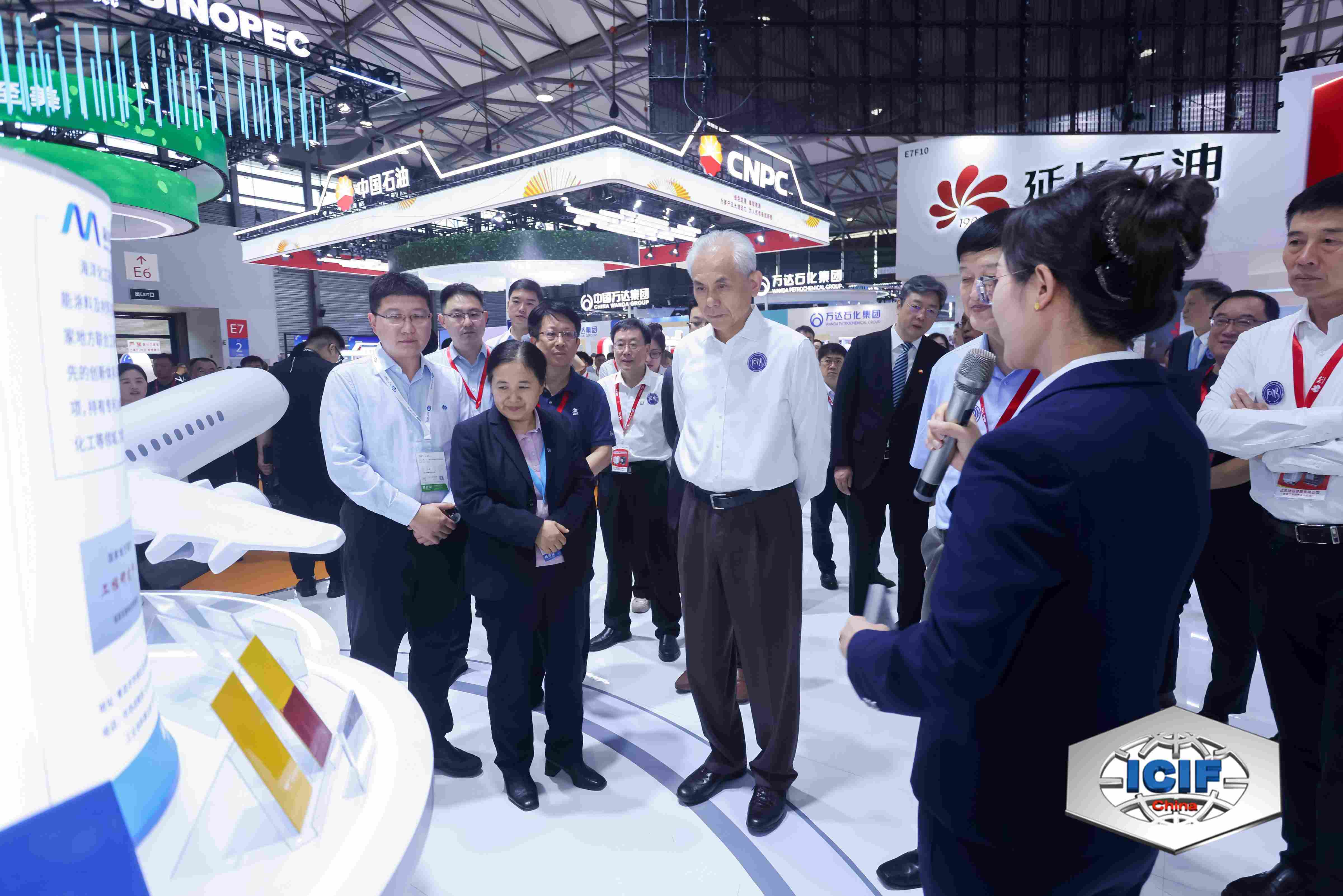
Positioned where raw material flows intersect with booming manufacturing demand, this corridor has quietly become the industry's meeting ground for long-term collaboration. Rather than chasing one-off deals, companies here are designing joint ventures that blend local feedstock access with advanced processing technologies. The result is a web of relationships where each partner fills a gap the other didn't know they had—whether it's specialty chemical know-how or distribution networks reaching deep into Southeast Asian markets.
What sets these partnerships apart is a deliberate shift from transactional supply agreements to shared infrastructure commitments. Investors are co-financing cracker expansions, tank farms, and even utility corridors, creating a stake in each other's operational efficiency. This physical integration makes it harder to walk away and easier to innovate together, as daily logistics force chemical producers, traders, and logistics firms to solve problems side by side.
The human element often gets overlooked, but here it's the linchpin. Long-term expatriate rotations and cross-company training programs have built a generation of managers who think in terms of supply-chain-wide margins instead of their own P&Ls. That cultural shift means partnership negotiations focus less on price per ton and more on how to jointly capture the premium for faster delivery or higher purity—advantages that ripple through every downstream sector from electronics to agriculture.
Navigating Sustainable Chemistry and Circular Economy Solutions
The shift toward sustainable chemistry and circular economy models is reshaping industrial paradigms, moving beyond mere waste reduction to fundamentally redesigning material life cycles. At its core, this convergence demands a rethinking of how chemical products are invented, manufactured, and repurposed, ensuring that every molecular component can be safely cycled back into production or nature without harm. Innovations like bio-based feedstocks, benign solvent systems, and modular synthesis are not just technical upgrades—they are strategic moves that align economic resilience with ecological boundaries. By designing for disassembly and regeneration from the earliest stages, companies are discovering that profitability and planetary stewardship can reinforce each other in remarkably practical ways.
Real-world applications are emerging across sectors, from fashion to construction, where materials are engineered to retain value through multiple use phases. Take polymers, for example: chemically recyclable plastics are being developed to break down into pristine monomers at end-of-life, bypassing the quality degradation typical of mechanical recycling. Similarly, in agriculture, nutrients are being delivered through controlled-release mechanisms that minimize runoff while enabling full recovery of carrier materials. These breakthroughs challenge the long-held assumption that performance must be sacrificed for sustainability, revealing instead a design space where functionality and circularity are synergistic.
The path forward is not without hurdles—regulatory fragmentation, legacy infrastructure, and the inertia of linear business models still pose significant barriers. Yet, companies that embed circular principles into their R&D and supply chains are building a durable competitive edge. Collaboration across value chains, transparent tracking of chemical substances, and investment in reverse logistics are turning circular concepts into operational routines. The chemistry community, once seen as a driver of pollution, now stands at the forefront of a regenerative economy, proving that the molecules we create today need not become tomorrow's waste, but rather enduring assets in a closed-loop system.
Innovation Showcases: From Lab Bench to Industrial Scale
Walking through the exhibition hall, you could sense the quiet hum of possibility. A tabletop prototype that once barely fit on a lab bench now occupied a full-scale production rig, its stainless-steel piping gleaming under the showcase lights. The team behind it described late nights recalibrating reaction conditions, moments of doubt when yields dipped below viability, and the eventual pivot toward a modular design that made scaling up not just feasible, but elegant. This wasn’t just equipment on display—it was a story of persistence, where every weld and valve carried the memory of a failed run that taught them something crucial.
Not every innovation arrives with such polish. Some projects still bear the scars of their incubation: a bioplastic extruder with handwritten adjustments taped to its side, a carbon-capture unit that hums with a rhythm all its own. The engineers here speak in a language of pragmatism—how to source materials sustainably, how to cut energy consumption without sacrificing throughput, how to convince investors that a 2% efficiency gain in the lab translates to megatons of impact at scale. The distance between a proof-of-concept and a plant capable of serving thousands isn’t measured in just meters or months; it’s measured in the redesigns that happen when you finally understand what the lab never told you.
What lingers after a walk through these showcases is the realization that industrial scale isn’t a destination—it’s a shifting horizon. The same curiosity that ignited the first benchtop experiment gets reapplied to problems of logistics, supply chains, and process safety. You see it in the way a young researcher explains her pilot plant’s control system, sketching flow diagrams on a napkin with the same intensity she once reserved for chiral catalysts. The transition from lab bench to industrial scale doesn’t just amplify production; it transforms the team, the technology, and the very definition of what’s possible.
Exclusive Insights from Policy Makers and Industry Pioneers
You won’t find these stories in press releases or polished keynote speeches. We sit down with the people drafting the regulations and the entrepreneurs navigating them—often in the same room—to hear what actually keeps them up at night. The candid back-and-forth reveals how policy gets shaped away from the cameras, and why some rules end up helping innovation rather than stifling it.
From founders who bet their careers on unproven technology to officials who had to defend unpopular decisions, these conversations cut through the usual soundbites. They share the missteps, the lucky breaks, and the messy middle that never makes it into the case studies. One common thread? The best breakthroughs rarely follow a straight line.
Listening to both sides together cracks open a perspective you can’t get from any report. It’s where you learn that a regulatory hurdle forced a smarter business model, or that a startup’s pushback actually refined a crucial standard. The insights aren’t theoretical—they’re hard-won lessons that can save you years of trial and error.
Tailored Learning Tracks for Emerging and Established Professionals
People rarely grow at the same pace or in the same direction, and cookie-cutter training often misses the mark. What fires up someone stepping into their first role won't necessarily challenge a seasoned manager eyeing a director-level move. Tailored learning tracks acknowledge that reality, offering a structured yet flexible way to close skill gaps, amplify strengths, and stay curious—without forcing everyone through the same door.
For those in the early innings of their career, the focus tends to land on building a broad, durable foundation. These tracks usually mix technical know-how with the kind of practical wisdom that's hard to pick up from a textbook—things like presenting to stakeholders, managing up, or making sense of cross-functional dynamics. Rather than inundating learners with theory, the material is sliced into digestible modules that mirror what they encounter day to day, so they can apply new insights before the week ends.
Professionals who've already carved out a track record need something sharper. Their paths lean into nuanced challenges: influencing without formal authority, rethinking legacy processes, or reading shifts in regulatory and market landscapes before they become urgent. Instead of generic leadership proverbs, these tracks often draw from case studies, peer exchanges, and intensive sprints that reflect the complexity of their actual work. The result is learning that feels less like a classroom exercise and more like a catalyst for the kinds of conversations they're already having around the table.
FAQ
It's a comprehensive platform that brings together the entire chemical supply chain—from raw materials and specialty chemicals to process technology and sustainability solutions. You'll find a mix of technical sessions, market outlooks, and case studies tailored for the Asian market.
Anyone working in the chemical industry looking to stay ahead—professionals in R&D, manufacturing, procurement, business development, and even investors. It’s designed for both technical experts and decision-makers who want to understand where the Asian chemical sector is heading.
Instead of focusing on a single niche, it covers the full value chain under one roof. You get to explore upstream and downstream connections in one trip, which saves time and sparks cross-sectoral ideas you wouldn’t encounter at a specialized symposium.
Beyond the sessions, there are curated matchmaking sessions, informal roundtables, and dedicated networking breaks. The organizers use a smart app that suggests contacts based on your interests, so you don’t just swap cards—you build genuine partnerships.
The flagship events rotate across key chemical hubs in Asia—think Singapore, Shanghai, Mumbai, and Bangkok. Exact dates and venues are announced seasonally, typically with two to three major gatherings each year to capture regional dynamics.
Last year, a session on bio-based feedstocks presented a novel enzymatic recycling process that’s now being piloted by a consortium. Attendees got early access to the technology and connected directly with the labs behind it—something a journal article can’t offer.
Yes, hybrid attendance is available for most sessions, with on-demand recordings for a limited time. But the real magic happens on-site, where spontaneous conversations and live demos create the most value. The platform is designed to blend both worlds smoothly.
You can register directly on the event website. Fees vary depending on early-bird windows and sector passes, but there are often group discounts and startup packages. The pricing is transparent—no hidden costs—and you can cancel or transfer your pass within a reasonable timeframe.
Conclusion
In the fast-shifting landscape of Asia’s chemical sector, staying ahead means more than tracking spreadsheets—it demands immersive, forward-thinking dialogues that unpack regional market dynamics in real time. These conferences cut through the noise, bringing together analysts, corporate leaders, and on-the-ground experts to decode what’s next for supply chains, demand patterns, and regulatory pivots across the region’s diverse economies. You’ll walk away not just with data, but with a nuanced understanding of where opportunities truly lie. Meanwhile, the networking dimension is elevated beyond superficial exchanges. At the heart of Asia’s chemical corridor, relationships are forged that bridge gaps between multinational corporations, nimble startups, and government agencies. These connections often blossom into strategic partnerships that accelerate market entry, share risk, and unlock new value chains. And running through every conversation is an urgent yet optimistic focus on sustainability. The conferences don’t just pay lip service to green chemistry; they equip you with practical tools for circular economy integration, from eco-friendly feedstocks to novel recycling models, ensuring that your growth aligns with both profit and planetary health.
Innovation isn’t a buzzword here—it’s a tangible journey you witness from lab bench to industrial scale. Dedicated showcases spotlight cutting-edge R&D, whether it’s a breakthrough catalyst that slashes energy consumption or a bio-based polymer ready for commercial rollout. You’ll meet the brilliant minds behind these advancements and explore pathways to scale them within your own operations. Equally vital are the exclusive briefings from policymakers and industry veterans who share the candid, off-the-record perspectives that shape investment decisions. These insights help you navigate complex regulatory landscapes and anticipate policy shifts before they happen. Recognizing that one size never fits all, the conference structure features tailored learning tracks. Early-career professionals dive into fundamentals of petrochemical markets or negotiation skills, while seasoned executives tackle deep-dive sessions on digital transformation or cross-border M&A. The result is a learning ecosystem that respects your expertise level while stretching your capabilities. Ultimately, this is more than a conference—it’s a launchpad for those ready to lead Asia’s chemical evolution.
Contact Us
Contact Person: Shaozhen Zhou
Email: [email protected]
Tel/WhatsApp: 0086-18612117599
Website: https://en.icif.cn/