

Aromatic Carboxylic Acid Intermediate Manufacturer Delivering High-Purity Chemical Solutions
2026-09-13
Impurities in aromatic carboxylic acid intermediates don't just reduce yield—they quietly sabotage final product performance. That's why DSL Chemicals built its entire manufacturing philosophy around one uncompromising principle: high-purity chemical solutions, batch after batch. Before you spec your next intermediate, here's the purity conversation you need to have.
High-Purity Aromatic Carboxylic Acid Intermediates, Minus the Guesswork
Batch-to-batch variation in aromatic carboxylic acid intermediates forces chemists into a familiar loop: recheck purity, adjust stoichiometry, repeat the reaction. That kind of guesswork wastes time and materials. Our production process removes it at the source, with each lot meeting the same tight specification instead of a vague '≥98%' promise.
The difference comes from a column-based purification step that isolates the target acid from close-eluting isomers and mono-acid byproducts. Liquid chromatography–mass spectrometry (LC-MS) and quantitative nuclear magnetic resonance (qNMR) verify both identity and absolute purity before release. Residual metal content is also tracked, because trace iron or palladium can quietly sabotage a downstream coupling.
What you receive is a white-to-off-white crystalline solid with a certificate that shows actual numbers, not ranges. No more 'it worked last time' moments. You can plug the intermediate straight into your amide coupling, esterification, or polymerization without re-optimizing around an impurity you can't see.
Custom Synthesis Routes That Fit Your Existing Process
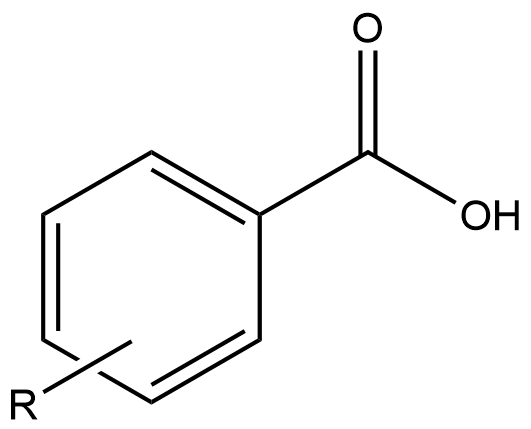
Adjusting established chemistry is rarely a clean swap. Our team maps your current equipment, solvent tolerances, and isolation steps before proposing alternatives, so a new route doesn't force you to revalidate the entire downstream line.
We often start with the bottlenecks you already know: a protecting group that adds two days, a coupling that runs at 40% yield, or a workup that generates emulsions at scale. From there, we redesign the sequence using reagents and conditions your plant can handle without new capital.
The result is not a generic literature procedure but a worked-out pathway that slots into your existing reactors, timelines, and quality agreements. If a solvent switch or catalyst loading change saves a column, we quantify that against your current cost per kilo before you commit.
Impurity Profiles We’re Willing to Put in Writing
We document impurity profiles only after we have confirmed each peak in at least two orthogonal separation systems, typically reversed-phase and HILIC. The written profile includes not just named impurities from compendial monographs but also synthetic intermediates, side products, and degradation products observed under forced degradation conditions. Every batch-specific chromatogram is reviewed peak by peak, and any signal above 0.03% area is investigated even if it falls below the ICH reporting threshold.
Our methods are validated with experimentally determined limits of detection and quantitation, not values extrapolated from signal-to-noise assumptions. For potential genotoxic impurities, we use dedicated LC-MS/MS or GC-MS methods with isotopically labeled internal standards, achieving quantitation limits in the low ppm range. We deliberately run stressed samples beyond the typical heat, humidity, acid, base, and oxidation conditions to capture slow-forming degradants that might otherwise appear only after long-term storage.
When we hand over an impurity profile in writing, it includes any unexpected peaks we could not identify, with retention time and mass data attached. We avoid vague phrases like 'not detected' and instead state the exact limit of detection and the result obtained. If a new peak appears in a later batch, we update the profile immediately, even if the peak is below the reporting threshold, and we trace its origin back to raw materials, process changes, or packaging interaction.
From Benchtop Trials to Commercial-Scale Carboxylic Acid Batches
Scaling a carboxylic acid synthesis from a benchtop flask to a multi-ton reactor is rarely a matter of simply turning up the heat and stirring faster. What worked at 100 milliliters can fall apart at 1,000 liters due to differences in heat transfer, mixing efficiency, and localized concentration gradients. In early laboratory runs, an exothermic ester hydrolysis might be easily managed with an ice bath and slow reagent addition, but in a stainless steel vessel, the same reaction can generate enough heat to push temperatures past the point where side products like anhydrides or decarboxylated impurities begin to dominate. The move from glassware to industrial equipment demands rethinking every step: reagent addition rates, cooling capacity, agitation geometry, and even the purity of raw materials, since trace metals from plant piping can act as unintended catalysts.
One of the trickiest hurdles is maintaining selectivity when the reaction volume increases by three or four orders of magnitude. On a bench, a chemist can rely on rapid magnetic stirring to keep pH uniform during a carboxylation or oxidation step. In a production reactor, however, the mixing time can stretch from seconds to minutes, creating pockets of high or low pH that promote unwanted pathways. For example, a Grignard carboxylation that gives 95% yield in a round-bottom flask may drop to 70% in a pilot plant because the surface area for carbon dioxide absorption doesn't scale linearly. Teams often discover that the optimal solvent volume, previously kept minimal to push equilibrium, now needs to be increased just to ensure the agitator can actually turn. These adjustments aren't failures; they are the normal, messy reality of process development.
Successful scale-up also hinges on anticipating how impurity profiles shift when you leave the hood behind. A faint shoulder on a lab HPLC trace can become a full-blown contaminant at commercial batch size, especially if it co-crystallizes with the target acid or resists simple washing. Engineers and chemists need to run deliberate stress tests at intermediate scales, deliberately introducing process deviations like delayed quenches or slower filtrations to map out what the plant operators will actually face. Often, the final commercial route bears little resemblance to the original benchtop procedure: an expensive chiral auxiliary gets swapped for a catalytic resolution, a hazardous diazomethane step is replaced with a safe carbonylation, and a tedious column purification is exchanged for a pH-swing crystallization. The goal is not to replicate the lab exactly but to translate its core chemistry into a robust, reproducible, and economical batch that can be made week after week without surprises.
Removing Trace Metals and Solvent Residues Before They Reach You
Trace metals often sneak into chemical and pharmaceutical products through catalysts, piping, or raw material impurities. Even at parts-per-billion levels, elements like palladium, nickel, or lead can alter biological activity or trigger unwanted reactions. Solvent residues pose a different problem: they may leave behind unpleasant odors, affect shelf life, or interfere with downstream formulation. The goal isn't simply to reduce these contaminants, but to remove them before they ever reach the end user.
Our approach combines targeted filtration media with low-temperature evaporation under vacuum. Chelating resins bind transition metals selectively, while activated carbon beds capture a wide range of organic residuals. For particularly stubborn solvents, we use a two-stage wiped-film distillation that strips volatiles without degrading heat-sensitive intermediates. Each step is tuned to the specific chemistry of the batch, not applied as a one-size-fits-all routine.
Before any lot leaves the facility, we run inductively coupled plasma mass spectrometry for metal quantification and headspace gas chromatography for solvent screening. Limits are set well below regulatory thresholds, and results are reviewed against historical control charts. This means the product you receive has already passed through multiple barriers designed to catch what routine washing or simple distillation would miss.
Stability Data and Packaging That Protect Purity Through Transit
Long-term stability testing goes beyond simply ticking boxes on a regulatory checklist. For each batch, we track how active compounds respond to temperature shifts, humidity cycles, and light exposure over many months. The resulting data isn't just a set of charts; it's a practical guide that shapes every shipping decision. If a product shows even a slight drift in potency under certain conditions, that insight reshapes how it's packed, stored, and moved.
The outer carton might look ordinary, but inside lies a carefully engineered system. We pair moisture-barrier films with desiccant packs sized to the fill volume, and for more fragile formulas, we add oxygen absorbers that continue working long after the box is sealed. Rather than relying on one standard box, each shipment gets packaging matched to the specific vulnerabilities uncovered during stability studies—whether that means extra cushioning against physical shock or a double-wall container to buffer extreme outdoor temperatures.
Every transit route introduces its own set of stressors, from airport tarmac heat to unheated cargo holds in winter. By simulating these conditions in advance and comparing them against our stability database, we know exactly which shipping lane a product can handle without special handling. That means the bottle you open at the end of its journey contains the same purity, potency, and appearance as the day it left our facility—not because we hope so, but because the numbers and the packaging both say so.
FAQ
We focus on high-purity synthesis with tight control over residual solvents and metal catalysts. Most batches go through additional crystallization or preparative chromatography, so you receive material that behaves predictably in downstream reactions.
Every lot is checked by HPLC and GC, and we also run titration or NMR when the functional group allows it. If a client has a specific impurity limit, we adjust the purification route rather than just blending to pass a test.
Yes, our lab routinely works on halogenated, nitro, hydroxy, and heteroaromatic carboxylic acids. We can take a route from gram-scale feasibility to multi-kilogram batches, often optimizing steps that give poor regioselectivity in literature methods.
We typically pack under nitrogen or argon in amber glass or foil-lined drums, depending on moisture and light sensitivity. Desiccant pouches and tamper-evident seals are standard, and we can ship with temperature loggers if needed.
Most of our volume goes to pharmaceutical fine chemical producers and agrochemical formulation teams. We also support dye and pigment manufacturers, fragrance labs, and a few specialty polymer groups that need high-purity aromatic acids.
We lock the process after pilot validation, including reaction temperature, stirring rate, and crystallization cooling curves. In-process checks at each stage catch drift early, so the final product's particle size and impurity profile stay repeatable.
For standard items we keep in stock, orders usually ship within three to five business days. Custom derivatives that require route development often take four to eight weeks, depending on how many synthetic steps are involved and whether starting materials are readily available.
Yes, each batch comes with a CoA listing appearance, assay, moisture, residue on ignition, and any client-specific tests. We also include an SDS that reflects the actual batch's hazard classification, not a generic template.
Conclusion
Working with an aromatic carboxylic acid intermediate supplier shouldn't mean accepting vague purity claims or hoping the material behaves once it reaches your reactor. We build every batch around a defined target profile, then document the actual impurity levels—trace metals, solvent residues, and organic byproducts—in writing before anything leaves our facility. If your existing synthesis route has constraints, we adapt the chemistry to fit it rather than forcing you to rework a validated process. That means adjusting protecting-group strategies, solvent systems, or workup sequences so the intermediate drops into your downstream steps without surprise re-optimization. The result is a high-purity carboxylic acid building block that removes guesswork from incoming QC and lets your team focus on the chemistry that matters.
Scaling from a few grams in the lab to multi-kilogram or commercial batches is where many aromatic acid intermediates lose their edge. We hold impurity profiles steady across that transition, using the same analytical methods at benchtop and production scale, so a spec written during early trials still means something at tonnage. Trace metal removal is handled before packaging, not as a downstream fix, and residual solvent levels are checked against ICH limits for your intended use. Every container is paired with stability data covering the relevant temperature and humidity range, and packaging is chosen to keep moisture and oxygen out during transit. Whether you need a research quantity or a scheduled campaign, the material arrives with the same purity, the same profile, and the same documentation you approved in the first place.
Contact Us
Contact Person: Wei Zhang
Email: [email protected]
Tel/WhatsApp: 862163529955
Website: https://www.dslchem.com