

Ammonium Polyphosphate Manufacturer: Essential Considerations for Industrial Buyers
2026-08-17
Sourcing ammonium polyphosphate isn't just about price per ton—it's about fire safety performance, batch consistency, and supply chain reliability. Industrial buyers who skip due diligence often end up with underperforming flame retardants that fail critical certifications. At X.X.F.R, we've spent years helping manufacturers avoid those costly mistakes. Here's what you need to know before choosing your next APP supplier.
What Goes Into the Bag: Composition Transparency
A label that simply reads “polyester” tells you almost nothing. Real transparency means explaining why a particular fiber was chosen, how it behaves under daily stress, and where the raw material actually came from. We break down every layer of the bag — the outer shell, the lining, the webbing, the foam padding — and give each one a plain-language profile. For instance, the main fabric is a 600-denier recycled PET with a matte finish, selected because it resists abrasion better than standard nylon while using 78% less water in production. The padding isn’t just “foam”; it’s a closed-cell EVA that keeps its rebound after years of being squashed against a back.
You’ll also find details that most brands skip: the zipper is a YKK coil with a lead-free metal slider, the thread is a bonded nylon that won’t fray at stress points, and the inner lining is a solution-dyed ripstop so the color never rubs off on your laptop. We don’t hide the fact that some components, like the plastic buckles, are still petroleum-based — but we tell you exactly what percentage of the bag’s total weight they represent, and what we’re testing as a bio-based alternative. If a material changes suppliers, we update the spec sheet within a week, not silently swap it out under the same product name.
This level of disclosure isn’t about sounding impressive on a hangtag. It’s about letting you verify the claims yourself. Each bag has a small QR code printed on the inside pocket that pulls up the batch-specific composition breakdown, including the date each component was produced and the name of the facility that stitched it together. No vague asterisks, no “ethically sourced” without a definition. When you know what actually goes into the seams, the straps, and the hidden corners, you can judge durability and impact on evidence — not on marketing adjectives.
The Capacity Question: Can They Handle Your Peak Season?
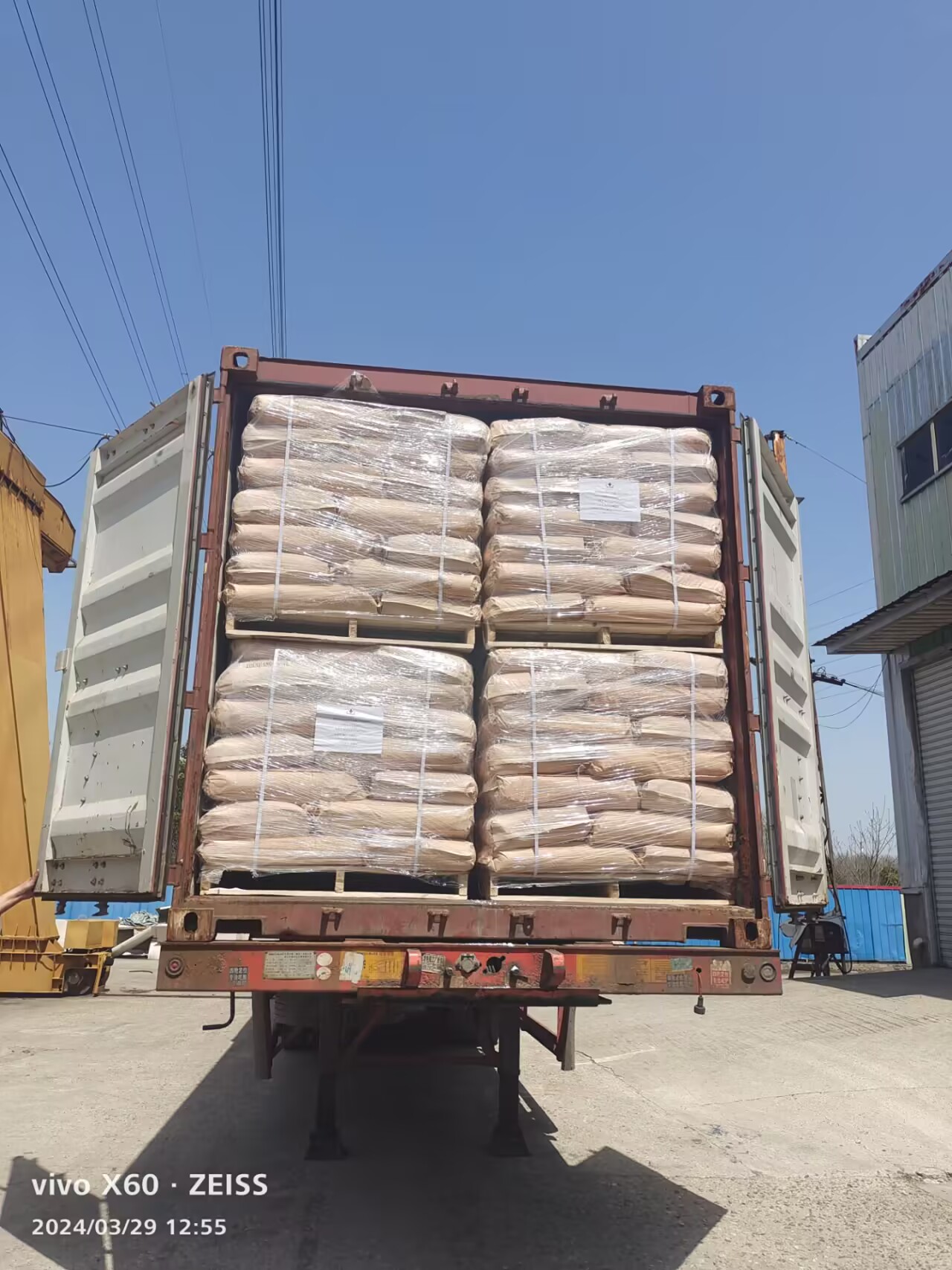
When orders spike without warning, the real test of a fulfillment partner isn't their everyday speed—it's whether their warehouse floor, staffing model, and carrier relationships can flex without snapping. Many operations promise scalability, but few actually cross-train pickers across zones, maintain a rolling bench of vetted seasonal labor, or negotiate surge pricing with regional carriers months in advance. If their answer to peak season is simply “we’ll hire more people,” you’re already behind.
Look past the polished pitch and ask for concrete numbers from their last three peak periods: maximum daily order volume handled, overtime hours as a percentage of total labor, and on-time shipment rate during the two busiest weeks. A partner worth trusting will volunteer this data without hesitation—and they’ll explain how their slotting strategy changes when SKU velocity jumps, or how they prioritize single-line orders to keep conveyor lines moving. If you hear vague reassurances instead of specific throughput metrics, treat that as a capacity risk in itself.
The sharpest operations treat peak season not as an anomaly but as a design constraint. They pre-stage fast-moving inventory in forward pick locations, temporarily reconfigure packing stations for high-volume gift sets or bundles, and hold daily capacity huddles with carrier reps to reroute volume before trucks fill up. That kind of proactive orchestration rarely shows up on a pricing sheet—but it’s the difference between a warehouse that survives your rush and one that quietly caps your growth.
Beyond the Quote: Evaluating Technical Depth
Evaluating technical depth requires looking past the surface of references and terminology. A piece of content may cite authoritative sources or toss around specialized vocabulary, but that alone doesn't demonstrate real understanding. Depth shows up when the writer explains how a mechanism actually works, why a particular choice matters, or where two seemingly similar approaches diverge. It's the difference between saying "this algorithm is faster" and walking through the trade-offs that make that speed possible.
One way to gauge depth is to check whether the content addresses limitations and counterexamples. Shallow material tends to present a single viewpoint as if it were universally true. In contrast, technically deep writing acknowledges the conditions under which a method fails, the assumptions it relies on, and the edge cases that might break it. If the author never mentions what could go wrong or what the approach cannot handle, the depth is probably thin.
Another signal is how the writer handles evidence. It's easy to drop a citation and move on, but deep evaluation means examining the evidence itself—its sample size, experimental design, or applicability to the current context. A technically deep discussion will question whether the cited work actually supports the claim, rather than treating the reference as a stamp of approval. This kind of critical engagement is what separates genuine understanding from mere quotation.
How a Manufacturer’s Location Impacts Your Bottom Line
Where your manufacturer sits on the map isn't just a dot on a logistics chart—it's a direct line item on your profit and loss statement. Freight costs, lead times, and even the stability of the local power grid all quietly shape your unit economics. A factory in a coastal port city may slash ocean freight, but if it's prone to typhoon season shutdowns, your inventory buffer suddenly becomes a financial sinkhole. Meanwhile, an inland plant might offer cheaper labor but adds weeks to transit, tying up cash in goods that haven't even reached your warehouse yet.
There's also the less obvious stuff: proximity to raw material suppliers, local tax incentives, and the maturity of the surrounding industrial ecosystem. A manufacturer clustered near component makers can turn around design changes in days, not months, which means you can respond to market shifts without eating the cost of obsolete stock. On the flip side, a remote facility with sweetheart land deals might look great on a quote sheet, but every rushed air shipment or last-minute trucking escalation will claw back those savings.
Smart buyers don't just compare unit prices—they map the full cost waterfall from factory floor to customer doorstep. That means factoring in port congestion patterns, regional labor law stability, and even the average turnaround time for customs clearance at the origin. The right location acts like a silent partner, compressing your cash conversion cycle and letting you price more aggressively. Pick the wrong one, and you'll spend every quarter explaining why your margins are thinner than the spreadsheet promised.
The Real Reason Some APP Prices Look Too Good
That $0.99 price tag on a productivity app or photo editor isn't always a bargain. Many developers deliberately set a low upfront cost because they know the real money comes later. Once you've downloaded the app and invested time in learning its quirks, you'll hit a paywall for essential features or a subscription pop-up that makes the initial price feel like bait.
Another reason those prices look too good is that the app itself is not the product—you are. Free or suspiciously cheap apps often harvest location data, contact lists, or browsing habits, then sell that information to advertisers or data brokers. The price you see is a decoy; the actual cost is your privacy, which has no refund policy.
Some low prices also come from regional pricing experiments or aggressive app store optimization tricks. A developer might set a rock-bottom price in one country to climb the charts quickly, then raise it once visibility improves. Alternatively, the app could be a stripped-down version of a web service, designed to funnel you toward a pricier desktop plan. In all these cases, that attractive number on the store page is less about savings and more about getting your foot in the door.
Future-Proofing Your Supply: Innovation and R&D Signals
Most supply chains are designed for yesterday's constraints, not tomorrow's disruptions. Forward-looking teams now track early R&D signals from suppliers and adjacent industries—patent filings, pilot line investments, and shifts in technical hiring—rather than waiting for finished product announcements. These indicators often surface eighteen to twenty-four months before a technology becomes commercially relevant, giving procurement and engineering leaders a meaningful window to test alternatives or co-develop solutions.
One underused lever is treating supplier innovation capacity as a formal sourcing criterion. Instead of asking "can you meet this spec today," mature organizations ask "what have you prototyped in the last year, and which of those experiments could lower our total cost or risk exposure?" This shift changes the conversation from transactional RFQs to joint capability mapping, and it tends to reveal which suppliers are truly investing in resilience versus those running legacy operations at full utilization.
R&D signals also help avoid overcommitment to a single emerging technology. By monitoring a basket of indicators across materials science, process automation, and digital quality systems, supply leaders can stage investments in small increments. If a pilot underperforms or a patent landscape shifts, the cost of adjusting course is far lower than when a supply chain has been aggressively optimized around one unproven route.
FAQ
A supplier that understands industrial buyers asks about your end-use environment before recommending a grade. They want to know whether the APP will face high processing temperatures, prolonged moisture exposure, or specific viscosity constraints in a coating. If the conversation starts with your process conditions rather than a price list, that is usually a strong sign.
Polymerization degree heavily influences thermal stability and water resistance, but it is not the only factor that matters. A high degree may improve performance in intumescent systems, yet it can also create dispersion challenges if the particle size distribution is not controlled. Ask for data that links polymerization degree to actual performance in your formulation instead of treating it as a standalone number.
The quoted purity usually refers to the main chemical composition, but it may not reveal trace metals, residual acids, or the consistency of the crystal structure. Those impurities can affect corrosion, color stability, or reaction behavior in downstream processing. A lower upfront price often comes with wider batch-to-batch variation that shows up later as rejected product or extra quality-control labor.
Beyond the certificate of analysis, ask for a material safety data sheet that reflects real handling conditions, storage stability data under typical warehouse humidity, and any compatibility notes with common resin systems. Some manufacturers will also share a small reference sample with a detailed test report from an independent lab. If they hesitate to provide anything beyond a basic one-page spec, that is a risk signal.
Moisture pickup during ocean freight is often underestimated, especially for bags that sit in a container for weeks. The packaging should include a moisture barrier and the manufacturer should be able to advise on palletization and container loading to reduce condensation. Customs documentation for fertilizer-grade versus flame-retardant-grade APP can also differ, so confirm the correct harmonized code before the shipment leaves.
Request a statistical process control summary from the last twelve months, not just a single certificate. A manufacturer that tracks key parameters like particle size distribution, pH, and viscosity on every batch will have control charts available. You can also set up a simple incoming inspection routine using a few sensitive measurements that correlate with your final product performance.
Customization is not always about exotic chemistry; sometimes it is simply adjusting the surface treatment or narrowing the particle size window. If your process cannot tolerate wide variation, a tailored grade can reduce downstream filtration or mixing problems significantly. Just make sure the manufacturer has produced that customization for other customers before, so you are not paying for their learning curve.
Look for clear information on heavy metal limits, compliance with relevant chemical inventory regulations in your region, and evidence of responsible phosphorus sourcing. A manufacturer that can show third-party audits for environmental management or product stewardship is generally more dependable than one that only claims to be 'green' in a brochure.
Conclusion
When evaluating ammonium polyphosphate manufacturers, industrial buyers should first dig into what actually goes into the bag. Request a full compositional breakdown—not just the standard spec sheet—because the ratio of phosphorus to nitrogen, the presence of trace metals, and the type of coating or surface treatment can all affect flame retardancy, water solubility, and long-term stability in your end product. A supplier that hesitates to share detailed composition data or hides behind vague “proprietary blend” language is often signaling inconsistency. At the same time, assess whether the manufacturer’s production capacity aligns with your peak season demands. A low upfront price means little if the plant cannot ramp up output or maintain batch-to-batch uniformity when orders spike. Look beyond the sales quote and ask targeted technical questions: how do they handle particle size distribution, what is their moisture pickup over time, and can they provide comparative thermogravimetric data under your processing conditions? The depth of their answers will quickly separate commodity grinders from true formulation partners.
Location is another silent cost driver that many buyers underestimate. A manufacturer situated near major ports or phosphate rock sources can reduce freight expenses, shorten lead times, and buffer against supply chain shocks—especially if your factory is in a different continent. But a low transportation cost is not enough. Be wary of APP prices that look suspiciously cheap; often the discount comes from using lower-purity raw materials, skipping stabilizers, or cutting corners on drying and milling, which shows up later as caking, corrosion, or poor dispersion in your polymer matrix. Instead, prioritize manufacturers that reinvest in process control and R&D. Ask about recent patents, new grades for halogen-free intumescent coatings, or efforts to reduce ammonia release during compounding. A supplier that is actively improving its product line signals a commitment to long-term reliability, not just transactional sales. By combining these practical checks—composition clarity, capacity honesty, technical responsiveness, logistical realism, and innovation signals—you can secure an ammonium polyphosphate source that protects both your production line and your final product’s performance.
Contact Us
Contact Person: Guohua Wang
Email: [email protected]
Tel/WhatsApp: 8613003442895
Website: https://www.xxflameretard.com