

All-in-One BESS Supplier: What to Look for in Integrated Energy Storage Solutions
2026-11-02
When your project needs an energy storage system that simplifies deployment without sacrificing long-term performance, every supplier's 'all-in-one' promise starts to sound the same. But not all BESS are created equal. From battery chemistry to thermal management, from software integration to after-sales support—what does true integration really mean? In this post, UNC breaks down the factors that matter most, so you can make a confident decision.
Can the Supplier Prove Field Reliability, Not Just Lab Cycles?
When a supplier hands you a datasheet full of lab cycle counts, it is easy to miss what actually happens in the field. A connector that survives ten thousand mating cycles on a bench might still fail in a coastal installation where salt fog creeps into every micro-gap. The real question is whether the supplier can show you failure rates from actual deployments, not just accelerated life tests in a clean room. Ask for field return data, installation photos from tough environments, and the names of maintenance engineers who have seen the product age for five or ten years. If the only proof they offer is a lab report, you are not buying reliability—you are buying a simulation.
Field reliability also shows up in the way a supplier handles unexpected problems. A vendor who only knows lab conditions will struggle when a truck fleet in a northern climate reports cracked housings after two winters. The better supplier walks you through their root cause analysis from that exact complaint, showing how they traced the failure to thermal contraction in a specific resin grade. They will have changed the material, updated their production checks, and shipped a replacement batch without pretending the lab data was enough. That kind of field feedback loop is impossible to fake with polished cycle count charts.
Finally, look for evidence that the supplier understands how their product interacts with the rest of your system under real operating stress. Lab tests isolate variables; the field combines them. Vibration, temperature swings, chemical exposure, and user error all happen at once. A supplier who can prove field reliability will ask about your specific installation conditions and may even propose a joint pilot program before you commit to volume orders. If they shy away from that conversation and keep pointing to an environmental chamber, you have your answer about what their numbers really mean.
Integrated Means One Team for Battery, BMS, and Thermal—Not a Parts Bin
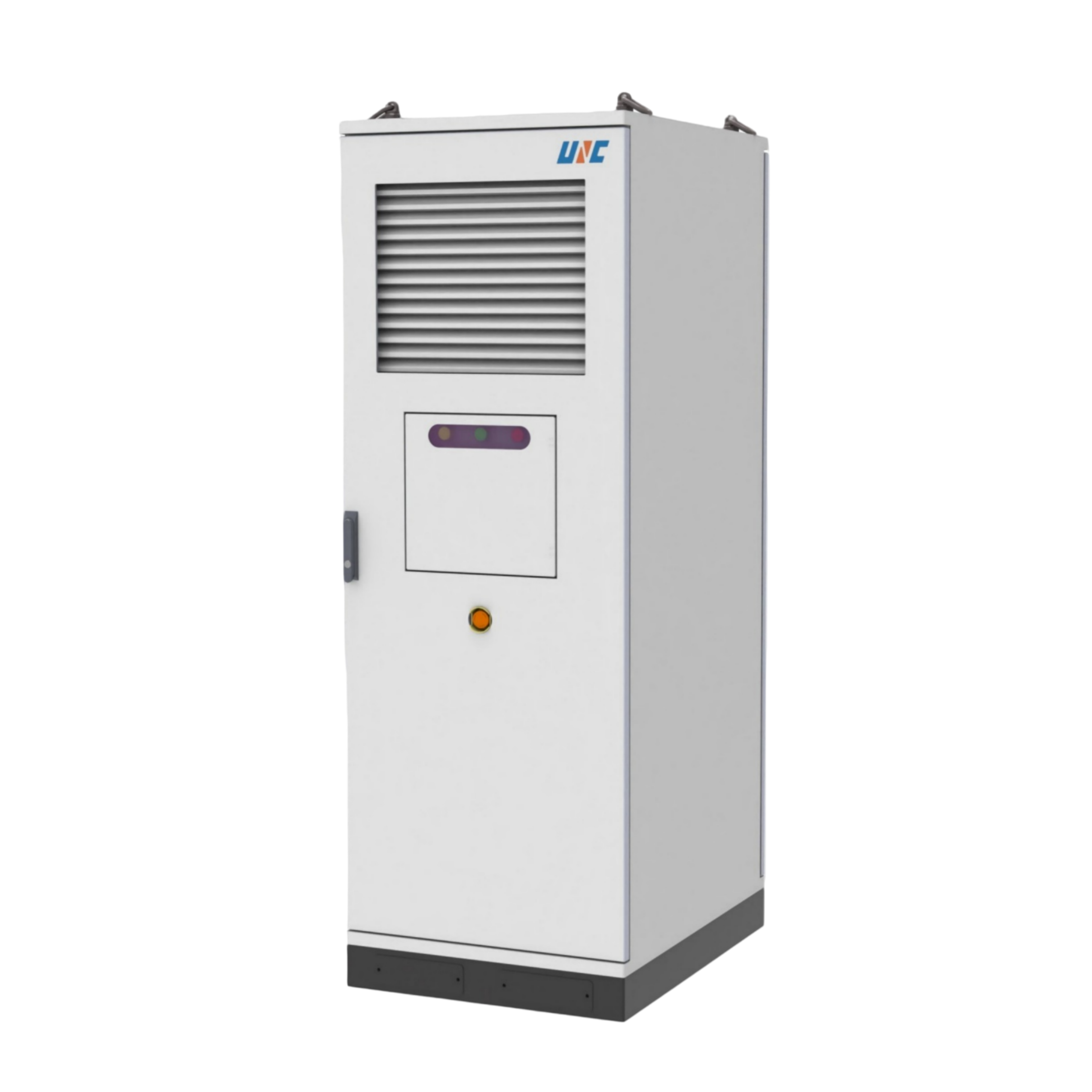
When the battery, BMS, and thermal system are designed by separate groups, each optimizes in a silo. You end up with a pack that meets individual specs but struggles as a system—cooling loops fighting the BMS derating, cell choices that ignore thermal interfaces, and last-minute compromises that erode range and lifespan.
An integrated team operates differently. The same engineers own the cell-to-pack thermal path, the state estimation logic, and the cooling architecture from day one. They trade a few kilograms of cold plate mass for a simpler BMS algorithm, or redesign a busbar to cut hot spots without adding pump power. The result is not a collection of best-in-class parts; it is a single, coherent system where every decision pulls in the same direction.
That coherence shows up in the details: reduced coolant flow rate because the BMS communicates temperature limits in real time, narrower voltage windows that extend cycle life without overbuilding the thermal system, and a pack that hits its targets without a stack of patches. Integration is not a marketing phrase—it is how you avoid the parts bin trap.
The Hidden Cost of Overlooked Software in EMS, BMS, and Grid Compliance
When facility teams treat EMS and BMS platforms as simple monitoring dashboards, they miss how quietly these systems drift out of calibration. A sensor offset here, a stale setpoint there, and within months the building is burning through energy nobody can account for. The real expense isn't the license fee or the occasional firmware update—it's the accumulated drift that goes unnoticed until an audit or a utility bill forces a closer look.
Grid compliance adds another layer that rarely shows up in a standard budget line. Interconnection requirements change, reporting formats shift, and older software often can't produce the exact data trail a utility or regulator now expects. Teams end up patching gaps with manual exports and spreadsheets, which introduces errors and eats hours every week. Over time, that reactive work costs more than a proper software refresh, but because it's spread across departments, it never appears as a single line item.
The hidden cost also shows up in risk. When a BMS can't reliably shed load during a demand response event or an EMS fails to log the right timestamps, the financial penalties and missed incentive payments dwarf any savings from deferring an upgrade. Software isn't a background utility; it's part of the operational controls, and treating it as an afterthought quietly erodes both efficiency and compliance readiness.
Round-Trip Efficiency Claims That Hold Up Under Partial Loads
Many storage systems advertise round-trip efficiency at full rated power, but real-world duty cycles rarely sit there. Under partial loads, losses from auxiliary systems and fixed switching overhead don't scale down proportionally. A handful of vendors now publish efficiency curves measured at 25%, 50%, and 75% load, revealing which claims survive contact with actual operating profiles.
The usual culprit is fixed auxiliary consumption: cooling pumps, control electronics, and transformer magnetization stay roughly constant whether the system pushes 10 kW or 100 kW. At 25% load, that overhead can eat 3-5 percentage points off the headline number. Units that maintain high partial-load efficiency typically use silicon-carbide switches, adaptive modulation, and low-loss magnetics, along with software that shuts down nonessential subsystems when demand drops.
Rather than trusting a single data-sheet number, operators should ask for a measured efficiency map across the load range. Field data from systems with wide-bandgap power stages and smart thermal management shows round-trip efficiency staying within two percentage points from 30% to 100% load. That kind of flat curve is a better predictor of annual performance than any full-load claim.
From Container to Control Room—Turnkey Delivery Without Finger-Pointing
We take ownership from the moment a container leaves the factory floor until the control room goes live. No hand-off meetings where responsibility blurs, no "that was their scope" emails. Our engineers manage power, networking, cooling, and software integration as one continuous workflow, so you're never left coordinating between vendors who point fingers at each other.
Instead of multiple contracts and competing priorities, you get a single team that walks the floor, wires the racks, and tunes the HMI until the operator smiles. The result is a system that passes the first commissioning test because every bolt and every line of code was checked by people who answer to one name.
When something does need adjustment, you don't call three companies. You call one number, and the person who picks up already knows your layout, your PLC tags, and your production schedule. That's what turnkey should mean—not a collection of parts, but a working room handed over with the lights on and the alarms cleared.
Scaling from Pilot to Project Through Modular Architecture Without Re-Design
Moving from a small pilot to a full-scale project often fails because teams assume the original design will simply stretch. A modular architecture changes that equation. By breaking the system into independent, well-defined modules with clear interfaces, the core logic that worked in the pilot remains untouched while new capacity is added around it. There is no need to tear down walls or redraw the blueprint; you attach new modules like rooms to a sturdy frame.
The pilot proves the value of each module in isolation. When scaling, those same modules can be replicated, grouped, or extended without rewriting the underlying structure. Dependencies are contained, so a change in one area does not ripple through the entire codebase. This allows the team to scale incrementally—adding users, data volume, or features—without the costly and risky re-design that typically accompanies growth. The modular approach turns scaling into an assembly process rather than a reconstruction project.
What emerges is a system that grows by composition, not by alteration. The pilot’s validated components become the foundation for the larger project, and new requirements are met by introducing new modules or swapping existing ones within the same architectural boundaries. This keeps the project coherent, maintainable, and aligned with the original vision, even as its scope expands far beyond the initial trial.
FAQ
A genuine all-in-one partner handles system design, containerization, power conversion, thermal management, controls, and often long-term service agreements. The real value is having one accountable team when something goes wrong instead of chasing multiple vendors.
Look at round-trip efficiency, usable capacity under real operating conditions, C-rate flexibility, and how the system behaves at partial state of charge. Also check if the supplier provides detailed performance data from existing installations rather than just datasheet numbers.
Ask for references from projects of similar size and application, request a site visit to an operating system, and have their engineers walk through a fault scenario. A capable supplier will explain their controls architecture and show how components communicate during grid disturbances.
Chemistry sets the baseline, but system integration determines safety, lifespan, and real-world performance. A well-integrated LFP system can outperform a poorly integrated NMC system. Focus on how the supplier manages temperature, state of charge, and cell balancing across the entire container.
Consider shipping and site preparation, grid interconnection studies, commissioning time, software licensing fees, and end-of-life recycling responsibilities. Some suppliers quote a low upfront price but charge heavily for commissioning support or firmware updates.
Software is often the make-or-break component. The energy management system must handle multiple revenue streams, respond to utility signals, and protect the battery without constant human intervention. Request a demo of the interface and ask about update policies and cybersecurity measures.
Ask for UL 9540A test results, IEC 62619 compliance, and whether the supplier performs full-scale fire testing on their integrated container. Also inquire about their failure containment strategy, gas detection, and emergency response procedures.
With one supplier, commissioning is a coordinated effort between their own engineers rather than a back-and-forth between separate battery, inverter, and software vendors. After-sales support usually has a clear escalation path, and warranty claims are not batted between companies.
Conclusion
A genuinely integrated BESS supplier earns trust through field data, not just laboratory cycle counts. Ask for operating histories from sites with similar duty cycles, temperature swings, and grid demands. The battery, BMS, and thermal management should be designed as one system by a single engineering team—not assembled from a parts bin where responsibility blurs at the first fault. Software often becomes the quiet cost driver: EMS logic, BMS safety limits, and grid compliance updates must be handled in-house, with clear ownership for firmware patches and utility interoperability. Without that, a cheap upfront quote can turn into repeated site visits and regulatory headaches.
Round-trip efficiency claims deserve scrutiny under partial loads, since real storage rarely runs at full rated power. A supplier that can show measured curves across 20% to 80% load is more credible than one quoting a single lab number. Turnkey delivery should mean one accountable team from container placement to control room commissioning—no finger-pointing between battery vendor, integrator, and software house. Finally, modular architecture lets you scale from a pilot to a multi-megawatt project without re-engineering core components, preserving both time and capital. Look for these traits early; retrofitting integration after the fact is far more expensive than choosing the right all-in-one partner from the start.
Contact Us
Contact Person: Manager Leng
Email: [email protected]
Tel/WhatsApp: 8613764878967
Website: https://www.unc-energy.com